


Three Theories, One Timeline: What Happened in Aleppo
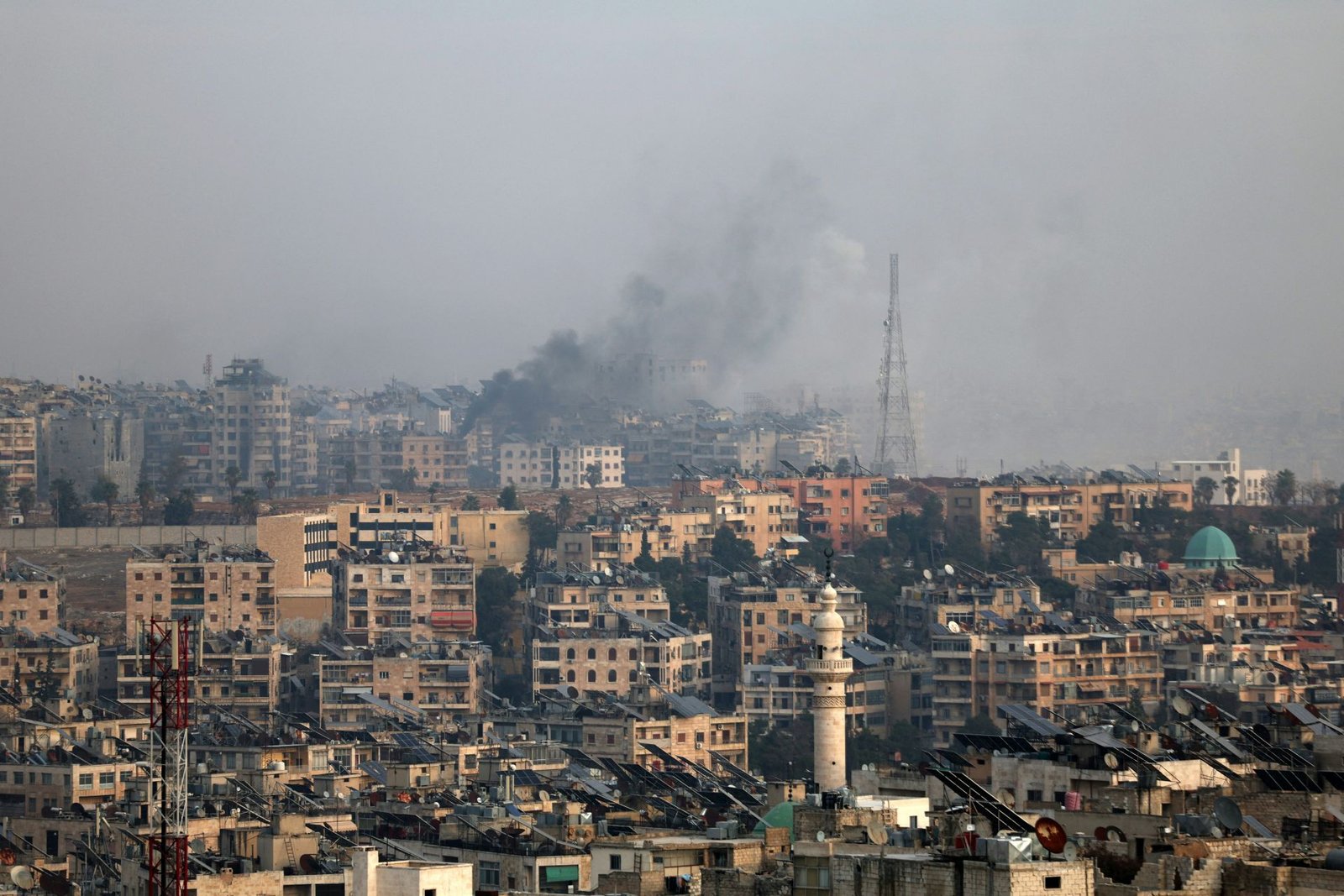
The collapse of the ceasefire in Aleppo’s Kurdish-held neighbourhoods of Sheikh Maqsoud and Ashrafieh has generated a rush of competing explanations, from diplomatic timing to alleged fractures on the Kurdish side. But the sequence of events on the ground points to a more prosaic conclusion: the escalation was being prepared before the headline meetings in Paris, and it accelerated as Damascus concluded that negotiations were turning into a slow-rolling process. What follows reconstructs the timeline and weighs the most plausible triggers.
Was the assault connected to the Syria–Israel breakthrough in Paris?
Syrian and Israeli officials met in Paris on January 5 and 6, producing a joint US–Syrian–Israeli statement. Turkey’s foreign minister, Hakan Fidan, joined the talks on January 6. The Paris channel appears to have been enabled by Donald Trump’s meeting with Israeli Prime Minister Benjamin Netanyahu on December 29, with the meeting date likely finalised afterward.
Yet the escalation in Aleppo began well before the Paris meetings. The current episode traces back to around December 20, when attacks and counter-attacks were recorded in and around the pocket. On December 23, pro-SDF groups in northeast Syria issued joint statements in response to what they described as escalating attacks on Sheikh Maqsoud. That same day, pro-SDF media reported that 23 people had been wounded by targeting of the pocket, while pro–Syrian government sources accused SDF-backed forces of firing toward government-controlled areas and sending drones in their direction.
On December 24, the Syrian government closed all movement in and out of the pocket. By December 26 and 27, Syrian army tanks were observed deploying nearby. On December 27, pro-SDF media published videos showing the Syrian army establishing new military points in buildings directly across from the Kurdish-held areas. The pattern of incidents continued in the days that followed, including reports of drones and sniper fire; on December 30, pro-SDF outlets reported a drone attack in Ashrafieh.
This timeline matters for assessing the Paris theory. Syrian military reinforcements, operational friction and the tightening siege-like measures began before the Trump–Netanyahu meeting that helped unlock the Paris track. That does not mean the Paris breakthrough had no effect. It may have emboldened Damascus politically, and it may have softened the risk of a US veto. But it does make it difficult to argue that the January 6 agreement “paved the way” for the assault in any direct sense, given how far the local escalation had already progressed.
There are also logistical signs of prior preparation. Syrian military messaging began to resemble an Israeli-style targeting narrative, including publishing coordinates it claimed corresponded to SDF and Asayish positions or weapons depots, with at least one video showing a large depot being hit. A targeting cycle of that sort is difficult to assemble in a matter of days.
The more coherent explanation is that the assault was part of a deadline-driven plan tied to the March 10 framework, which both Syrian and Turkish officials had repeatedly framed as needing implementation by year’s end. In December alone, Turkish and Syrian military officials met four times. One meeting on December 12 stood out: Turkish Land Forces Commander Gen. Metin Tokel was photographed explaining what appeared to be a military plan on a screen to Syrian officials, though the screen was blurred in the image. The final December meeting was on December 30, when the Syrian Chief of General Staff, Maj. Gen. Ali Noureddine al-Naasan, was in Ankara. That same al-Naasan later appeared in the operations room during the Aleppo clashes. Taken together, this suggests a planned operation rather than an improvised response to diplomacy.
It also points to likely Turkish support. The Turkish side appears to have helped with intelligence and logistics, and it is plausible that Turkish officers were present in the operations room that oversaw the assault.
Was the January 4 SDF–Damascus meeting the trigger?
A second claim is that the January 4 SDF–Damascus meeting was nearing a breakthrough before the Syrian side abruptly shut it down due to internal differences. Al-Monitor, citing SDF officials, reported that the meeting with the Syrian defence minister was going well until the foreign minister entered, asked the US military commander present to leave, ended the session, and pushed a follow-up to January 7 or 8. The same framing, in slightly different form, also appeared in comments attributed to YPG commander Sipan Hemo in an interview with Rohani TV.
This account is hard to square with what is known about Syrian decision-making at that level. Asad al-Shaibani is widely understood to be part of Ahmad al-Sharaa’s trusted inner circle, with a long working relationship. It is therefore unlikely that he could unilaterally block an agreement of this magnitude, especially if it were truly the decisive moment of a strategic settlement. The specific detail that he entered the room and ordered the American commander to leave is also difficult to credit. Syria’s foreign minister is not in a position to dismiss a senior US officer such as Brig. Gen. Kevin J. Lambert, the commander of the US-led coalition in Iraq and Syria, who was reported to have attended the meeting.
The more telling evidence is what both sides said immediately after the meeting ended. Within minutes, Syrian state television reported as breaking news that the meeting “did not yield tangible results” that could accelerate implementation of the agreement on the ground. Shortly afterward, the SDF spokesman Farhad Shami said details and outcomes would be announced officially once consultations were complete, and that what was circulating outside that framework did not reflect what took place. Later that night, around 23:30 local time, the SDF Media Center said the two sides had agreed to continue meetings in the coming period, to complete the discussions and keep the issue under review “within an organised process,” until results were reached.
Then, on January 6, a report published by Özgür Politika — a Germany-based outlet run by the PKK’s European branch — quoted Sipan Hemo as saying the January 4 meeting had reflected the Syrian government’s continuing inflexibility and the absence of any horizon for practical solutions. Hours later, the SDF issued a clarification insisting Hemo had said no such thing, despite the fact that Hemo was part of the delegation alongside Mazloum Abdi.
The author of the Özgür Politika piece was Mihrac Ural, a Turkish–Syrian Alawite militant and pro–Assad militia figure. That is relevant because Ural had previously published reporting based on a meeting with Sipan Hemo, suggesting he had access to him. The January 6 report was later deleted without clarification, but Ural continued contributing to the site afterward. If he had simply fabricated quotations, it would be reasonable to expect Özgür Politika to cut him off entirely.
One plausible interpretation is that Hemo may have conveyed a pessimistic assessment off record and did not expect it to be published as an attributed quote. Either way, the incident reinforces a broader point: the January 4 meeting does not look like a clean “trigger,” but it likely deepened Damascus’s conclusion that the SDF was seeking an open-ended process rather than a deadline-driven implementation.
Damascus framed the meeting as producing nothing concrete that could accelerate implementation. The SDF framed it as the continuation of talks until results were reached. In practice, that difference is the crux. Damascus likely read the open-ended language as a strategy of delay. The SDF appears to have believed Damascus would accept a longer runway.
That makes January 4 less of a trigger than an accelerant: it likely hardened the Syrian side’s conclusion that a negotiated outcome under the current structure would not deliver the kind of deadline-bound implementation it wanted.
Was there an internal split within the SDF or between the SDF and the PKK over whether to withdraw or fight?
While the Syrian side appeared prepared and confident when it launched the assault, the SDF side appeared flat-footed, as if caught off guard and struggling to control events. This has produced claims of factionalism: a split between PKK leadership in Qandil and SDF leadership in Qamishli, or between SDF figures such as Mazloum Abdi and Sipan Hemo. Pro-Turkish outlet Middle East Eye, for instance, reported that Turkish officials believed PKK leaders urged Asayish fighters in Aleppo to resist, while Syria Ultra suggested Sipan Hemo pushed a more hawkish line while Abdi or Ilham Ahmed favoured withdrawal and painful concessions tied to implementing the March 10 framework.
There is no solid evidence for this, and there is meaningful evidence pointing the other way. These factionalism narratives mirror the earlier pro-SDF claims of splits inside the Syrian government, and they likely serve similar political purposes.
First, the idea that Hemo and Abdi hold fundamentally different views on integration is contradicted by their public record. On December 20, 2025, Mazloum Abdi told Aryen TV that the SDF did not want to integrate into the current HTS-led army as it exists today, but instead sought a merger to build a new “national army” on a co-equal basis, reflecting the Islamist versus secular identities of the respective forces. This closely matches Sipan Hemo’s position in a September interview with Hawar News Agency.
Second, the sequence of statements during the Aleppo fighting looks less like ideological factionalism and more like a combination of poor preparedness, uncertainty, and structural constraints. The internal security forces in Sheikh Maqsoud and Ashrafieh operate in a decentralised way. The SDF leadership in Qamishli cannot simply dictate decisions without coordination with local command structures.
Third, the political messaging from the PKK-aligned umbrella (the KCK) and from Abdi was broadly aligned. On January 8, both called on Damascus to stop the attacks. Abdi framed the operation as a continuation of violence seen in Syria’s coast and in Suwayda, and he did not call on the Asayish to withdraw. In another statement the same day, Abdi explicitly praised the “resistance” of the “heroes of the Internal Security Forces in Sheikh Maqsoud and Ashrafieh.”
What followed strengthens the “inside-versus-outside” dynamic more than an SDF-versus-PKK split. On January 9, local forces in Sheikh Maqsoud reportedly rejected evacuation. That same day, Sipan Hemo said, “As much as we can, we will support them.” On January 10, local forces again denied that a ceasefire required evacuation. None of this proves internal political schism. It more plausibly reflects local fighters rejecting a withdrawal that would end their leverage and local autonomy.
Ilham Ahmed’s comments also do not clearly support the “split” theory. On January 9, she signalled support for evacuation, but she conditioned it on preserving some form of local rule in the two neighbourhoods. Damascus rejected that condition, and it was the same underlying issue local Kurdish forces cited in rejecting evacuation.
Finally, the external political environment shifted further against the SDF. On January 10, US envoy Tom Barrack met al-Sharaa and al-Shaibani in Damascus, and his public messaging leaned heavily toward the Syrian government’s position, particularly the emphasis on one army. That reduced the space for the SDF to hold out for a different end-state, even if local forces still refused to leave.
Taken as a whole, the available evidence does not support the claim that the fall of the pocket was primarily the product of an SDF–PKK rupture or a dramatic internal split inside the SDF leadership. The more coherent reading is that the SDF was not prepared for a coordinated, deadline-driven assault, and that the decisive tension was between local forces inside the pocket and the political and military leadership outside it over the terms and meaning of withdrawal.
This is an inferential reconstruction based on the sequence of events and the most credible “hard” signals available so far. Even with that caveat, the fall of the Sheikh Maqsoud–Ashrafieh pocket is a strategically major development, with serious implications for the future balance of power and negotiation dynamics in northeast Syria.


