


In Damascus Talks, SDF and Syria Battle Over Optics and Command
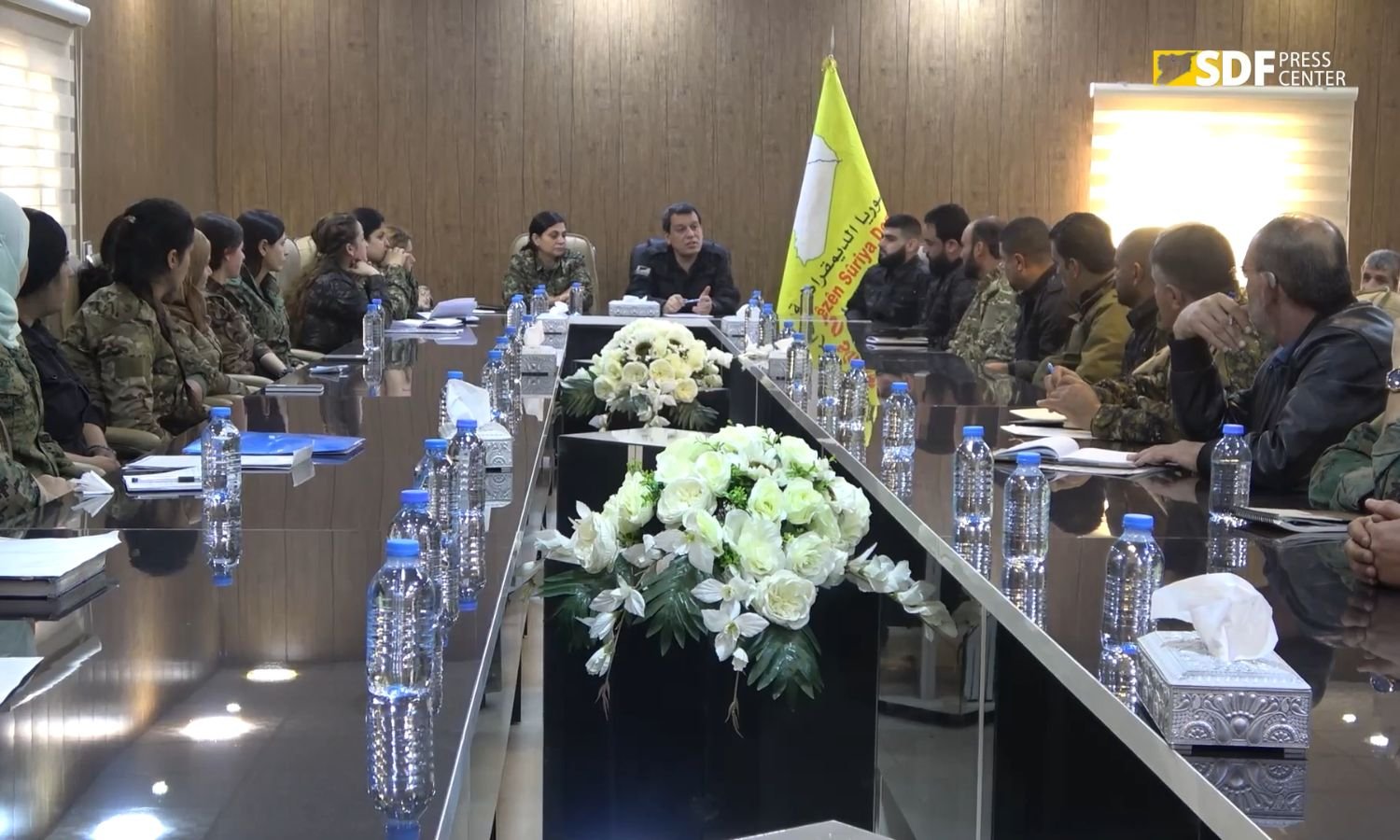
Yesterday, top SDF commanders Mazloum Abdi, Sipan Hamo and Sozdar Derik met with Syrian officials in Damascus. The talks immediately produced two competing narratives: the SDF said the meeting was positive with additional meetings to follow “until they reach an agreement,” while Syrian state media reported that the meeting “did not yield tangible results that can lead to the acceleration of implementing the agreement on the ground.”
Context: The meeting was originally scheduled for before the year’s end to discuss the March 10 agreement to integrate the SDF into the Syrian army, but it was postponed due to what the SDF called “technical reasons.” Yesterday’s meeting was attended by SDF commander Mazloum Abdi, YPG commander Sipan Hamo and YPJ commander Sozdar Derik. From the Syrian side there is no official record of who attended, but some reports suggest Defence Minister Murhaf Abu Qasra and intelligence chief Hussein Salama were present. There were also unconfirmed reports that Brig. Gen. Kevin J. Lambert, who commands the US-led coalition forces in Iraq and Syria, attended the meeting.
Analysis: Although Syrian state media was quick to describe the meeting as a failure, it did confirm reports from pro-SDF media that future meetings were agreed. Two important observations help illuminate the trajectory of the negotiations.
In terms of optics, the fact that the meeting took place after the year’s end is a win for the SDF. Damascus and Ankara had insisted that the March 10 agreement’s deadline was the end of 2025 and that it would expire after that date. Yet the fact that even Syrian state media described the meeting as a ‘follow-up to the March 10 agreement’ and confirmed that more meetings would follow suggests the agreement is still seen as alive, which is precisely what Mazloum Abdi has maintained: that no such deadline exists.
At the same time, the optics also cut in the opposite direction, in a way that benefits Damascus. The SDF has long tried to shift the venue to Paris under French and European mediation, not only US involvement. Damascus was reportedly close to accepting this proposal but changed its mind at the last minute, with some reports suggesting Turkish intervention was the reason. This is an important detail because moving the talks out of Damascus would have positioned the two sides as equals and internationalised the negotiations, which was exactly what the SDF wanted but ultimately failed to achieve. By contrast, for instance, today’s Syria meeting with Israel to discuss a security agreement is taking place in Paris with the presence of Trump’s Syria envoy Tom Barrack. In terms of framing, this matters: Damascus has successfully pushed the narrative that the SDF is an internal matter, and that Damascus is the “legitimate and national address” for Syrian dialogue.
The second point is that the core dispute over the March agreement concerns chain of command. The decisive fault line is clear: for Damascus, integration means the SDF’s command coherence is effectively dismantled; for the SDF, integration means preserving its unified command structure. According to Rudaw TV, the meeting focused on the mechanics of integration into the Ministry of Defence. The reporting claimed that the YAT, the SDF’s anti-terror force, would be reorganised into a “special brigade” tasked with counterterrorism operations across Syria, with activities conducted under the monitoring and oversight of the international coalition against ISIS. A second special brigade format involving female forces from the YPJ was also discussed as part of the evolving structure. But the report acknowledged that the core dispute remained over command: Damascus’s position is to integrate the proposed formations one by one directly under the Ministry of Defence, while the SDF’s position is to integrate the three formations collectively as a bloc, retaining cohesion under SDF command while entering the ministry’s framework. This means that despite Damascus’s apparent approval of integrating actual fighters into several brigades and divisions, the key redline remains command structure.
Baseem Abu Adnan, a well-connected and pro-Damascus commentator, made an interesting observation following yesterday’s meeting. He suggested that state media’s very quick reporting, issued directly after the meeting ended, that the meeting “failed and produced no result” marks the end of a “good-faith concessions” phase and the start of a “hybrid phase” in which Damascus keeps negotiations open so it appears reasonable and avoids immediate high-cost escalation, while simultaneously applying “semi-harsh” pressure tools to raise the costs of delay and force acceptance of state terms.
For Damascus, two key goals matter most, and it is willing to make concessions on technical details, such as allowing the SDF’s anti-terror force to operate across all of Syria, to achieve them. First, no geographic monopoly for SDF forces: even if the SDF’s reorganised forces were to be stationed in the three provinces now under SDF control, other Syrian units must be allowed to enter these areas as well. Second, on command structure: each of these province-bound divisions must be unconnected and directly answer to the Syrian defence ministry.
The SDF has been trying to offer some concessions in this regard, but Damascus sees them as cosmetic and has completely rejected them. Points that the SDF considers concessions include allowing Damascus forces to be stationed in “security squares” in Hasakah and Qamishli, replicating the model used by the Assad regime in these areas. Damascus fully rejects this because, in its view, this is a cosmetic concession in which the SDF benefits from the state’s administrative and service presence while retaining control, and would allow the SDF to signal, internally and externally, that it remains in contact with the government and to use that as a tool to restrain any possible Turkish move in the area.
Another form of Syrian army deployment that the SDF might accept but Damascus rejects is deployment along the border with Turkey, similar to how the Assad-era army was positioned before. Damascus views this as the SDF exploiting them to deter potential Turkish military intervention, making Damascus rather than the SDF the party on the front line. In essence, the SDF would be using the same Syrian army it refuses to allow into its territory as a shield against potential Turkish attacks.
Meanwhile, the SDF sees Damascus’s demands, especially to enter their areas, as a trap that plays into the social geography of the SDF-held northeast. If non-SDF Syrian units enter predominantly Arab areas, Damascus may calculate that local grievances, anti-SDF mobilisation and protests could intensify, weakening the SDF’s negotiating position and its grip on power in these majority Arab areas. On the command question, Damascus may also be betting that because a large share of SDF fighters are Arab, shifting payroll and chain-of-command gravity toward the state could hollow out the SDF’s cohesion over time, leaving a smaller Kurdish core with less leverage. The SDF understands these dynamics, which is why it is unlikely to accept an arrangement that dilutes its exclusive control without ironclad guarantees.
This mutual mistrust runs deep and is unlikely to be resolved without external guarantees. But the US has categorically refused to become a guarantor to any party, which means the threat of military escalation and instability in the region will remain for the foreseeable future.


