


The US Could Not Topple Iran’s Regime. Now It Is Trying to Crack It From Within.
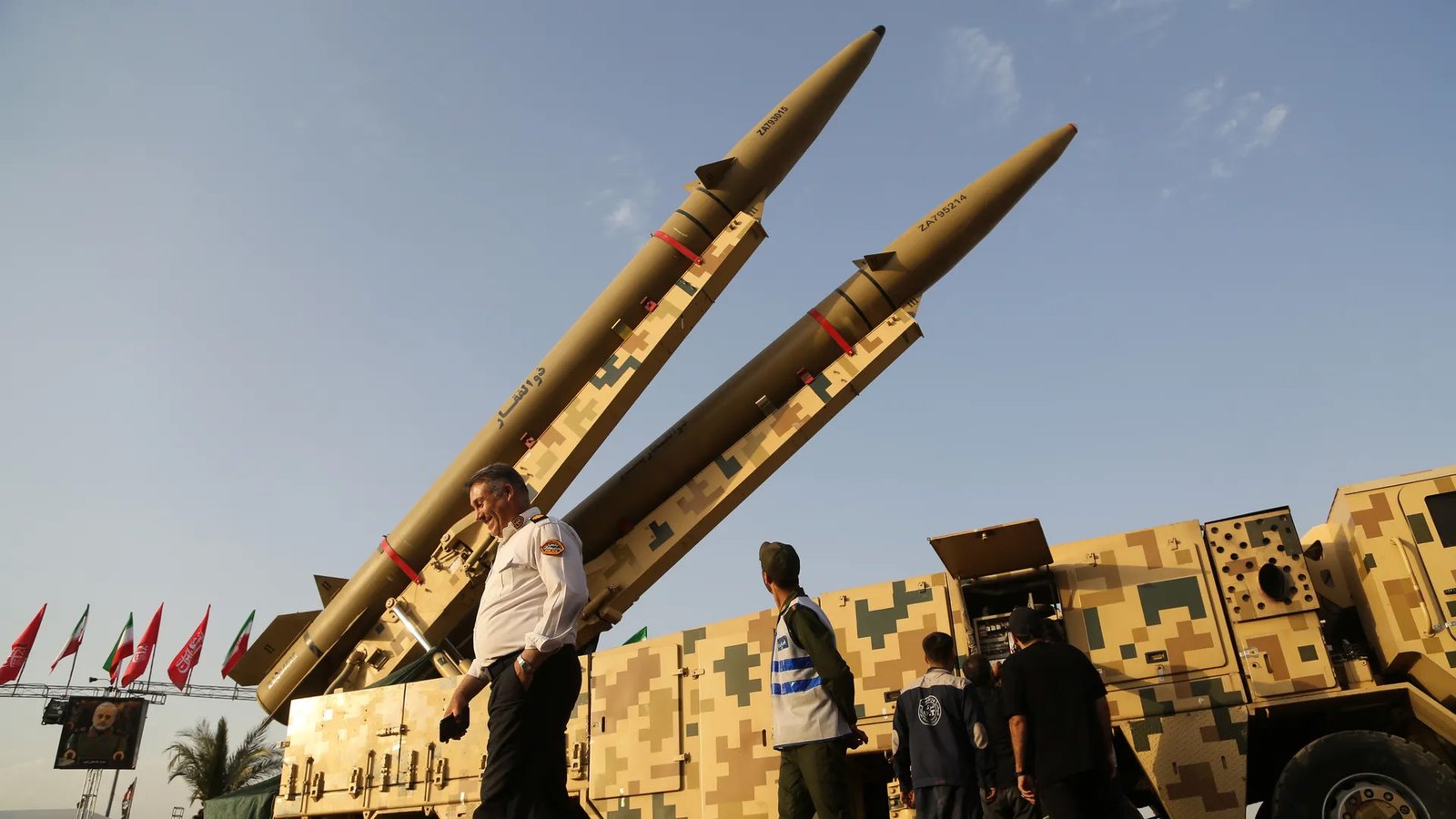
The war has passed through three phases since February. The American and Israeli campaign that opened it to produce the collapse of the Islamic Republic, and the ceasefire of 8 April converted the confrontation into something slower: a full blockade, negotiations under siege, and recurring threats of renewed attack. The one-page memorandum agreed in June appeared to stabilise that arrangement. The attacks on shipping in early July destroyed it, and the weeks since have produced the widest fighting of the war: a surprise Iranian missile launch against American forces in Jordan on 28 July, Houthi missile and drone strikes on Saudi cities and tankers, Iraqi armed groups joining the attacks on Saudi Arabia, joint Saudi-American retaliation inside Iraq, simultaneous pressure on the Strait of Hormuz and Bab el-Mandeb, and a drone attack on gas shipping as far away as Egypt’s Mediterranean coast.
This escalation becomes easier to understand once the war is described by its strategies rather than by its incidents. Two campaigns are now running against each other. Washington, having lost confidence in regime change by military means, is attempting to fracture the Iranian regime from within, through a coordinated mixture of public statements, intelligence leaks, episodic threats and a blockade whose pressure compounds over time. Iran, having concluded that the temporal structure of the war is destroying it, is attempting to fracture the regional coalition around the United States, through pre-emption, horizontal escalation and a deliberately cultivated image of recklessness designed to make continued confrontation intolerable for Washington’s partners. Each side has chosen fracture over conquest, and each is using time as an active instrument rather than treating it as a neutral background condition.
Fracturing Iran from within
The clearest evidence for the American strategy is the sheer repetition of its central claim. Since the April ceasefire, Trump and his officials have returned to the internal fracture of the Iranian regime on at least seven distinct occasions, around nine when parallel statements and briefings are counted separately. In late April, Trump described Iran’s government as “seriously fractured” while extending the ceasefire, days after praising the same leadership as rational and reasonable. The following day, officials described to reporters an “absolute fracture” between civilian negotiators and IRGC commanders, a new supreme leader, Mojtaba Khamenei, whom neither camp could reliably reach, and the absence of any Iranian figure empowered to conclude a binding agreement. The officials even supplied a cause: the March assassination of Ali Larijani, whose authority had held Iranian decision-making together and whose successor has not. In May, internal division was cited as a principal obstacle to the memorandum. After the July shipping attacks destroyed it, the account reached its most concrete form: Iranian civilian officials privately told Trump’s advisers that the attacks had been a mistake, the work of hardliners rather than of the leadership that had negotiated the deal.
The narrative campaign has been reinforced by targeted disclosure. The sharpest example is the mid-July investigation published by The New York Times, with parallel reporting in Haaretz, detailing the Mossad’s years-long recruitment of former president Mahmoud Ahmadinejad as an intelligence asset and prospective post-regime figurehead, complete with meetings with the Mossad’s director in Budapest, notification of the CIA, and an attempted extraction on the war’s first day. The story may well be accurate; Tehran evidently believes enough of it to hold Ahmadinejad under house arrest. The more instructive fact is the publication itself. The account was sourced to American, Iranian and former Israeli officials, which means the disclosure served interests in more than one capital, and its effect inside Iran is predictable either way. It tells every member of the Iranian elite that the system has been penetrated at the highest level, that even a former president may have been an asset, and that Washington and its allies hold more than they reveal. A government still confident of defeating its adversary militarily has no need to publish such material; a government trying to set that adversary against itself does.
The statements and the leaks have moved in step with a third instrument, which is the episodic threat of renewed escalation. Each round of fracture messaging since April has arrived alongside warnings that the bombing would resume if Iran failed to concede; on the day he extended the April ceasefire, Trump told CNBC he expected “to be bombing” once it lapsed. The pairing is the mechanism. Every credible threat of escalation forces an argument inside the Iranian system between those who would concede in order to stop the attacks and those who would treat concession as the beginning of the regime’s end. The fracture narrative then names those camps publicly, assigns them positions, and invites each to suspect the other of dealing separately with Washington. The leak completes the circle by suggesting that some of them already have.
None of this requires the fracture to be real in the form Washington describes. Differences of opinion inside the Islamic Republic are permanent, structural and well documented, and they exist within the Trump administration as well. What matters is the shift in American method: the campaign is designed to produce a literal fracture rather than to describe an existing one, on the calculation that internal division is now the most realistic way to weaken a regime that survived direct attack. And the same ambiguity serves Tehran. The Iranian system has its own long tradition of staged plurality, and the spectacle of conciliatory negotiators and escalating commanders can function as a coordinated division of labour in which the diplomats harvest the value of the violence they disown. The most plausible model of Iranian decision-making sits between performance and disorder: broad internal agreement that the current structure of the war is intolerable, combined with genuine operational autonomy for the IRGC and the wider [network]{TNC LINK: Iranian influence model piece}. This is directional coherence rather than command, and it produces exactly the pattern the war now shows, strategically aligned action with unsynchronised execution. The fracture has therefore become a theatre of the war in its own right. Washington works to produce it, Tehran works to simulate and exploit it, and neither capital needs its true depth verified.
Time as a weapon
The engine underneath the American strategy is temporal. The sequence that has structured the war since April, escalation, ceasefire, negotiation, deadline, threatened resumption, rests on the assumption that a pause relieves both sides equally. Under blockade, the relief is distributed almost entirely to one side. For the United States, a ceasefire reduces the expenditure of munitions, money and presidential attention while the siege continues to operate at full force. For Iran, a ceasefire suspends the bombing and preserves everything else: the economic strangulation deepens, the threat of renewed attack stands, and each new round of talks opens with Tehran weaker than the round before. Iranian officials have said as much publicly, insisting that a ceasefire which leaves the maritime blockade in place is no ceasefire at all.
A ceasefire under these conditions is coercion continued at lower American cost, and the cycle of escalation and de-escalation is itself the weapon, a structure of punctuated attrition in which the pauses do as much of the work as the strikes. Every rotation transfers pressure onto the Iranian economy and, through it, onto the cohesion of the regime, which must repeatedly hold the internal argument the American campaign is working to inflame. The result for Tehran is a form of strategic paralysis. It cannot accept the blockade indefinitely, because the siege is designed to tighten. It cannot accept the standing threat of escalation indefinitely, because each threat renews the internal dispute over concession. And it cannot simply wait, because waiting is precisely what the structure is built to punish. In Iranian strategic logic the conclusion follows directly: the cycle must be broken, control over the timing of escalation must be taken away from Washington, and the cost of every pause must be redistributed onto the coalition that currently enjoys it.
Fracturing the coalition from without
Iran’s counter-strategy answers the American campaign symmetrically. Washington is trying to fracture the regime from within; Tehran is trying to fracture the American camp from without, by making the war so costly for the regional states that they begin to question the value of the American role itself. The method is horizontal escalation, multiplying the actors, theatres and economic systems exposed to the war rather than intensifying any single exchange. The 28 July launch against American forces in Jordan, described by Central Command as an attempted surprise attack, established that Iran will now act first and act inside a pause; it was the first strike since Trump had halted his air campaign to give negotiations another chance. The Houthi surge against Saudi Arabia, staged partly from Iraqi territory alongside Iraqi armed groups and, by credible reporting, under IRGC coordination, showed the Iranian-aligned network operating as a single cross-border system. The coupling of Hormuz and Bab el-Mandeb placed both of the region’s principal maritime chokepoints under simultaneous threat, and the Houthi leadership has framed its new maritime pressure on Saudi ports as “blockade for blockade”, a direct answer to the siege of Iran.
The Damietta strike extends the same logic into a theatre previously assumed to stand outside the war. Egypt has now confirmed that a drone caused the fire that engulfed the US-owned gas carrier Energos Winter and a second vessel at its Mediterranean gas hub, a port that sits near the Suez corridor now serving as the main remaining outlet for Gulf energy while both straits are contested. No actor has claimed the attack, and Iranian state television had named Damietta as a possible target only two days earlier. Attributing the strike to Tehran therefore remains an inference rather than a finding, but it is the inference every government in the region is drawing, and its deterrent effect does not depend on confirmation.
Alongside the widening geography, Iran is cultivating a change of image. It wants to be seen as less rational and more reckless than the cautious actor of the strategic patience era, because the credibility of its escalation now matters more than the credibility of its restraint. The shift follows from a judgement that appears to be shared across the political leadership and the IRGC alike: that negotiations under the current structure are unlikely to succeed, and that only a dramatic increase in the cost of continued confrontation can change the structure itself. The demand behind the escalation is correspondingly specific. Iran is pressing for a complete cessation of hostilities and an end to the blockade, on the logic that any settlement which leaves the siege and the standing threat in place would merely restart the cycle it is trying to destroy.
The contest over unpredictability
There is a further dimension aimed at Trump personally. Trump has built his coercive method on unpredictability: deadlines that move, positions that reverse, and adversaries left uncertain whether a threat is theatre, an opening bid or the prelude to sudden attack, and whether the objective is an agreement, punishment or the fall of the regime. The method depends on his being the only unpredictable actor in the interaction, free to alternate menace and offer while the opponent responds cautiously. Iran’s posture under the previous administration fitted that requirement. Strategic patience was a rational answer to a procedural adversary that could be relied upon to restore boundaries after each exchange. Against Trump, the same patience surrendered the entire currency of uncertainty to one side, and restraint purchased no reciprocity.
The evidence now suggests that Iran is mirroring the method in order to unsettle its author. It acts before deadlines, escalates out of ceasefires, and allows its thresholds, targets and geographic limits to become as difficult to read as Trump’s intentions. Whether this is conscious imitation or a convergent conclusion that uncertainty creates leverage cannot be settled from outside Tehran, and the argument does not depend on settling it. The structural change is observable. What was one unpredictable actor coercing a predictable one has become a contest in which each side works to convince the other that it has the lower escalation threshold. Trump signals that he may do something far more extreme than expected and that Iran should concede before he does. Iran replies that the response may be far broader than he can control and that he should settle before it escapes him.
The two forms of unpredictability differ in kind. Trump’s is decision-centric and flows from one man’s ability to reverse himself overnight. Iran’s is networked and geographic, flowing from a distributed system that runs from the IRGC and the regular military to Iraqi armed groups, the Houthis and maritime units, whose multiplicity makes escalation appear less governable even where it is governed. That structure gives Tehran a capability Trump lacks: it can be conciliatory and escalatory at the same time, through different organs, which returns the analysis to the staged ambiguity described above. The same institutional plurality that Washington presents as fracture doubles as Iran’s instrument of coercive uncertainty.
The asymmetries underneath
Iran’s confidence in this strategy rests on two asymmetries. The first is the asymmetry of stakes and attention. For Tehran the war concerns the survival of the regime, and it can justify concentrating everything it has. For Washington, Iran is one front among many. The domestic front, the strategic competition with Russia and China, Latin America and now Cuba all claim the same finite resources, and American munitions stocks are already reported to be approaching uncomfortable levels of depletion. The United States could sustain this war for months or even years, but it cannot direct its full weight at Iran without abandoning the global posture that defines it, and a superpower that concentrates everything on a single regional front has, functionally, stopped being one. Iran reads Trump’s hesitancy through this lens, reinforced by an American public that has turned against the war: in the AP-NORC poll released this week, 64 per cent said the war has not been worth fighting and only 28 per cent approved of Trump’s handling of it. The bet is that a president who needs visible victories will eventually prefer a settlement he can present as an achievement to an open-ended conflict he cannot control or narrate.
The second asymmetry concerns the tolerance of pain, and it centres on Saudi Arabia. The Iranian system has been shaped by decades of sanctions, isolation and military pressure, and it is adapted to prolonged disorder in a way few states are. The Gulf system is built on the opposite premise. Saudi Arabia’s economic model depends on secure exports, investor confidence, functioning aviation and the credibility of stability itself, which are precisely the assets this war attacks, and its military record offers little reassurance: a state that could not subdue the Houthis across a decade of trying is poorly placed to absorb a multi-front Iranian campaign. Riyadh’s current forcefulness, including the joint strikes with the United States across eastern Iraq, is the response of a state under direct attack, and in the immediate term it has moved Saudi Arabia closer to Washington rather than away from it. Iran’s calculation runs longer. If the costs are sustained for months rather than weeks, Tehran expects the difference in pain thresholds to assert itself, and a stability-dependent system under indefinite threat to demand a settlement before an adversity-hardened one collapses. Saudi Arabia’s position as the hinge of the regional coalition makes this the single most consequential bet in the strategy.
It is also the strategy’s greatest exposure. Pain can produce accommodation, and it can produce the anxiety of entrapment that pushes partners away from Washington, but it can equally produce consolidation, the conclusion that Iran must be defeated because accommodation no longer buys safety. The early evidence points toward consolidation first. Iran therefore faces a severe calibration problem. It must generate enough danger to break regional confidence in the American strategy without generating so much that it unifies the coalition it is trying to divide, and the networked structure that produces its unpredictability is also the element most likely to cross that line without central instruction. A strategy built on directional coherence rather than command cannot fully control its own calibration.
The race between two fractures
The war is therefore best understood as a race between two fracture campaigns. Washington is betting that the siege, the threats, the narrative and the leaks will break the cohesion of the Iranian regime before the costs of the war break the cohesion of the American coalition. Tehran is betting on the reverse, and its escalation is designed to accelerate the clock on Washington’s side of the race while slowing it on its own. Iran’s evolution across the war can be read in three stages: strategic patience toward a predictable United States, controlled recklessness once patience proved unrewarded, and now mirrored unpredictability, which denies Washington exclusive control over uncertainty and over the timing of escalation.
The unresolved danger sits in the mirroring itself. Each side must continue demonstrating a willingness to lose control in order to prove that it cannot be coerced, and every demonstration obliges the other to answer with a larger one. There is no reliable method, inside these governments or outside them, for identifying the point at which the performance of uncontrollability becomes the reality of it. The next ceasefire, whenever it arrives, should be read accordingly, as another phase of both fracture campaigns rather than a suspension of either, because both sides have now made the pause itself an instrument of the war.


