


Damascus Won Aleppo. The Next Battle Could Decide the SDF’s Fate.
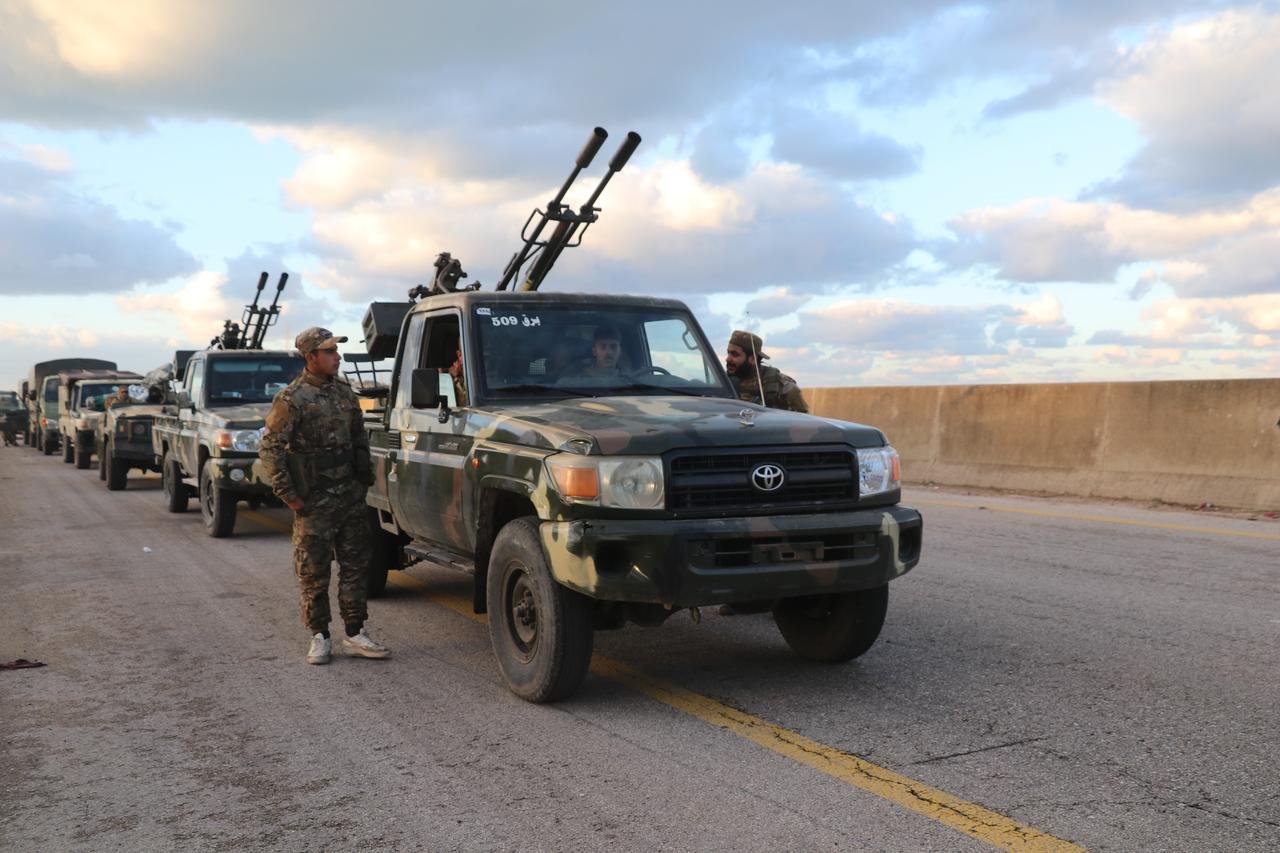
The Syrian government’s victory in Aleppo should not be underestimated. The Sheikh Maqsoud–Ashrafieh pocket, previously controlled by SDF-backed security forces, was a major urban settlement where an estimated 300,000 to 400,000 people lived, making it one of the largest population centres linked to the SDF. For comparison, Qamishli, one of the biggest SDF-controlled cities and the largest Kurdish-majority city, is often estimated at around 350,000.
In military terms, Sheikh Maqsoud offered one of the stronger defensive positions among SDF-held areas. It sits on high ground overlooking much of the city, and its demography—including many IDPs from Afrin—meant a broadly sympathetic local environment. Yet it was also uniquely vulnerable: an enclave fully surrounded by Syrian government territory, reportedly held by only several hundred Asayish fighters. The SDF-backed forces had dug extensive tunnels, suggesting serious defensive preparation, with at least one reportedly extending beyond the city to move weapons and supplies.
What made the episode a tactical victory for Damascus was not only the outcome but the speed. The pocket’s defences collapsed quickly, delivering a major morale boost on the Damascus side in what was their first direct confrontation with SDF-backed forces since the fall of the Assad regime in December 2024. Given the pocket’s isolation and its status under a local arrangement, it is understandable that the SDF did not commit to an all-out defence. The problem is how that choice appeared in practice. The SDF looked unable to decide whether to fight, negotiate from strength, or withdraw in a controlled way. In a fortress-like urban area, it did not need to hold indefinitely, but it did need either to hold long enough to force a settlement or to leave without the optics of being driven out by force.
Those optics carried political costs. The disorderly withdrawal fed a sense of betrayal among many Kurds in Aleppo and Afrin, especially because a large share of the pocket’s residents were already displaced from Afrin after 2018. For them, Sheikh Maqsoud and Ashrafieh was not a peripheral outpost but a second refuge. The episode has widened a fault line inside the Kurdish constituency between those in the west who feel sacrificed and those in the east who speak of consolidating “east of the Euphrates” as if Aleppo and Afrin are expendable. Even if that argument is strategically coherent, it is politically corrosive, and it risks weakening the SDF’s social base at the moment it most needs cohesion.
Aleppo also punctures a comforting assumption about defensibility. Yes, the pocket was isolated, but it had favourable terrain and a supportive demographic environment. If a position like that fell quickly, it raises uncomfortable questions about preparedness, command decisions, and deterrence. Those questions become more acute in majority-Arab areas such as Deir ez-Zor and Raqqa, where local support is often more conditional and where military pressure can trigger political unravelling.
This is why the next episode, centred on Deir Hafir east of Aleppo province, will matter more than Aleppo itself. Deir Hafir is not a contained pocket managed under a local arrangement. It is a declared front where the SDF has said it will defend with its full forces. If it does not, Damascus will read restraint as weakness and keep probing for more ground, turning limited advances into a rolling campaign of pressure. If the SDF does commit fully and still loses, the implications are sharper still. A defeat there would signal that even an all-in defence cannot hold, risking a cascade across the majority-Arab belt and forcing an accelerated contraction into a narrower, largely Kurdish core.
The external balance compounds the danger. Turkey’s apparent resumption of drone activity after a long pause, alongside broader signs of military readiness, increases Damascus’s ability to sustain pressure, widen the front, and turn incremental gains into momentum. Some argue escalation will remain confined to areas west of the Euphrates, but there are no clear indications this will hold. Turkey already controls a strip of territory east of the river, roughly 4,000 square kilometres around the Tal Abyad corridor, and continued deployments there suggest the eastern theatre could be drawn in as well, especially if the SDF is preparing to defend Deir Hafir at full scale.
In the end, the SDF file will be settled through negotiations. The question is what shape the SDF arrives in, and who holds the leverage when talks become unavoidable. If the SDF can hold long enough to deny Damascus a quick win, it restores credibility, steadies wavering communities, and strengthens its hand to impose demands rather than seek guarantees. If it cannot, it will return to the table in a far weaker position, likely facing demands for major concessions on autonomy, security structures, and governance, and the only remaining debate will be how much can be salvaged before the map, and the balance of power behind it, moves further against it.


