


Syrian Army Presses Toward Tabqa as SDF Seeks U.S. Lifeline in Erbil
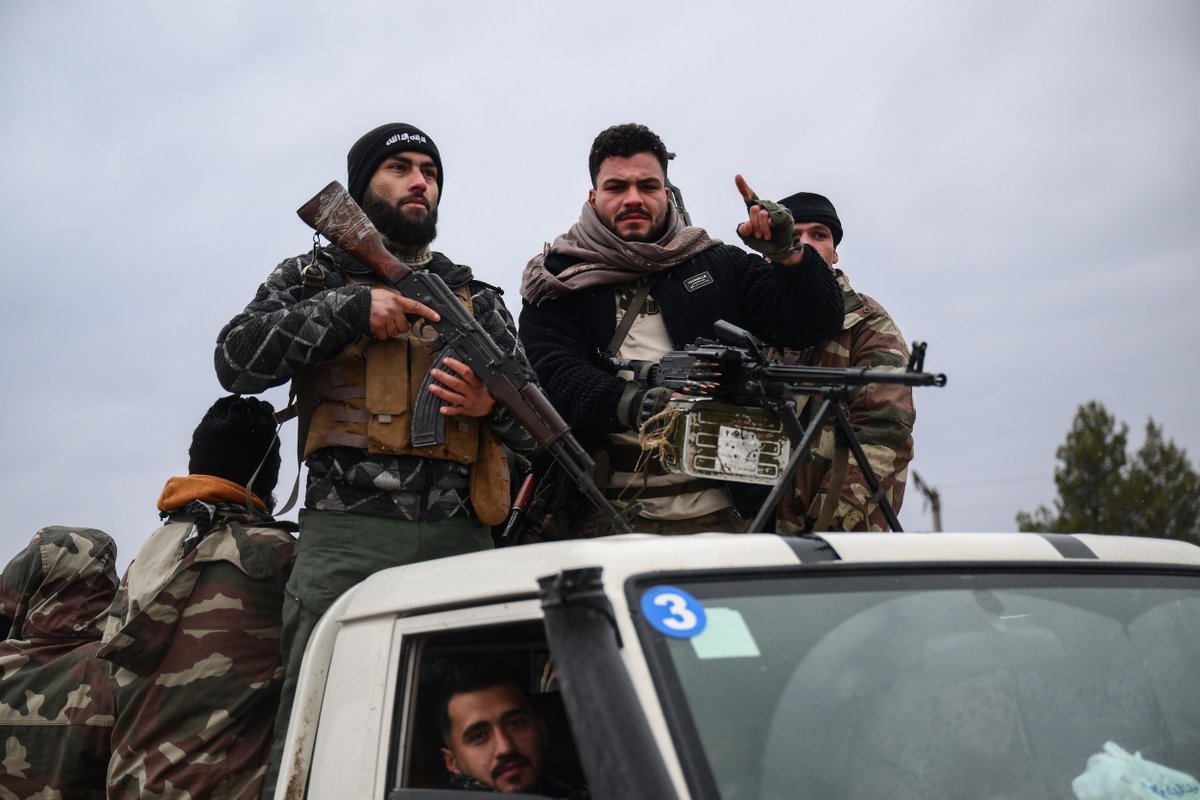
The Syrian army is continuing its westward pressure on SDF-held Tabqa, the last Kurdish-controlled pocket west of the Euphrates, after the SDF withdrew from the Deir Hafir–Maskanah salient in eastern Aleppo countryside under a pre-arranged agreement.
Damascus has declared Tabqa a closed military zone, though the SDF has not yet signaled any intention to withdraw. The Syrian army is framing its advance as part of “honoring publicly announced commitments”—but SDF commander Mazloum Abdi’s statement yesterday referred only to “contact lines east of Aleppo.” Tabqa lies in Raqqa governorate, not Aleppo, suggesting Damascus intends to carry its momentum forward regardless of the original terms.
The distinction matters. The Deir Hafir–Maskanah salient only fell under SDF control during the Assad regime’s collapse in November 2024. Tabqa, by contrast, has been in SDF hands since 2017, captured during the U.S.-backed campaign against ISIS—a far more significant position both strategically and symbolically.
For now, the SDF appears to be framing its withdrawals as goodwill gestures rather than components of a substantive deal, aimed at clearing the path to revive negotiations around the stalled March 10 agreement. There has been speculation that the SDF is pulling back from positions west of the Euphrates under a broader pre-agreed arrangement to consolidate in the east, but developments on the ground do not clearly support that reading.
Abdi in Erbil
On Wednesday, Abdi traveled to Erbil to meet Trump’s envoy Tom Barrack in an effort to break the deadlock. The meeting comes as the SDF faces pressure on multiple fronts.
Reuters reports that the Syrian army has quietly reinforced its positions near the Deir ez-Zor front, apparently preparing for another operation aimed at capturing the eastern part of the province—Syria’s most oil-rich area—which remains under SDF control. Separately, open-source footage shows Turkey and its Syrian proxy forces continuing to send reinforcements to the Tal Abyad–Ras al-Ayn pocket in the northeast, which remains under de facto Turkish occupation.

Murky U.S. Leverage
A Wall Street Journal report published Tuesday suggests U.S. officials lack full clarity on the scope of Syrian-Turkish military coordination. Washington has warned Damascus against a full-scale offensive and threatened to reimpose sanctions if President Ahmad al-Sharaa proceeds, while urging a return to negotiations.
But the Caesar Act lever has grown murky. Had Washington intended to maintain serious pressure, it would have made the sanctions repeal conditional—instead, the act was lifted unconditionally. The pressure Damascus now seeks to avoid is less about automatic secondary sanctions and more about political backlash in Washington, including congressional hearings and new legislation; targeted designations under other executive authorities; and the U.S. using its military and diplomatic weight to block any push that threatens the anti-ISIS mission or risks mass displacement.
It also remains unclear where Washington’s actual redline lies: a military campaign anywhere east of the Euphrates, or only an advance on the core areas of Hasakah province where ISIS detainees are held?
Slice, Pause, Talk
The picture that emerges is one of few firm agreements—only requests, goodwill gestures, and calibrated pressure. Damascus and Ankara appear to be pursuing an incremental approach: take a slice, pause, return to talks, repeat. It is a strategy designed to avoid triggering a sharp U.S. response while steadily shifting facts on the ground.
Damascus is also deploying tools beyond military force. Al-Sharaa’s recent decree recognizing Kurdish rights fits this broader effort—an attempt to weaken the political rationale for a separate SDF-administered region.
This is why Tabqa represents a critical juncture. If the SDF vacates without securing tangible gains in return, Damascus will likely read restraint as weakness and continue probing, turning limited advances into a rolling campaign that eventually presses deeper into the eastern Euphrates.
The problem for the SDF is that its strategy still appears heavily reliant on the United States—whose stance remains fluid and, at times, deliberately ambiguous.


