


Why Was KRG PM Masrour Barzani’s Office Targeted?
The attack on Masrour Barzani’s office on August 17th and a resting house belonging to one of the KDP’s key intelligence officials was likely connected to the ongoing Iraqi-Iranian negotiations over the Iranian Kurdish opposition groups. The reason becomes relatively straightforward when the attack is placed within the timeline of negotiations before it and the statements that followed.
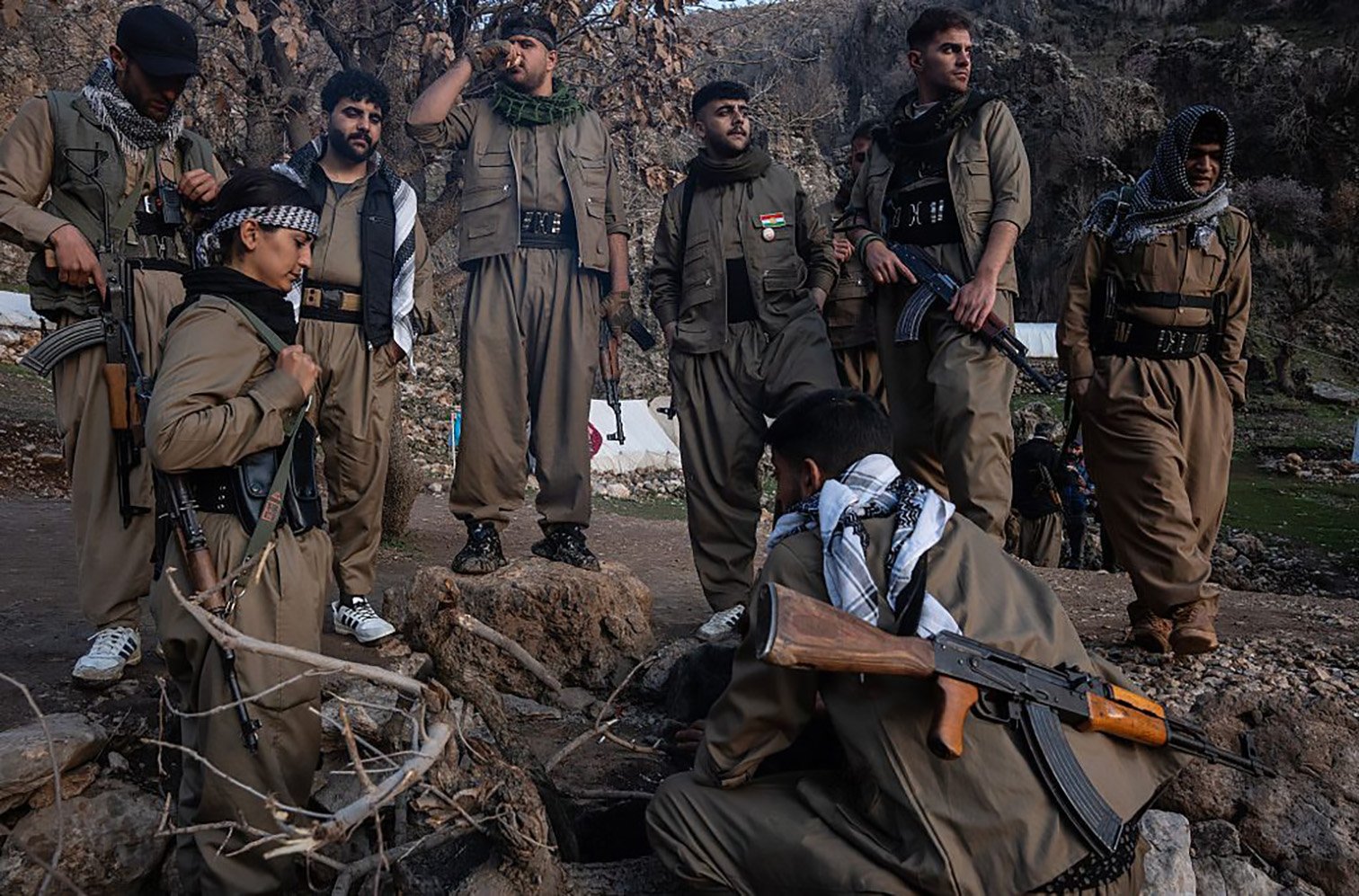
Since the middle of the Iran war, and more intensively since the ceasefire, Tehran has been pressing Baghdad and the Kurdistan Region for a new arrangement governing the Iranian Kurdish armed groups based in Iraqi Kurdistan. Iran increasingly appears to regard the 2023 Iraq-Iran security agreement as no longer sufficient. That agreement was intended to disarm the groups, move them away from Iran’s border and prevent them from using Iraqi territory for attacks. The war demonstrated, however, that several remained organised and capable of remobilising.
Tehran has therefore been pushing for a more far-reaching solution, including their removal from Iraq altogether to a non-neighbouring third country. On May 26, Al-Araby al-Jadeed reported, citing an official in Iraq’s National Security Advisory and a senior KDP politician, that Tehran considered the 2023 agreement no longer sufficient and was seeking the complete removal of the groups from Iraqi territory, similar to the earlier removal of the Mujahedin-e Khalq. The KDP source also said Iran had demanded the handover of named senior figures, which he said the Kurdish side would not accept.
The sequence that followed is worth setting out. On July 6, KRG Deputy Prime Minister Qubad Talabani was on an official visit to Albania, the country where the MEK was eventually resettled after leaving Iraq. On exactly the same day, Iraqi National Security Adviser Qasim al-Aboudi and a senior KRG delegation headed by Interior Minister Rebar Ahmed were meeting in Baghdad to discuss the Iran security agreement. That meeting dealt specifically with implementation, including the stages of the agreement and the next steps.
No evidence establishes that Qubad Talabani’s visit concerned the Iranian Kurdish groups, and his side subsequently denied such reports. The coincidence is notable, however, because third-country removal had already emerged as an Iranian demand more than a month earlier. Albania also provides an obvious precedent for precisely such an arrangement, having taken in an Iranian opposition organisation that was removed from Iraq and resettled at a distance from Iran.

The negotiations continued. On August 15, al-Aboudi travelled to Erbil at the head of a senior federal security delegation. He and Rebar Ahmed chaired another meeting of the committee responsible for implementing the Iraq-Iran security agreement, reviewing what had already been implemented and discussing the remaining security issues.
What was discussed behind closed doors is not public. Two nights later, at 00:28, drones targeted Masrour Barzani’s private office and a site associated with the leadership of Parastin, the KDP intelligence service. No casualties were reported.
The choice of targets is important. Masrour Barzani’s standing rests on more than the premiership, since his political rise came through the KDP intelligence establishment. He headed Parastin before becoming prime minister and remains enormously influential over the security network he previously commanded, while the institution is now headed by his brother Waisi Barzani. The second target therefore belonged to the same intelligence and security structure rather than to an unrelated KRG institution.
The manner of the attack points in the same direction. The targets were offices and security facilities struck at an hour when senior officials were unlikely to be present, rather than occupied family residences. The attackers nevertheless used relatively sophisticated Hadid-110 drones, which raised the probability that they would penetrate defences and reach their designated targets. The combination suggests an operation intended to demonstrate capability and deliver a serious warning while limiting the likelihood of casualties.
The subsequent comments of Rebar Ahmed make the negotiating context harder to ignore. Ahmed, a close confidant of Masrour Barzani, revealed on August 20 that the Iraqi and Kurdish sides had already prepared a working paper that was to be presented to Iran as part of the continuing negotiations. He said the planned meeting had been postponed because of the attack, and that the KRG would not participate in further meetings until the incident was clarified and assurances were provided that such attacks would not be repeated.
The attack therefore landed in the middle of an active negotiating process. Baghdad and Erbil had formulated a proposal, another meeting with Tehran was approaching, the implementation committee had met in Erbil on August 15, and two days later Masrour Barzani and Parastin were targeted. The KRG then suspended the next stage of the negotiations because of the strike.
What remains unclear is the precise point of disagreement, although there are indications that the KDP has resisted the most far-reaching versions of Tehran’s demands. The May 26 report itself quoted a senior KDP politician rejecting any handover of Iranian Kurdish opposition leaders to Iran, while confirming that Tehran was now demanding that the groups leave Iraq altogether. The dispute was therefore already visible months before the August attack.
One issue stands out. Unlike most of the other Iranian Kurdish opposition organisations, which retain a substantial degree of autonomy from the KRG parties, the Kurdistan Freedom Party (PAK) has over the years become deeply embedded in the KDP security environment. An Associated Press investigation found that PAK fighters operated under the wider umbrella of the KRG Ministry of Peshmerga Affairs during the war against ISIS and received Western military training alongside other Peshmerga forces.
PAK’s leadership has also operated from within the Erbil security environment rather than from one of the more remote opposition camps. The organisation has at the same time been among the most hawkish Iranian Kurdish groups toward Tehran, openly advocating military action against the Iranian government, appealing for outside support and declaring its readiness to take part in operations inside Iran during the war.
This creates an obvious source of friction. From Tehran’s perspective, PAK is difficult to portray as an autonomous organisation beyond KDP influence when its military history, leadership and physical presence have for years been intertwined with the KDP-controlled security environment. Removing such a group from Iraq altogether would require the KDP to give up a relationship and an armed asset it has maintained for years.
None of this establishes what precisely happened during the August 15 negotiations or proves that a dispute over PAK or third-country relocation directly triggered the August 17 attack. The broader sequence, however, is difficult to ignore. Iran concluded that the 2023 arrangement was no longer sufficient and began demanding the removal of the Iranian Kurdish groups from Iraq altogether. Several weeks later, Qubad Talabani visited Albania on exactly the same day that Baghdad and Erbil were discussing the next stages of the Iran security agreement. The negotiations continued into August, an Iraqi working paper was prepared for Tehran, and two days after another high-level meeting in Erbil, sophisticated drones targeted Masrour Barzani and the KDP intelligence apparatus most closely associated with him.
The most plausible inference from that sequence is that the attack was connected to the negotiations and intended to pressure the KDP security leadership over the future of the Iranian Kurdish groups. What remains unknown is not whether this file was relevant, but which part of the emerging settlement Tehran believed the KDP was resisting.


