


What Turkey’s Religious Communities Reveal About Its Regional Cultures
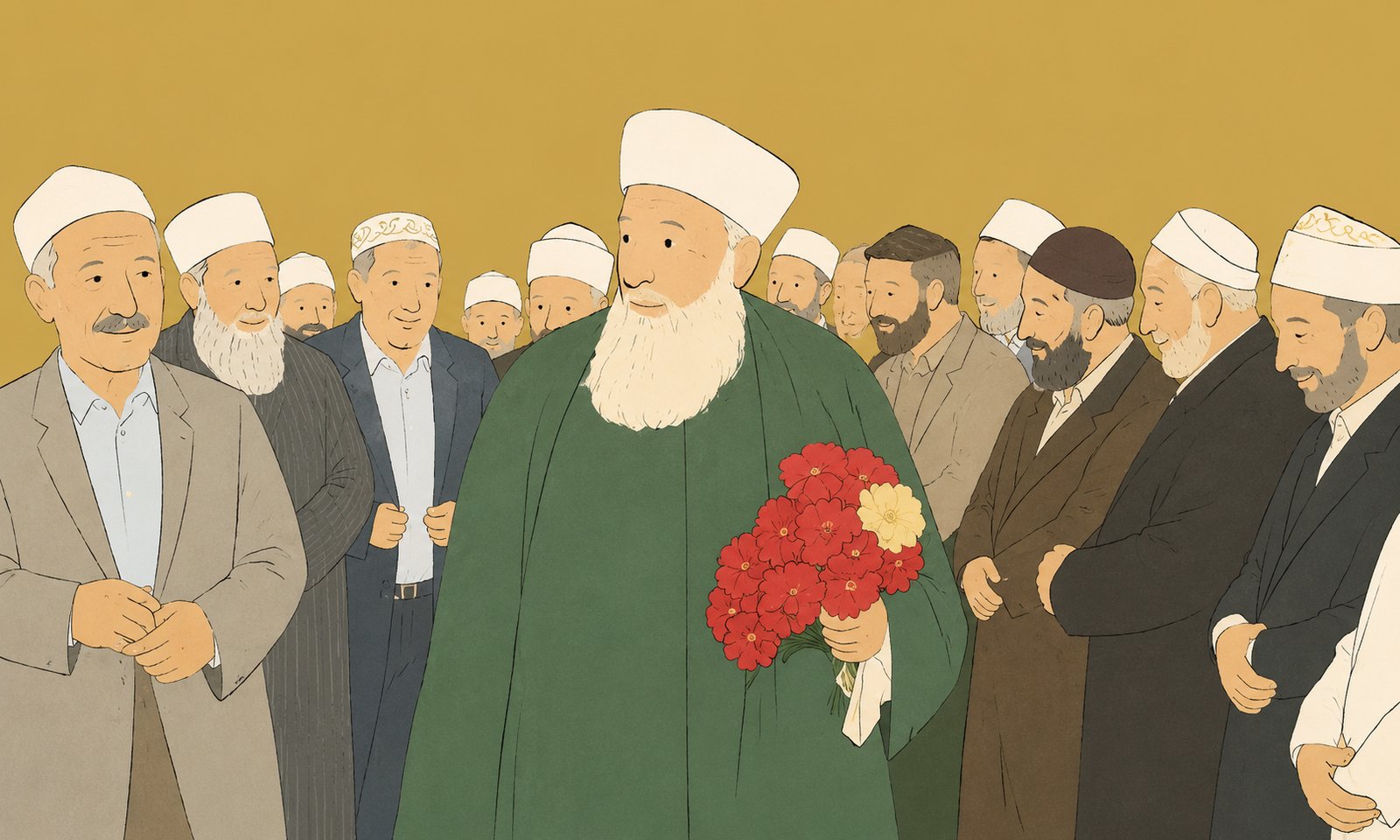
Turkey’s latest operation against the Suleymancilar religious community has reopened a question that has existed since the breakdown of the alliance between the AKP and the Gulen movement: what determines which religious networks the state accommodates, which it incorporates and which it eventually moves against?
On 13 August, Ankara prosecutors issued detention orders for 49 people in an investigation centred on Alihan Kuris, the leader of the Suleymancilar since 2016. Thirty were initially detained, including Kuris, with the number subsequently rising. Searches and seizures were ordered at 123 addresses across 17 provinces, including 80 locations belonging to 32 companies. Prosecutors cited allegations including forming and managing a criminal organisation, money laundering, fraud against public institutions and tax offences. MASAK financial investigations are examining more than TL100 billion, roughly two billion dollars, in alleged transfers abroad, while trustees were appointed to companies and assets considered connected to suspected money laundering. The allegations have not been adjudicated, and the government has explicitly said that the investigation concerns an alleged financial and criminal structure rather than the religious activities of the Suleymanci community itself. Few in Turkey read it that narrowly: pro-government commentators had been signalling for over a year that, after the Gulen movement, “it’s the Suleymancilar’s turn.”
The scale of the operation is significant because the Suleymancilar are not a marginal religious group. They belong to a small group of large Sunni religious networks that have maintained their own leadership structures, educational institutions, financial resources and social constituencies outside the formal state.
These groups are usually described according to theology: Naqshbandi, Khalidi, Mujaddidi, tariqa, cemaat. Those categories matter, but they do not fully explain why organisations that share much of the same Sunni religious framework operate so differently. Another way of understanding them is through their regional genealogies.
Turkey’s main cemaats emerged from different regional cultures of Sunni conservatism. Those environments shaped how authority was organised, how followers were recruited, how money was accumulated and how each community interacted with political power. Over time, those practices hardened into different organisational systems.
Four networks provide the clearest contemporary cases: the Suleymancilar, Menzil, Ismailaga and Erenkoy. They correspond, approximately, to four different regional-cultural pathways: the Ottoman Balkan and western institutional tradition, the Kurdish southeast, the eastern Black Sea and the Cilician-eastern Mediterranean commercial world.
This is an analytical framework rather than a claim that geography mechanically determines religious organisation. All four later expanded far beyond their places of origin and acquired followers from different ethnic and regional backgrounds. The argument concerns institutional genealogy: the social environment in which the founding leadership was formed helped determine what kind of organisation it subsequently built.
The same regional cultures, it is worth noting, left their sediment in Turkey’s secular politics through entirely separate channels. The CHP grew historically out of the western, Balkan-inflected Turkey of administrators and institution-builders, later fusing with Alevi communities and other constituencies that had their own reasons to prefer a secular state. The AKP under Recep Tayyip Erdogan, whose family comes from Rize, has drawn heavily on the dense mosque-and-neighbourhood conservatism of the eastern Black Sea and its vast migrant population in Istanbul. The DEM Party is rooted in the distinct political culture of the Kurdish southeast. This is emphatically not a claim that any party resembles any cemaat: the DEM Party does not mirror Menzil, and the CHP is not a secular Suleymancilar. The point is that regional culture is the underlying variable, and religious communities and political parties are separate expressions of it, formed in parallel. The cemaats simply display the pattern more legibly, because they are closed, self-reproducing systems that have preserved their founding cultures with unusual fidelity.
1. Suleymancilar: the Balkan institutional model
The Suleymanci movement originates with Suleyman Hilmi Tunahan, born in 1888 in Ferhatlar, near Razgrad, in the Silistre region of the Ottoman Balkans, now Bulgaria. His father was a medrese teacher. Tunahan later moved to Istanbul and passed through the late Ottoman higher religious education system, eventually receiving the qualification of an Istanbul muderris. He belonged to the Naqshbandi-Mujaddidi tradition, a lineage detail worth pausing on: the other three communities examined here are all Naqshbandi-Khalidi, and the one community whose doctrinal branch differs is also the one whose organisational and political behaviour diverges most sharply from the rest.
That biography helps explain the institutional form his movement assumed after the Ottoman religious establishment was dismantled by the republic. The Muslim world of the Ottoman Balkans and western Anatolia was institutional rather than charismatic: religion lived in schools, medreses and town mosques, administered by trained personnel, rather than in tribal sheikhdoms or saintly lineages. When the republic closed the old religious schools, Tunahan’s response was characteristically institutional. He organised teaching circles and, after restrictions loosened following the Democrat Party’s victory in 1950, expanded Quran courses and boarding education. His students were sent to other parts of the country to establish further courses and train another generation of religious personnel.
Its basic organisational unit therefore became the course and the dormitory. The movement reproduced itself through a sequence of student, teacher, administrator and institution. Unlike a classical rural tariqa centred physically on a sheikh’s dergah, the Suleymanci model could be replicated wherever accommodation, teachers and students were available.
That portability also explains its later strength in western Europe, because the model requires no sacred village and no hereditary sheikh, only a building, a teacher and students. Germany’s VIKZ, the community’s principal European vehicle, today describes roughly 300 local mosque and education associations organised into state federations, its own imam training conducted in Germany since the 1980s, and student residences at more than 20 university locations. The same structure was reproduced in Austria, the Netherlands and elsewhere without requiring followers to remain geographically connected to a single centre.
The result was a relatively centralised and bureaucratic religious network with substantial physical assets and a strong educational and diaspora infrastructure. The present investigation itself demonstrates the size of the economic environment surrounding the current leadership: prosecutors say they identified dozens of companies and a large volume of financial transactions connected to those under investigation. Those claims do not establish that the broader religious community is a criminal organisation, but they demonstrate the institutional scale that investigators are examining.
Politically, the Suleymancilar also developed differently from most of Turkey’s later Islamist movements. Their historical preference was generally the conventional centre right rather than Necmettin Erbakan’s Milli Gorus tradition: they moved through the Democrat Party, the Justice Party, the DYP and similar political environments, on an implicit bargain of religious freedom and institutional autonomy in exchange for loyalty to the state. They never sought to capture the republic, only to be left alone by it. By 2018, the leadership was widely reported to have backed Meral Aksener and the IYI Party, and the journalist Rusen Cakir argued at the time that this political independence, combined with the movement’s relatively closed structure, could expose it to increasing pressure from the government. The distance subsequently widened, with reporting describing support for opposition candidates against the AKP in the 2023 general election and 2024 local elections.
The Suleymanci model can therefore be reduced to three characteristics: centralised leadership, educational institutions and organisational autonomy. The first two made it powerful. As will become clear, all three together made it vulnerable.
2. Menzil: the Kurdish southeast and the sheikh-family model
Menzil emerged from a different social environment. The Erol family that established the movement came from Siirt and is of Kurdish origin. The organisation became centred in Menzil village in Adiyaman, from which it took its name, and belongs to the Naqshbandi-Khalidi tradition.
Its basic institution was not the dormitory but the dergah. Authority was organised around a sheikh, his religious lineage, his family and a physical centre to which followers travelled. Menzil village remained central even after the movement developed branches, companies and institutions throughout Turkey and Europe: followers travelled there to see the sheikh, declare allegiance and participate in the movement’s religious practices.
That structure reflects the historical importance of sheikh families and religious lineages in the Kurdish southeast. This did not make Menzil a Kurdish nationalist movement. Its following became nationwide, and the leadership integrated closely with Turkish conservative and state-oriented politics, a trajectory that demonstrates how powerfully shared Sunni identity and state accommodation can override ethnic mobilisation. Its Kurdish genealogy instead matters for understanding the type of religious authority around which the institution was constructed.
Menzil subsequently built an extensive economic and social infrastructure around that core. Reporting has documented companies in healthcare, tourism, food, media, publishing and other sectors, alongside the Semerkand publishing and broadcasting network, student accommodation and charities. It also developed a reported bureaucratic presence, particularly in the Health Ministry, with additional claims of networks elsewhere in the state. The extent of those bureaucratic links is difficult to quantify because there is no official membership record, and such claims rest largely on journalistic and insider accounts rather than transparent data.
Its political relationship also followed a different trajectory from the Suleymancilar. Menzil developed links with nationalist-conservative circles, including figures from the Ulkucu and BBP environments, and later supported Erdogan and the governing People’s Alliance. Reporting has also described connections between Menzil-linked figures and parts of the MHP-associated state network.
The principal weakness of this organisational model became visible after Abdulbaki Erol died in 2023. Authority had remained embedded in the sheikh family, and when no single son became universally accepted as the successor, the movement divided among competing family branches, with even Menzil village itself split between them. A succession crisis of this kind is structurally impossible in the Suleymanci system, where the organisation owns the movement; in Menzil the lineage is the movement, so the family’s quarrels become the organisation’s schisms.
Menzil’s system is therefore based on a different sequence: sheikh, family, dergah, murid, and only then institutional and commercial expansion.
3. Ismailaga: the Black Sea hoca and medrese model
Ismailaga represents a third regional genealogy. Its central figure, Mahmut Ustaosmanoglu, was born in Of, in Trabzon province, a district with one of the densest traditions of Quran teaching and village religious scholarship anywhere in Turkey. He later became imam of the Ismailaga Mosque in Fatih, Istanbul, where the movement developed its institutional centre. Ismailaga belongs to the Naqshbandi-Khalidi tradition.
Its social genealogy connects the eastern Black Sea to Istanbul. Of and the surrounding districts had a strong tradition of village religious teachers, Quran instruction and informal medrese education, and large-scale Black Sea migration into Istanbul transported those social networks into the city. Ismailaga is essentially that world’s transplantation into Fatih, and it built an institutional system around the hoca and the medrese rather than the Suleymanci dormitory bureaucracy or the Menzil sheikh-family village.
Its central complex in Fatih includes medrese education, boarding facilities and advanced religious instruction, and its wider network reproduces religious teachers who can establish teaching circles and local communities elsewhere. The community’s own account of its activities describes a tiered training system running from local medreses through advanced and specialist programmes, alongside a fiqh council whose consultation service answers, by the community’s figures, well over a hundred thousand religious queries a year. That is a production line for religious authority rather than for corporate assets.
This creates a more distributed form of power. The overall sheikh remains important, but senior hocas can acquire their own constituencies because the medrese system continually produces recognised religious personalities. Cubbeli Ahmet, or Ahmet Mahmut Unlu, is one example of that process: formed inside the Ismailaga environment, he eventually developed public religious authority independent of the current institutional leadership.
This also helps explain Ismailaga’s political relationship with Erdogan. The relationship cannot be reduced to common regional origins, but the shared eastern Black Sea social background is relevant: Ustaosmanoglu came from Of, while Erdogan’s family comes from neighbouring Rize, and both emerged through networks produced by Black Sea migration into Istanbul’s conservative neighbourhoods, one of the social foundations of the AKP’s mass politics. The alignment is also institutional: Ismailaga has repeatedly supported the AKP and Erdogan, and Erdogan has maintained direct relations with its senior religious leadership.
Its main form of power is therefore not primarily corporate assets or control of a single family centre. It lies in religious personnel and grassroots social authority: hocas, medreses, mosques, preaching networks and the regulation of conservative everyday religious practice.
4. Erenkoy: the Cilician-eastern Mediterranean merchant model
Erenkoy completes the four-pole framework. Its founding figure, Mahmud Sami Ramazanoglu, was born in Adana into the Ramazanoglu family, one of the region’s historic notable houses. He later studied law in Istanbul and worked in commercial accounting while continuing his religious activities, eventually becoming associated with the Erenkoy area of Istanbul, from which the community takes its common name.
Adana and the wider Cukurova belong to a different historical geography from the Black Sea or the Kurdish southeast. The area forms the northern part of the eastern Mediterranean system connecting Cilicia, the Gulf of Iskenderun, Hatay and northern Syria, and its long-term social history has been structured around agriculture, trade, merchant families and regional notables. The relevance here is not a claim of direct cultural continuity from one ancient society to a modern cemaat. It is that a geography repeatedly organised around commerce, exchange and regional brokerage can produce durable forms of social organisation centred on merchants, notable families and private patronage.
Erenkoy developed in precisely that direction. Under Ramazanoglu and his successors, the movement attracted educated urban followers and wealthy businesspeople, and it institutionalised through the Aziz Mahmud Hudayi Foundation, Altinoluk magazine, Erkam publishing, educational activities, scholarships, dormitories and Quran schools. The Topbas family became particularly important within this environment: members of the family have been major commercial figures, while Osman Nuri Topbas became the network’s central religious personality, and reporting on the group has consequently characterised commerce as one of its defining social sectors.
Its international footprint is now substantial. The Hudayi Foundation describes activity in dozens of countries across the Balkans, Africa, Central Asia and the Middle East, running schools, orphanages and charitable programmes, and holds public-benefit status in Turkey, a signal of how establishment-compatible its institutional style is. Recent critical reporting counts an expanding network of educational institutions abroad stretching back to the 1990s.
Its institutional mechanism is different from the first three. Erenkoy converts private commercial wealth into foundations, publishing, education, charitable activity and professional networks. Its structure is less dependent on mass mobilisation around a single village than Menzil, less focused on producing medrese hocas than Ismailaga and less reliant on a centrally administered dormitory system than the Suleymancilar. Its power is concentrated in business, philanthropy, education and elite social networks, and it needs neither crowds nor confrontation.
Why the state operation falls differently on the Suleymancilar?
The current operation shows why organisational form matters to the state. A Suleymanci network built around administrators, dormitories, companies, property and financial structures is comparatively legible to a modern bureaucracy. Prosecutors can identify legal persons, bank accounts, shareholders, company transfers and physical addresses. They can freeze assets, appoint trustees, search offices and reconstruct money flows. That is exactly how the current case has been structured: the Ankara investigation focuses heavily on companies, transactions and alleged financial offences, and 80 of the 123 searched addresses belonged to companies.
The same tools would interact differently with the other movements. Menzil’s authority historically begins with allegiance to a sheikh family and a religious centre, even though substantial companies were later constructed around it. Ismailaga’s influence is dispersed through medreses, hoca networks and religious relationships that cannot be reduced to one corporate balance sheet. Erenkoy has major commercial and foundation networks, but its political relationship with the governing establishment has generally been more cooperative, even when disputes have occurred: it publicly supported Erdogan in 2018, and senior figures in its commercial milieu have had longstanding personal relationships with him.
The Suleymancilar combined institutional concentration with political autonomy, and that combination is the heart of the matter. That distinction had already been identified in 2018, when, after operations against the Gulen movement, Furkan Vakfi and Adnan Oktar, Rusen Cakir examined which religious organisations might face pressure next. He differentiated Yeni Asya, whose public and transparent structure he considered relatively difficult to target, from the Suleymancilar, whose closed organisation and reported IYI Party support made them more vulnerable to government restrictions. Eight years later the legal accusations are different and must be assessed on their own evidence, but the organisational vulnerability he identified remains relevant, and Cakir himself now argues that if an operation of this scale can be mounted against a century-old movement over financial flows, every cemaat has become a potential target.
It is also no accident that the two communities Turkey has moved against with full prosecutorial force, the Gulenists and now the Suleymancilar, were the two most bureaucratically organised, the two least dependent on a hereditary religious family, and the two least integrated into the governing coalition.
Regional culture and selective state tolerance
Turkey’s major cemaats are therefore difficult to understand as interchangeable religious groups competing for the same followers. They represent different methods of organising conservative Sunni society. The Suleymancilar transformed a Balkan-Ottoman religious educational tradition into a centralised network of courses, dormitories and administrators. Menzil transformed the Kurdish southeastern sheikh-family tradition into a nationwide murid network surrounded by companies, charities and state connections. Ismailaga transferred the eastern Black Sea hoca and medrese tradition into Istanbul and built power by reproducing religious personnel and conservative local communities. Erenkoy transformed a Cilician-eastern Mediterranean merchant and notable environment into a network built around business families, foundations, philanthropy, publishing and education.
Read together, the four communities amount to a cultural atlas of Anatolia and its Ottoman hinterland, and the same regions, through separate secular channels, shaped the party system as well: the CHP’s institutionalist inheritance, the AKP’s Black Sea texture, the DEM Party’s southeastern base. The religious and political maps overlap not because one produced the other but because both were drawn from the same underlying regional geography.
The state, meanwhile, is not simply tolerant of large cemaats and hostile to small ones, nor does it act against every network that retains institutional independence. The relationship depends partly on what kind of power a network possesses and partly on how that network positions itself politically. Menzil accumulated bureaucratic and commercial influence while maintaining cooperation with the governing conservative coalition. Ismailaga developed direct access to Erdogan while retaining considerable religious autonomy. Erenkoy maintained an independent commercial and philanthropic infrastructure while generally remaining inside the conservative establishment. The Suleymancilar retained a large, centralised institutional system while repeatedly taking political positions outside Erdogan’s coalition.
The current investigation is formally a criminal and financial case, and its allegations remain to be tested through the judicial process. But as a question of political sociology, it demonstrates why the institutional structure of a cemaat matters. Different regional cultures produced different organisational systems, and those systems determine both the forms of power each community can exercise and the points at which the Turkish state can intervene. The state, in this reading, is not moving against conservatism. It is moving against one regional culture’s way of organising it.


