


How the alleged Kataib Hezbollah oil-smuggling operation in Jurf al-Sakhar works
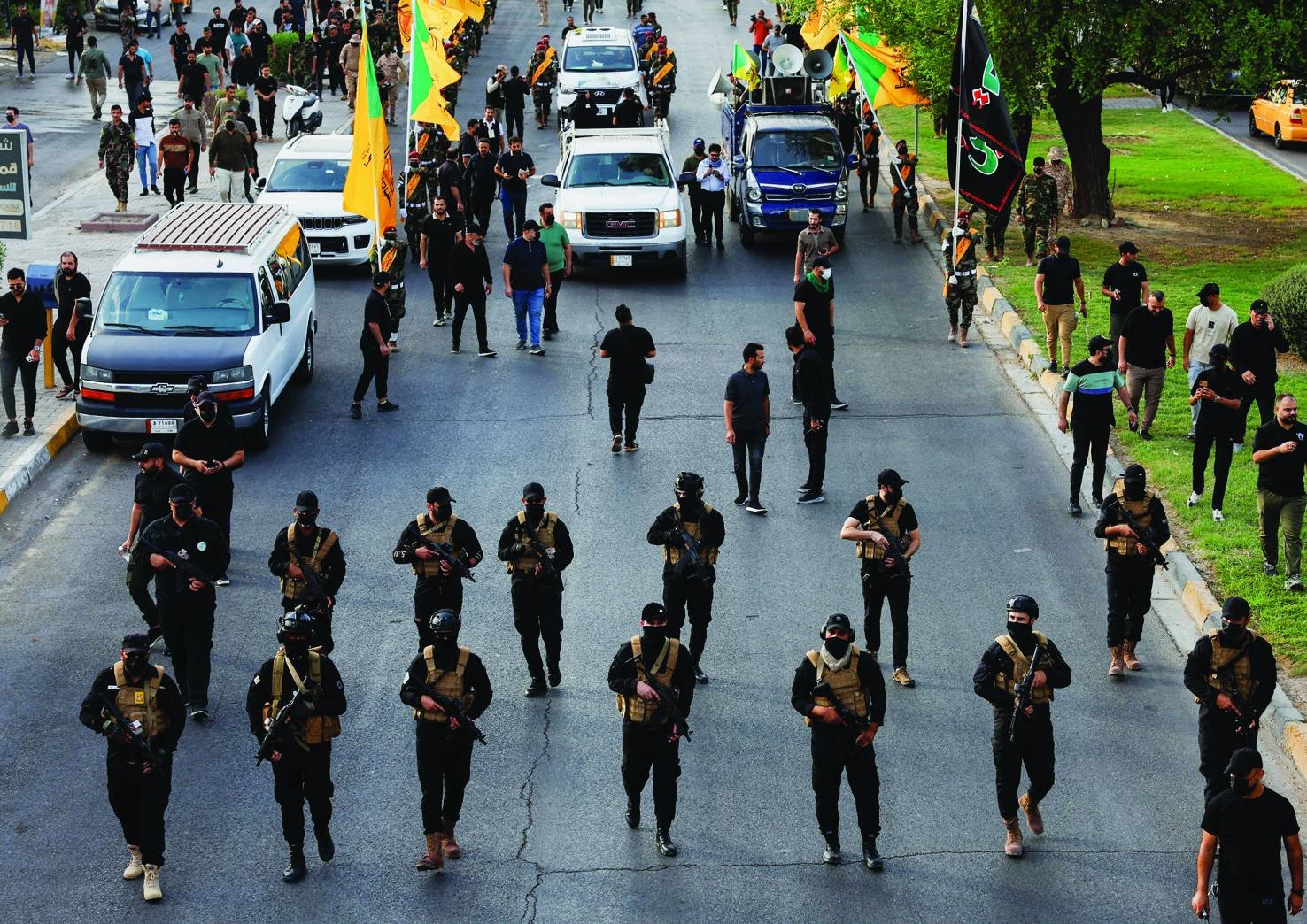
Iraqi intelligence reports and a government investigation have revealed details of an alleged large-scale oil-smuggling network inside Jurf al-Sakhar, a closed area in Babil province southwest of Baghdad. Kataib Hezbollah, an Iran-backed armed faction within the Popular Mobilisation Forces (PMF), has controlled the area since Iraqi forces and allied militias recaptured it from ISIS in October 2014. Most of the original residents have been prevented from returning, and government institutions have had little access.
A leaked 19-page report by Iraq’s Federal Intelligence and Investigations Agency, now widely covered in Iraqi media, dates the operation to at least 2021. It attributes the operation’s persistence to protection from the faction that controls the area.
How the operation reportedly works: The alleged operation begins with the diversion of petroleum from underground pipelines. Government spokesman Haider al-Abboudi confirmed on November 16 that three branches of the Basra–Haditha pipeline system cross Jurf al-Sakhar. Two run to Baghdad’s Dora refinery and one to the nearby Musayyib refinery. Investigators reportedly found evidence of interference with one branch but have not said which.
The petroleum is then stored at several sites inside the area. Satellite imagery examined by Iraqi intelligence between 2021 and July 2026 shows undeveloped land turned into installations with storage structures, underground pits, covered facilities and tanker-loading areas, some hidden under metal roofing or among palm groves. Al-Abboudi said investigators examined six sites and found two refineries, which suggests at least some of the petroleum is processed locally. The intelligence report could not establish whether the tankers carried crude or refined products, so the network may both resell stolen crude and process it into fuel.
Al-Mada and Ultra Iraq name several of the sites, including former military-industrial facilities from Saddam Hussein’s rule. Among them is the Al-Hakam complex, built in the 1980s for biological weapons production, where the group has reportedly dug tunnels and built fortifications. The others include Project 190, formerly the Ibn al-Atheer installation; the al-Baj fuel station on the desert road towards the Fadhiliya bridge; and an area in northern al-Baj on the pipeline route through Bahbahan. Al-Mada also reports tankers hidden under palm trees near al-Hamiya, close to the Sayyid Mashyuh cemetery.
The petroleum is reportedly loaded into tankers that hold about 36,000 litres each. The report documented repeated tanker movements over five years, including 21 tankers at one loading site on a single day in October 2022. On November 16, Ali Nuhair, a member of parliament’s Security and Defence Committee, said 15 to 25 tankers leave the area daily, citing video and thermal-camera footage. At full loads, that would be roughly 540,000 to 900,000 litres, or 3,400 to 5,700 barrels, a day. That figure has not been independently verified.
The report identifies three possible routes into Baghdad province. One runs east through Musayyib and two run through Anbar via Amiriyat al-Fallujah and Fallujah. On these routes the tankers may blend into ordinary fuel traffic. The routes remain intelligence assessments, and no full smuggling journey has been independently documented.

The government’s response: On November 12, Prime Minister Ali al-Zaidi formed an investigative committee chaired by the PMF’s director general of discipline and security. It entered Jurf al-Sakhar the next day, but only on Kataib Hezbollah’s terms. According to Al-Mada, the group forced the chair to be replaced with a figure close to the factions, and its social media accounts described the committee members as “guests.” The committee also stayed away from sites believed to house detention facilities, training camps and drone factories.
On November 14, after the committee confirmed the intelligence findings, al-Zaidi dismissed nine officials in Babil. They included the provincial police chief, the local intelligence and national security heads, the PMF commander, the commander of the Energy Police’s 6th Brigade and the director of the Oil Ministry’s pipelines company. None of the measures targeted Kataib Hezbollah, even though PMF Brigades 45 and 46, which are linked to the group, are at the centre of the dispute. Al-Abboudi has since accused the group directly.
According to leaks reported by Al-Mada, al-Zaidi has given the group until November 20 to leave Jurf al-Sakhar or face force. There is no sign yet that he has political backing for this from the Coordination Framework, the ruling alliance of Shia parties.
Kataib Hezbollah denies the accusations. It says the installations were used to improve fuel for its own vehicles and equipment, and that the allegations are part of an effort to force it to give up its “resistance weapons.” Talks within the Coordination Framework on the future of faction weapons have stalled. During earlier negotiations, the group reportedly sought senior posts, including the intelligence service and the Border Ports Authority.
Officials say the smuggling has been confirmed, but the full findings and the evidence linking facilities, shipments and buyers have not been released. The allegations show how an armed faction’s territorial control may enable economic activity that federal institutions struggle to inspect or dismantle. They have turned the dispute between Baghdad and Kataib Hezbollah into a direct confrontation over control of Jurf al-Sakhar itself.


