


Why Iraq’s Shiite Factions May Be Willing to Sacrifice Militia Power to Preserve the State
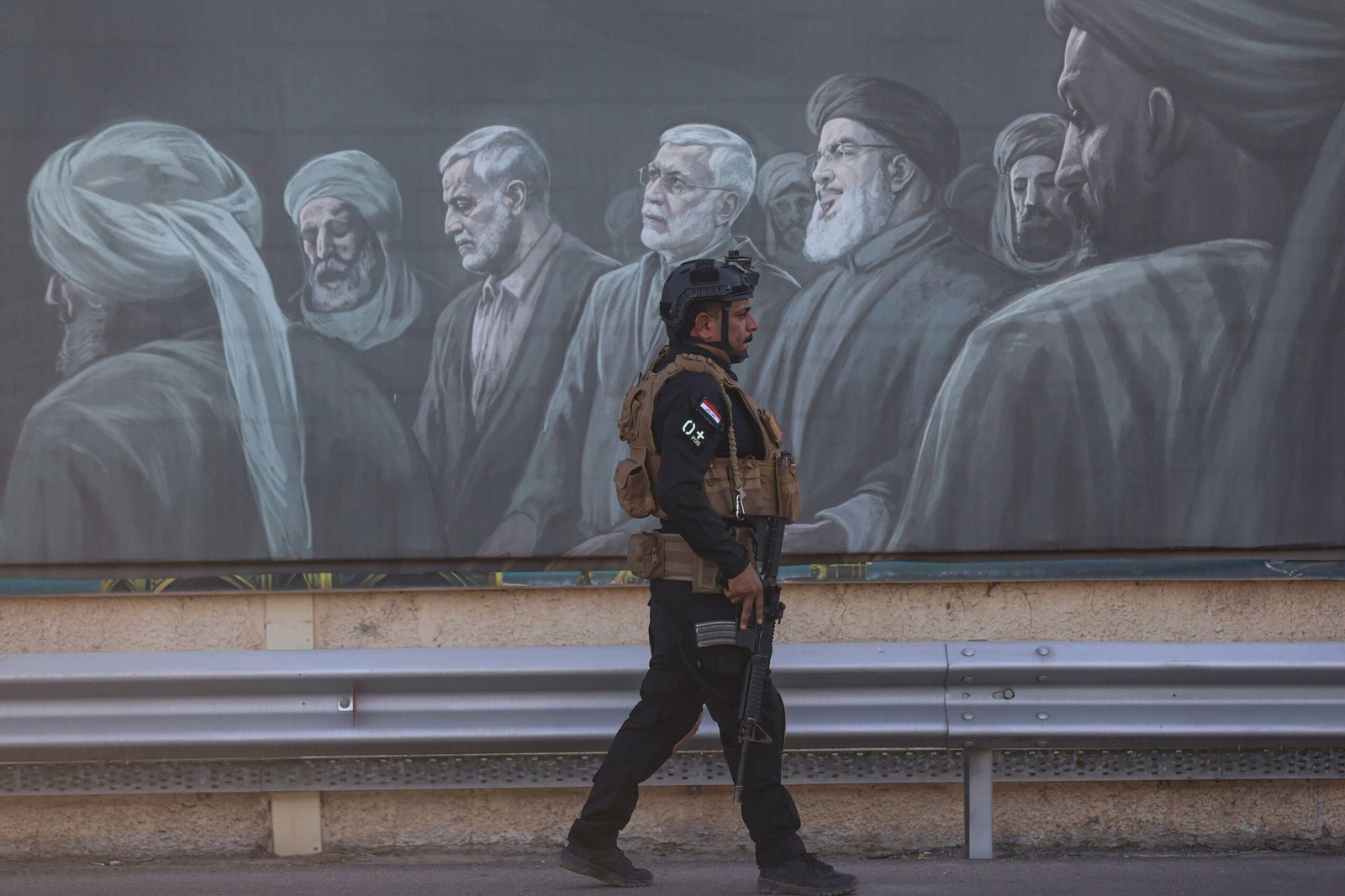
The confrontation between Iraq’s government and Kataib Hezbollah, the Iran-backed armed faction that has controlled Jurf al-Sakhar in northern Babil province since 2014, offers a revealing glimpse into a much larger strategic debate taking place within Iraq’s Shiite political establishment and, crucially, in Iran itself.
After days of threats and military deployments around the district ahead of a 20 November deadline set by Prime Minister Ali al-Zaidi, an agreement was reported on 19 November under which Kataib Hezbollah would relinquish control of Jurf al-Sakhar to Iraqi government forces and relocate its fighters elsewhere. The agreement followed mediation involving senior Shiite figures and Esmail Qaani, commander of the Islamic Revolutionary Guard Corps’ Quds Force.
Although the confrontation appeared dramatic, its resolution illustrates a wider calculation increasingly evident among influential Shiite actors: giving up some power today may be necessary to preserve, and potentially strengthen, their collective position tomorrow.
The debate concerns how best to preserve the political order that emerged in Iraq after 2003, in which Shiite parties became dominant, while safeguarding Iran’s strategic position amid the enormous regional pressures unleashed since October 7, 2023, and intensified by the 2026 Iran war. Both sides of it remain closely tied to Tehran.
The fundamental question is whether independent armed factions, once essential to projecting Iranian influence, have increasingly become a liability to the very political order they were established to protect.
During the Iran war, conversations with figures from Asaib Ahl al-Haq, the faction led by Qais al-Khazali, and the Badr Organisation, led by Hadi al-Amiri, revealed a deliberate strategic calculation. Their argument, which kept Iraq firmly within the resistance camp, was that an internationally recognised, economically functioning and militarily capable Iraqi state, governed by political forces with close ties to Tehran, could be considerably more valuable to Iran than a collection of independent armed groups capable of launching missiles and drones.
Their reasoning is straightforward. Militia attacks can expose Iraq to American retaliation, sanctions and diplomatic isolation, weakening the state, damaging an open economy from which Iran itself benefits, and potentially threatening the Shiite political establishment itself. A weakened Iraq, in turn, becomes less capable of protecting interests that Baghdad and Tehran regard as strategically important.
The Kurdistan Region illustrates this reasoning most clearly. During the 2026 war, Iranian Kurdish opposition organisations based in the region explored the possibility of launching cross-border operations against Iran, reportedly with American support. Although the KRG denied involvement, the possibility of opening a ground front against Iran exposed a vulnerability that Iraqi Shiite leaders had long considered significant.
Their calculation is that a stronger Baghdad, enjoying greater international legitimacy and possessing more effective security institutions, would be better positioned to exercise federal authority over Iraq’s borders and prevent its territory from being used for attacks against neighbouring states.
From Tehran’s perspective, preventing a potentially serious ground threat from Iraqi territory could be strategically more consequential than the limited military contribution of individual Iraqi militias during a regional war.
This also explains why some Shiite factions connect the question of militia integration to the wider struggle over federal authority, border security and Baghdad’s relationship with Erbil, which they see as able to pursue its own contacts with Washington and Israel while the federal government remains weak. The aim, from their perspective, is to give the state the capacity to enforce policies they believe protect both Iraqi and Iranian interests.
There is an important institutional dimension to this calculation. Integrating militia personnel into the regular security establishment does not necessarily eliminate their political or ideological loyalties. Badr’s decades-long influence within Iraq’s Interior Ministry, including the Federal Police, offers a historical example of how an armed organisation can exchange formal autonomy for enduring influence within the state. Absorbing militia personnel into security forces whose ranks are already predominantly Shiite would also deepen the weight of factions close to Tehran inside them.
For these factions, therefore, surrendering independent military structures may not amount to surrendering power. It may represent the conversion of factional military influence into institutional power, backed by the resources, legal authority and international recognition of the Iraqi government.
Tehran appears to share this thinking. There are good reasons to believe that important Iranian decision-makers regard it as serving their own strategic objectives, even as they keep their position deliberately ambiguous.
In a 2023 meeting reported at the time, Asaib leader Qais al-Khazali asked Iran’s then-supreme leader Ali Khamenei whether the priority should be building the Iraqi state or preserving the resistance. Khamenei avoided giving a definitive answer, while stressing Iraqi national interests, Shiite unity and the importance of respecting Najaf’s religious authority.
That ambiguity reflects Iran’s actual policy. It allows Tehran to support the strengthening of the state while leaving allied factions room to manoeuvre and keeping Washington uncertain about how far its demands are being met. Iran’s relationships with Iraqi Shiite factions have never been adequately explained by a simple patron-client model in which Tehran issues instructions and local actors merely implement them.
These relationships are deeply rooted in religious solidarity, decades of political cooperation, personal networks, shared experiences of persecution and exile, and reciprocal obligations. Iraqi factions possess considerable agency and pursue their own organisational interests. Tehran has generally tolerated such differences, partly because factional competition is a familiar feature of Iran’s own political system, intervening more directly when disputes threaten broader strategic interests.
The influence exercised by Qassem Soleimani, the Quds Force commander killed in a US strike in Baghdad in 2020, exemplified this system. His relationships with Iraqi Kurdish and Shiite leaders were not based exclusively on formal command structures but also on trust, personal obligations and an ability to negotiate among competing centres of power.
This helps explain why disagreements between Iraqi Shiite factions do not automatically represent strategic ruptures. Competition over ministries, economic resources, military positions and territorial control can be genuine, even intense, without undermining their shared commitment to preserving the wider political order. Even armed infighting between factions would not, in this reading, pose an existential threat to that order.
There is also a religious and historical dimension that purely geopolitical interpretations often overlook.
For many influential Iraqi Shiite leaders, Iran is not simply a neighbouring state or an external sponsor. Their political identities were shaped by Saddam Hussein’s persecution of Shiites, years of exile in Iran, the post-2003 sectarian conflicts and the existential threat posed by ISIS. They view the security of Iraq’s Shiite political establishment and the survival of Iran’s Islamic Republic as deeply interconnected, notwithstanding important differences between Najaf and Tehran.
The potential collapse of Iran’s political system is therefore perceived by some as a profound threat to the wider regional environment in which Shiite political power has developed, with consequences reaching well beyond geopolitics. For the same reason, the Saddam-era assumption that Tehran would fear a strong Iraq as a rival does little to explain how Iranian and Iraqi Shiite leaders now think about each other, particularly while the survival of the Islamic Republic is at stake.
Against that background, preserving a stable Iraqi state can itself become a form of strategic resistance.
In the Jurf al-Sakhar confrontation, Kataib Hezbollah defended its territorial and military interests, while other senior Shiite figures sought an accommodation that would avoid armed confrontation with the government. Iran’s intervention helped facilitate an agreement that could reduce Kataib Hezbollah’s independent territorial control without requiring the organisation to abandon its broader political identity or military capabilities.
The public escalation may also have served a bargaining purpose, making a limited concession appear more substantial while allowing Baghdad to demonstrate progress toward restoring state authority. Some of the disagreement was genuine, and genuine factional disputes can be politically amplified and subsequently contained through higher-level mediation.
The wider strategy is not without contradictions. Formally integrating armed organisations does not guarantee that their independent command structures disappear. Nor is strengthening Shiite factional influence within government necessarily equivalent to building an effective and impartial Iraqi state. Attempts to assert federal authority must also contend with the Kurdistan Region’s constitutional rights and Iraq’s wider political and communal diversity.
Nevertheless, the underlying strategic calculation is increasingly apparent. Iran and influential Iraqi Shiite actors may see greater value in preserving an internationally connected Iraqi state with which they share substantial political and security interests than in defending every autonomous military position held by allied factions.
Such a shift would allow Iraq to remain politically aligned with Iran’s regional strategic outlook without necessarily becoming a direct military participant in every confrontation involving Tehran.
For Washington, reductions in militia autonomy may appear to represent a weakening of Iranian influence. For some Iranian and Iraqi Shiite leaders, the same process may offer an opportunity to institutionalise that influence, protect Iraq from external pressure and consolidate a political order they consider indispensable to their collective security.
The decisive question is therefore where the factions’ political, military and institutional power ultimately resides, which matters more than whether militias formally hand over their weapons.
The strategic thinking emerging from within parts of Iraq’s Shiite establishment can be reduced to one proposition: insisting on retaining every independent militia capability risks weakening the state upon which their wider political position increasingly depends.
In their calculation, sacrificing some autonomy may be the price of preserving the system as a whole, and potentially emerging from the crisis with a stronger Iraqi state and more durable strategic influence.


