


PUK to Leave KRG Cabinet and Seek Separate Sulaimani Region, Source Says
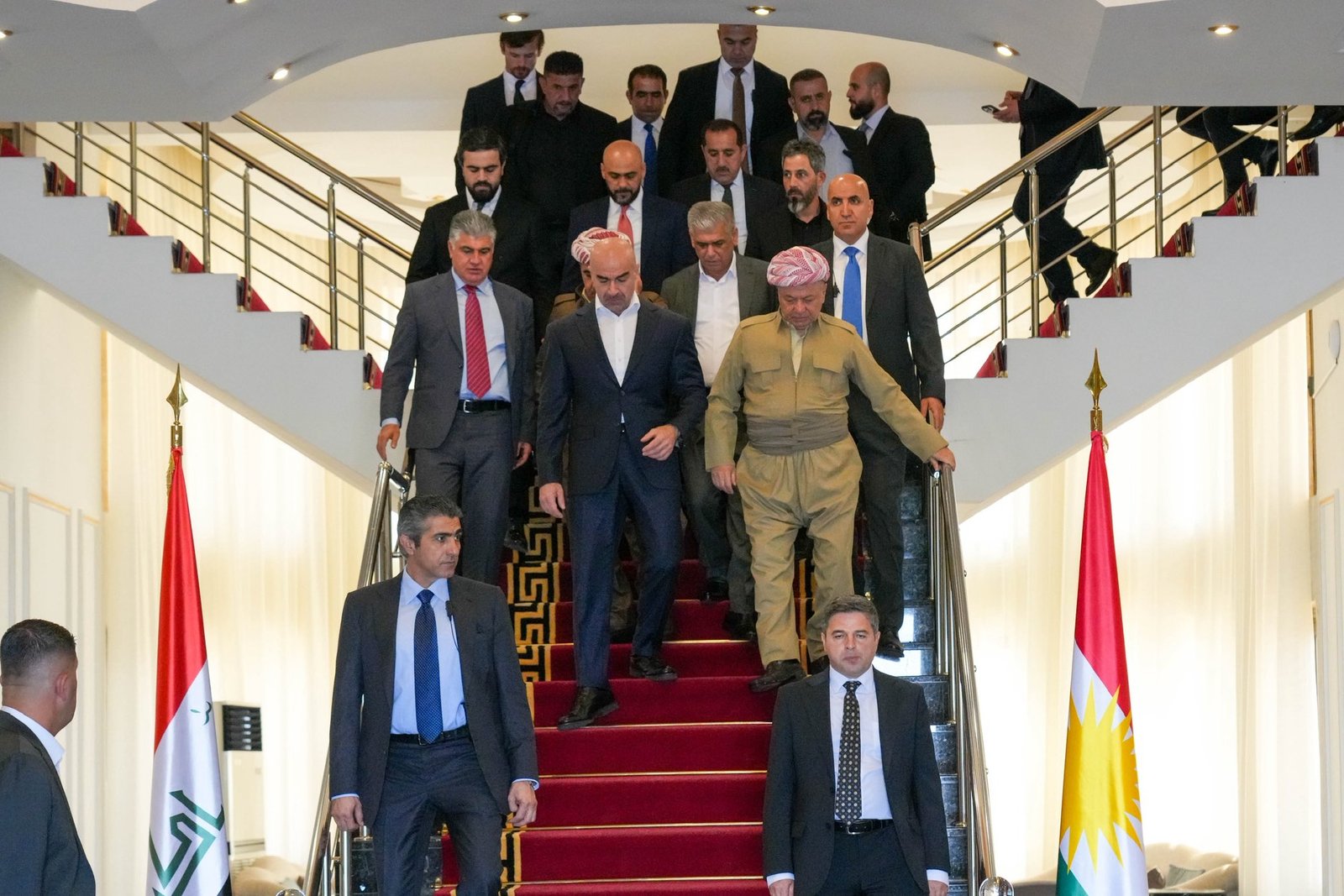
The PUK, dominated by the Talabani family and controlling the southeastern half of the Kurdistan Region, has reportedly decided to withdraw from the KRG cabinet and pursue the establishment of a separate federal region centred on Sulaimani.
According to a well-placed source in Sulaimani, the PUK leadership made the decision today, marking a potentially historic turning point in the two-decade experiment to govern Iraqi Kurdistan as a unified region.
The decision follows more than two years of political deadlock since the October 2024 regional elections, the first held since 2018. The immediate trigger was yesterday’s move by the KDP, dominated by the Barzani family, to unilaterally reconvene the Kurdistan Parliament, which had not met since its inaugural session on 2 December 2024.
The KDP secured the 51-MP quorum in the 100-seat chamber by attracting individual MPs from rival factions, despite those parties officially boycotting the session. It has now decided to press ahead with forming a new cabinet without the PUK, a move that would shut the PUK out of the regional executive it has shared with the KDP since 2006.
The prospect of a formal split has been building for years. At the heart of the crisis is the governing style of KRG Prime Minister Masrour Barzani of the KDP, who has increasingly sought to concentrate power in his own hands at the expense of the region’s deeply entrenched power-sharing arrangements. Yet the Kurdistan Region is structurally divided into two zones, making such centralisation extremely difficult without the consent of the PUK.
The PUK has maintained de facto control over Sulaimani and surrounding areas since the Kurdish civil war of the 1990s, which resulted in two separate administrations. Even after their formal reunification in 2006, the region remained unified largely in name. In practice, the KDP and PUK retained separate security forces, intelligence agencies and administrative structures in their respective territories. The unified government rested on an arrangement between two competing centres of power whose institutions were never genuinely integrated.
The Kurdistan Parliament itself has long been a weak institution, despite the symbolic significance of yesterday’s session. In 2015, when rival parties, particularly Gorran, the Sulaimani-based movement that split from the PUK in 2009, challenged the extension of then-Kurdistan Region President Masoud Barzani’s term, KDP security forces prevented the parliamentary speaker, Yousif Mohammed of Gorran, from entering Erbil, where parliament is located. Parliament was effectively shut down for approximately two years.
That episode established a dangerous precedent, demonstrating that the region’s legislative institution could be suspended through the use of force by the party controlling the capital. It substantially undermined parliament’s independence, authority and credibility. The KDP’s presentation of yesterday’s session as a major institutional achievement sits uneasily with that history, since the same party kept the chamber closed by force a decade ago.
The latest confrontation could have consequences extending well beyond the composition of a new cabinet. According to the Sulaimani-based source, the PUK leadership intends to pursue the new region through Iraq’s constitutional mechanisms.
Article 119 of Iraq’s Constitution allows one or more governorates to initiate the formation of a federal region through a referendum, following a request supported by either one-third of the relevant governorate council members or 10% of registered voters. Under Iraq’s 2008 Law on Executive Procedures for Forming Regions, the voter-initiated process begins with an initial petition supported by 2% of voters, followed by a registration process to reach the 10% threshold. Once the signatures are validated, Iraq’s Independent High Electoral Commission refers the request to the federal Council of Ministers, which sets the date of the referendum.
However, there is a significant constitutional complication. Although Article 119 provides a mechanism for creating new federal regions, Article 117 explicitly recognises the Kurdistan Region as an existing federal region. Neither provision clearly establishes a procedure for a governorate to withdraw from an already recognised region. The PUK’s proposed separation could therefore face serious constitutional challenges, potentially requiring a ruling from the Federal Supreme Court or new legislation.
The source says the PUK intends to begin the process in the coming weeks. However, even without legal challenges, the referendum procedures would take months, and any constitutional dispute could extend the process considerably.
What matters politically is that the PUK leadership has reportedly decided to abandon negotiations within the existing framework and pursue separation. The formal constitutional process may be lengthy and uncertain, but the decision itself, if implemented, would represent a fundamental rupture in the region’s political order.
For much of the past three decades, Iraqi Kurdistan has operated as two competing centres of power, a division institutionalised by the civil war and left largely intact by the 2006 reunification.
The latest confrontation now threatens to transform that longstanding de facto division into a formal constitutional and territorial split. If the PUK proceeds, it could mark the end of Iraqi Kurdistan’s two-decade experiment with a unified regional government.


