


Iraq’s Oil Is Flowing Again. Its Budget Gap Is Not Closing.
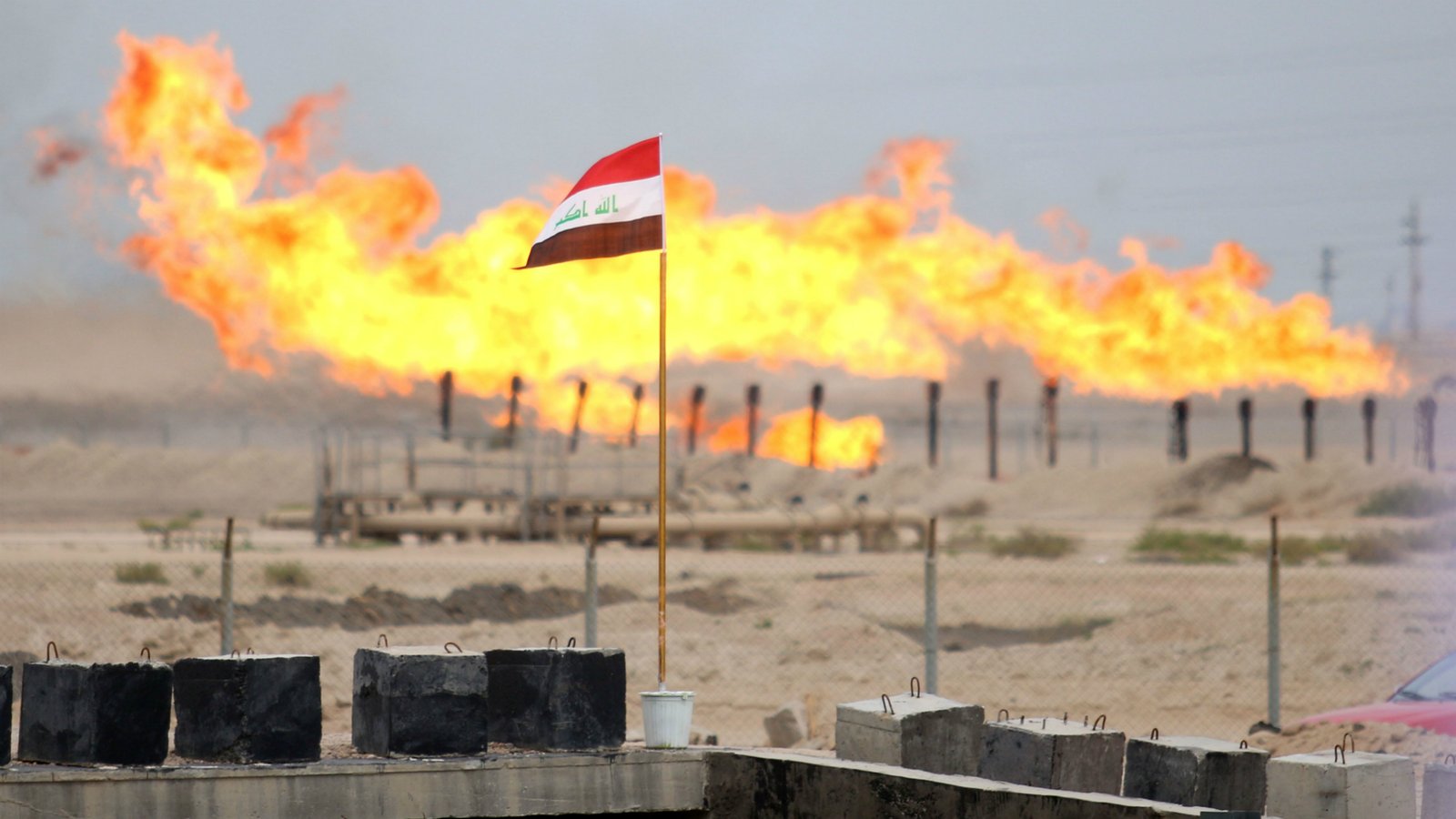
Before the Iran war, which started on February 28, Iraq earned roughly $6.5 to $6.8 billion a month from crude, exporting 107.6 million barrels in January and 99.9 million in February. After Hormuz was disrupted, exports fell to 18.6 million barrels in March and just 9.88 million in April, with revenue collapsing to $1.96 billion and then $1.09 billion. On the official figures from SOMO, Iraq’s state oil marketer, the country went from around 3.5 million barrels per day to only 329,000 bpd at the April low. May stayed near the bottom at roughly 14 million barrels and June recovered modestly to 18.1 million, together generating $2.34 billion. July was the first real rebound: SOMO put crude sales at 42 to 42.5 million barrels, about 35.5 million through the south and 7 million through Ceyhan, worth around $2.5 billion at a realised price near $60. The recovery accelerated into August, with Oil Minister Bassem Mohammed Khudair saying about 26 million barrels shipped in the first 13 days, roughly 2 million bpd and the highest rate since the crisis began.
The export routes, north and south: Before the crisis, Iraq depended overwhelmingly on the Gulf: in February, about 94% of exports moved through the southern system, against only 5.55 million barrels through Ceyhan. By April that had inverted. SOMO recorded 4.59 million barrels of Basra crude against 5.30 million through Ceyhan, of which 4.96 million was federal Kirkuk crude and only 339,000 came from the Kurdistan Region. Ceyhan had stopped being a Kurdistan export outlet and become an emergency channel for federal oil, following the March deal between Baghdad and Erbil that let Kirkuk crude enter the Kurdistan Region’s pipeline system at Fishkhabur and continue to Turkey.
Baghdad’s own federal Kirkuk-Ceyhan line is still not operating at commercial scale. The government has called that pipeline close to completion since April, but continues to route federal crude through KRG-controlled infrastructure, which it would have no reason to do if it had a reliable independent line to Fishkhabur. Unusable since 2014, the old line has required a full rehabilitation rather than the short repair first described, with inspections, hydrostatic testing, damaged sections and replacement pumps all surfacing in sequence.
The one-year Iraq-Turkey deal signed on August 1, after the previous treaty expired on July 27, targets at least 750,000 bpd through Ceyhan, but actual flow is only around 170,000 to 225,000 bpd, so the figure reflects intended capacity, not throughput. The corridor could handle about 1.5 million bpd, but reaching even 750,000 needs the federal Kirkuk line working and, eventually, central and southern crude piped northward, since northern fields alone cannot sustain that volume while also feeding refineries. Prime Minister Ali al-Zaidi called it a prelude to the planned $1.5 billion Basra-Haditha-Kirkuk-Ceyhan line.
Syria has become a third outlet, mostly for products rather than crude. Since April, Iraq has trucked fuel oil to Baniyas for re-export by sea, exceeding 600,000 tonnes a month by June, roughly 4 million barrels depending on density. These volumes belong to a separate products trade and should not be added to SOMO’s crude figures. Jordan, despite repeated talk of restarting its small crude arrangement, has contributed virtually nothing. Ceyhan has stayed near 0.2 million bpd while national exports climbed from 0.45 to 0.60 million bpd in May and June to about 1.37 million in July and roughly 2 million in early August. The recovery has come from the southern route reopening, not from the alternative routes.
The budget gap: Iraq’s federal balance swung from a 5.29 trillion dinar surplus in the first half of 2025 to a deficit of 21.24 trillion dinars, about $16 billion, in the first half of 2026. The Finance Ministry reported actual H1 revenues of around 36 trillion dinars against spending of nearly 57 trillion, with oil revenue at just under 28 trillion, down from the equivalent of roughly $85 billion for the whole of 2025. SOMO put total first-half oil export earnings at about $18.5 billion, from nearly 268 million barrels, roughly a third of pre-war volumes and a fraction of the $154 billion in annual revenue the 2023 to 2025 budgets assumed.
Most spending is fixed and cannot be reduced quickly. Civil-servant wages alone consumed 20.5 trillion dinars in the first four months of the year, more than half of all spending, and estimates of the full monthly salary bill vary from about 5 trillion dinars in the Finance Ministry’s own accounts to 7.8 trillion cited by a member of parliament’s finance committee and 10.8 trillion cited by the health minister, depending on what is counted. Against that, domestic non-oil revenue runs at only around 2.5 to 3.5 trillion dinars a month. Financial analyst Mustafa Hantoush put the resulting monthly financing gap at roughly 4.5 trillion dinars, and argued Iraq needs a borrowing law worth 10 trillion dinars, about $7.6 billion, simply to guarantee salaries through the rest of 2026.
The shortfall has affected salaries directly. The government acknowledged that July payments were delayed, the first such disruption since 2003, and a senior Finance Ministry official warned that if the export disruption continues, salaries can no longer be paid on time, with options under review including a shift to paying wages every 45 days. Salary payments now depend on cash management and borrowing rather than routine oil receipts.
Filling the gap, and its limits: With oil income cut to a fraction of the wage bill, Baghdad has used three main levers. The first is borrowing, overwhelmingly domestic. Iraq borrowed nearly 13 trillion dinars in the first five months of the year, about 8 trillion of it in April alone, pushing domestic public debt to a record 103.18 trillion dinars, about $79 billion, by the end of May. Much of that is the Central Bank financing the Finance Ministry, since al-Zaidi’s government has operated for months without an approved federal budget, under the one-twelfth monthly spending rule. A separate external borrowing law under discussion would, critics warn, push combined debt beyond $150 billion.
The second lever is reserves. The parliamentary finance committee said in August that treasury cash reserves stood at about 109 trillion dinars, roughly $83 billion, enough on their own to cover salaries and pensions for about ten months. These are separate from the central bank’s foreign reserves, which fell about 6.3% to around $91 billion by the end of May. The foreign reserves exist to back the dinar, finance imports and contain inflation, not to fund payroll, so using them to pay salaries would create a monetary problem in place of the fiscal one. Economists say the central bank can bridge the gap and hold the exchange rate for a few months, but sustained monetary financing would eventually push up the exchange rate and prices.
The third lever is cutting spending, mainly by freezing investment and deferring less politically sensitive outlays. Capital works have already been curtailed to protect payrolls, which reduces the investment Iraq needs to become less oil-dependent. Prime Ministerial adviser Mudher Mohammed Saleh has described emergency borrowing as a temporary measure rather than a substitute for a sustainable budget. Borrowing and reserves cover the shortfall for a period, but the oil revenue that normally funds the state has to be replaced by these measures for as long as exports stay low.
What happens if revenue stays low: July’s roughly $2.5 billion was more than twice April’s level, and a full month at the August rate would generate around $3.5 to $3.7 billion. That still falls short of the monthly wage bill on any of the estimates above, and the financing measures remain in place as exports recover.
S&P placed Iraq on CreditWatch negative on March 17, then removed it on June 12 while keeping a negative outlook, on the assumption that exports would gradually recover in the second half of the year, even as it forecast the general government deficit widening to 7.5% of GDP and a real contraction above 15%. The July and August figures are consistent with that assumption. At April export levels, the financing measures would have become progressively harder to sustain; the southern recovery has extended the period over which Baghdad can fund the deficit.
If revenue does not keep rising, the buffers are finite and already being drawn down. Domestic debt rose more than 12 trillion dinars in five months, and reserves are being spent faster than a partial export recovery can replace them, so the ten-month salary cushion assumes current spending levels, not a fresh shock or a stalled recovery. If exports flatten or fall back, Baghdad would rely more heavily on central-bank financing, which pushes up the exchange rate and, through the currency auction, inflation. It would pass an external borrowing law, adding hard-currency debt to a stock already near $100 billion. It would stretch the payment calendar, with the 45-day salary cycle the first visible sign, and deepen the freeze on investment. In the extreme case of near-zero oil revenue, which officials have begun to discuss publicly, the remaining options are politically costly: raising fees and taxes, cutting allowances, or introducing compulsory savings schemes. None of this is imminent while exports recover, but the room to avoid it is measured in months rather than years.
Iraq’s export routes and its salary payments are directly linked. Ceyhan, Baniyas and the other outlets determine how much of Iraq’s oil can be sold and turned into government revenue. The crisis has accelerated efforts to diversify export routes, but those routes remain supplementary, and Iraq’s fiscal position still depends mainly on how much southern crude can pass through the Strait of Hormuz. Baghdad can keep paying salaries as long as exports rise, borrowing remains available and its buffers stay credible. It is currently financing a state built for $6.8 billion a month on roughly half that. Closing the gap requires either Hormuz returning to normal or a northern network far larger than the one Iraq now has.


