


What Syria, Iraq and Turkey reveal about the scale of the global energy shock
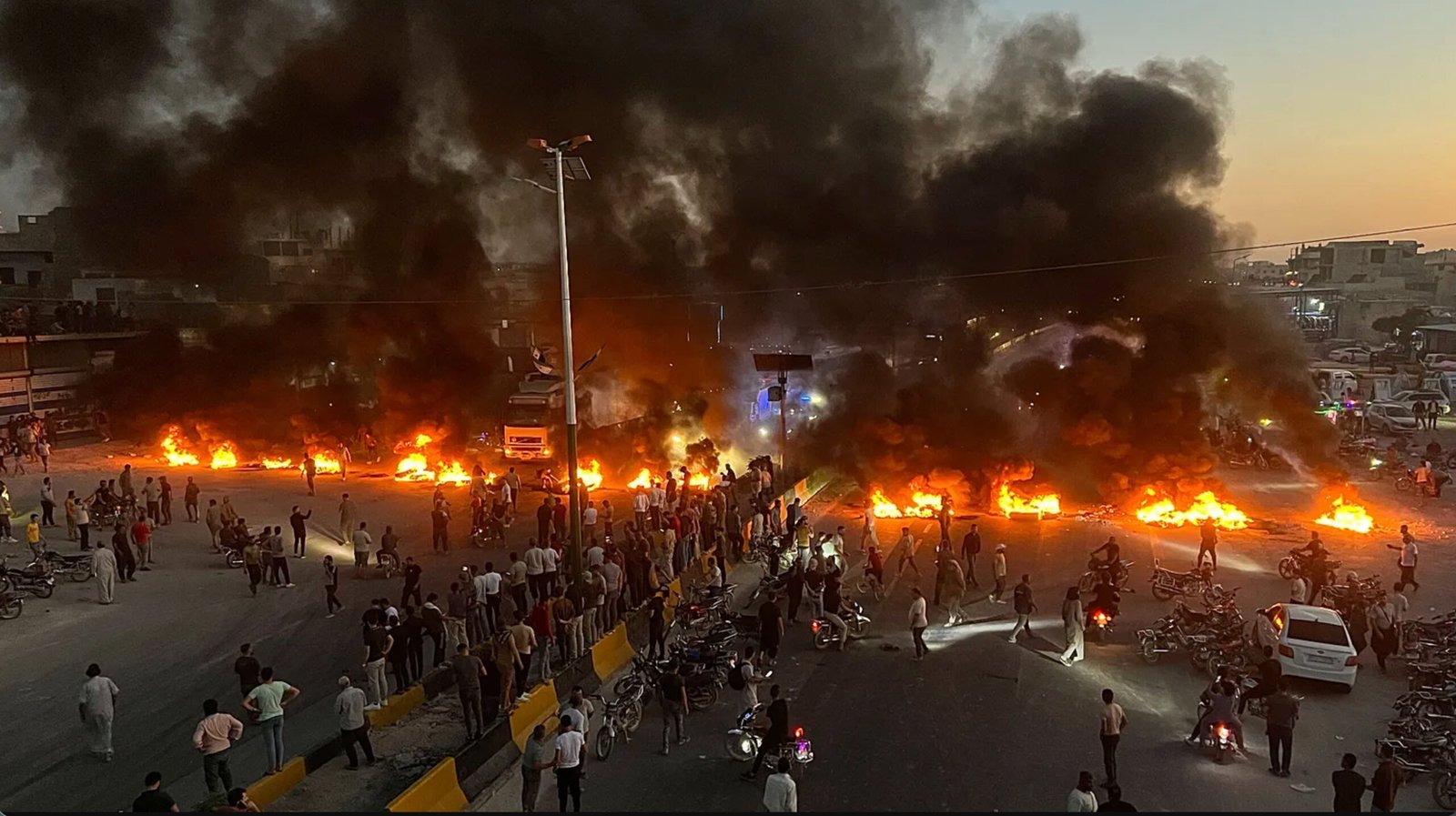
On 14 September, Syria saw its largest protests since the fall of Bashar al-Assad in December 2024. Demonstrators burned tyres, blocked the Damascus-Aleppo highway and stopped fuel tankers after the government raised standard diesel from 125 to 175 Syrian pounds per litre, a 40% increase in a single decision. Since February, diesel has more than doubled and 95-octane petrol has risen by around 86%. Truck owners struck, and the Transport Ministry acknowledged that freight had come to a near-complete stop in several provinces. In Hasakah, bakeries halted production because bread could no longer be sold at the official price with diesel at the new rate.
On 17 September Damascus partially retreated, introducing diesel at 115 pounds for heating, agriculture and eligible household uses and 150 pounds for productive and service sectors, while keeping the standard price at 175. The government says even that price sits below its acquisition cost of 206 pounds per litre. Protesters were back on the roads in Hasakah the same day, connecting the diesel price to bread, transport and the cost of running the neighbourhood generators that supply most of the electricity people actually use.
The same week brought the same story from Syria’s neighbours. In Iraq, farmers and factory owners in Muthanna took tractors, combine harvesters and heavy equipment onto the roads in protest after diesel for their sectors rose from 400 to 1,250 dinars per litre. In the Kurdistan Region, a 216-litre barrel of kerosene reached around 330,000 dinars in Erbil and 280,000 in Sulaimani as households began buying for winter. In Istanbul, diesel crossed 100 lira per litre for the first time on 17 September, up 66% from 60.30 lira on 24 February, four days before the war escalated.
At the source of the shock, the position deteriorated further. A drone strike this month forced the temporary shutdown of Saudi Arabia’s East-West pipeline, the main route for Gulf crude bypassing the Strait of Hormuz. Yemen’s Iran-aligned Houthi movement has expanded its control along the Bab al-Mandab strait, including the port of Mokha, and new US strikes on Iranian tankers pushed crude back above $100 a barrel.
Context: Syria is the most visible case of a pattern that now runs across its neighbours, and the pattern matters for a reason that reaches well beyond the region. Iraq is OPEC’s second-largest producer. The Kurdistan Region has its own oilfields and its own gas. Syria has domestic fields in the northeast that Damascus is bringing back into production. Turkey has large refineries, diversified suppliers, growing domestic gas and oil output from the Black Sea and the southeast, and a budget capable of absorbing part of the shock. All four sit within a few hundred kilometres of the Gulf’s supply. If the energy shock created by the war with Iran can stop trucks, close bakeries and cut power to hospitals in these countries, the question is what it does to the far larger group of states that import all their fuel in dollars, sit thousands of kilometres from any alternative supply and entered this crisis with weaker currencies and heavier debt.
Two things make fuel different from other commodities that rise in price. The first is that diesel is an input to almost everything else. It moves freight and public transport, runs tractors and harvesters, powers the private generators that supply electricity where grids fail, and fires the ovens that produce bread. When its price rises, the increase reappears in food, building materials, fares and electricity within days, and it reaches households that never buy diesel directly. The second is that fuel can simply stop being available. A price rise squeezes budgets; a shortage stops the system. Both are happening at once in the region, and both are producing protests.
Analysis: Syria shows the chain running end to end: fuel price, then freight, then bread and transport, then basic services, then the streets. The sequence took about a week. Syria has domestic oil and a government trying to rebuild an economy after more than a decade of war, and neither changed the sequence. A state with no fiscal room cannot stand between the international price and its population, so the shock arrives at the household almost unfiltered.
Federal Iraq is the case that should have been most insulated. The government of Prime Minister Ali al-Zaidi has kept the fuels sold directly to citizens at subsidised prices. Regular petrol still sells at 450 dinars per litre at state stations, and the Oil Products Distribution Company repeated last week that consumer prices had not changed. On paper, the household price increase is zero.
The adjustment has instead moved into the sectors around the consumer. The government withdrew subsidies from institutional and productive users on 1 September, which produced the Muthanna diesel increase of more than 200% and the protests that followed, with farmers warning that the cost would feed into construction and consumer prices. Farmers in Wasit blocked roads over the same issue. Brick kilns in Babil saw black oil rise from 100 to 480 dinars per litre, production almost stopped and the price of a standard load of bricks rose from around 1.1 million to 1.5 million dinars.
Scarcity compounded the price shift. The Oil Ministry says the conflict has delayed imported petrol shipments into Iraqi ports. In Mosul, truck drivers blocked a main road after waiting up to four days for diesel, and transport costs for building materials had already risen. Government offices in Diyala went dark when generator fuel ran out, and in Dhi Qar shortages reached hospital generators and ambulances. Baghdad’s private generator owners, whose machines supply the electricity households actually receive during grid outages, began switching off in protest until the government guaranteed them diesel at 400 dinars per litre for September.
Iraq demonstrates that crude in the ground is a different thing from usable energy. Oil still has to be refined, imported as products where refining falls short, moved by tanker and truck, and converted into electricity. Iraq has shielded the pump price and paid for it with shortages, sectoral price shocks, protests and a larger subsidy bill, in a year when its own oil revenue has been cut by the same closure of Hormuz.
The Kurdistan Region combines price shock, scarcity and infrastructure failure. On 8 February, commercial regular petrol in Erbil sold for around 800 dinars per litre. At the July peak, it reached 1,300 to 1,400 dinars, an increase of 63% to 75%, and queues stretched outside subsidised stations. The Kurdistan Regional Government imposed price ceilings and piloted an electronic rationing card in Erbil, while officials put daily demand at around six million litres against a shortfall of roughly 4.5 million. Many stations reported no stock or declined to sell at capped prices, so the official price held while the fuel itself became hard to find.
Gas showed how a single piece of infrastructure can transmit the shock. When security threats linked to the regional conflict halted production in July at the Khor Mor field, operated by a consortium led by the UAE’s Dana Gas and Crescent Petroleum and the main fuel source for the Region’s power plants, household LPG doubled from 400 to 800 dinars per litre overnight and a standard cylinder rose from roughly 9,000 to 18,000 dinars. The shutdown removed around 2,500 megawatts of generation and cut water supply in parts of Erbil because pumping stations lost power.
Heating fuel is the next pressure point. The kerosene households use for heating and cooking has risen from roughly 120,000 dinars a barrel a year ago to 200,000 in mid-July and 330,000 this week, and rising prices are already driving renewed tree-cutting in mountain districts, with more than 1.3 million households expected to need hundreds of millions of litres over the winter. A region that produces both oil and gas is rationing petrol and watching families cut trees for heat.
Turkey is the strongest of the four economies and the only one to avoid queues and physical shortages. It has diversified suppliers, refining capacity covering about half its diesel demand, rising domestic gas production from the Sakarya field in the Black Sea and oil from Gabar in the southeast, and the fiscal room to intervene. The price shock reached it anyway. Petrol rose from 57.19 to 80.31 lira per litre between 24 February and 17 September, an increase of 40%, alongside the 66% rise in diesel.
That increase came despite active suppression. Ankara activated its fuel tax buffer in March and in August cut the special consumption tax on diesel to zero, a step that alone removed roughly 9 lira from the pump price, and it continues to subsidise household electricity and gas. Turkey imports around 47% of its diesel, which exposes it to the collapse in refined-product exports from the Gulf and Russia, and because Turkish freight is overwhelmingly road-based, the diesel increase moves directly into agriculture, food, manufacturing and distribution costs.
Turkey shows the ceiling of what a capable state can do. It can keep supply moving, absorb part of the cost through the budget and protect consumers for a period. The cost itself is only redistributed. If the driver does not pay it, the Treasury pays part of it; once the state stops absorbing it, businesses and consumers do, through inflation that was already Turkey’s central economic problem before the war.
The main cause is the widening war with Iran and the disruption to the Strait of Hormuz. Before February, around 20 million barrels of crude oil and petroleum products passed through Hormuz each day, roughly a fifth of global consumption. Traffic through the strait fell from 21.6 million barrels a day in late 2025 to 4.9 million in the second quarter of this year. The International Energy Agency has described the disruption as the largest in the history of the oil market by volume.
For several months, the impact was partly contained because producers and governments had other options. Saudi Arabia moved more crude through its East-West pipeline to Yanbu on the Red Sea. Countries drew on storage and strategic reserves. Refiners bought oil from different suppliers. These measures helped replace some of the missing supply.
Those alternatives are now under more pressure. The Houthis declared a maritime embargo on Saudi Arabia on 20 July and have expanded their control around the Bab al-Mandab area. The East-West pipeline, which gives Saudi Arabia an export route outside Hormuz, has itself come under attack. China’s two largest state tanker operators have avoided both Hormuz and Bab al-Mandab since late July and have relied more on ship-to-ship transfers outside the Gulf.
There is little modern precedent for this combination. During earlier oil crises, pressure was usually concentrated on one route, one producer or one source of supply. Hormuz remained open during the 1973 embargo, the tanker war of the 1980s and the 1991 Gulf war. During the Houthi attacks on Red Sea shipping in 2023 and 2024, Gulf oil continued moving through Hormuz. The current crisis is affecting both the main Gulf route and some of the infrastructure used to bypass it.
That matters well beyond the Middle East because most countries still buy fuel on international markets. A country does not need to face a physical shortage to feel the impact. If the international price rises, its import bill rises. If it buys fuel in dollars and its currency weakens, the cost rises further.
Governments have tried to stop all of that from reaching households at once. The IMF counts almost 900 policy measures across around 170 countries since the war began, including subsidies, tax cuts and price controls. These measures reduce the immediate pressure on consumers, but they also cost governments money.
This creates another problem. Governments that spend more on fuel and electricity subsidies either have to borrow more, raise taxes or cut spending elsewhere. At the same time, higher energy prices add to inflation, which can make it harder for central banks to lower interest rates. Japan’s 10-year bond yield has reached levels last seen three decades ago, while US Treasury yields have returned to levels not seen since before the global financial crisis.
For households and businesses, that means the effects can last much longer than the original rise in fuel prices. Higher interest rates make mortgages and business loans more expensive. Governments with larger subsidy and debt costs have less money available for other spending. Companies facing higher energy and borrowing costs may delay hiring or investment. What begins with a fuel price increase can therefore affect growth and public finances for years.
Similar problems are already appearing outside the region. Indonesia has faced shortages of petrol and cooking gas, rolling blackouts and protests. Transport workers in the Philippines have demanded more government support as fuel costs rise. Kenya has also seen protests and transport disruption linked to higher fuel prices. These countries are dealing with the same basic problem: fuel is more expensive, households cannot easily absorb the increase and governments have limited room to keep subsidising it.
This is why Syria, Iraq, the Kurdistan Region and Turkey matter beyond their own borders. They are very different countries with different levels of wealth, domestic energy production and state capacity. Yet all have been affected within a matter of months.
Many poorer net-energy importers have even fewer options. They import most of their fuel, have weaker currencies, smaller financial reserves and less money for subsidies. Households in those countries also tend to spend more of their income on food and other basic needs, which means even a relatively small increase in transport or electricity costs can be difficult to absorb.
The protests in Syria, the tractors on Iraqi roads, the rise in kerosene prices in Erbil and diesel above 100 lira in Istanbul are therefore part of the same wider problem. The energy crisis is already affecting transport, food production, electricity, government budgets and household spending. If disruption around the Gulf and the Red Sea continues, those pressures are likely to spread further. Countries with fewer resources to subsidise fuel or absorb higher import costs will find it much harder to contain them.


