


Why Iran’s Sunni Kurdish Islamists Are Not Joining the Anti-Regime War
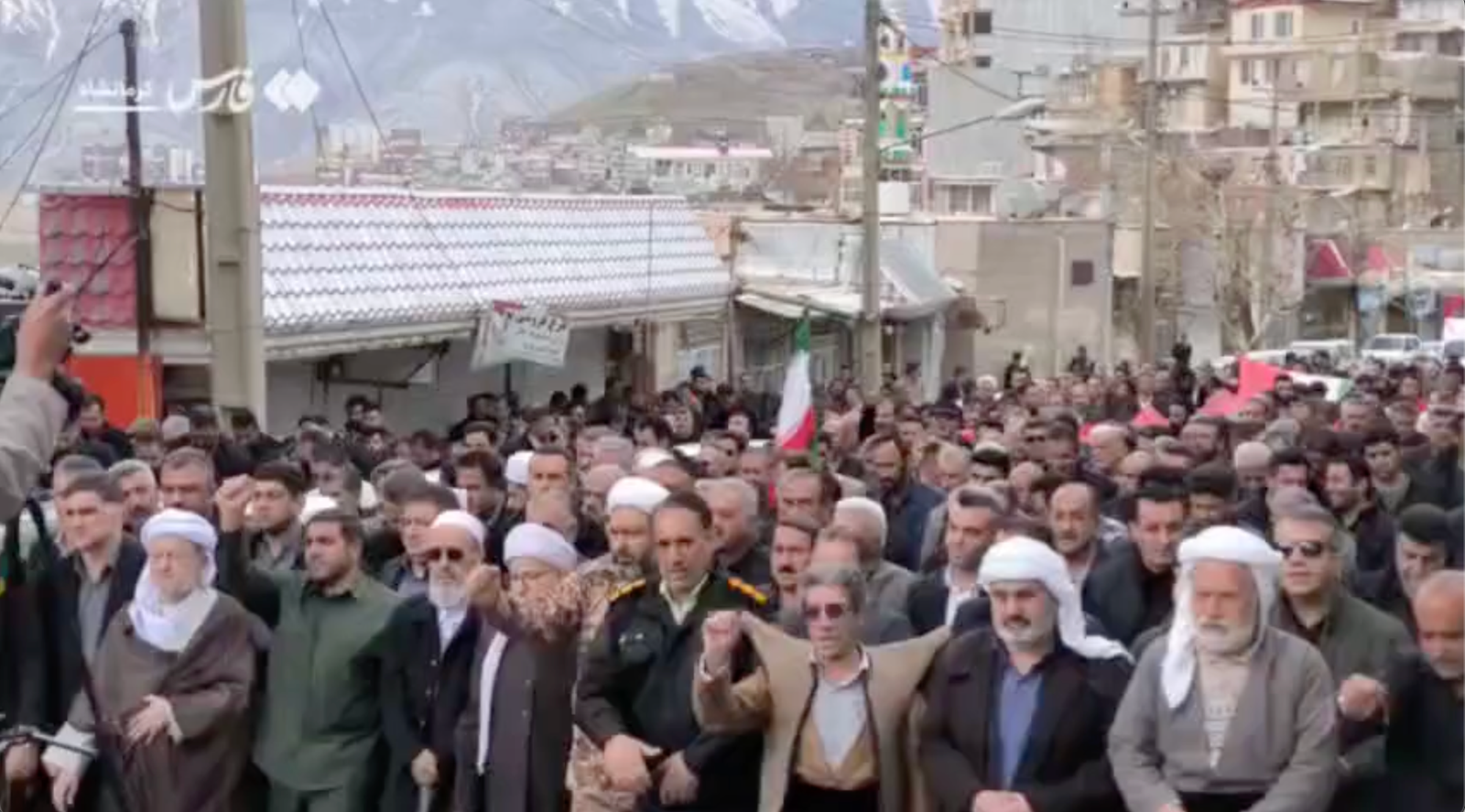
One of the misleading assumptions on the Iran war is that the Sunni Kurdish belt should naturally drift toward any project aimed at weakening the Islamic Republic. On paper, that can sound plausible. These are heavily Kurdish, largely Sunni areas with long histories of grievance against the state, repeated episodes of repression, and strong opposition traditions. But that reading misses a crucial fact. A meaningful part of the Sunni Kurdish Islamist milieu is moving away from becoming part of an Israeli-U.S. project against Iran, even as it remains critical of the Islamic Republic.
That does not mean these networks have become pro-regime. Some of the same Sunni clerical and Islamic milieus played an important role in the Jina uprising, helping provide moral language, social legitimacy, and local infrastructure in Sunni-majority Kurdish areas. Their wartime position is driven by a refusal to let long-standing Sunni and Kurdish grievances be absorbed into a foreign-led war against Iran.
This distinction matters even more because these currents do not emerge from a pro-regime founding history. Ahmad Moftizadeh, the founding figure of Maktab Quran, died after years of imprisonment and severe mistreatment by the Islamic Republic. Naser Sobhani, one of the key founding figures of Iran’s Call and Reform current, was executed by the regime. Their refusal to join the current war effort against Iran should therefore not be mistaken for loyalty to the state. It reflects a different hierarchy of enemies and a refusal to let Sunni and Kurdish grievances be absorbed into an Israeli-U.S. war project.
And the foreign power leading this war matters. According to Axios, U.S. and Israeli officials confirmed that the idea of supporting Iranian Kurdish factions for a possible ground offensive from Iraq into Iran originated with Israeli Prime Minister Benjamin Netanyahu and the Mossad, with the CIA joining the effort at a later stage. Bloomberg reported that the Israel Defense Forces are working to open the way for Kurdish forces to take up positions in Iran’s northwest. Israeli media amplified the Kurdish front concept from the first week of the war. For Sunni Islamist networks shaped by Brotherhood-adjacent traditions, anti-Zionism is foundational. The more publicly Israeli the Kurdish front project appears, the harder it becomes for these actors to participate or stand aside.
The Religious Landscape
Sunni Iranian Kurdistan is not just a nationalist space. Roughly half of Iran’s Kurds are Sunni, concentrated in Kurdistan province, northern Kermanshah, and the Kurdish belt of West Azerbaijan. The other half, largely Shia, are more structurally integrated into the Iranian state and less relevant to this story. Within the Sunni half, the religious field is dense, made up of traditional clerical networks, Sufi influence, organized Islamist currents, and smaller Salafi strands. Most Sunni Kurds are not Islamists. But the Islamist milieu is a substantial and influential minority, and its strongholds are concentrated in towns close to the Iraqi border that would matter directly in any western-front scenario. In those towns, local clerics, mosque networks, Quran circles, and religious associations remain socially influential even when they do not operate like formal political parties. These networks shape how communities interpret crisis, war, protest, and legitimacy.
The two most important organized Sunni Islamist currents in Iranian Kurdistan are Maktab Quran and Da’wat wa Islah, also known as the Iranian Call and Reform Organization, or ICRO.

Maktab Quran is the older and more indigenous Kurdish Sunni Islamist current. It is associated with Ahmad Moftizadeh and emerged most strongly from Sanandaj before spreading through other Kurdish cities. Rather than a straightforward Iranian branch of the Muslim Brotherhood, it is a Kurdish Sunni reformist tradition rooted in Quranic revival, religious reform, spiritual discipline, and social influence in Kurdish society. Historically, its strongest belt has been Sanandaj, Marivan, and Saqqez, with important influence also in Paveh and Javanrud.
ICRO is different. It is more structured, more organizational, and closer to a Brotherhood-style reformist movement. It is not Salafi. It is more modernist, movement-based, and socially programmatic, with a stronger emphasis on education, organization, gradual reform, and disciplined public messaging. Its visible organizational footprint appears strongest in Sanandaj, Marivan, Paveh, and Javanrud, with a broader second tier in places such as Sardasht, Bukan, and parts of West Azerbaijan.
There is also a Salafi presence, but it is smaller, more securitized, and politically distinct from both Maktab Quran and ICRO. The clearest town-level evidence points to Javanrud as one of the strongest single-town examples of visible Salafi activity. Beyond Javanrud, Salafi influence has also appeared in Sanandaj, Marivan, Saqqez, and Orumiyeh. But this current is narrower, more fragmented, and far more heavily treated by the state as a security threat. It should not be confused with the broader reformist and clerical Sunni field.
These are not marginal actors. In many of the towns that would matter most in any western anti-regime opening, these religious and Islamist networks are part of the social infrastructure. They do not dominate Sunni Kurdish society. Secular Kurdish nationalists, armed opposition factions, tribal networks, and non-religious activists are also present. But the Islamist milieu carries enough social weight that its wartime position matters.
The Jina Precedent
The proof of that influence came during the Jina uprising. The protest-era clerical field in eastern Kurdistan included recognizable names such as Kak Hassan Amini, Mohammad Khizrnejad, Luqman Amini, Ibrahim Salimi, and Saber Khodamoradi, alongside clerical circles in Dehgolan, Qorveh, Marivan, Hawraman, and other Sunni Kurdish areas. Some of these figures were prosecuted, imprisoned, or otherwise pressured after the Jina protests. Luqman Amini was sentenced to 11 years, Ebrahim Karimi Nanaleh of Javanrud to 12 years, Ibrahim Salimi to 3 years, Saber Khodamoradi to 15 months. That alone is enough to show that they were not simply regime auxiliaries. They mattered because they carried social authority in towns where politics is still filtered through mosque networks, family ties, and local religious legitimacy. Their wartime position now carries the same weight.
Wartime Positioning: The Israeli Factor
The clearest public wartime line has come from ICRO. In its official response to the Israeli attack, ICRO condemned what it described as a violation of Iran’s national sovereignty and called for a decisive and legitimate response. Later, in Sanandaj, a central ICRO figure, Salah Qasemiani, said clearly that Iran’s defense against “the aggression was legitimate and supportable”. The framing is sovereignty, anti-aggression, and Muslim-political solidarity, not anti-regime opportunity.
That language mirrors the wider Ikhwani reaction to the war. The International Union of Muslim Scholars, the global Brotherhood-aligned clerical body headquartered in Qatar, issued a statement on March 3 warning against what it called the arrogance of the Zionist-American project and framing Israel as the primary threat to the Islamic world. ICRO’s own wartime positioning reads as a local Kurdish iteration of that same frame.
The wider Sunni clerical environment points in the same direction. Large collective statements by Kurdish mamostas (clerics) condemned the U.S. and Israeli attack on Iran. Without proving ideological uniformity, this shows that parts of the Sunni clerical field chose to place themselves inside a sovereignty-and-resistance frame rather than an anti-regime one.

At the more openly pro-state end of that field, the rhetoric has been even clearer. In Dehgolan, Mamosta Abdolsalam Mohammadi described the conflict as not merely political or military, but part of a wider confrontation between Islam and its enemies, and framed defense of the homeland as a religious duty. In Sanandaj, Mamosta Seyed Mohsen Hosseini warned anti-regime groups against trying to cross into the province and said they would face a decisive response from Kurdish people themselves.
In Paveh, this stance took visible wartime form. On March 13, the Islamic Propagation Coordination Council announced Quds Day march routes for Paveh, Javanrud, Ravansar, and Thalath Babajani, all important Sunni Kurdish towns. In Paveh, the march ran from Palestine Square to the Friday prayer musalla. Days earlier, the town’s Friday imam, Mamosta Molla Qader Qaderi, had publicly congratulated Mojtaba Khamenei on becoming the new leader of the Islamic Republic. None of this proves broad Sunni Kurdish enthusiasm for the regime. But it does show that the state can still activate a Palestine-and-sovereignty frame inside Sunni Kurdish space with visible local clerical cover.
That is especially notable in Paveh’s case because the town sits in the Hawraman belt, the same cross-border religious zone that links it to Halabja on the Iraqi side. One of the key founding figures of Iran’s Call and Reform current, Naser Sobhani, came from Paveh. On the Iraqi side, the Kurdistan Islamic Union was co-founded by Salahaddin Bahaaddin of the Halabja area and Omar Reshawi, also from the Halabja side. That does not make the two movements identical. But it does show that some of the most important Sunni Kurdish Islamist currents on both sides of the border emerged from the same Hawrami social and religious milieu. That helps explain why the anti-Israel reading of the war has resonance in both places.
There is also a broader provincial pattern. In Kermanshah province, hundreds of Sunni clerics issued a joint statement condemning the attack on Iran and expressing support for national defense. In Urmia, the Sunni Friday imam Mamad Kalshinejad called for national unity and warned people not to be deceived by “enemy promises”. The pattern across these statements is consistent: the war is being interpreted through anti-Israel, anti-U.S., sovereignty, and Muslim-solidarity lenses, even by clerics who are far from natural regime allies.
Why the Israeli Fingerprint Changes the Alignment Map
These currents have their own histories of grievance, repression, and opposition. Some helped supply the moral language and social infrastructure of the Jina protests. But many appear unwilling to let those grievances be turned into a political asset for an Israeli-U.S. war against Iran.
The Israeli character of this war is what makes it specifically toxic for Sunni Islamist networks. The Kurdish front has been publicly attributed, by named U.S. and Israeli officials, to Benjamin Netanyahu and the Mossad. Bloomberg reported the IDF is actively working to clear the way for Kurdish forces in Iran’s northwest. Israeli-run i24NEWS was the first outlet to claim a Kurdish offensive had begun on March 4, citing an unnamed Israeli official, before the Kurdish parties themselves denied it. Each of these reports deepens the association between the Kurdish front and Israeli strategic objectives, making Sunni Islamist participation harder.
For currents shaped by Brotherhood-adjacent thinking, the Palestinian cause, anti-Zionism, and solidarity with the wider Muslim sphere are central to the worldview. ICRO’s official wartime language invoked sovereignty and Muslim solidarity against Israeli aggression by name. The broader mamosta statements condemned U.S. and Israeli aggression specifically. The International Union of Muslim Scholars, the transnational Ikhwani body, framed the entire war as a Zionist-American project. ICRO’s local Kurdish position maps directly onto that global Islamist reading.
What is emerging is wartime refusal, not pro-regime fervor. These actors will not become the social rear of an Israeli war against the country, regardless of what they think of the regime itself.
The Strategic Implication
That distinction matters because any Kurdish anti-regime project in western Iran would need more than fighters and border routes. It would need local permissiveness: neutral or sympathetic towns, influential clerics and mosque networks willing to stand aside or quietly facilitate the effort. If those same networks are instead telling people not to become part of an Israeli-U.S. war effort, one of the most important potential multipliers for a Kurdish western front begins to disappear.
The geography matters. The towns where these religious and Islamist currents have the most weight overlap directly with the Sunni Kurdish belt most often imagined as the social rear of a cross-border anti-regime opening.
Maktab Quran’s historical core is Sanandaj, Marivan, and Saqqez, with additional influence in Paveh and Javanrud.
ICRO’s strongest visible network appears in Sanandaj, Marivan, Paveh, and Javanrud, with additional footprint in Sardasht, Bukan, and parts of West Azerbaijan.
The broader Sunni clerical sphere remains influential across Sanandaj, Dehgolan, Qorveh, Marivan, Hawraman, Paveh, Javanrud, Ravansar, and other Sunni Kurdish towns. The religious field sits directly inside the geography that matters.
That is the real significance of the Sunni Kurdish Islamist angle. Tehran has not won Sunni Kurdish society. The war itself has changed the alignment map. In normal times, these currents may remain deeply critical of the state, hostile to sectarian inequality, and resistant to Tehran’s domination. But in a war led by Israel and the United States, and publicly framed as an Israeli strategic project, many appear unwilling to let those grievances be conscripted into the attacking side’s campaign.


