


Airstrikes Target Iraq’s Disputed Territories and Sunni Heartland, Not the Shia-Dominated South
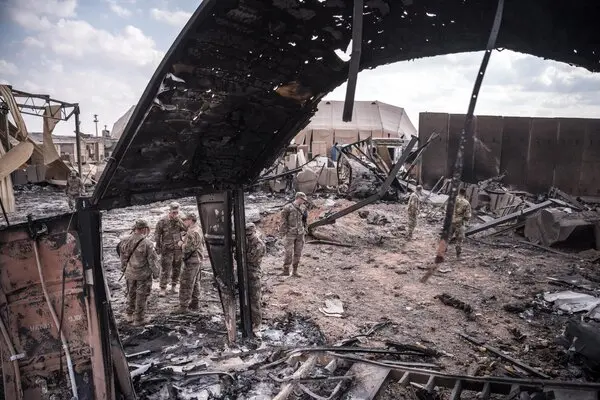
From Jurf al-Sakhar and Baghdad to al-Qaim, Mosul, Kirkuk, and Tuz Khurmatu, the strike campaign has widened sharply since late February. But even as it has expanded, it still concentrates on the militias’ forward military infrastructure in Iraq’s disputed north, western border belt, and Sunni heartland, while avoiding the deep southern Shia core where these factions retain their densest political and social base.
The expanding strike campaign against Iran-aligned militias in Iraq is not random. Even as the map has widened since late February, its geographic logic remains consistent. The attacks are still concentrated on militia deployments, headquarters, checkpoints, command nodes, and logistics infrastructure in Iraq’s northern, western, and disputed belts, while the deep Shia south remains outside the strike map.
By faction, Kataib Hezbollah appears to be the most heavily targeted militia family, especially through repeated strikes on its Brigade 45 network in Anbar, Brigade 47-linked sites around Jurf al-Sakhar, and additional KH-linked sites in Baghdad, Fallujah, and central Iraq. If KH-linked orbit groups are included, Liwa al-Tufuf (Brigade 13) also falls within that wider exposure pattern. Brigade 63, however, is better treated separately from KH as a distinct Turkmen and northern-axis formation. Kataib Hezbollah is followed by Hashd al-Shabak, or Quwat Sahl Nineveh, whose Brigade 30 positions across the Nineveh Plains came under repeated attack, and by Kataib Imam Ali, whose Brigade 40 was repeatedly struck across Kirkuk and Nineveh.
The campaign has widened into Baghdad, Babil, and Wasit, and has touched a broader range of militias than in its first phase. Late March did not just broaden the map generically. It added or clarified strikes on Badr-linked formations including Brigades 27 and 61, Kataib Sayyid al-Shuhada’s Brigade 14 in Rashidiya, Babylon and Kataib Babiliyoun-linked structures around Mosul, Risaliyun’s Brigade 31, Quwat al-Sadr’s Brigade 15, and mixed PMF intelligence and operations nodes in Jurf and at Kirkuk airport. But the campaign still stops short of Basra, Maysan, Dhi Qar, Muthanna, Najaf, and Karbala. In other words, it is hitting the militias’ exposed operational arc, not their deepest political home ground.
The geography is widening, but not in every direction
The earlier phase of the campaign centered on places like Jurf al-Sakhar, Akashat, al-Qaim, Muqdadiya, Bartella, Qayyarah, Rashidiya, Dibis, and Baiji. The newer map adds repeated strikes in Baghdad, more sites in Salah al-Din and Kirkuk, and further pressure on the Mosul area, the Nineveh Plains, and the Syria-facing border zone in Anbar.
That expansion matters, but it has not erased the campaign’s underlying pattern. The militias being hit are still overwhelmingly deployed in mixed, militarized, or frontier spaces. That includes Kataib Hezbollah, Asaib Ahl al-Haq, Harakat Hezbollah al-Nujaba, Hashd al-Shabak, Kataib Imam Ali, Kataib Sayyid al-Shuhada, Ansar Allah al-Awfiya, Saraya al-Khorasani, Badr-linked formations including Brigades 27 and 61, Turkmen PMF units, Brigade 63, Kataib Jund al-Imam, Risaliyun, Fawj Amerli, Waad Allah, Kataib Babiliyoun, Haras Nainawa, Liwa Salah al-Din, Liwa al-Tufuf, Quwat al-Sadr, and mixed PMF command and intelligence structures.
Baghdad has now clearly entered the map. So have some central Iraqi belts. But widening is not the same as becoming nationwide. The strikes have edged into the capital and its approaches, but they still avoid the deep southern provinces where the militias’ political offices, patronage networks, leadership environments, and social base are strongest.
Nineveh remains the densest military front
No province better illustrates the logic of the campaign than Nineveh, where the strike map is less about symbolic punishment than repeated pressure on forward military infrastructure.
The most sustained pressure fell on Hashd al-Shabak, or Quwat Sahl Nineveh, the PMF’s Brigade 30. In Bartella, Brigade 30’s communications building was hit on March 2, followed by another strike on a Brigade 30 site on March 3, another daytime strike near the base on March 9, and helicopter fire near its positions on March 10. In Khazna Taba, Brigade 30 sites were hit on March 3, again on March 9, and then on March 19, when the regiment headquarters was struck, leaving one fighter killed and three wounded. In Khorsibat, another Brigade 30 site was hit on March 4, causing material damage. In al-Mowafaqiya, Brigade 30 headquarters was struck on March 9, with ammunition warehouses reportedly destroyed. In Ain al-Safra, another Brigade 30 site was hit on March 11.
The same province also saw repeated targeting of Kataib Sayyid al-Shuhada. In al-Rashidiya, a probable Brigade 14 position was struck on March 4, followed by a U.S. helicopter strike near a PMF checkpoint on March 6, and local claims of another strike around March 11. In Shirikhan and Qara Qoyun, Apache or helicopter strikes on March 6 hit joint checkpoints used by Kataib Sayyid al-Shuhada and a Badr Organization-linked 34th Brigade structure, with up to 14 explosions reported in waves, though no confirmed casualties emerged. In Bartella, a Kataib Sayyid al-Shuhada complex was also hit on March 13, producing material damage. The Nineveh pattern also extended into late March, when Brigade 14 of Kataib Sayyid al-Shuhada was again struck in Rashidiya on 29 March.
Kataib Imam Ali, especially Brigade 40, was repeatedly targeted in Qayyarah. A fire at its headquarters on March 3 was initially treated as a possible airstrike. A strike was then confirmed on March 6, followed by another strike on March 7 on a Brigade 40 position. Waad Allah’s 33rd Regiment was hit at al-Adhba near Hammam al-Alil on March 7, as part of a coordinated cluster that left one killed and three wounded. In Batnaya, a Kataib Babiliyoun, or Brigade 50, facility was struck by a suicide drone on March 6, causing material damage. North of Mosul, Haras Nainawa, or Brigade 59, was hit by two airstrikes on March 11, and the PMF Nineveh Operations Command, a shared multi-faction command node, was struck in a forested area north of the city on March 19.
Taken together, the Nineveh pattern is unmistakable. The campaign is hitting the PMF’s exposed infrastructure in and around Mosul, the Nineveh Plains, and the mixed frontier zone east and north of the city, not the militias’ rear political environment.
Anbar shows the border-corridor logic most clearly
If Nineveh reflects the militias’ disputed-territory deployments, Anbar reflects the cross-border logistics logic of the campaign.
The most consistently hit militia in the province has been Kataib Hezbollah, especially through Brigade 45. In Akashat, Brigade 45 positions were hit on March 1 and again on March 2, with the settled toll reaching four killed and 11 wounded. The same area then saw another strike on March 10 that also hit positions of Saraya Talia al-Khorasani, or Brigade 18, wounding several, followed by a fresh strike on March 14 against Ansar Allah al-Awfiya, or Brigade 19.
In al-Qaim, the campaign became even more layered. Kataib Hezbollah / Brigade 45 sites near al-Qaim were reportedly hit late on March 1, followed by another strike on militant sites on March 4. On March 9, an airstrike hit Saraya al-Khorasani’s Brigade 18 headquarters and nearby border-strip locations. On March 12, three Ansar Allah al-Awfiya / Brigade 19 sites were struck in a major wave, with some reports putting the toll at more than 20 killed. On March 16, consecutive strikes hit sites of Brigade 18 and Brigade 19, including the Martyr Haider checkpoint, where six were killed and four wounded, and the 2nd Battalion of Brigade 18, where two were killed and others wounded. On March 18, a coordinated wave hit Qasim Muslih’s Anbar operations headquarters, the 2nd Battalion of Kataib Hezbollah’s Brigade 45, the Martyr Haider checkpoint used by Saraya al-Khorasani, and an operational site inside the 7th Division base, killing three and wounding others.
Elsewhere in Anbar, a Kataib Hezbollah / Brigade 45 site at the entrance to Akkaz was struck on March 11, leaving one dead and nine wounded. A Saraya al-Khorasani / Brigade 18 position along the southern Anbar frontier near the Iraq-Syria border was hit on March 13. A strike was reported on Rahaliya / al-Kahawi checkpoint on March 7, again affecting Kataib Hezbollah-linked positions, though the losses remained unclear. A Kataib Hezbollah headquarters in Fallujah was also struck on March 13. In Jazirat al-Tharthar, a PMF site was widely reported struck on March 8 but never firmly confirmed, and on March 17 a Tribal Mobilization Forces site north of Ramadi in the Tharthar area was hit.
Anbar’s pattern is not just about geography. It is about the old Iraq-Syria corridor, the border belt, and the logistics architecture that underpins militia movement between Iraq’s west and Syria’s east.
Baghdad, Babil, Diyala, and Wasit show the campaign pushing into central Iraq
The map’s most important change from the first phase is that the campaign has now pushed clearly into Baghdad and the central belts, though still without crossing into the deep southern heartland.
In Baghdad, the most significant strikes hit Kataib Hezbollah-linked structures. In al-Arsat on March 14, a strike hit a Kataib Hezbollah faction house, killing four and wounding eight. In Nahrawan the same day, a vehicle strike killed one Kataib Hezbollah member. In Jadriyah on March 16-17, strikes hit a Kataib Hezbollah-linked house used as a PMF headquarters and reportedly hosting Iranian advisers, leaving six dead, including two senior PMF officials, and four wounded. On March 12, Camp Saqr in Abu Dshir was struck. It is a mixed military site hosting PMF units alongside Interior Ministry and Federal Police forces, but the PMF contingent included Kataib Hezbollah elements. The strike left one killed and three wounded. In the south of Baghdad belt, a vehicle strike on March 4 killed senior Kataib Hezbollah commander Ali Hassan al-Furaiji, along with Haider al-Majidi and Sayyid Aoun al-Fadhili. In Tarmiyah / Albu Bahr, a Harakat Hezbollah al-Nujaba / Brigade 12 position was hit on March 19, causing material damage.
Just north of Baghdad, at al-Nibai on the Salah al-Din-Baghdad border, Harakat Hezbollah al-Nujaba / Brigade 12 headquarters was struck on March 17, leaving three wounded.
In Babil, Jurf al-Sakhar remained one of the most repeatedly targeted locations on the entire map. On February 28, airstrikes hit Kataib Hezbollah positions, leaving at least two dead and three seriously wounded. A follow-on strike on March 2 hit a PMF security headquarters, killing one and wounding one. Another strike on March 6 hit empty PMF-used locations. Social media and local reporting also cited possible strikes on March 8 and March 11, though both remain weakly corroborated or contested. A further strike on March 17 hit the 2nd Regiment of Kataib Hezbollah / PMF Brigade 47, with no human losses reported. Elsewhere in Babil, a PMF headquarters in al-Musayyib was struck on March 11, though no casualties or major damage were reported.
In Diyala, the clearest named strike hit Asaib Ahl al-Haq / Brigade 41 in Muqdadiya / Sharaban on March 1, leaving four killed, between two and eight wounded, and major material damage. On March 4, a reported suicide drone strike also hit an unspecified PMF base east of Baghdad in the Diyala direction.
In Wasit, Hamurabi Camp near al-Suwayra was struck on March 11. The camp was described as mainly hosting Asaib Ahl al-Haq. The strike killed a civilian woman, wounded her son with shrapnel, and reportedly injured PMF personnel. It was one of the clearest cases in the campaign where civilian casualties were explicitly reported.
Kirkuk and Salah al-Din are the core disputed-territory belt
The second major axis of the campaign runs through Kirkuk and Salah al-Din, where the PMF’s military role has remained deeply embedded in mixed and disputed terrain.
In Kirkuk province, the single deadliest named site on the map was Dibis, where Kataib Imam Ali / Brigade 40 positions were repeatedly hit. On March 10, strikes on the unit’s 1st Regiment left between four and six killed and between three and 18 wounded, while causing severe structural damage. The same brigade’s headquarters was hit again in Dibis on March 15, and its positions were struck once more on March 17, followed by an episode of U.S. Apache fire.
In Kirkuk city, strikes on March 11-12 hit the PMF secretariat and a Turkmen unit in the Badr neighbourhood, reportedly linked to the Badr Organization, leaving one killed and seven wounded. Then on March 18, three downtown explosions hit near an Asaib Ahl al-Haq-linked site on Governorate Street, a Brigade 63 support battalion and other Turkmen and northern-axis PMF structures in the Badr neighbourhood, and a Badr Organization office on 90 Street.
In Taza Khurmatu, the 1st Battalion of Quwat al-Turkmen, or Liwa al-Turkmen, Brigade 16, was struck on March 15, damaging unused vehicles but causing no casualties. In Daquq, multiple PMF-linked locations were struck on March 18, including the 3rd Battalion of Quwat al-Turkmen / Brigade 16, the headquarters of Brigade 63, whose militia-family classification is less clean than that of Brigade 45/47 or Badr’s Brigades 27 and 61, the Abu Mahdi al-Muhandis Center, and an Asaib Ahl al-Haq-linked site, leaving between three and five wounded overall.
In Salah al-Din, the pattern broadens but remains consistent. Tuz Khurmatu was struck on March 14, when multiple PMF positions were hit, including the 1st Regiment of Fawj Amerli / Brigade 52, which reported one wounded, along with other PMF sites. On March 19, two more airstrikes hit Brigade 63 at Camp al-Shuhada in Tuz Khurmatu.
Near Baiji, two airstrikes were reported on March 9 against Liwa Salah al-Din / Brigade 51, though no casualties were published in the main local reporting. On March 19, Kataib Jund al-Imam / Brigade 6 was struck in Baiji, leaving three wounded, followed by another evening strike on a second Brigade 6 site in northeastern Salah al-Din. At Sinniyah Airport, a strike on March 19 hit a Kataib al-Tayyar al-Risali, or Risaliyun, Brigade 31 position, leaving one dead and several wounded. An Asaib Ahl al-Haq headquarters in Salah al-Din was also struck on March 13. In the Makhoul Mountains and al-Qusour area, another strike was reported in mid-March on PMF positions. At Balad Air Base, PMF-linked sites were reportedly struck on March 1 and again on March 3, with damage reported but no confirmed casualties.
This entire axis, from Dibis and Kirkuk city to Daquq, Tuz, Baiji, Sinniyah, Makhoul, and Balad, reflects the same underlying logic. These are not the militias’ safest political strongholds. They are militarized nodes in mixed and disputed terrain where the PMF’s post-ISIS role remained operationally entrenched.
Why the south is still being spared
The absence of strikes in the deep south is not an accident. It reflects an escalation ceiling.
Hitting militia sites in Basra, Amarah, Nasiriyah, Najaf, or Karbala would mean striking inside dense Shia urban and political environments. The risk of civilian casualties would rise sharply. So would the political cost. A strike on a forward PMF position in Bartella, Akashat, Qaim, Baiji, Dibis, or Daquq can be framed as hitting military infrastructure. A strike in the southern heartland would be read much more easily as an attack on the Shia core of the Iraqi state itself.
That distinction matters for every side in the crisis. It preserves space for Baghdad to contain escalation. It limits the risk of turning a militia-degradation campaign into a broader Iraqi domestic rupture. And it suggests that the campaign’s objective is still to degrade operational capacity, not to open a full war against Iraq’s Shia political order.
The strategic message of the map
The strategic message of the strike map is clearer now than it was in the first phase. The campaign is broader, more ambitious, and touching more factions. But its geography still follows Iraq’s divide.
The militias being hit are concentrated in Iraq’s disputed territories, Sunni heartland, western border corridor, and capital approaches. Kataib Hezbollah remains the most heavily targeted militia family, but only when defined through Brigades 45, 46, and 47 and direct KH-linked sites. Hashd al-Shabak and Kataib Imam Ali follow closely. Late March broadened the strike pattern to Badr-linked formations including Brigades 27 and 61, Kataib Sayyid al-Shuhada, Babylon, Risaliyun, Quwat al-Sadr, and mixed PMF intelligence and command nodes. Repeated or notable strikes also hit Asaib Ahl al-Haq, Ansar Allah al-Awfiya, Saraya al-Khorasani, Harakat Hezbollah al-Nujaba, Brigade 63 and other Turkmen and northern-axis PMF structures, Quwat al-Turkmen, Fawj Amerli, Kataib Jund al-Imam, Liwa al-Tufuf, Waad Allah, Haras Nainawa, Liwa Salah al-Din, and mixed PMF command nodes.
So while the map shows real expansion, it does not show a nationwide war map. It shows a calibrated one. The airstrikes are widening across Iraq’s operational frontier, but they are still stopping short of the militias’ deepest southern political core.


