


How Damascus Is Trading Institutional Manning for Coercive Penetration in Hasakah
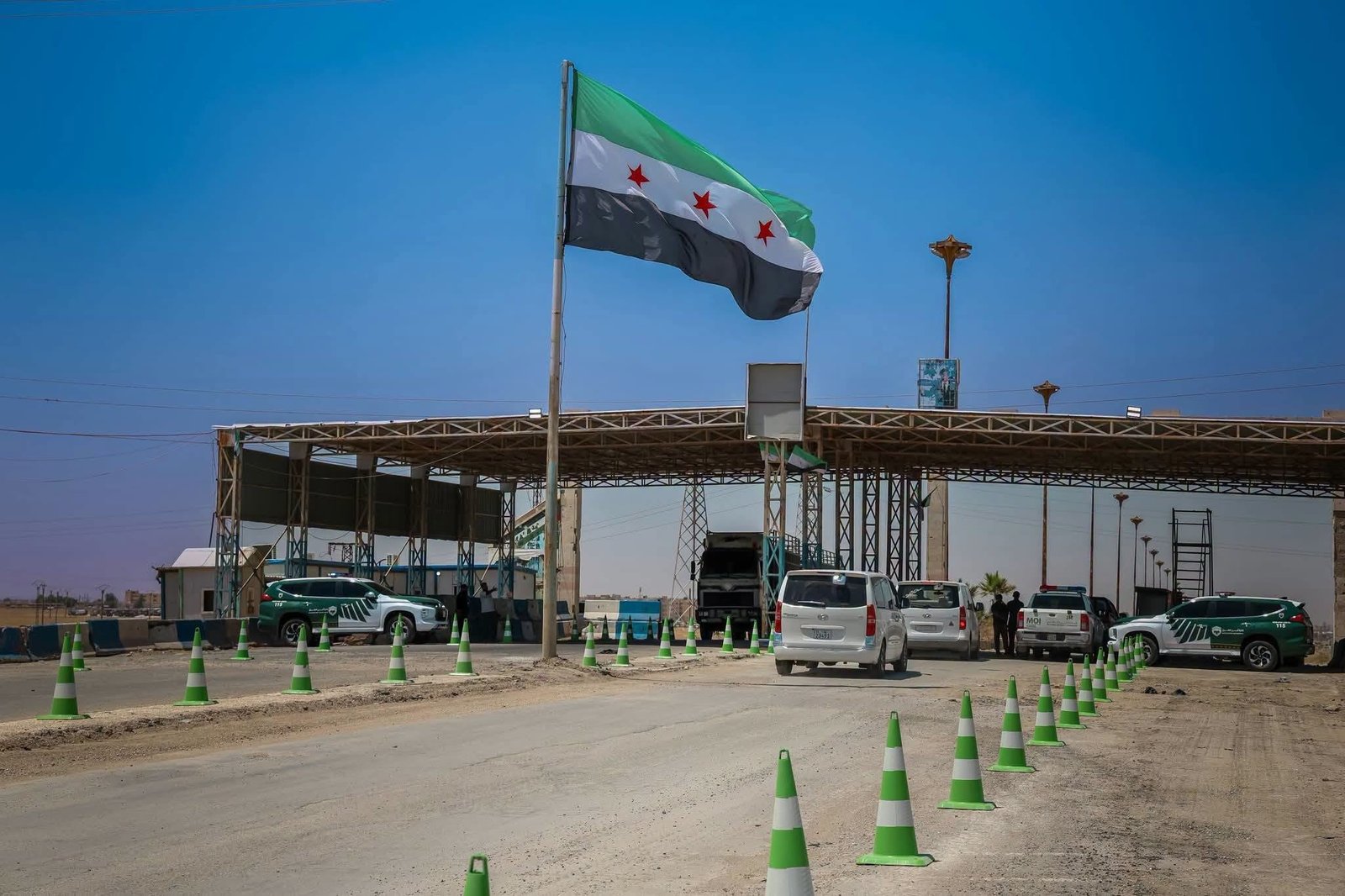
The Syrian government has announced a provisional executive office in Hasakah province with a roughly 6:4 ratio favouring SDF-linked appointees over Damascus appointees. This has provoked criticism from some Arab activists in Hasakah, but in Damascus’s strategic calculus the arrangement is likely seen more favourably than the numbers suggest.
– For Damascus, the restoration of formal state institutions in Hasakah matters more at this stage than the composition of those institutions. Manning is not irrelevant, but it is secondary to re-establishing the structural hierarchy of governance itself, which is the larger objective. The provisional framing reinforces this. Damascus is likely aiming to shift the composition of the executive office in its favour once it builds greater coercive and administrative capacity on the ground. The implied sequence: restore institutions first, build enforcement capacity, then hold elections under more favourable conditions, allowing it to claim the outcome was determined by democratic process rather than appointment.
– That said, templates of vertical subordination and numerical representation should be applied cautiously to Syria’s current context. In a post-Assad environment where state-building is still marred with weak institutions, the individuals who occupy positions often matter more than the formal architecture, because they can build patronage networks, entrench themselves, and accumulate informal power that outlasts any provisional arrangement. The manning question should not be dismissed as secondary to structure; both interact in ways specific to Syria’s transitional conditions.
– Damascus has also made several pointed moves in the sub-district appointments that signal a deliberate effort to de-ethnicise the integration. Hasakah district itself has been left without an appointee, but SDF-linked personnel have been appointed as district managers for al-Malikiyah (Direk) and the Qamishli area, both of which contain territory split between government and SDF control. Simultaneously, Damascus has appointed government-linked Arab officials to sub-district governorships in areas like Cil Agha (Jawadiyah) which largely sits within the SDF pocket, creating mixed governance that frames integration around territoriality and personnel rather than ethnic partition. The likely intent is to increase interaction between government and SDF-linked officials and normalise integrated administration, but the SDF may read these appointments as confirmation that it has regained institutional standing in these areas, creating an incentive to consolidate further rather than allow to be absorbed.
The coercive trade
– The concessions on the executive office appear linked to a parallel, and arguably more consequential, development: the gradual redeployment of Syrian Interior Ministry personnel into areas previously under exclusive SDF control. Several checkpoints at the southern entrance of Hasakah city, formerly under SDF control, have been handed to Interior Ministry personnel. These are substantive transfers, not cosmetic. Interior Ministry personnel have also been observed in areas east and west of Hasakah city that they never entered during the January offensive, representing a new penetration of the SDF’s territorial envelope.
– Furthermore, pro-government sources claim Interior Ministry personnel will also deploy inside Hasakah city itself, not only at its perimeter checkpoints. At the entrance to Kobani city (not just the broader area), a Syrian Interior Ministry checkpoint has been established and staffed by government personnel, another notable milestone in the integration process.
– It remains unclear whether a similar deployment will extend to Qamishli, which is psychologically more significant for Kurds than Hasakah, even though Hasakah holds greater strategic weight: it sits deeper inside Syria, further from the Turkish border, and serves as the provincial capital and seat of local government.
– What appears to be unfolding is a deliberate trade: Damascus is conceding on the composition of civilian-facing institutions in exchange for incremental gains in coercive capacity, specifically policing, arrest powers, judiciary, and territorial presence. This explains why Damascus may have shown patience over incidents like the repeated attacks of the judicial palace signage by pro-SDF Kurdish elements as a protest of not including Kurdish. The government may have calculated that as its personnel gain ground, it will eventually be able to protect and enforce the restoration of the judicial palace on its own terms. The reactivation of the judicial palace appears postponed until Damascus has sufficient coercive presence in Hasakah city to sustain it.
Shadow structures and the fiscal lever
– The SDF, operating from a PKK organisational culture, is unlikely to treat the formal dismantling of its parallel institutions as a genuine surrender of power. Its probable strategy is to translate its institutional presence informally into a de facto autonomy sustained by shadow structures: maintaining parallel institutions beneath the formal apparatus, building patronage networks within the new governance structures to generate revenue, and retaining informal armed elements (operatives like those involved in the harassment campaigns and signage attacks) as instruments of pressure and territorial assertion.
– In fact, the SDF is using every available method to preserve its informal power, including methods that sit uncomfortably with its own ideology, such as aggressively pushing to privatise sectors where it can steer tenders to affiliated companies, retaining both revenue streams and institutional leverage.
– Each side is therefore reading the same arrangement through a different lens. Damascus sees the institutional appointments as the dismantling of a parallel structure and the beginning of fiscal absorption (payrolls now run through Damascus). The SDF reads its numerical advantage in the executive office as a foothold for consolidating power through the very institutions it has nominally conceded.
– For Damascus, this is also the least costly model of absorbing the SDF. A new US Senate draft bill conditions continued support on a “fair” integration of SDF into the Syrian military, but this does not pose a strategic threat to Ahmad al-Sharaa’s position. If compliance proves too costly, he may simply disregard it, since Turkey, not the US, provides the bulk of direct military assistance to Syria. The US holds greater leverage over sanctions and diplomatic normalisation, but Trump appears committed to his current approach on sanctions relief, making a reversal unlikely. Maintaining the appearance of fair integration is therefore useful for preserving US military assistance as a supplementary channel, but not existential.
– Al-Sharaa also appears to recognise that even minimal power-sharing with minorities in the northeast sets a precedent for managing the Druze question in Suwayda. The SDF arrangement is therefore not only about the Kurdish file but serves as a template for broader minority incorporation across Syria.


