


Trump’s Veto Throws Iraq’s Prime Minister Race Into Turmoil
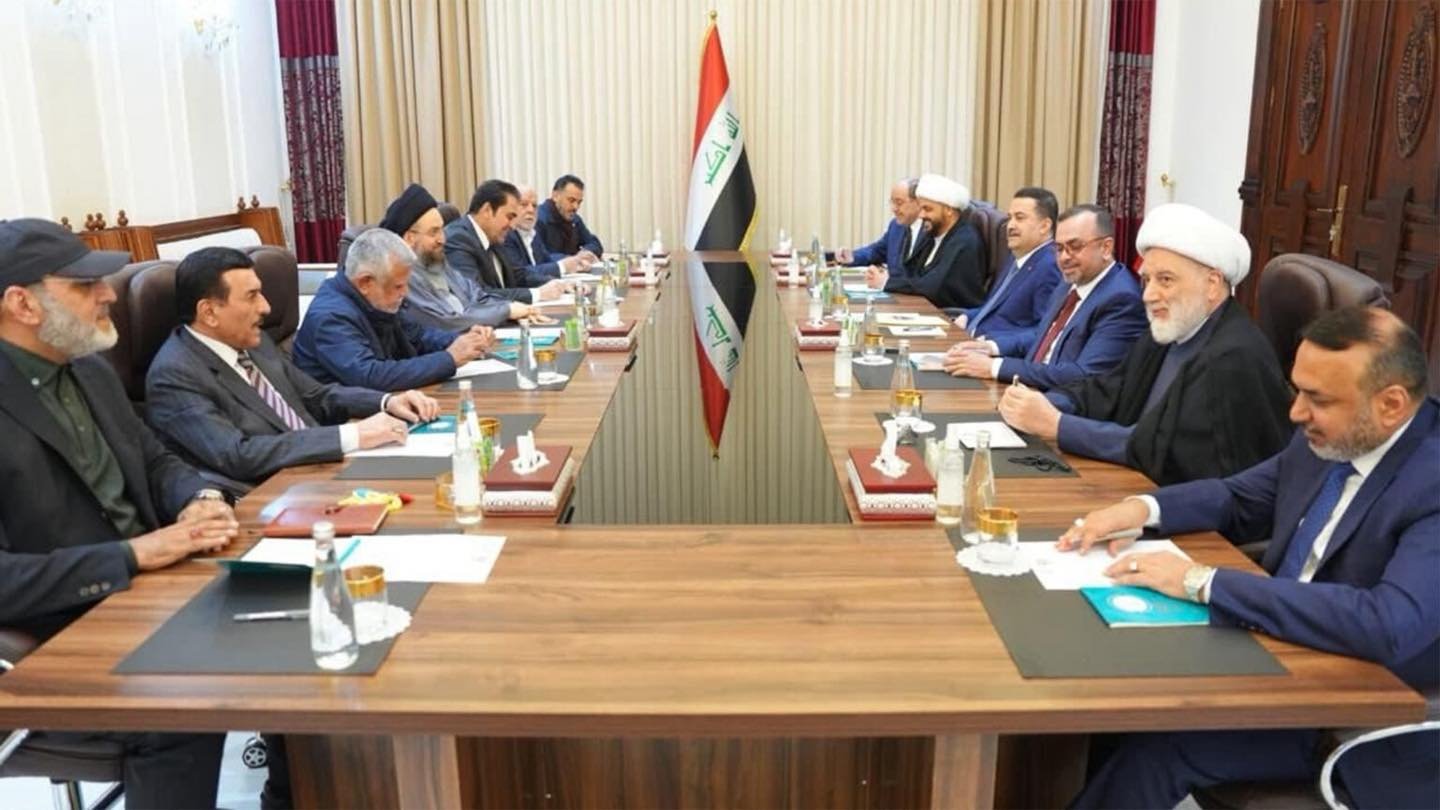
After Iraq’s Shia-led Coordination Framework bloc, following lengthy deliberations, announced controversial former prime minister Nouri al-Maliki as its candidate, US President Donald Trump publicly opposed the move, further deepening the crisis around Iraq’s cabinet formation.
Context: Maliki was put forward as the ruling Shia bloc’s nominee after a surprise withdrawal by the incumbent prime minister, Mohammed Shia’ al-Sudani. The move caught many inside the Shia camp off guard. Even among those who treated the nomination as a fait accompli, resistance to Maliki’s return persisted.
Analysis: When Sudani suddenly withdrew and announced his support for Maliki, many suspected a trap. Maliki has been Sudani’s most prominent rival, the only Coordination Framework leader who explicitly opposed Sudani’s return to office. Maliki’s goal in entering the race was never necessarily to become PM himself. After his two terms from 2006 to 2014, his performance, which contributed to the rise of ISIS, and Grand Ayatollah Ali al-Sistani’s verdict that “those who have been tried shouldn’t be tried again” made his prospects slim. Rather, Maliki aimed to block Sudani by conditioning his own withdrawal on Sudani’s.
By clearing the way for Maliki, Sudani may have calculated that his rival would try and fail, forced to withdraw and clearing the road for Sudani’s return. The theory gains weight from Sudani’s relationship with Trump’s presidential envoy Mark Savaya, which predates both Savaya’s appointment and the Iraqi elections. Sudani may have known Trump would veto Maliki. A FaceTime call after Trump’s election, with Savaya translating, ended with Trump pleased enough to appoint Savaya as his envoy. Sudani also implemented financial reforms reducing money flows to Iran that Maliki had opposed, and was quickest to reach out to Damascus after Assad’s fall while Maliki incited against the new authorities.
With 24 hours remaining before the presidential election session and Maliki’s formal tasking, American messages exploded in Baghdad. According to Asaib Ahl al-Haq MP Safaa al-Jabri, two distinct messages were sent: one to the Coordination Framework with a diplomatic tone, another to non-Shia parties containing direct warnings against supporting Maliki. The Sunni rejections that followed came in light of those warnings. A six-point English-language message arrived through embassy channels and was read at a Framework meeting on Monday. Sources say the reading produced physical scuffles between leaders, with local media reporting gunfire from inside the Green Zone. Five points contained standard language about dismantling Iran-aligned factions. But one point stated explicitly that “the governments headed by Nouri al-Maliki were negative,” a departure from traditional US diplomatic indirection. Then Trump himself tweeted, and his framing was notable. He spoke of Iraq as “a great country” rather than an appendage to the Iran file. His objection was not that Maliki is an Iranian proxy, the usual American line, but that “Maliki is a man with crazy policies and ideas who destroyed Iraq.”
The intervention crystallized a split that was already emerging. The anti-Maliki camp now comprises Qais al-Khazali’s Asaib Ahl al-Haq with 28 seats, Ammar al-Hakim’s Hikma Movement with 18 seats, Mohammed al-Halbousi’s Taqaddum with 35 seats, Bafel Talabani’s PUK, and Sudani’s allies, commanding over 150 seats combined. Its advantage is the ability to balance Iranian interests with American red lines. The pro-Maliki camp is smaller: Masoud Barzani‘s KDP, Hadi al-Amiri’s Badr Organization, and Muthanna al-Samaraii’s Azm Alliance, with around 100 seats. Even Barzani’s support has become shaky after Trump’s Syria envoy Tom Barrack phoned him, with one report suggesting Barrack asked him to withdraw support for Maliki.
What is striking is how quickly Framework leaders distanced themselves while maintaining nominal solidarity. Khazali, according to Jabri, did not vote to approve Maliki’s nomination and was waiting for a signal from Najaf when Trump’s tweet surprised him. Hikma warned that sanctions on Iraqi oil revenues under Washington’s protection could “push the street into protests that bring down the Iraqi government.” Sudani’s statement emphasized “relations with friendly countries, especially the United States.” Halbousi announced his bloc would not join a Maliki government. Even Asaib, which broadcast Trump’s statements as breaking news on a loop, left the door open. Political bureau member Hussein al-Shiahani suggested Maliki may withdraw of his own accord as “a respectable man who values the national interest,” while adding that if consensus moves toward Maliki, “we will still support him and will not be a tool of failure for his path.”
State of Law has not signaled surrender, but its response reveals the bind. A senior coalition source dismissed the Hakim-conveyed message as “ridiculous,” noting that “the parties known for their hostility to the United States were showing great enthusiasm for the six points rejecting Maliki.” MP Othman al-Shaibani claimed a conspiracy against Maliki is being woven inside Iraq, confirmed an investigation has been opened on charges of “foreign collusion,” and said Maliki will not withdraw. Badr’s Hamid al-Moussawi was more explicit, claiming Trump’s tweet “looked as if it was written by Iraqi hands” and pointing to Halbousi specifically as seeking “payback” for his removal from the parliament speakership. He also alleged Gulf financing pushed Trump in this direction. Notably, one line of speculation within Iraqi political circles is that Sudani himself may have coordinated with Halbousi to explicitly reject Maliki’s nomination, which would lend a different meaning to Moussawi’s accusation. Yet this effort to delegitimize the mechanism rather than the substance is revealing: even those questioning the message’s authenticity are behaving as if the underlying American line is real. If it were not, there would not be such widespread and synchronized emphasis on safeguarding relations with the United States.
Yet Sudani may not be Washington’s only acceptable option. A report by al-Aleem suggests a US message conveyed by Hakim expressed preference for Mustafa al-Kadhimi, Haider al-Abadi, or Adnan al-Zurfi, placing Sudani outside the calculations. This signals Washington is steering toward candidates with weaker ties to Iran-aligned factions and fewer direct channels to Tehran. Other Framework sources point to intelligence chief Hamid al-Shatri and accountability commission head Bassem al-Badri as alternatives under discussion. Maliki’s own camp, meanwhile, may consider a familiar workaround: nominating a proxy from within his bloc, such as Youth and Sports Minister Ahmed al-Mubarkaa, who publicly declared he would not abandon “the true leader,” to preserve influence while sidestepping the personal veto.
But either way, Maliki looks increasingly isolated even inside a camp that initially rallied behind an “internal decision.” The emerging consensus is not necessarily ideological. It is procedural and defensive. Many actors want to avoid being seen as retreating because of an American tweet, but they also want to avoid being the faction that triggers a dollar shock, a banking squeeze, or a sudden collapse in government legitimacy. That tension is producing a predictable political outcome: a search for a way to end Maliki’s bid while maintaining face.
One face-saving scenario remains: Shia leaders proceed formally with Maliki’s nomination, then have his government brought down in parliament during the cabinet vote by failing to secure the required majority. But given how openly Framework factions are now foregrounding the US relationship and financial risk, a more plausible outcome is that Maliki does not reach formal tasking at all. The system may end it earlier, inside the Framework, by pivoting to an alternative while framing it as internal recalibration rather than surrender.
Maliki’s comeback has turned into a forcing mechanism. It has clarified who is willing to absorb a rupture with Washington and who is not. The most important change is not that everyone suddenly opposes Maliki. It is that many who might have tolerated him are now signaling publicly that they cannot carry the economic and diplomatic risk of defiance. That is the real meaning of the “reason and balance” language echoing across Framework statements. It is political insurance, and it is the beginning of an exit.


