


How Turkey Turned the Smelka Crossing Into One of the Middle East’s Most Surveilled Borders
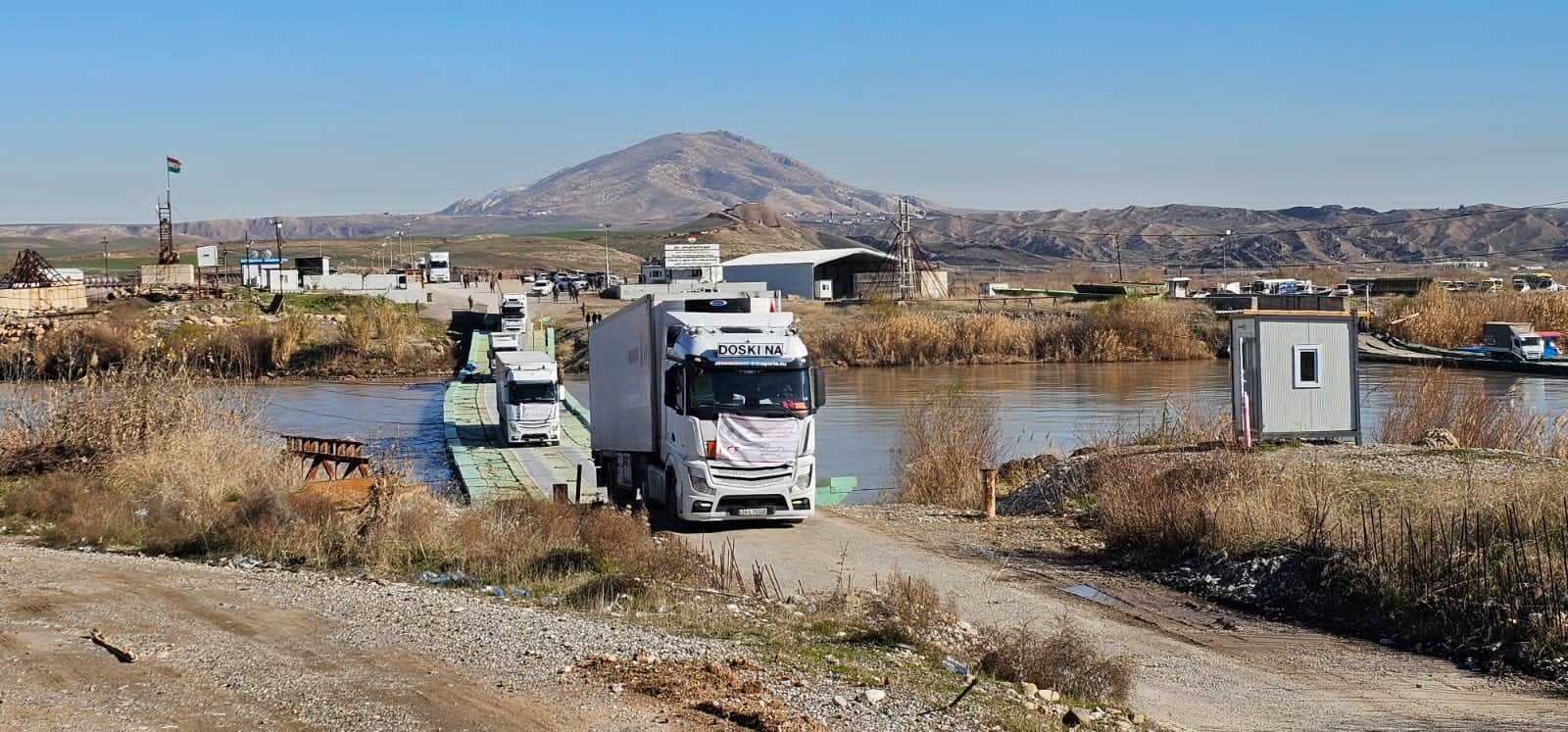
As intermittent clashes in Syria’s Hasakah province move closer to Al-Jawadiyah (known in Kurdish as Çil Axa), a key route connecting the Smelka border crossing between Iraq’s Kurdistan Region and the remaining SDF-controlled strip in northeast Syria, the crossing’s strategic importance has come to the forefront. What remains little known is how Turkey has transformed Smelka into one of the most heavily surveilled border crossings in the Middle East.
Context: As the crisis in northeast Syria has unfolded, humanitarian aid flowing from the Kurdistan Region to SDF-held areas through the only functioning border point between those territories and the outside world has come under scrutiny. Some pro-Damascus and Turkish outlets have claimed the humanitarian convoys contain “concealed weapons” or transport “PKK militants.” The reality points to something entirely different.
Analysis: When the crisis unfolded in Syria this January, the Barzani Charity Foundation transported humanitarian aid to Hasakah’s SDF-held Kurdish areas for the first time. Since then, debate about what the trucks contain has been pushed heavily by Syrian activists and journalists close to the Syrian government, along with some Turkish accounts. But the reality is this: the Smelka crossing is so heavily surveilled through both KRG-led, Turkish-coordinated bureaucratic measures and Turkey’s own ground-based surveillance that the debate is easily settled. It is near impossible, and therefore highly improbable, that any weapons can be transported through this crossing.
Turkey monitors and tracks this route through two key methods. First, no truck can cross Smelka without prior coordination with either the Barzani Charity Foundation or the KRG’s Joint Crisis Coordination Centre (JCC). For context, Barzani Charity closely coordinates with Turkey because the organisation is active in the Afrin area, which has been under Turkish-backed control since Ankara’s 2018 military operation. BCF can only transport aid there via the Syrian government or Turkey, entering through the Bab al-Salameh crossing from Turkish territory. As recently as this January, Barzani Charity coordinated with Turkish-backed Afrin authorities to organise an aid convoy from Afrin to the Sheikh Maqsoud neighbourhood in Aleppo after it was captured by Syrian forces from SDF-backed fighters. The idea that this organisation could conceal or carry weapons to SDF-held areas while simultaneously coordinating closely with Turkey and the Syrian government in other Kurdish-populated parts of Syria makes no sense and disproves the weapons talking point.
The JCC, meanwhile, is an official governmental body established in 2014 under the KRG Ministry of Interior that coordinates with numerous international agencies including UNDP, UNHCR, UNICEF, and the UN Office for the Coordination of Humanitarian Affairs. It operates as the KRG’s lead institution for crisis response with formal collaboration networks across international donor partners. The idea that this body would engage in any activity that could place it on an international blacklist is highly implausible. More importantly, as a direct KRG body dominated by the KDP of Masoud Barzani, the geopolitical logic collapses entirely: the Barzani family’s political and economic interests are deeply intertwined with Ankara, relying on Turkish markets for oil exports and Turkish political support against rivals in Baghdad and Sulaymaniyah. Allowing PKK weapons to flow through KDP-controlled channels would collapse this relationship, costing the KRG far more than any conceivable benefit to the PKK, which the KDP views as a political competitor in any case.

Beyond these bureaucratic controls, there is a second and more important layer through which Turkey monitors any truck or equipment moving from KRG-held areas to SDF-held Hasakah. The border crossing sits just over one kilometre from the Turkish border, and while the crossing area is flat, the Turkish side sits on higher ground, making observation straightforward. Directly at the Iraq-Syria-Turkey tri-border on the Turkish side lies a sand and gravel quarry with an aggregate processing plant. Satellite imagery shows the facility includes elevated conveyor structures and a bridge deck that provide clear sightlines over the crossing below. This infrastructure doubles as an informal monitoring point. From these elevated positions, Turkey uses advanced electro-optical systems such as Aselsan’s DragonEye, a system specifically designed for border surveillance that can read every truck’s licence plate, identify the driver’s face, and see exactly what the cargo looks like from the outside, even at night. These systems use thermal imaging, allowing them to observe traffic just as clearly in pitch-black darkness. Over a thousand DragonEye units have been delivered to Turkish border forces and security posts for precisely this purpose.
Turkey also creates “pattern of life” maps using its drone fleet, primarily Bayraktar TB2s and ANKAs, which frequently patrol this tri-border area. This is not speculation: Turkish drones have conducted hundreds of strikes against PKK targets across northern Iraq and Syria since 2016, demonstrating that Ankara actively converts surveillance intelligence into operational action. Rather than checking a truck at the bridge, a drone can simply follow a suspicious vehicle after it crosses into Syria. If a truck crosses Smelka and drives to a civilian market, it is ignored. If it crosses and drives directly to a known SDF military tunnel or ammunition depot, Turkey logs it as a military supply run. The absence of Turkish airstrikes on Smelka convoys, or any publicised evidence of weapons smuggling that Ankara could use to justify military action, suggests either the crossing is clean or Turkey’s monitoring is comprehensive enough that they know exactly what passes through.
Turkey’s thermal profiling tools add another layer. They use thermal imagers to examine truck engines and cargo areas. From a distance, they can tell if a truck is a refrigerated unit but the cooling system is off, yet the driver is acting secretively: a red flag. If a truck is a canvas-covered flatbed, thermal cameras can easily detect the heat signatures of people hiding inside the cargo area.
Turkey also operates sophisticated signals intelligence arrays in this border triangle, capabilities that have been documented providing real-time SIGINT and electronic intelligence to Turkish joint command centres during cross-border operations. They do not just watch the truck; they listen to the driver’s mobile phone and radio.
While high-risk smuggling routes that the SDF or PKK use for cross-border movement may exist, none pass through Smelka or the known routes, which are heavily monitored. Turkey has turned this crossing into one of the most surveilled border points in the Middle East.


