


The Syria Crisis Triggered a Different Battle in the Kurdistan Region: Over What It Means to Be Kurdish
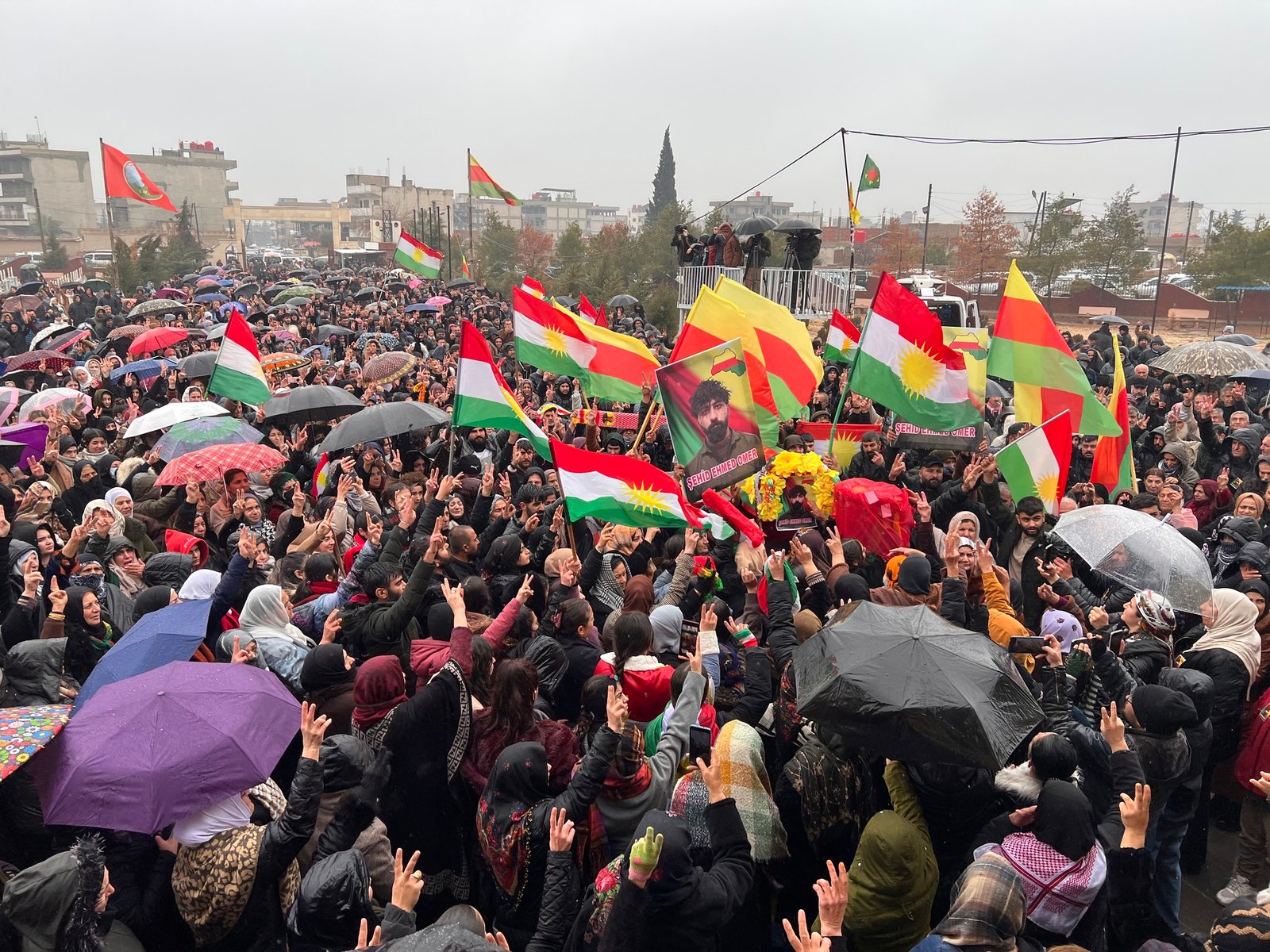
When fighting between the Syrian Democratic Forces and Damascus-aligned forces escalated in early-to-mid January, the Kurdistan Region of Iraq responded on two levels at once. The mainstream reaction was instinctive and broadly unified: anxiety for Syrian Kurds, solidarity with the displaced, dread at the familiar pattern of a Kurdish community under siege. For most people, the concern was elemental, about Kurds as kin, as an ethnic community in danger, not about any particular political entity or armed faction. But in comment sections, sermons, and television studios, a second reaction took shape, one that had less to do with Syria than with old fractures at home. The crisis became raw material for an ideological proxy war over what it means to be Kurdish, who is to blame when Kurds suffer, and whether the answer lies in more religion or less of it.
What made the argument unusually raw was that it fed on the same emotional fuel, fear and humiliation, but pulled it in opposite directions. On one pole were Islamist-leaning clerical voices and conservative commentators who treated the crisis as a cautionary tale about secular politics, Western patronage, and social norms they considered degraded. On the other were hard secular and anti-religious voices who treated the violence as proof that Sunni Islamist power, now embodied in Ahmad al-Sharaa’s ascendancy, would always be turned against Kurds, and that Islam itself was being weaponized against the Kurdish nation.
The argument did not replace mainstream sympathy. It sat on top of it, parasitic and opportunistic, but powerful enough to reshape the tone of Kurdish debate at precisely the moment people were most vulnerable to grand conclusions.
The conservative critique moved quickly to a familiar charge: the Kurds had been used as expendable “boots on the ground” by the United States, then left stranded when strategic priorities shifted. That claim was not new, but the Syrian escalation gave it fresh traction because it was now paired with a moral reading: reliance on a foreign patron was not only risky, it was degrading.
Dana Nawzar, a conservative commentator with a substantial following who positions himself as a voice for family-oriented, religiously rooted Kurdish identity, offered the sharpest version of this argument. The tragedy was not merely abandonment, he argued. It was that ‘secular’ Kurdish actors had made themselves cheap, fighting and dying in Arab-majority areas far from their own communities without building durable legitimacy at home or leverage abroad. Nawzar’s framing went further than geopolitical complaint. In his worldview, dependence is not just a policy error; it is a symptom of a deeper weakness, a lack of rootedness and self-respect. A movement that does not draw its strength from its own society will always be fragile. He advanced a broader prescription too: Kurds, Arabs, and Turks share the common thread of Sunni Islam, and should lean into that religious identity as the basis for regional coexistence rather than relying on secular nationalism, which he cast as divisive and ultimately self-defeating.
A second conservative line of attack targeted social symbolism. Mullah Muzaffar Khorasani, an Erbil-based cleric, drew particular attention with a critique of the SDF’s use of female fighters. His argument was pointed and specific: why, he asked, are women being sent to the front lines while so many of the men who claim to support them sit at home commenting on Facebook? When something happens to these women, he said, those same men complain, yet they accepted the situation that put women in harm’s way in the first place. The argument blended conservative gender norms with a populist critique of performative solidarity, and it resonated in clerical networks where the image of the female fighter has long served as a proxy for a broader complaint about secularism and the legitimacy of the Kurdish political project in Syria.
The hard secular counter-argument was equally sweeping, and in its own way equally moralistic. If conservatives framed the crisis as the price of secular dependency, anti-religious voices online framed it as the predictable consequence of Sunni Islamist power. In that reading, the violence was not simply “Syria” and not just “Damascus.” It was the reassertion of a broader Sunni Islamist axis, perceived as aligned with Turkey, that treats Kurdish autonomy as heresy and Kurdish identity as a threat. The conclusion drawn by the most extreme voices in this camp was stark: if Kurds keep clinging to a religious identity that their enemies manipulate, they will remain permanently exposed. Some went further, using the crisis to argue that Kurds should renounce Islam altogether, or at minimum detach Kurdish nationalism from Sunni religious belonging.
These voices celebrated the SDF’s female fighters not just as brave individuals but as symbols of secularism defending Kurdish honor when states and men had failed. When U.S. Senator Lindsey Graham introduced the Save the Kurds Act, widely understood even by supporters as a political signal more than a near-term legislative instrument, voices in this camp treated it as vindication: see, they argued, even distant non-Muslim allies will speak up, while the Muslim world stays silent.
Perhaps the most emotionally charged flashpoint involved a video posted on January 21 showing a Damascus-affiliated fighter holding up a severed braid he said belonged to a YPJ fighter killed during clashes in Raqqa. In the clip, the man refers to the hair’s owner as “haval,” the Kurdish word for comrade. When asked why he cut it, he replies that she was already dead. After a wave of online outrage, he posted a second video claiming the braid was fake and that he had found it at a restaurant. Whether the original incident was real or staged, its emotional effect was immediate. Across Kurdish communities, women braided their hair in solidarity, turning an act of humiliation into a counter-symbol of defiance. The braid became a political object: proof of Kurdish dignity for some, proof of Kurdish “deviance” for others.
That is where the ideological poles collided most visibly. Secular activists celebrated the braid as a feminist-nationalist gesture. Conservative clerics rejected the solidarity trend on religious grounds. But one of the most uncompromising statement came from Mullah Halo, an influential Salafi cleric in Sulaimani, who declared publicly that he would not participate in any solidarity around the video. His reasoning was blunt: the woman in question, by not wearing hijab, was already in violation of Islamic teaching. He would not defend anyone, regardless of their ethnicity or circumstances, who was not abiding by religious codes. The trend itself, he said, was haram, because it amounted to defending someone in rebellion against the requirements of the faith. He was detained for two days over the remarks. It was the moment where the abstract theological argument became a concrete refusal of ethnic solidarity, and where that refusal met a concrete state response, the clearest illustration of how quickly words about identity become a security matter in the Kurdistan Region.
Another spark came in Erbil, when a young woman at a solidarity demonstration recited a well-known nationalist poem that some in the audience and online interpreted as insulting Islam and the Prophet Muhammad. Anger spread quickly enough to trigger a counter-protest. Supporters, including some religious people, argued the poem was being misread, taken out of its original literary context. The woman later appeared on television to say she had never intended any insult, that the poem was a nationalist work she had chosen for the occasion, and that she herself came from a religious family and was a practicing Muslim. But by then the recitation had already served its function as a cultural wedge. It offered conservatives a concrete exhibit for their claim that “secular nationalism” slides into contempt for religion, and it offered hard secular voices a new exhibit for their claim that religious outrage is selectively mobilized while Kurdish lives are treated as negotiable.
Even figures who tried to lower the temperature became targets. Ali al-Qaradaghi, the Iraqi Kurdish scholar who heads the influential International Union of Muslim Scholars from Qatar, called for restraint and urged both sides to avoid further fighting. In a polarized environment, that kind of language was read as neutrality, which is to say, as betrayal. Kurdish nationalists accused him of legitimizing Damascus at the moment Kurds were bleeding. When Qaradaghi praised a presidential decree from Damascus announcing certain Kurdish rights, including language protections, critics asked how he could lend legitimacy to such gestures while Kurdish areas were under attack. But Qaradaghi was also attacked from the other direction. Arab Islamist-nationalist commentators criticized him for equating the SDF, which they described as a militia, with the legitimate Syrian state and its armed forces. The fact that he drew fire from both sides illustrated how narrow the middle ground had become.
What rooted this story specifically in the Kurdistan Region was not only the content of the debate but how it was policed, and where.
In Sulaimani and surrounding areas, at least four religious clerics were detained at various points for commentary that touched on the ideological dimensions of the Syria crisis, including remarks seen as insulting Kurdish fighters. In one reported incident, congregants in a mosque stood up and refused to let a mullah finish a sermon critical of the SDF’s secularism. In Erbil, by contrast, no clerics were detained. Mullah Muzaffar Khorasani continued to speak despite a social media campaign calling for his arrest. The divergence reflected not just political geography but the distinct relationships between governing parties and religious establishments in the two cities. Sulaimani’s denser activist networks and sharper PKK-adjacent currents make it a more combustible environment and, perhaps for that reason, one more tightly managed by security forces.
The case of Duhok added another layer. Despite speaking the Kurmanji dialect closely related to that of Hasakah’s Kurds, and despite arguably having the strongest linguistic and cultural ties to those directly affected by the fighting, Duhok saw the least visible activity on either side of the debate. The pattern underscored that this ideological battle was driven less by proximity to the conflict than by pre-existing political dynamics within each city. Where PKK-aligned and Islamist currents were already competing for space, the Syrian crisis became fuel. Where they were not, the crisis remained what it was for most people: a source of worry, not a platform for ideology.
A number of religious figures did attempt to strike a balance, expressing sympathy for Kurdish civilians while stopping short of endorsing the SDF’s political project. But several appeared cautious in ways that suggested they feared popular backlash. The political cost of being seen as too sympathetic to the SDF in conservative circles, or too sympathetic to Islamism in nationalist ones, was visible enough to discourage many from staking out clear positions. The middle ground existed, but it was narrow and difficult to hold.
There was also an undercurrent that pointed beyond Syria. As Sunni Islamist narratives surged, some Kurdish voices highlighted a different kind of solidarity: public sympathy from Iraqi Shia clerics and Shia political currents who framed Kurds as partners rather than enemies. From that, a separate argument took shape: Kurdish interests in Iraq may be safer when anchored in a stronger understanding with Shia forces, given that Sunni Arab politics, regionally and domestically, has often treated Kurdish autonomy as a target or a bargaining chip. That line of thinking is not new, but the Syrian crisis, reframed in Kurdish discourse as a Sunni Islamist advance, gave it renewed emotional force.
None of this means the Kurdistan Region suddenly became a society split into two ideological camps. The broad center, anxious and sympathetic, is still there. But the Syria crisis offered something that vocal minorities on both ends crave: a moment when fear makes people hungry for total explanations.
Conservatives offered one: the Kurds are paying for secularism and dependency, and the way out is to be more rooted, more communal, more religious, and less naïve about foreign patrons. Hard secular voices offered another: the Kurds are paying for living in a region where Islam can be mobilized against them, and the way out is to detach Kurdish identity from religious belonging and build alliances on power, not piety.
The reportable fact is not which explanation is right. It is that a Syrian battlefield produced a Kurdish argument at home, and that argument is increasingly about identity rather than tactics. The next crisis, whether it comes from Syria, from Baghdad, or from within the Kurdistan Region itself, will land on a society that has not resolved this question but has now rehearsed the battle lines. The ideological infrastructure is in place. The next trigger will find it ready.


