


Syria’s Arms Seizure Sells Washington Its Leverage Over Hezbollah
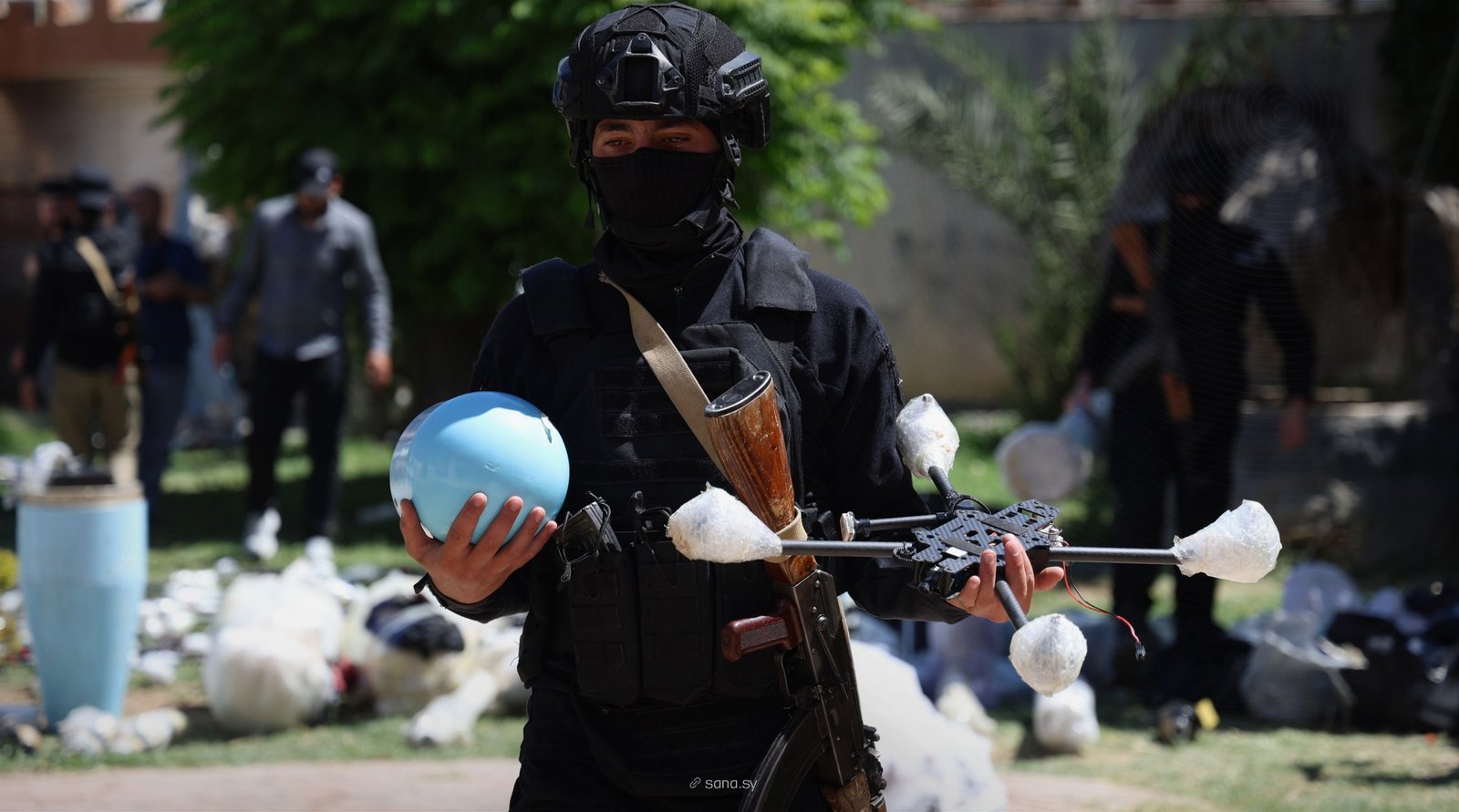
Syrian authorities have intercepted a truck carrying Iraqi oil that was found to be concealing a shipment of weapons, including long-range missiles and drones, destined for Hezbollah in Lebanon via Iranian channels. The seizure took place at the al-Tanf crossing on the Syrian-Iraqi border and marks the latest instance of Damascus disrupting the logistics network that has emerged along the Iraq-Syria overland oil route, at a moment when Washington is weighing a Syrian role in pressuring Hezbollah more broadly.
Context: Iraqi oil has been flowing overland into Syria as part of the rerouting triggered by the Strait of Hormuz crisis, which pushed Baghdad to look for alternative export and transit corridors via the Syrian port of Baniyas. That traffic passes through four traders believed to be militia-linked figures embedded in Iraq’s oil and border patronage networks, reportedly earning $5 to $10 per barrel on the emerging route. The arrangement has quietly become a significant channel of cross-border trade, and, as this seizure shows, a vector that can also carry illicit cargo.
Analysis: Three points are worth drawing out from this interception.
First, the timing strongly suggests a deliberate Syrian move to build leverage at a moment when Trump has been making increasingly frequent statements floating a Syrian role in tackling Hezbollah in place of Israel. The seizure demonstrates, in the clearest terms available, that cutting the logistics line running from Iran to Hezbollah requires Syrian cooperation. That gives Damascus something concrete to trade. The likely asks are Israeli withdrawal from recent advances inside Syrian territory, including the buffer zones tied to the Suwayda dispute, and the timing is notable given that the seizure came just two days after Trump urged Netanyahu to begin redeploying Israeli forces out of Syria.
There is also a related reading worth setting alongside this. Al-Sharaa has little appetite for the direct confrontation with Hezbollah that Trump has been pushing. Openly taking on the group would be a serious gamble for a presidency that remains fragile, and it risks retaliation from Hezbollah itself as well as from Iran-aligned militias to Syria’s east in Iraq. Al-Sharaa is unlikely to accept that role however the pressure is framed. Read this way, the seizure functions as an indirect signal that Damascus can help on the Hezbollah file through means short of direct confrontation, while still building the leverage it wants over withdrawal and Suwayda.
Second, the oil moving into Syria travels under term contracts that Iraq’s state oil marketer awarded to four Iraqi oil traders, and it moves through an oil and border economy that US Treasury sanctions have tied to Iran-aligned militias. Majid Shingali, a KDP MP, has alleged that political blocs take commissions of between $5 and $20 per barrel on the route. None of that amounts to evidence that anyone in the chain is knowingly moving weapons for Hezbollah. The likelier explanation lies in the volume itself, since checkpoints along this corridor run on cash, are difficult to audit and easy to bribe, and once convoys are crossing the same points on the same paperwork week after week, concealing a shipment inside that flow becomes considerably easier.
Third, Damascus may well have known about this specific route and opted for selective enforcement rather than a genuine crackdown, timed for effect rather than out of newfound resolve to shut the network down. Hezbollah secretary-general Naim Qassem said in April that the party has no problem with Syria’s new leadership and names Israel as its only enemy, a framing that leaves room to read Damascus as tacitly permissive rather than hostile. Separately, a source cited by Al-Marsad said Syrian authorities knowingly let arms shipments to Hezbollah cross the country. Set against that backdrop, the precision of this particular seizure’s timing is difficult to explain as coincidence.
Taken together, the episode illustrates how energy flows and security calculations are becoming fused on this corridor, with enforcement itself operating as a bargaining chip rather than as policy.


