


Iran’s Power in Iraq Has Become Harder to See
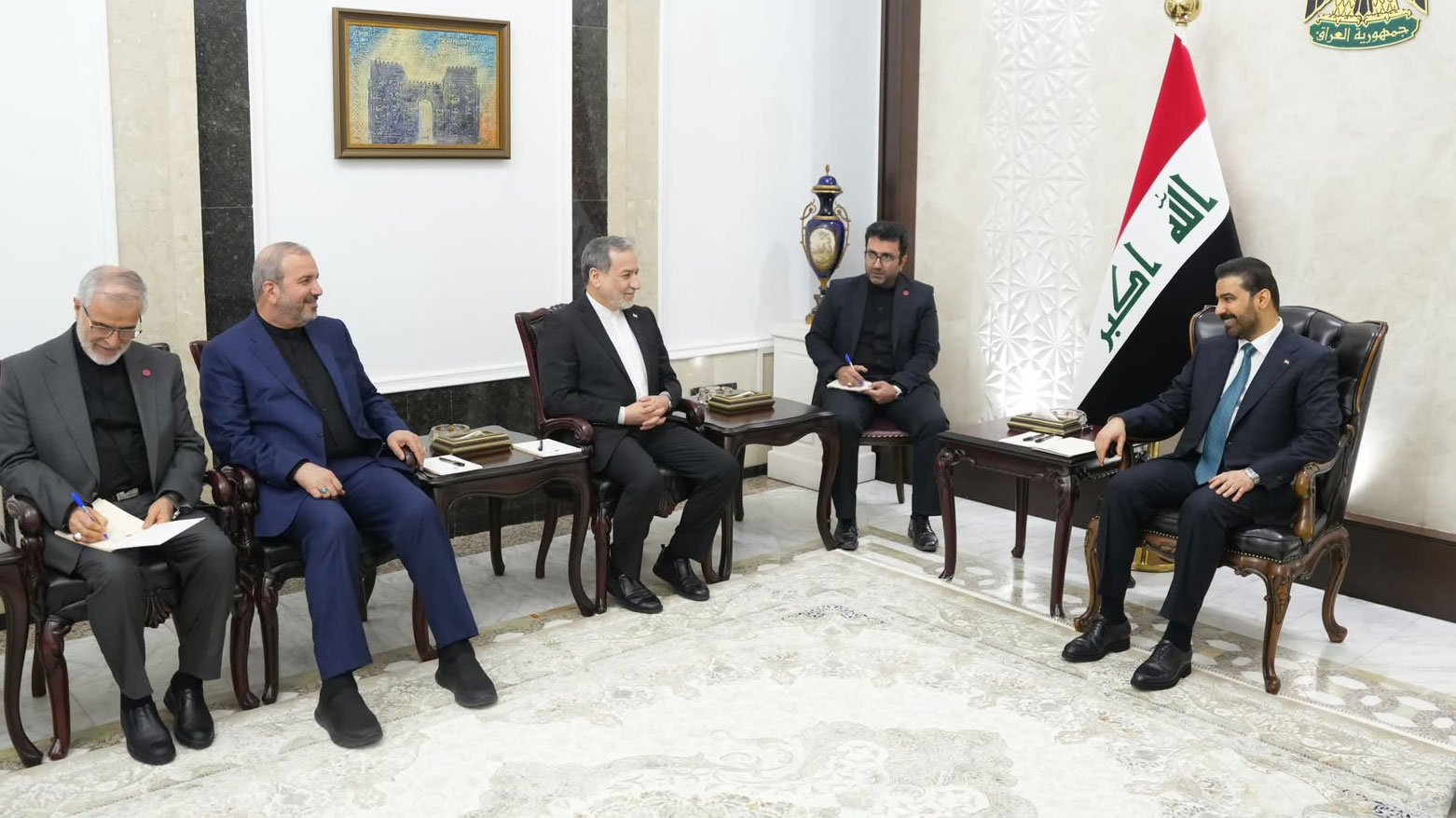
Iraqi Prime Minister Ali al-Zaidi arrived in Washington on Monday for his first foreign trip since taking office, leading a delegation that includes the foreign and oil ministers and the head of the National Intelligence Service, and meets President Donald Trump at the White House today. Energy, trade and investment agreements are expected over the week-long visit, including a proposed fund into which Iraq would deposit half a million barrels of oil per day in exchange for American support for its electricity sector. In an op-ed published on the eve of his departure, Zaidi presented his government as a reform administration that has disarmed a significant number of armed groups within sixty days of taking office, strengthened the rule of law, and prepared the country for large-scale American investment in energy, infrastructure and technology. He framed 30 September, the end of the Coalition mission in Iraq, as the opening of a new phase of partnership with the United States, and described a sovereign Iraq that stands apart from regional alignments. Hours before his departure, the Islamic Resistance in Iraq, the umbrella of Iran-aligned armed factions, rejected the visit and warned against replacing military occupation with what it called a more dangerous economic occupation.
The visit comes as a wave of commentary in Washington, led by a Foreign Affairs essay titled “Iran Is Losing Iraq”, argues that Iranian influence in Iraq has entered a structural decline, with Zaidi’s rise and the militia integration process cited as leading evidence.
Context: Zaidi was named prime minister-designate by the Coordination Framework on 27 April and confirmed by parliament on 14 May. Zaidi’s rise begins inside the “economic committees” of militia-linked Shia parties, the financial engine rooms through which armed factions manage, invest and recycle capital. His nomination followed a sequence of escalating American pressure. One week earlier, Washington halted a five-hundred-million-dollar shipment of physical dollars to the Central Bank of Iraq from accounts at the New York Federal Reserve. One day earlier, US chargé d’affaires Joshua Harris circulated a letter describing Coordination Framework leaders as adversaries, and the same day Washington placed a ten-million-dollar bounty on militia leader Haydar al-Ghrawi, whose political wing holds seats inside Sudani’s coalition. IRGC Quds Force commander Esmail Qaani had visited Baghdad the week before the nomination.
The parliament that confirmed Zaidi is itself the clearest available dataset on where power sits. Final results from the Independent High Electoral Commission show that each of the five largest Shia lists from the November 2025 elections included at least one armed faction designated by the United States as a Foreign Terrorist Organisation, and in every case those factions won seats. The five lists together took roughly 140 of 329 seats. Sadiqoun, the political wing of Asaib Ahl al-Haq, won 28. Badr won 20. Kataib Sayyid al-Shuhada took 7 inside Maliki’s State of Law. Kataib Jund al-Imam and Ansar Allah al-Awfiya took 6 and 3 respectively inside Sudani’s coalition. Kataib Hezbollah’s Huquq bloc won 6 on its own list, the Imam Ali Brigades took 9 across two lists plus 3 through the Arak Party, and Saraya al-Jihad won a seat inside Ammar al-Hakim’s alliance, which is usually described as the moderate pole of Shia politics. This accounting excludes PMF chairman Falih al-Fayyadh, sanctioned under Global Magnitsky rather than designated, whose Ataa Movement won around ten seats within Sudani’s coalition.
Analysis: The case for Iranian decline rests on visible indicators: a businessman prime minister acceptable to Washington, a disarmament programme, quieter militias, an Iraqi government courting American investment. The error lies in treating visibility as a proxy for influence. Influence that has become embedded in state institutions, party finance, procurement channels and social constituencies generates fewer visible signals than influence exercised through open militia activity, and the decline argument mistakes this reduction in signal for a reduction in substance.
The militia seat count, striking as it is, understates the position, because Iran-aligned weight in parliament extends well beyond factions under US designation. Maliki commands no militia, yet Washington treated his return to the premiership as unacceptable precisely because of his closeness to Tehran. Counting only designated factions therefore sets a floor. Measured against earlier cycles the trajectory is clearer still. In 2010, Ayad Allawi’s Iraqiya outpolled Maliki’s State of Law, the principal forerunner of today’s Coordination Framework. No comparable challenge exists now. The Framework and its allies dominate the chamber to a degree the Iran-aligned bloc never achieved in any previous parliament, and they did so while presiding over a recovery in turnout to 56 per cent, after years in which falling participation had been read as evidence of the system’s exhaustion. Attitudinal data moves the same way. Gallup finds approval of Iran’s leadership among Iraqi Shias at 52 per cent in 2025, from 17 per cent in 2022, and Arab Barometer’s postwar wave records positive views of Iranian regional foreign policy at 48 per cent, up eleven points on the prewar survey. Seats, participation and attitudes all strengthened during the precise period in which the decline literature claims collapse.
The long-run benchmark reinforces the point. American troops remained in Iraq until 2011, constraining what Iranian influence could look like even where it ran deep, and the years of maximal visibility after 2014 reflected emergency mobilisation to rescue a failing state. Emergencies make influence conspicuous without making it larger. Measured against 2005, Iranian influence today is more established, more institutionalised and more socially rooted. The one genuine setback, the Tishreen movement of 2019 to 2021, when Fatah fell from 48 seats to 17 and protesters burned Iranian consulates, has been followed by a recovery in more structural and diffused form, spread across coalitions and calibrated to stay below the threshold that triggers American economic retaliation. The attitudinal recovery tracks the same arc, and the war sharpened it. Gallup’s annual series shows approval of Iran’s leadership among all Iraqis climbing from 14 per cent in 2022 to 36 per cent in 2025, with the Shia figure rising from 17 to 52 per cent across the same period. Arab Barometer’s Wave IX, fielded between late September and early November 2025 and therefore a genuinely postwar observation, records favourable views of Iran up ten points on the prewar wave to 44 per cent, and positive views of Khamenei’s regional foreign policy up eleven to 48 per cent. Iran’s confrontation with Israel, and its survival of direct war, has resonated in a country where hostility towards Israel is close to universal: Arab Barometer finds only 13 per cent of Iraqis supporting normalisation, among the lowest levels recorded in the region. For much of the Shia public, Iran’s endurance under Israeli and American attack reads as vindication. Influence that has learned to hide in plain sight registers as decline on every indicator that tracks visibility, which is why those indicators mislead.
The Zaidan intervention: Zaidi’s rise is better understood through Faiq Zaidan, the head of Iraq’s judiciary, whose closeness to the new prime minister is well established within Iraqi policy circles and has been documented in earlier TNC coverage. Zaidan is widely regarded as the guardian of the post-2003 Shia order, and his settled preference is to work from behind the scenes, preserving the appearance that governments emerge from elections. His decision to step forward personally and arrange the succession is therefore the most telling fact of this government formation. Guardians expose themselves only when the order they protect is in danger, and by early 2026 the danger was acute. The war with Iran had put the Shia order itself at risk, the Maliki-Sudani rivalry was pulling the Coordination Framework apart, Sudani’s independent channels to Washington threatened a rupture that would have spilled two decades of shared secrets, and sanctions pressure had reached the financial core of the state.
That Iran permitted, and by every indication welcomed, Zaidan’s intervention is equally telling. He is trusted across the system’s factions, carries the institutional weight to impose an outcome none of them could impose alone, and has the flexibility to manage Washington while steering the order to safety. At a moment too delicate for the usual intermediaries, his stewardship functions as Tehran’s insurance policy rather than a challenge to it.
Zaidi fit the moment because of the liabilities he lacked and the connections he held. Maliki was too provocative for Washington, a militia commander too exposing, a second Sudani term too threatening to the balance inside the Shia house, a genuine reformer too dangerous to the rent channels that hold the coalition together. Zaidi’s business relationships span Maliki, Sudani and the Sunni and Kurdish factions, which gives every major actor both a stake in him and exposure to him, while his businessman profile appeals to a transactional American president. He functions less as a political leader than as a chief executive appointed by a cartel that could agree on no boss, could not risk a reformer, and could not surrender the economy that sustains it.
The same adaptability shows in how established figures have adjusted their presentation. Maliki spent the war placing himself rhetorically inside the resistance axis and attacking in every direction, then softened his tone the moment American escalation made that posture costly. The alignment did not change; the packaging did. A system capable of this degree of self-adjustment, under the most serious pressure it has faced since 2014, is displaying institutional depth.
Integration as absorption: The factions accepting integration, led by Asaib Ahl al-Haq, are converting militia manpower into salaried, ranked positions inside the security apparatus, with procurement access and legal cover attached and command loyalties intact. Badr is the operative precedent: folded into the federal police years ago, it emerged with greater influence over that institution than it held outside it. Kataib Hezbollah’s refusal to integrate, as the faction closest to the IRGC, is best read as portfolio structure rather than rupture. A system that places most of its armed capital inside state institutions while holding its most reliable instrument outside them preserves institutional reach and deniable striking power at once. The war demonstrated how the layers interact. Alongside the public resistance umbrella, decentralised cells of roughly ten fighters conducted repeated drone attacks on Gulf targets, formations too small to attribute cleanly, while networks embedded in the federal police and army needed only to enable, shield and overlook them. The geography of wartime airstrikes confirms how rooted this architecture is: strikes on militia targets concentrated in Sunni-majority and northern areas rather than the south, despite the south hosting the movements’ bases and command infrastructure, a targeting pattern that amounts to tacit acknowledgement that the southern social base is beyond contestation.
The anchor state: The deeper flaw in the decline argument concerns what Iran wants from Iraq. Tehran’s interest lies in an Iraq that is solvent, internationally connected and free of sanctions, because such an Iraq serves as the economic lung of a sanctioned Iran. An Iraq openly displayed as an Iranian instrument invites the sanctions that destroy that value, and an Iraq weakened past a certain point is useful to nobody, Iran least of all. The apparent paradox of a Coordination Framework government courting Washington while its component factions remain Iran-aligned dissolves accordingly. The latitude Baghdad enjoys is extended by Tehran as deliberately as it is claimed by Iraq. The appropriate description is managed tactical autonomy: latitude at the level of daily governance and diplomacy, granted to protect the strategic architecture underneath.
Regional geography makes the logic compulsory. With Assad gone and Ahmad al-Sharaa in Damascus, the Shia political order in Baghdad sits encircled on three sides, by a Sunni Islamist Syria to the west, a Turkey allied with it to the north, and a Saudi Arabia courting it to the south, with Iran as its only strategic hinterland. Every actor who owes his existence to the post-2003 system, Maliki and the Sadrist current included, has a structural incentive to coordinate with Tehran for mutual survival, and Tehran has every incentive to show flexibility so that the order endures. Iraq’s place in the Iranian portfolio also differs in kind from Hezbollah or the Houthis. Those are non-state actors whose value lies in confrontation; Iraq is a state integrated into the global economy whose value lies in staying out of it, so that the economic channel remains open. It is the anchor state of the network, and anchor states are held loosely by design.
Iranian statecraft compounds the measurement problem. A tradition of strategic ambiguity, layered signalling and delayed response, built over decades of sanctions and intelligence pressure, means an apparently slow or passive Iranian posture often conceals mapping, patience and deferred retaliation. This bears directly on how Washington will judge whether its final-chance pressure on Baghdad has succeeded. The metrics available to it are the visible ones, disarmament announcements, integration numbers, investment agreements, the tone of this week’s visit, and Zaidi’s op-ed is engineered to satisfy exactly those. The structural indicators, seat distribution, procurement control, judicial power, social attitudes and the covert operational layer, move on a longer timescale and largely outside American view. A policy that measures success through signals the system has learned to manage will find success wherever it looks, while the architecture beneath continues to consolidate.


