


How the Strikes on Iraq’s Militias Followed the Country’s Divide
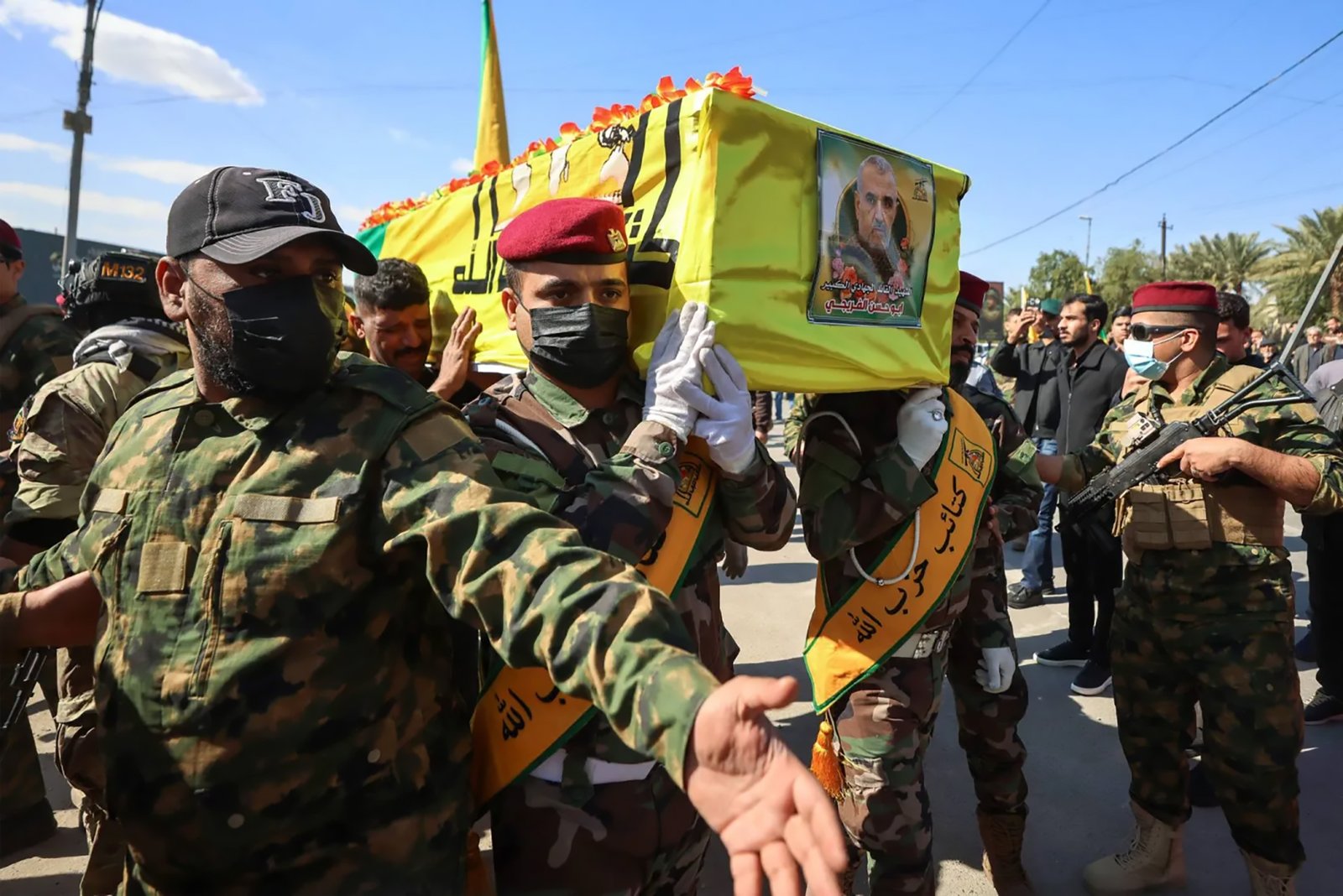
The pattern that emerged in the strikes on pro-Iran Iraqi militias between February 28 and March 11 was striking not only for the number of attacks but for where they landed. At least 15 distinct target clusters were hit across Nineveh, Anbar, Babil, Diyala, Kirkuk, and Salah al-Din, involving at least nine named militia formations within the Popular Mobilization Forces. Upwards of 20 PMF personnel were killed and dozens wounded, including senior Kataib Hezbollah commander Ali Hassan al-Furaiji. But not a single strike fell in Iraq’s Shia-majority south, where these same militias maintain their organizational, financial, and political headquarters. The campaign is targeting the forward-deployed kinetic infrastructure of Iran’s proxy network while leaving its political core untouched.
Context: Nine identifiable formations were struck. Kataib Hezbollah’s 45th Brigade absorbed repeated hits at Jurf al-Nasr in Babil, Akashat and the Al-Qaim border strip in western Anbar, and the south Baghdad belt, where al-Furaiji was killed on March 4 alongside Haider al-Majidi and Sayyid Aoun al-Fadhili. Asaib Ahl al-Haq’s 41st Brigade was hit in Diyala’s Sharaban district on March 1, killing four. Kataib al-Imam Ali’s 40th Brigade suffered the deadliest single strike at Dibis in Kirkuk on March 10, with casualty reports ranging from four to six killed and up to 18 wounded, and was also hit at Qayyarah and on the Nineveh Plain. Kataib Sayyid al-Shuhada’s 14th Brigade was struck at al-Rashidiya and at Shariykhan alongside the Badr Organization’s 34th Brigade. Hashd al-Shabak’s 30th Brigade endured the most sustained targeting, hit on at least six occasions across eastern Nineveh from Bartella to Ain al-Safra. Saraya Talia al-Khorasani’s 18th Brigade was targeted in Akashat and at its Al-Qaim headquarters. The Babylon Brigades (50th Brigade) were struck at Batnaya in Tal Keif. The Waad Allah Brigades’ 33rd Regiment was hit alongside the 40th Brigade HQ on the Nineveh Plain. A PMF 51st Brigade position near Baiji was reported struck on March 9 at low confidence.
These are not marginal actors. The targeted groups or their parent blocs hold more than 60 seats in Iraq’s 329-member Council of Representatives following the November 2025 elections. Asaib Ahl al-Haq’s Sadiqoun bloc holds 27. The Badr Organization holds 18. Kataib Sayyid al-Shuhada holds seven through the Muntasirun bloc within Maliki’s State of Law Coalition. Kataib Hezbollah’s Huquq Movement holds six. Kataib al-Imam Ali’s Khadamat Alliance holds five. The Babylon Brigades’ Babylon Movement holds three, including two via the Christian minority quota.
Analysis: Nineveh absorbed more strikes than any other province. At least six distinct clusters were hit, reflecting the density of PMF forward deployments around Mosul and the concentration of U.S.-designated groups there.
Eastern Nineveh, centered on Bartella, Khazna Taba, Ain al-Safra, and Khorsibat, was hit repeatedly from March 2 through March 11, with nearly all strikes falling on Hashd al-Shabak (30th Brigade) positions. This was the most sustained targeting of any single formation in the campaign. The 30th Brigade is primarily composed of Shabak fighters aligned with the Badr Organization. Kurdish authorities accused the 30th Brigade, alongside Kataib Sayyid al-Shuhada and the Babylon Brigades, of launching attacks on the Kurdistan Region from their Nineveh Plains bases. Baghdad responded by announcing the Iraqi Army’s 16th Division would assume the 30th Brigade’s security responsibilities, effectively conceding the operational rationale behind the strikes.
On the Nineveh Plain, a coordinated strike on March 7 hit the Kataib al-Imam Ali (40th Brigade) headquarters and the Waad Allah Brigades’ 33rd Regiment, killing one and wounding three. Qayyarah recorded strikes on Kataib Imam Ali facilities on March 3, 6, and 7. At al-Rashidiya, a U.S. helicopter fired approximately six missiles near a Kataib Sayyid al-Shuhada checkpoint on March 6. At Shariykhan and Qara Qoyun, northwest of Mosul, Apache gunships struck a joint checkpoint shared by Kataib Sayyid al-Shuhada and the Badr Organization’s 34th Brigade the same day, producing 14 reported explosions in four waves. At Batnaya in Tal Keif, a drone struck a Babylon Brigades (50th Brigade) facility on March 6.
Western Anbar: Akashat was struck on March 1-2 (Kataib Hezbollah’s 45th Brigade; 4 killed, 11 wounded) and again on March 10 (Saraya Talia al-Khorasani’s 18th Brigade). Al-Qaim and Akkaz, near the Syrian border, were struck on March 9 (18th Brigade HQ) and March 11 (45th Brigade). The Rahaliya checkpoint in western Anbar was reportedly hit on March 7, though confirmation is weak. These positions sit along the corridor historically used for cross-border weapons transfers between Iraq and Syria.
Babil: Jurf al-Nasr functioned as the campaign’s anchor point, hit on at least four occasions. The February 28 strike was the first reported incident, killing at least two Kataib Hezbollah personnel. A follow-on strike hit a PMF security headquarters on March 2. On March 4, a vehicle strike in the south Baghdad belt killed al-Furaiji, a senior Kataib Hezbollah commander of more than two decades’ standing, along with two other militants. Kataib Hezbollah’s secretary-general, Abu Hussein al-Hamidawi, mourned him publicly, and Harakat Hezbollah al-Nujaba vowed the death would “not go unanswered.” A further strike on March 6 targeted empty PMF-used locations.
Diyala, Kirkuk, Salah al-Din, and Wasit: In Diyala, the March 1 strike on Asaib Ahl al-Haq’s 41st Brigade near Muqdadiya killed four and wounded between two and eight. In Kirkuk, the Dibis strike on March 10 was the deadliest single incident: Kataib Imam Ali’s own statement put the toll at four killed and 12 injured; the Iraqi Security Media Cell confirmed six killed; Kurdistan24 reported five dead and 18 injured. In Salah al-Din, two strikes on the PMF 51st Brigade near Baiji were reported on March 9 at low confidence. In Wasit, a strike on the Hamurabi Camp near al-Suwayra on March 11 injured PMF personnel and killed a civilian woman, with her son wounded by shrapnel, the first confirmed civilian casualties of the campaign.
Why the South Has Been Spared: Every confirmed or reported strike fell within six provinces north and west of Baghdad. Not one hit militia positions in Basra, Maysan, Dhi Qar, Muthanna, Wasit, Karbala, or Najaf, despite the fact that these provinces are where Kataib Hezbollah, Asaib Ahl al-Haq, Badr, and Harakat Hezbollah al-Nujaba maintain their political offices, recruitment networks, financial infrastructure, and senior leadership residences. The forward positions in Nineveh, Anbar, Kirkuk, and Diyala are operational deployments that grew out of the 2014 anti-ISIS mobilization and were never fully withdrawn.
Three factors explain the pattern. The forward positions are militarily isolated: a PMF brigade headquarters in Bartella or Akashat sits in low-density terrain where collateral damage risk is manageable. Hitting a Kataib Hezbollah facility in Basra or a Badr office in Amarah means striking inside dense Shia urban fabric where civilian casualties are near-certain. The coalition is also maintaining a political firewall: striking in the south would be read not as degrading proxy military capacity but as attacking Shia communities, collapsing whatever space Prime Minister Sudani retains to manage the crisis. The Karbala-Najaf desert incident of March 4, in which a U.S. special forces insertion led to a clash with an Iraqi Army patrol that killed one soldier, already triggered a parliamentary emergency session, and that was in an empty desert. Finally, the northern and western positions are where the operationally relevant assets sit: forward staging points, weapons depots, drone workshops, and border-adjacent logistics nodes tied to ongoing attacks on U.S. forces. The southern infrastructure is more political and financial than kinetic.
The geographic pattern tells a strategic story: the coalition is degrading militia operational capacity along the forward arc from Anbar through Nineveh while staying below the escalation threshold that strikes in the Shia heartland would cross.


