


The Iran Protest Wave’s Surprise Epicenter: Shi’a Kurdish Ilam
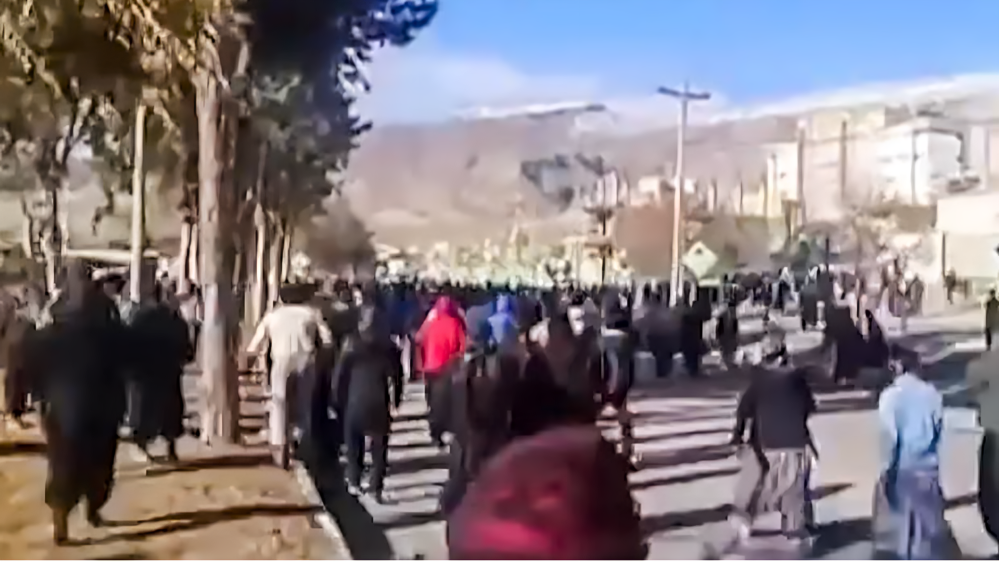
As the January 2026 Iran protest wave continues, after first erupting on 28 December 2025, some of the largest protests and sharpest violence have concentrated in Ilam province and, to a lesser degree, in adjacent parts of Kermanshah. In Ilam, the protest movement has been especially persistent and widespread across Malekshahi County, Chavar, and Ilam city itself. These areas overlap with the social geography of two of Ilam’s largest Shi’a Kurdish tribal groupings, the Malekshahi and the Arkawazi.
Context: As of 7 January, at least five Kurdish protesters have reportedly been killed in Ilam’s core Malekshahi and Arkawazi areas after the IRGC opened fire, out of 27 confirmed killed nationwide. In proportional terms, that is roughly 18.5% of the total confirmed deaths even though Ilam province as a whole accounts for only about 0.73% of Iran’s population.
Analysis: In Iran’s Kurdish politics, Ilam and Kermanshah have long been treated as peripheral terrain. The traditional Kurdish parties largely failed to build deep structures there, in part because their leadership and social base historically came from the Sunni, Sorani-speaking belt further north. But the past few years have seen a clearer rise in Kurdish nationalist sentiment in the Shi’a Kurdish south as well. Among organised Kurdish movements, the one actor that has most consistently managed to penetrate these areas is PJAK, the PKK’s Iranian offshoot, which appears to have built a following particularly within Malekshahi and Arkawazi milieus.
This is why the regime’s preferred narrative about violence in the Ilam–Kermanshah belt has leaned on securitised language, casting the protests as a space where “separatist groups entered the field.” PJAK, for its part, has pushed the opposite framing: it has publicly elevated those killed in Malekshahi as a Kurdish symbol, describing the Malekshahi dead as “a symbol of the resistance of Zagros and of free Kurds.” The competing narratives matter because they both point to the same structural shift: Shi’a Kurdish areas that once sat outside the core of Kurdish party politics are being pulled more directly into Kurdish mobilisation, and they are doing so largely through the PKK/PJAK ecosystem rather than through the older Iran-based Kurdish parties.
There is also a strategic layer. The PKK ecosystem has a track record of replicating tactics across arenas. In Syria, its local offshoot, the YPG, leveraged tacit understandings with the Assad state at key moments to consolidate territory and institutions, then turned that foothold into political weight as conditions shifted. PJAK, as the PKK’s Iranian offshoot, is positioned to pursue a similar playbook in Iran’s Kurdish belt if the regime’s grip weakens or fractures. Even without assuming the same trajectory, the Ilam–Kermanshah belt now looks more consequential than it did in earlier protest cycles: PJAK’s cross-sectarian, leftist branding has made it the first Kurdish movement in Iran with a growing appeal that spans from the northwestern Kurdish belt to the far south in Ilam. That breadth becomes more important as Tehran faces compounding pressure from external shocks and internal unrest.
Finally, geography reinforces the point. Beyond ideology and networks, PJAK is also the only major Iranian Kurdish organisation positioned directly across the border with the practical ability to move people and build a physical footprint quickly if state control fractures. That does not mean collapse is imminent, but it does mean that the protest intensity in Ilam is not just a local story. It is a signal that the regime’s western border belt is becoming both a pressure point and, potentially, a staging ground for whichever Kurdish actor is best organised to exploit openings if they appear.


