


How Israel’s Iranian Kurdish plan against Iran collapsed
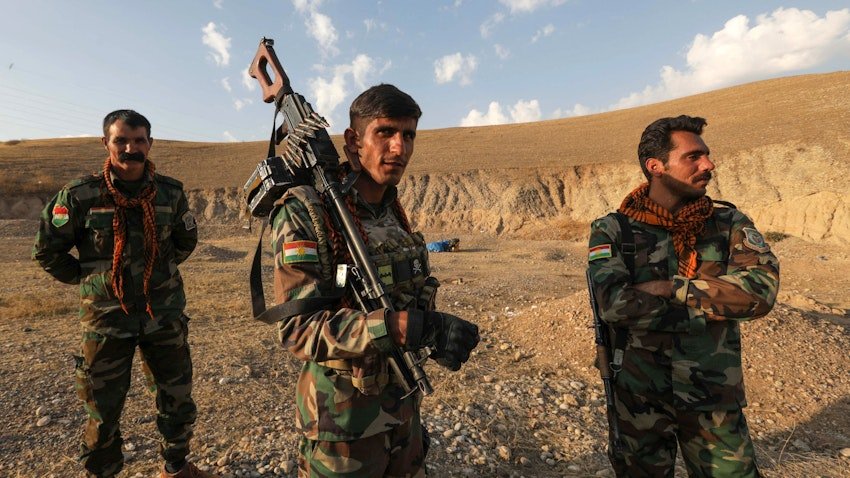
Three months after the war with Iran began, a fuller account shows the northern front Israel hoped to open through Iranian Kurdish groups was undone within a week, defeated less by Iranian firepower than by the disarray and overstated strength of those groups, the exposure of the Iraqi Kurdish parties, and a direct threat from Tehran.
When the US war with Iran began on February 28, one of the first pressure points considered against Tehran was a Kurdish uprising launched from Iraqi Kurdistan, intended to feed the wider effort to bring down the Islamic Republic. Iranian Kurdish opposition groups would cross the border, present themselves as the vanguard of a national revolt, and try to ignite a regional rising that leads to a broader uprising inside Iran. The idea sat within the US-Israeli campaign, but the Kurdish front specifically was largely an Israeli design. It did not survive the first week of the war.
The sequence: Word of potential Kurdish involvement spread within days. On March 2, Axios reported that Trump had spoken directly with Masoud Barzani and Bafel Talabani, a signal that Washington was engaging the KDP and PUK precisely as the Kurdistan Region risked being drawn in.
Iran moved to shut the door. Around March 3, Tehran warned the Iraqi Kurdish leadership directly: if Iranian Kurdish groups attacked Iran from the Kurdistan Region, Iran would not stop at those groups. It would hold the KDP and PUK leadership personally responsible.
That warning changed everything for the two parties. A plan that had been someone else’s now threatened their own survival. Rather than confront Washington in the open, the KDP and PUK turned to Ankara. A senior Barzani figure and Qubad Talabani from the PUK reached out to Hakan Fidan, urging Turkey to press the United States to drop the front.
Turkey needed little convincing. Fidan and Erdogan pushed Washington to abandon the plan, with Fidan reportedly making the case directly to Marco Rubio on March 7. Trump backed down. Because the Kurdish front was an Israeli initiative rather than a core American objective, little in Washington was prepared to fight for it.
The Iranian Kurds – willing but unable: The deeper reason the front never opened lay with the Iranian Kurdish groups. They were on board, but divided, distrustful, and badly under-resourced, and the confidence Israel placed in them rested in part on claims they had inflated themselves.
Their combined strength was under 2,500 fighters, far too few to hold ground or sustain a campaign against the Iranian state. Their aim was never a conventional assault but instigation: to cross over, pose as the vanguard of revolt, and inspire an uprising from within. The KDPI, Komala and others opened online recruitment channels, each claiming thousands of applications from inside Iran, figures that are difficult to verify and that served as much to project momentum as to measure it.
The coalition behind the plan was thinner than it appeared. The alliance of Iranian Kurdish parties had been announced barely eight days before the war began, and proved more cosmetic than real. According to an insider source in direct contact with one faction, Reza Kaabi, leader of one Komala faction, accused PJAK of quietly moving its own fighters into Iran without consulting the others. The episode exposed how little the partners trusted one another at the moment coordination mattered most.
Their operational security was no better. Preparations were conducted in the open: the groups bought up pickup trucks in bulk, conspicuously enough that a CNN reporter in Erbil noticed and filed on it. Weapons were sourced through the black market, often via networks tied to Hashd al-Shaabi, the pro-Iran militias operating across Iraq, which meant the groups were arming themselves through channels linked to the very state they were preparing to attack.
The clearest case of overselling was PAK, the Kurdistan Freedom Party led by Hussein Yazdanpanah and one of the main conduits to Israel. PAK is believed to field no more than 200 to 300 fighters, yet it appears to have hugely inflated its strength to maximise the financial support it could draw from the US and Israel, and that salesmanship helped convince Israel the groups were worth backing. The marketing was not subtle. During the 12-day war in June 2025, Yazdanpanah openly appealed for Israeli help on Israel’s i24NEWS and offered his fighters as boots on the ground. That public alignment told Iran exactly what to expect, and Tehran had prepared accordingly for the groups’ involvement should the war resume.
A front that required unity, surprise and a popular uprising thus rested on groups that had none of the first, had surrendered the second through their own exposure, and could only hope for the third.


