


Iran’s Layered Counter-Strategy Aims to Close the Kurdish Corridor Before It Opens
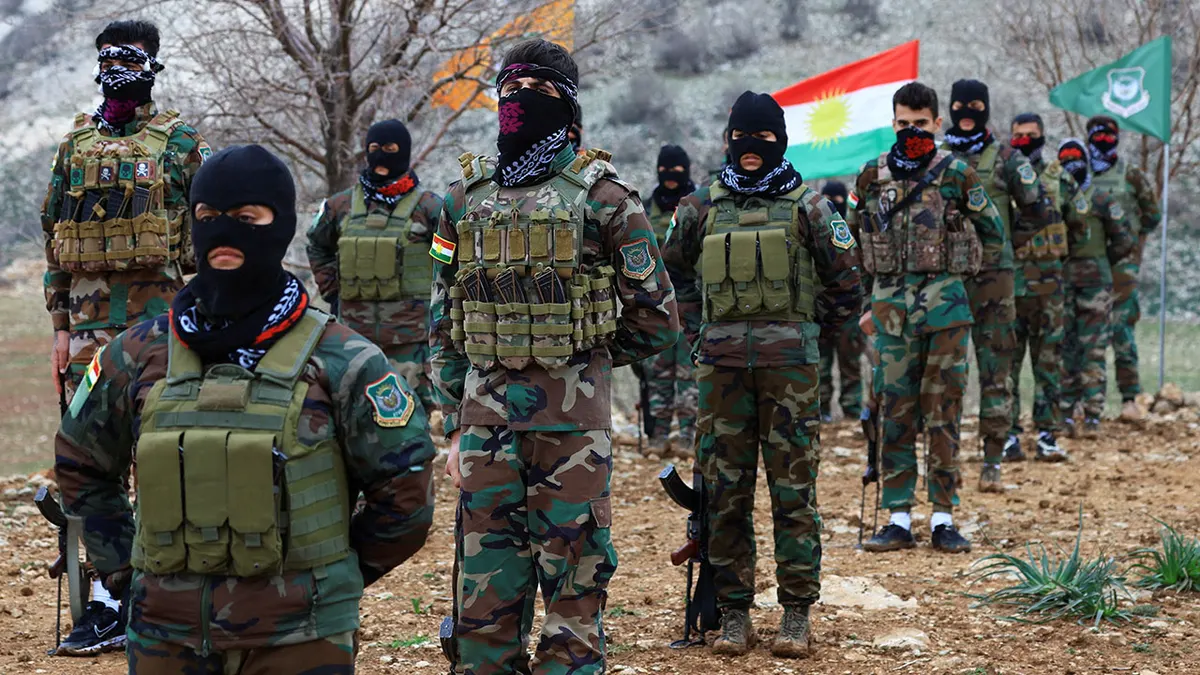
Since the U.S.-Israeli air war against Iran began on February 28, 2026, much of the outside commentary has fixated on whether Iranian Kurdish factions could open a western ground front. Reports from Reuters, Axios, the Washington Post, and CNN confirmed that Washington explored the idea, that the CIA discussed arming Kurdish groups, and that President Trump publicly encouraged a Kurdish offensive before retreating from it within days. On March 4, several outlets reported that a ground offensive had begun, only for every major Kurdish party, the KRG, and the IRGC to deny it.
Tehran was not waiting to see whether the Kurdish option would materialise. It was already executing a layered counter-strategy: blinding cross-border communications, striking exile bases, thickening urban checkpoints, hardening prisons, devolving coercive authority to provincial commands, and physically sealing the border belt.
The regime is treating the Kurdish question not as a standalone insurgency threat but as a fused challenge: external airpower plus cross-border militants plus domestic intelligence leakage plus renewed urban unrest in Kurdish provinces. That is why so many of its targeted or defended nodes are not classic frontline military assets but border guards, Basij sites, Law Enforcement Command facilities, prisons, communications infrastructure, and internal-security units. And the counter-strategy is working within a landscape, demographically fragmented, politically divided, and institutionally deep, that was already structurally hostile to insurgent success before a single bomb fell.
1. Blinding the Border
The most visible element of the counter-strategy is a systematic effort to destroy cross-border communications from both sides.
On the Iraqi Kurdistan side, Iran has been striking telecom towers along the frontier. Rudaw reported Korek Telecom had several towers targeted. Rudaw confirmed two drones hit Asiacell and Korek towers on Shnrwe Mountain in Halabja. Shafaq reported six rockets struck the same Halabja tower, followed days later by two more drone strikes on nearby towers, cutting phone and internet services in Hawraman and adjacent border districts. On March 9, 964media reported nine additional drone strikes on telecom towers in Darbandikhan and Garmian. CGTN, citing security sources, reported a drone attack on broadcast and telecom towers used by the Iranian opposition near Sulaymaniyah. Iraqi News said drones hit towers near Asiacell and Kurdistan Radio Channel infrastructure on Zmnako Mountain, with preliminary indications they were launched from Iran.
On the Iranian side, the regime has imposed a near-total internet blackout. By March 5, NetBlocks reported connectivity had fallen to roughly one percent of ordinary levels, with tens of millions cut off. In border villages, people have been physically walking toward the frontier to pick up Kurdistan Region cell signals to contact their families. The regime’s response has been to shoot them. Hengaw reported on March 11 that government forces issued direct-fire orders against citizens moving toward border points to make phone calls, and that a Kurdish man named Farzin Sasani from Bardarasha village in Marivan was shot and wounded in the leg while trying to reach Kurdistan Region telephone coverage. Forces abandoned fixed positions and set up temporary mountain posts with standing orders to pursue and fire on anyone deemed suspicious.
The communications denial is therefore two-sided: destroy the infrastructure on the Iraqi side, and physically prevent anyone on the Iranian side from reaching whatever signal remains. For any insurgent operation that depends on coordination between forces inside Iran and a support base in Iraqi Kurdistan, this is devastating.
2. Striking the Kurdistan Region Bases
Alongside the communications campaign, Iran has been directly hitting Kurdish opposition infrastructure in Iraq’s Kurdistan Region. On March 3, the IRGC said it had launched 30 drones at opposition sites and warned there would be “no leniency.” KDPI’s base in Koysinjaq was hit by seven missiles and several drones. PAK bases in Erbil were struck, killing at least one fighter. A Komala facility in Surdash and a Khabat Organisation site in Erbil province were also hit. On March 6, Iran explicitly threatened to target “all the facilities” of the Kurdistan Region if Kurdish militants were allowed to enter Iran.
These strikes serve multiple purposes. They degrade the armed groups’ ability to stage, train, and consolidate. They signal to the KRG that hosting these groups carries a cost. And they keep the parties in a defensive posture, absorbing bombardment and trying to survive rather than preparing an offensive. The groups that are supposedly going to open a western front against Iran are currently unable to even secure their own bases in Iraq.
The one notable exception is PJAK. Unlike every other Iranian Kurdish party, PJAK’s positions in Iraqi Kurdistan have not been targeted by Iran. This is striking given that PJAK is widely regarded as the most militarily capable faction. There are unverified reports of pre-war backchannel contact between PJAK and the regime, though Tehran reportedly rejected the approach. Whatever the explanation, the pattern is visible: Iran is hitting everyone except the one group that operates under PKK command from Qandil.
3. Thickening the Internal Security Posture
Inside Iran’s Kurdish provinces, the regime has visibly expanded its security presence since the war began. Rudaw, citing the Kurdistan Human Rights Network (KHRN), reported that IRGC and police forces sharply increased checkpoints in Kermanshah, Sanandaj, and Urmia, with new posts established in Kamyaran, Sawlawa, and Ravansar. IRGC personnel were moved from some Shaho Mountain bases to mosques in villages at the foot of the mountains, a shift from exposed fixed positions to embedded civilian-infrastructure cover.
KHRN reported tightened prison conditions in Mahabad after nearby strikes, including cut telephone lines and the deployment of special forces. Hengaw reported detainees being transferred from damaged security facilities in Sanandaj to Hamedan Province, indicating that the regime is relocating sensitive detention functions deeper inland rather than losing them. On March 13, Hengaw reported that security forces ordered the evacuation of Kermanshah border areas, forcing the early migration of nomadic families, consistent with pre-battlespace clearing of the frontier strip.
On March 3, President Pezeshkian formally devolved emergency authority to provincial governors, allowing regional IRGC commands to continue operations under degraded central coordination. This fits Iran’s long-standing mosaic defence logic. Each of Iran’s 31 provinces has its own IRGC headquarters and command structure. A Washington Institute specialist told RFE/RL the system is designed to help provincial IRGC and Basij elements defend against an outside invading force. The western commands are not improvising. They are executing within a pre-existing framework built for exactly this kind of decentralised crisis.
The IRGC is also advertising its counterinsurgency capacity. On March 9, the Hamzeh Seyyed al-Shohada Operational Base, the IRGC’s northwest command, announced it dismantled an armed anti-regime group in northwestern Kurdistan Province, killing one, arresting six, and seizing Kalashnikov rifles, RPGs, and grenades. Hengaw separately documented IRGC members wearing Peshmerga uniforms moving through Kamyaran in Saipa vehicles, which Hengaw’s investigation determined were security forces testing loyalties in border communities.
Additional field reports, mainly from Hengaw, describe mass arming of auxiliaries via loudspeakers in the Maku-Bazargan-Chaldoran belt, clearing of nomadic families from border strips in Qasr-e Shirin and Khosravi for artillery deployment, and IRGC-linked forces occupying upper floors of Kowsar Hospital in Sanandaj. These rest mainly on single Kurdish rights sources and should be treated as indicators of escalation rather than confirmed facts. But the broader pattern they point to is coherent: the regime is not simply waiting. It is actively shaping the zone where any Kurdish penetration would have to begin.
4. A State That Can Still Arrest and Kill
Perhaps the most telling evidence that the regime retains operational coercive power comes from what it is still doing to individual people, two weeks into the heaviest air campaign Iran has ever experienced.
On March 13, Hengaw reported that a woman named Nahal Ahouqalandari was shot dead by Iranian forces after expressing joy over Khamenei’s death. On March 12, two brothers aged 15 and 19 were shot dead by police in Karaj after celebrating Khamenei’s death; two Baha’i residents were arrested in Isfahan; a retired teacher was arrested by IRGC Intelligence in Shiraz. On March 11, in addition to the border shooting of Farzin Sasani in Marivan, Awat Rostami was detained in Mahabad and a student was violently arrested in Arak. On March 10, detainees were arrested in Mahabad and transferred to Great Tehran Penitentiary. On March 9, a Kurdish couple was arrested in Sanandaj. On March 8, a Kurdish man was arrested in Piranshahr.
This is not a collapsed state. It is a state whose formal buildings have been hit but whose coercive and intelligence functions continue to operate at the local level. The regime can still identify individuals by name, raid homes, make targeted arrests in multiple cities simultaneously, transfer prisoners between provinces, and shoot people who express political dissent. For any potential insurgent entering this environment, this is the operational reality: not a vacuum, but a landscape where the regime still knows who you are and can come for you at three in the morning.
5. Why the Counter-Strategy Finds Fertile Ground
The regime’s active measures would mean less if they were being imposed on a landscape that was socially united against them. They are not.
The force the counter-strategy is designed to contain is small, fragmented, and doubted by its own sponsors. Reuters put the broadest organisational universe at 5,000 to 8,000. The Economist said 2,500 across the armed factions. A VOA journalist embedded with the groups reports “more than 1,000 trained fighters” from the mainstream non-PKK parties. U.S. intelligence itself concluded the groups lack the firepower and numbers to sustain a fight. The coalition they formed, CPFIK, is nominal: political, not military.
The demographics of Iran’s western belt are structurally challenging to insurgent success. West Azerbaijan is mixed Kurdish-Azeri, and the regime can lean on its deep Azerbaijani-Turk state base without importing outside forces. Kermanshah and Ilam give Tehran Shia Kurdish manpower that is more integrated into the state than the Sunni belt farther north. Even Kurdistan province, the most plausible insurgent corridor, is internally complex.
Named IRGC provincial commands, Sepah-e Shohada, Sepah-e Beit al-Moqaddas, Sepah-e Nabi Akram, Sepah-e Amir al-Momenin, already had substantial mobilisation capacity before the war, with Kermanshah staging a 30,000-strong Basij exercise in January 2025, Ilam a 20,000-strong exercise in February 2025, and West Azerbaijan multiple drills totalling over 60,000 participants. The border was hardened with a three-metre barrier fitted with sensors stretching roughly 600 kilometres, built since June 2025.
And critically, significant currents within Kurdish society itself are rejecting the insurgent project. Sunni Kurdish Islamist networks, ICRO, Maktab Quran, populist clerical voices, are converging with the state on wartime anti-Zionist and sovereignty grounds, not because they love the regime, but because they refuse to be folded into an Israeli-U.S. war. On March 13, Quds Day rallies were held in the Sunni Kurdish towns of Paveh, Ravansar, Javanrud, and Thalath Babajani. The PKK, PJAK’s parent organisation, is pushing from the opposite ideological direction toward the same conclusion. Yesterday, senior PKK leader Duran Kalkan declared that Kurds “are not in a position to be anyone’s soldiers or instruments of anyone’s interests.” Earlier, Ocalan framed the war as a hegemonic clash and told Kurds to secure themselves rather than serve anyone. And the KRG, the launchpad these groups depend on, is publicly refusing to be drawn in because the retaliation would threaten its survival.
So the regime’s counter-strategy is not operating against a unified insurgent tide. It is operating against a small, fragmented force with no political consensus behind it, in a demographic landscape that already favours containment, backed by a pre-existing provincial security architecture that dwarfs the insurgents’ effective core.
What Remains Uncertain
There is strong evidence that Tehran is adapting. There is not yet equally strong evidence that the adaptation is working under sustained bombardment. The IDF confirmed on March 10 that it had destroyed most key Internal Security and Basij infrastructure in Ilam Province. The Iranian Kurdish rights group, Hengaw, says at least 100 security personnel were killed in the Kurdistan Province alone. Whether the regime’s dispersal, devolution, and localisation are sufficient to maintain effective control is a question that cannot yet be answered with full confidence.
PJAK’s actual position remains the most strategically significant unknown. It has not been targeted by Iran. Its parent organisation opposes the war. Yet it joined the coalition and its fighters have told journalists they are “ready to fight.” Whether PJAK acts, hedges, or sits this out will matter.
It is also unclear what Baghdad and the KRG are doing in practice, beyond public statements, on movement control and border enforcement. The real scale of auxiliary mobilisation inside Iran’s border belt, and the extent of military use of hospitals, schools, and mosques, remain difficult to verify independently.
But the overall picture is clear enough. The Kurdish ground option was not defeated by the regime’s counter-strategy alone. It was defeated by the combination of that counter-strategy with a landscape that was already working against the insurgents: too few fighters, too fragmented a coalition, too complex a demographic terrain, too many Kurdish voices rejecting the project, and too deep an embedded security architecture.


