


Iran to KDP and PUK Leaders: Let One Fighter Cross and We Strike You Directly
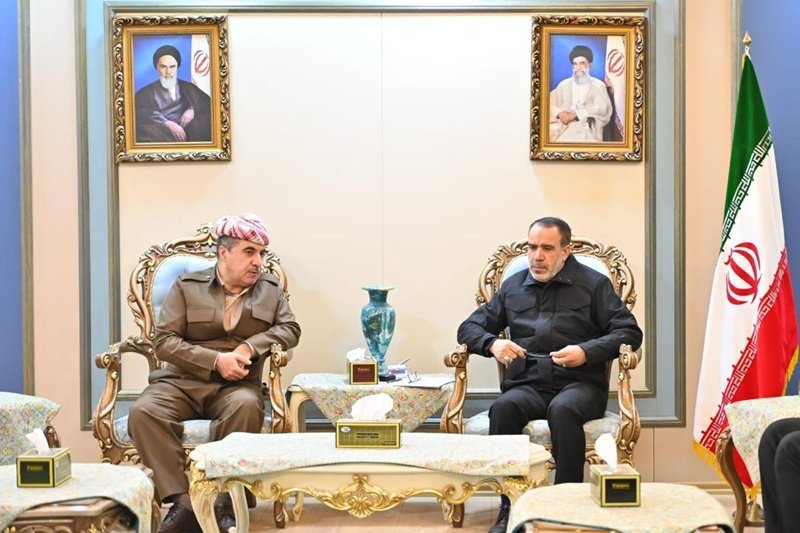
Iranian officials have warned KDP and PUK leadership that if one Iranian Kurdish fighter is allowed to cross the border into Iran and they find out, they will directly attack the two parties, a well placed source with knowledge of the warnings told The National Context.
The warnings were conveyed after the war began on 28 February. Iran has threatened to directly target the two parties and their leadership if they allow Iranian Kurdish groups to use the Kurdistan Region as a launching pad for ground attacks inside Iran.
Context. It was first reported by Axios and later by the Wall Street Journal that President Trump spoke with Masoud Barzani and Bafel Talabani regarding the war in Iran. Kurdish media now reports that Trump has also spoken with Mustafa Hijri, leader of the KDPI, who along with four other Iranian Kurdish parties formed the Coalition of Political Forces of Iranian Kurdistan days before the strikes began.
Details. According to a well placed source, the Trump calls with Barzani and Talabani were formulated during a visit by Trump’s envoy Tom Barrack, who met separately with Masoud Barzani in Erbil and Bafel Talabani in Sulaimani on 23 and 24 February. For context, the five Iranian Kurdish groups announced their coalition just one day earlier, on 22 February. A key American demand is for the KDP and PUK to allow Iranian Kurdish groups to use the Kurdistan Region as a launching pad for attacks inside Iran. The two parties have been imposing strict restrictions on Iranian Kurdish movement for years, fearing Iranian retaliation.
Iran began building a three-metre wall along the border with the Kurdistan Region, fitted with sensors and early warning devices, immediately after the twelve-day war ended on 24 June 2025. The timing suggests Tehran concluded during that earlier conflict that the Kurdistan Region frontier is the most susceptible entry point in any future war against the regime.
On the ground. Iran has already begun targeting Iranian Kurdish bases in Sulaimani and Erbil, though the scale of attacks has so far been limited and largely confined to drones. The Iranian Kurdish groups, per a reliable source, are already preparing to move in. But despite sustained Israeli and American airstrikes designed to degrade IRGC, police, border guard, and intelligence infrastructure across Iran’s Kurdish border provinces, there is little evidence that the border has been softened or that enough IRGC and affiliated Basij forces have been killed to meaningfully degrade Iran’s hold on the border region.
The KDP and PUK are caught between an American demand to open the border and an Iranian promise to punish them if they do. Both parties have survived for decades by maintaining a carefully calibrated ambiguity toward Tehran: hosting Iranian Kurdish opposition groups while restricting their movement enough to avoid direct confrontation. That space is now collapsing.
The Iranian Kurdish groups are preparing to move. The question is whether Barzani and Talabani will open the gate, knowing that if they do, Iran has promised to hold them personally responsible, and that the Americans asking them to do it have not yet decided what they are trying to achieve.


