


Turkey’s Kurdish peace process presses ahead after breakthrough over the ‘framework law’
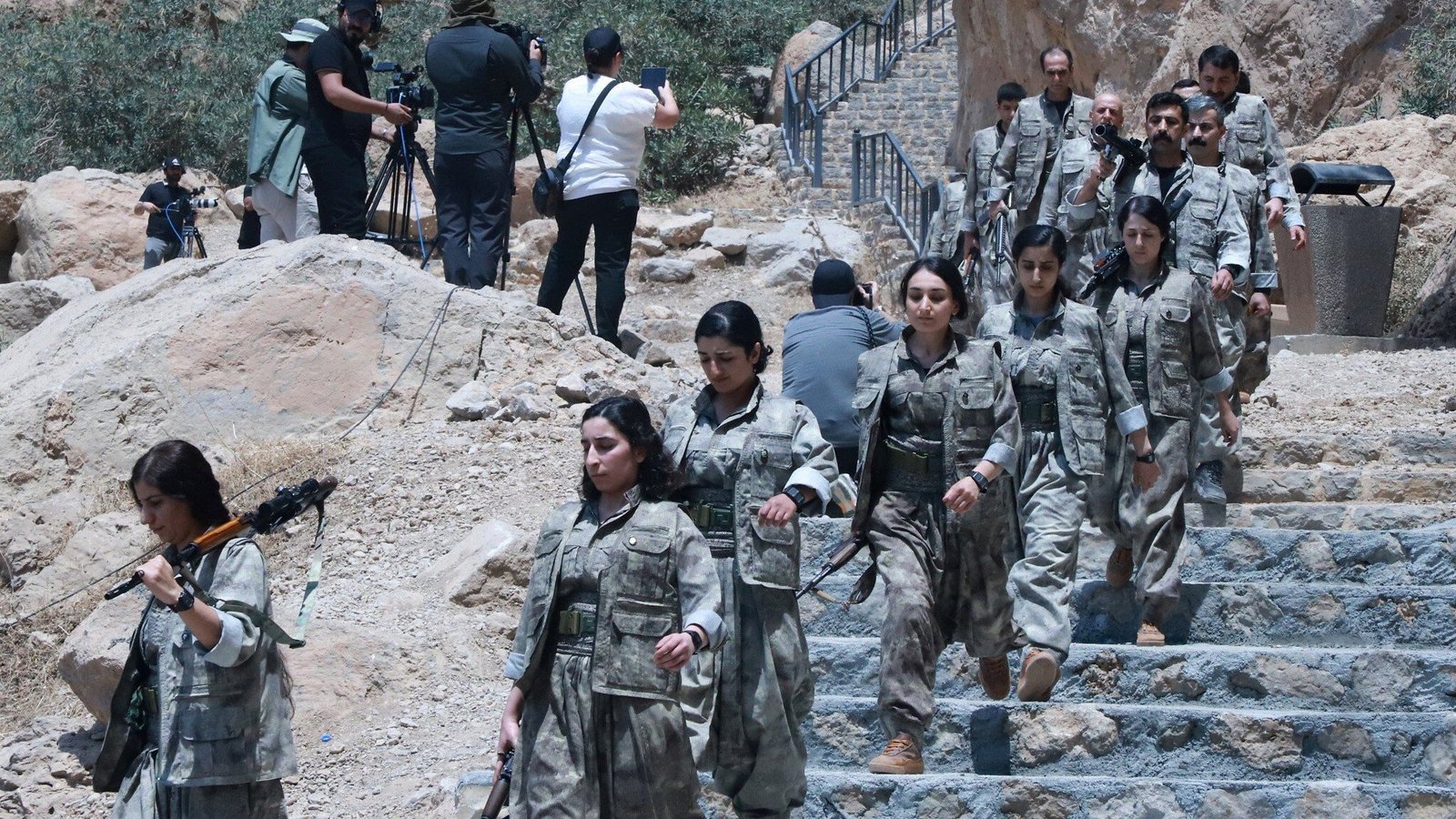
Following months of slowdown caused by the Iran war and by disagreement over the nature of the draft bill that will pave the way for the return of PKK-linked fighters, a negotiated breakthrough is now reported, with the PKK’s jailed leader Abdullah Ocalan giving his green light to the draft law. The bill is expected to pass through parliament before the summer recess.
Reporting this week indicates that returns to Turkey will begin with Kurdish political figures exiled in Europe and, according to Medyascope, with residents of the Makhmur refugee camp in the Kurdistan Region. Members of the PKK would follow in stages and the most contested questions, Ocalan’s status and the return of the senior leadership, are reported to be left for later phases of the process.
Context: Parliament Speaker Numan Kurtulmus completed a round of consultations with the parliamentary parties this week, said the discussions revealed broad agreement on the general framework, and confirmed that group leaders and their deputies would now work on the details. He said he hoped the bill would become law before the recess and would “open the door to a new era for Turkey”. The first half of August is the fallback, and 15 August, the 42nd anniversary of the PKK’s first ever militant attacks inside Turkey, has been discussed as a symbolic completion date. No official draft has been published.
The Makhmur camp was established in northern Iraq in 1998 through coordination between the UN refugee agency and the Iraqi authorities. It settled Kurdish families who had left southeastern Turkey during the fighting of the 1990s and had spent years moving between temporary sites. Ankara has long accused the PKK of controlling the camp and has repeatedly demanded its closure. Turkey struck Makhmur during Operation Claw-Eagle in June 2020, and a drone strike in June 2021 killed Selman Bozkir, described as the senior official responsible for the camp, days after President Erdogan called it an “incubator” for Qandil. The PKK announced the withdrawal of its armed forces from Makhmur in 2023, although its political and organisational ties there persisted. Population estimates vary considerably, with some placing the camp near 10,000 or 12,000 residents against Medyascope’s figure of 20,000, and the report remains unconfirmed by Ankara, Baghdad, the Kurdistan Regional Government, the camp administration and the UN.
The European exiles left Turkey under investigations, party closures, lifted parliamentary immunities or prosecutions connected to their political work, and come from the HDP and the parties that preceded it. They belong to what has historically been the third pillar of the movement, alongside Turkey itself and the Middle East centred on Qandil with extensions in Syria and Iran. The European organisation raised much of the movement’s money and conducted its diplomacy, presenting the movement to international opinion from Brussels, Germany, France and Scandinavia, and its weight grew whenever legal politics inside Turkey was blocked. Ocalan called on the exiles to return in a message to a European meeting last September.
Analysis: Opening with the exiles serves three purposes. Their returns are the easiest for the government to defend, since these are people known publicly as politicians with no established connection to armed attacks. Their arrival would also reinforce the legal Kurdish movement at the moment the pro-Kurdish DEM Party undergoes a restructuring that may extend to a new name, with some returnees expected to assume senior positions in the reorganised party. According to well-connected Turkish journalist Rusen Cakir, the deeper purpose is consolidation: Ocalan wants the movement’s centre of gravity shifted into Turkey and into legal politics, and repatriating the European cadres, who ran the movement’s finances and diplomacy for decades, is the mechanism for achieving it.
The exile returns carry a direct consequence for Selahattin Demirtas and Figen Yuksekdag. Once exiled figures such as former Diyarbakir mayor Osman Baydemir are active in Turkish politics again, the continued imprisonment of the two former HDP co-chairs becomes very difficult to justify to the Kurdish public, and releases could follow from this phase. Cakir adds a further reading: several returning heavyweights would balance the dominant position Demirtas would otherwise occupy in a restructured party. On this account Ocalan does not deny the political reality Demirtas represents, and he wants to prevent it from eclipsing his own role at the centre of the process.
Returns from Makhmur would also depend on substantial administrative groundwork. Turkish authorities would need to verify identities and citizenship, screen outstanding warrants, separate civilian families from individuals with organisational files, and coordinate with Baghdad and probably Erbil. The more probable model involves individual applications, security screening and returns in small groups.
The breakthrough itself can be reconstructed from the days around the five-hour Imrali meeting of 20 July. Shortly before its outcome became known, senior PKK leader Duran Kalkan said Ocalan had submitted his written views on the legal framework at the previous meeting, roughly two months earlier, had asked the state to respond within three days, and had committed to taking further steps once an answer arrived. Kalkan complained that no answer had come and warned that a law excluding Ocalan, categorising the organisation and resembling the “repentance” or “return home” laws of earlier decades would fail. The answer then arrived through an accelerating sequence: the DEM delegation met MHP leader Devlet Bahceli and AKP deputy chairman Efkan Ala, the Imrali visit was brought forward by three days, and pro-opposition newspaper Sozcu reported that the draft was shown to Ocalan before its submission to parliament, with the delegation spending the session taking his comments. The likely chain, reconstructed from the available reporting, runs as follows: Ocalan submitted his proposals in May; the government, the MHP and state institutions prepared a draft or negotiating position; Ala and Bahceli communicated that position to the delegation; the delegation carried it to Imrali; and Ocalan judged there was sufficient movement to endorse the start of the legislative phase. His message afterwards did exactly that, identifying the parliamentary commission’s report as the basis for legislation and calling for conflict and weapons to be removed from the equation entirely.
The endorsement is more striking because the first law is expected to leave Ocalan’s legal status unchanged. The ANKA news agency has reported that the government believes the status question can be dealt with “in practice”, through improved working conditions and flexibility in his contacts, while the return of the PKK’s senior leadership would be addressed in a subsequent package. The practical formula described in parliamentary reporting involves more frequent meetings with the DEM delegation, wider access to lawyers, politicians, academics and journalists, expanded communication, and working conditions that allow Ocalan to manage disarmament and returns from Imrali. This would explain why he could approve a draft that neither releases him nor assigns him a formal political title. He may have received assurances that he remains the principal interlocutor, that his communication restrictions will be progressively relaxed, that the first law is only the initial stage, and that neither the leadership question nor his own long-term situation has been permanently excluded.
The formal questions, a defined status, the “right to hope”, release or house arrest, and the return of the senior commanders, would accordingly move to a later phase through additional legislation or political agreement. One point remains contested: Sozcu has reported that the text may contain a reference to the right to hope, which DEM considers necessary for the law to carry political meaning, while pro-government reporting denies that the draft contains any provision specific to Ocalan. DEM’s leadership continued to demand a status for Ocalan and free working conditions in the days after the Imrali meeting, an indication that these disputes remain open.
The design reflects the constraints on both sides. The government cannot open with Ocalan or the commanders without provoking substantial nationalist opposition, and the movement cannot accept a process that permanently excludes them. The emerging answer is to begin with returns that are politically defensible, exiled politicians resuming legal politics and families leaving Makhmur, and to use the resulting momentum to carry the harder files: prisoners, serious criminal cases, the senior leadership and Ocalan himself. Whether parliament passes the law by mid-August is the first test of whether the sequence holds.


