


Zaidi’s ‘Anti-Corruption’ Raids Follow Iraq’s Post-Succession Pattern, and Fall Hardest on Halbousi’s Rivals
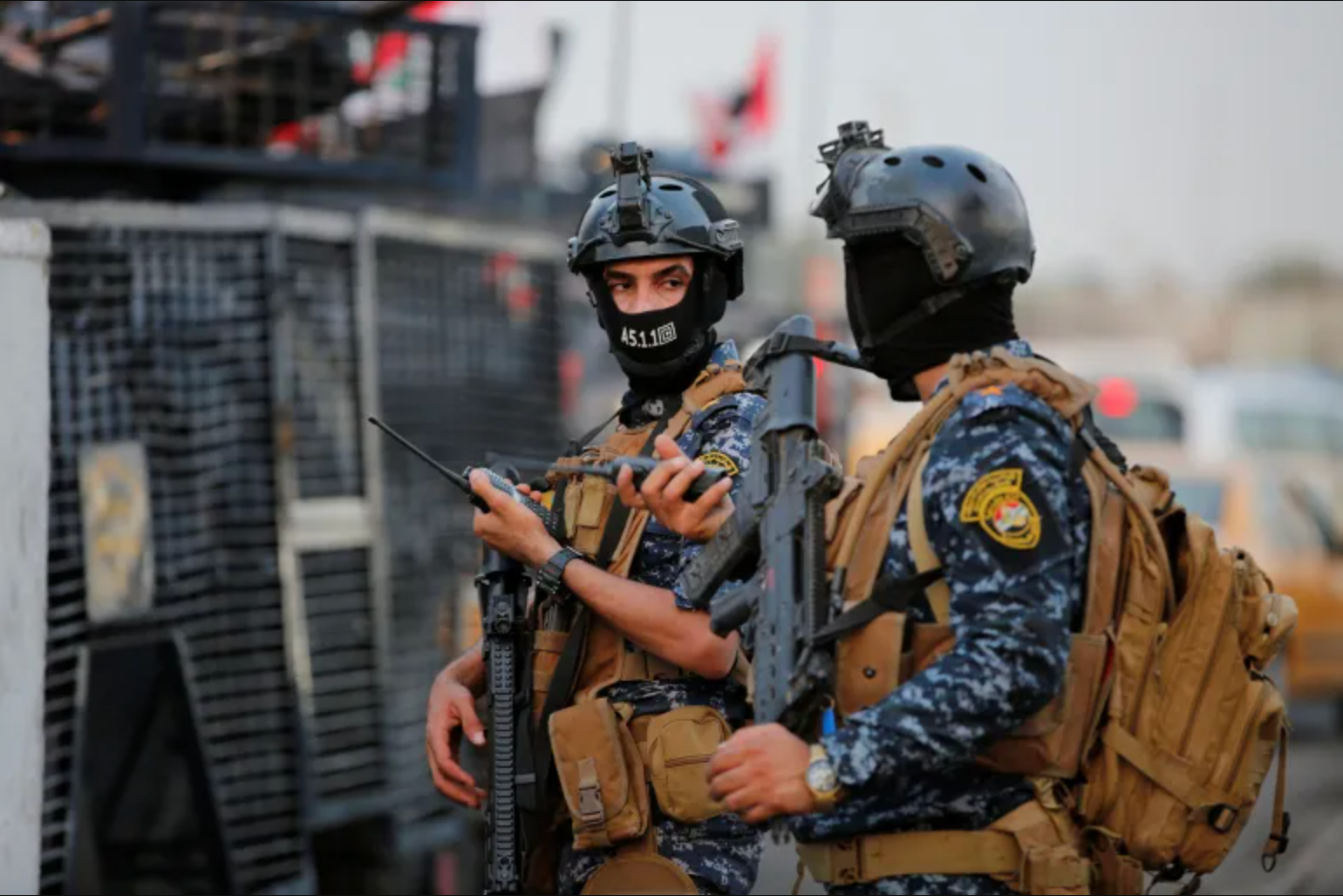
Iraqi security forces detained as many as 20 senior officials during raids in Baghdad’s Green Zone and other areas late on June 28. The most prominent reported detainee is Muthanna al-Samarrai, leader of the Azm Coalition. Several politicians linked to former prime minister Mohammed Shia al-Sudani’s Reconstruction and Development Coalition were also named, including Alia Nassif, Baha al-Din al-Nouri and Hassanein al-Khafaji. Security forces also raided the home of MP Alaa Sukkar, also linked to Sudani’s coalition, but did not find him at home, so he has not been confirmed detained.
Other reported detainees include Mudhar al-Karawi of the Sovereignty-Tashreea Alliance led by Khamis al-Khanjar; Hind al-Abbasi and Mohammed al-Karbouli of the Azm Alliance; Mohammed Farman of the Taqaddum Party, led by Mohammed al-Halbousi; and Ziyad al-Janabi, who ranks second in Khanjar’s Sovereignty Alliance. Mohammed al-Sayhoud, a former MP and Sudani’s paternal cousin, was detained in the first wave and released on bail on June 30, after two days in custody, with his office citing health reasons.
Security forces also raided the home of MP Hussein Mounes without locating him. Mounes is a senior figure in the Iran-aligned faction Kata’ib Hezbollah who now leads his own political movement, making him the first reported target of the campaign with a direct militia background rather than a Sunni or Sudani-aligned profile. Reports that former finance minister Taif Sami had been detained were formally denied by her office, which described the claims as entirely false and asked the media regulator to pursue legal action against those circulating them.
Context: Estimates of the total number detained have shifted over the following days, from an initial 15 officially named individuals to reports of 17, 35, 47 and finally 53 political, governmental and parliamentary figures. Some Iraqi sources have put the underlying investigation at close to 1,000 politicians and officials; judicial sources cited a more conservative target list of more than 100. A separate report cited a politician saying 64 names had been passed to airports and border crossings to prevent departures, with further raids expected outside Baghdad. The confirmed total stands at 53; the wider figures are unverified.
Several Iraqi outlets have also reported that Washington supplied names for the operation and is overseeing the arrests, and a separate report cites a judicial source describing the participation of an American investigative team after the oil ministry official’s confession. Specific claims that the CIA is overseeing the arrests remain unsubstantiated. Attributing domestic political operations to foreign intelligence services is a recurring feature of Iraqi political discourse, and the claim cuts both ways: it lends the campaign an appearance of external backing while giving opponents a framework to describe the arrests as foreign interference.
Analysis: Every Iraqi prime minister in recent memory has launched an anti-corruption initiative during the opening phase of his government, and in nearly every case the primary targets have been officials, intermediaries and businessmen tied to his immediate predecessor rather than the predecessor himself. Abadi’s 2015 reform campaign abolished the vice-presidency held by Nouri al-Maliki and dismissed 123 Maliki-era deputy ministers and directors-general. Kadhimi’s Committee 29, created in 2020, arrested the head of Iraq’s Retirement Fund, the Baghdad Investment Commission’s chairman and the head of the Qi Card payment company, before the Federal Supreme Court dissolved it over claims it had usurped judicial functions and extracted confessions through torture. Sudani then turned the same apparatus on Kadhimi’s circle, issuing warrants for former finance minister Ali Allawi, cabinet director Raed Jouhi, personal secretary Ahmed Najati and adviser Mushriq Abbas over the “theft of the century” case, while prosecuting members of Committee 29 itself. In each transition the incoming government activated files implicating its predecessor’s network while leaving comparable files involving its own sponsors dormant; the corruption was often real, but the choice of which files to open was political. An International Crisis Group analyst made the same point about Zaidi’s campaign specifically: it has concentrated on second-tier figures while senior leadership stays out of reach, and both Maliki and Sudani publicly backed the operation once it began, which is consistent with a campaign aimed at a predecessor’s circle rather than the centres of power themselves.
Two features of Zaidi’s position make this round different in mechanism, even where the target list still fits the old pattern. The first is that he has no political base to run a campaign through. He took office as a businessman from Dhi Qar with no party, no bloc and no prior government post, chosen by the Coordination Framework partly because none of its members could dominate him. That leaves him without the kind of internal machine that powered Abadi’s, Kadhimi’s and Sudani’s campaigns, and it makes his reported closeness to the head of the Supreme Judicial Council, Faiq Zaidan, his most consequential relationship rather than a peripheral one. One account attributed to a political activist describes the raids, the lifting of immunity and the deployment of Elite Counter Terrorism Service units as coordinated directly between Zaidi and Zaidan, without advance notice to Coordination Framework leaders, several of whom were reported to be anxious before endorsing the campaign publicly later the same day. A premier with no bloc of his own needs an institutional backer to move against sitting MPs at this scale, and Zaidan’s apparent role as that backer gives the operation a source of authority neither the 2015 nor the 2020 campaign had.
The second difference sits inside the Sunni detentions specifically. Samarrai’s Azm Alliance, which holds 17 parliamentary seats, has supplied the bulk of the senior Sunni names, including Mohammed al-Karbouli and Hind al-Abbasi alongside Samarrai himself. The other senior figure held, Ziyad al-Janabi, broke from Halbousi’s Taqaddum party in 2024 to form a rival bloc and was elected in 2025 on Khanjar’s list; Halbousi is reported to regard him as his most dangerous Sunni rival. Taqaddum’s own leadership has not produced a comparable detention. That pattern is notable because of reported talks of an informal alignment grouping Halbousi, Khazali and Talabani, the same axis that broke the presidential deadlock earlier this year, with Zaidan separately reported to be working against rival power centres alongside Khazali. A campaign that removes Halbousi’s two most direct Sunni challengers while leaving his own party’s leadership untouched would do double duty: a corruption case on one reading, and a clearing of the field within Sunni politics for a leader aligned with Zaidi’s own backer on another.
Set against that, the broader detainee list still shows the same communal asymmetry as the post-succession pattern. The Shia figures held, Nassif, Nouri, Khafaji and Sudani’s cousin Sayhoud, are peripheral to Sudani’s coalition rather than senior figures in their own right, and Sayhoud was the first released within just two days. The most senior Sunni detainees, Samarrai and Janabi, are comparable in stature to first or second-rank Shia leaders, yet the detention of an actual senior Shia leader remains close to unthinkable. Further Shia or Kurdish names may yet surface to broaden the campaign’s appearance, but unless figures of comparable weight to Samarrai and Janabi are taken, Sunni suspicion that enforcement runs along communal and intra-Sunni factional lines may deepen.
The financial scope is larger than in prior rounds: judicial sources put the value of the files under investigation at more than 3 billion dollars, concentrated in the Oil and Electricity Ministries, with Defence and Migration named as candidates for further files tied to the Sudani period. The government has announced a Ministry of Finance account for recovered funds and an Interpol list for suspects who left the country, describing the campaign as unlike its predecessors, a characterisation every incoming administration has offered about its own drive. The judicial architecture behind it, warrants from the central anti-corruption court, formal Integrity Commission involvement and the lifting of immunity, is more defensible than Committee 29 ever had, and the timing serves Zaidi directly: he is due in Washington in mid-July, and a visible campaign against corruption and illicit oil and dollar flows strengthens his position there, an external audience the same Crisis Group analysis identified alongside the domestic one.
What would still distinguish this campaign from its predecessors is whether it reaches financiers within the Coordination Framework parties that installed Zaidi, militia-linked oil, customs and contracting networks, Central Bank and currency-auction irregularities, senior Kurdish officials with exposure to federal contracts, and figures inside Zaidi’s own circle. None of these has produced a confirmed detention so far. The pattern across the past four changes of government, and the sharper pattern now visible within the Sunni detentions themselves, is consistent enough that the burden falls on Zaidi’s administration to show this round is more than a reordering of who holds power rather than how it is held.


