


Turkey’s PKK Law: What It Will Contain and Why It Is Taking So Long
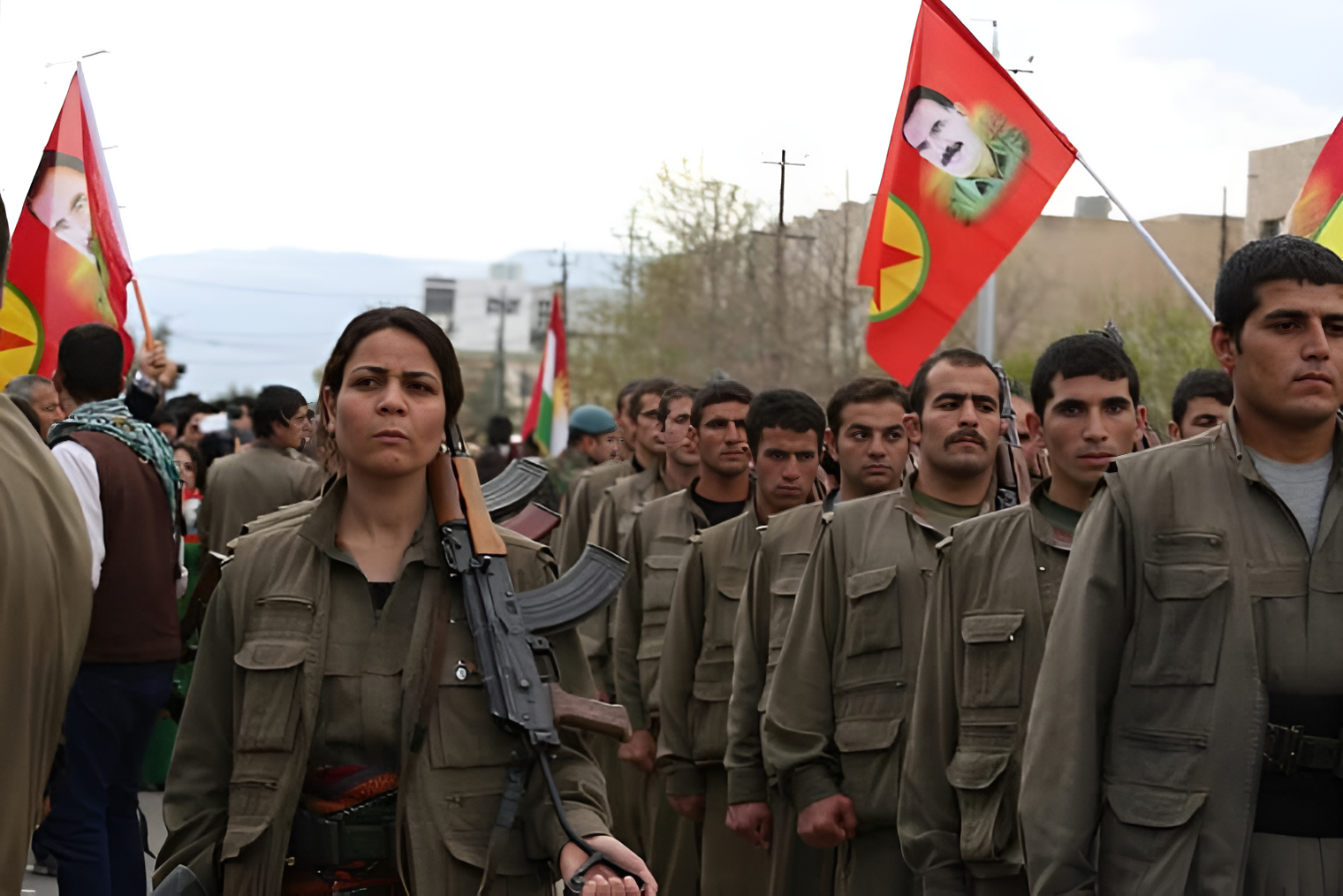
President Erdogan confirmed on 24 June that his government was preparing a legal framework to accelerate the dissolution of the PKK, ending several weeks of speculation over whether any legislation would be introduced. He said the bill would go to parliament after the necessary consultations and without undue delay, and he linked it to the parallel integration of Syrian Kurdish armed structures into the Syrian state.
Erdogan did not say how many articles the bill would contain, which categories of fighters would qualify, whether commanders would be covered, or whether Ocalan’s status would change, and he gave no date for submission. Those details continued to come from anonymous briefings and competing newspaper leaks that do not agree with one another. The substance of the process now turns on a question the confirmation left open, which is whether the law comes before disarmament or after it.
Context: What Ankara has confirmed about the law is narrow and consistent. After the ruling AK Party’s executive committee met on 22 June, party spokesman Omer Celik said the process had entered a new stage in which a law triggered by disarmament was under discussion, aimed at dissolving the armed and illegal structures of the PKK and its broader KCK umbrella, including their branches and extensions, and involving no bargaining over Turkey’s constitutional character. His clearest account, on 23 June, set out the three features that appear settled: the framework will be specific to this issue, it will operate for a limited period, and it will take effect subject to disarmament. Ankara describes the process as liquidation or termination, avoiding any language that would treat the PKK as an equal party to an agreement, and it works to keep the arrangement distinct from a general amnesty.
Everything beyond that frame comes from leaks that diverge, above all on the scale of the amnesty and the treatment of the leadership. The reported article count ranges from seven to twelve, and the most expansive account, in the newspaper Aydinlik, described a bill covering more than 20,000 people for a three-month period extendable by three more, with individuals classified by rank, by the offences attributed to them and by their involvement in armed activity; lower-ranking members and some armed participants would be eligible for sentence reductions or conditional release, while senior KCK figures would either spend a period on the prison island of Imrali or be moved under supervision to third countries. A narrower account in the news site Nefes on 26 June described no more than ten articles naming the PKK explicitly, with initial coverage limited to members not implicated in criminal acts, possible judicial supervision and a political-activity ban of around five years, the senior leadership excluded and Ocalan’s status unchanged, and submission possible in the first half of July at real risk of slipping to the next parliamentary year.
These versions also conflict with earlier reporting. Nefes itself had written on 6 June that an earlier draft might create the legal conditions for Ocalan to take part in negotiations, where its later account places him outside the legislation entirely, as a convicted prisoner serving his sentence. The inconsistency most plausibly reflects competing drafts, the absence of agreement among the ruling AK Party, its nationalist ally the MHP, the security bureaucracy and the pro-Kurdish DEM Party interlocutors, or messaging designed to test public reaction. The provisions on the senior leadership and Ocalan are the least reliable part of the coverage, and no published bill text yet allows the figures to be checked.
Analysis: One of the central obstacles is a fundamental lack of trust between the two sides.
The Turkish government argues that there must be a verifiable mechanism to demonstrate that PKK disarmament has reached an irreversible stage, one at which the process is fully locked in. Only then, it says, can the necessary legislation be guaranteed.
The PKK’s concern is the reverse. It argues that once disarmament becomes irreversible, it will have surrendered all its leverage. At that point, what guarantee would it have that the Turkish government would still deliver the required legal and political arrangements? The PKK also argues is that it has already taken the decisive steps, by withdrawing from Turkish territory, dissolving its organisation and ending armed struggle, so that the delay rests with the state. The DEM Party co-chair Tulay Hatimogullari put this directly in insisting the framework must not slip past July.
There is also a practical problem. As the PKK argues, how can its members lay down their arms without knowing what will happen to them afterwards? If they leave the mountains, where would they go? There is currently no legal framework governing their status, and if they returned to Turkey under existing laws, they could be arrested as before.
The two sides also disagree on what the law should contain. PKK-linked figures want considerably more than a leniency scheme for individual fighters, and the pro-Kurdish Human Rights Association co-chair Oya Ersoy has set out in interview what amounts to a near-general amnesty bound to structural reform: the return of exiles, the release of political prisoners, the reinstatement of mayors removed for trustees, the abolition of the village-guard system, guarantees for services in Kurdish, and recognition of Ocalan’s legal status. Ocalan is the centre of gravity, with the KJK, part of the wider PKK structure, calling his physical freedom its indispensable task. Parliament speaker Kurtulmus and Erdogan accept that legislation is needed but some pro-AKP voices have insisted in their media that no law can precede the surrender of weapons, an internal split that points towards a process advancing in stages rather than either side moving first in full. On the street, rallies for Ocalan’s freedom on 27 and 28 June drew a nationalist counter-mobilisation and a call from 112 former officials for them to be banned as terrorist propaganda, which further narrows the room for the government to legislate without appearing to concede.
The entire process was also slowed by the Iran war. Yet the outcome may, in some respects, prove favourable to both Turkey and the PKK. Much may now depend on what follows the current two-month pause and whether the conflict resumes.
Although Israel reportedly pushed for the opening of a Kurdish front against Iran, the PKK distanced itself from the initiative and did not become involved. The KDP and PUK were also opposed, but in the context of the Turkey-PKK process, the PKK’s position is the most important.
Had the PKK joined the war against Iran, the peace process with Turkey would probably have collapsed. Ankara would have interpreted such involvement as evidence that the PKK was not serious about disarmament. It could not credibly claim to be laying down its weapons while simultaneously entering another regional conflict.
The PKK’s refusal to participate therefore helped preserve the process. It also showed that, at the strategic level, particularly regarding Israel’s regional role, Turkey and the PKK may be closer than they would otherwise have been. This suggests that the prospects for an eventual deal remain strong.
At the same time, however, the regional outcome has reduced Turkey’s sense of urgency. One of Ankara’s main strategic reasons for accelerating PKK disarmament was the rapidly changing regional environment, particularly the possibility that the Iranian regime could collapse.
Turkey feared that, if Iran fell, it could become the next major regional target and that the PKK might be instrumentalised by Israel as one of the main pillars of a broader strategy against Turkey.
The fact that Iran has not collapsed makes Ankara more confident and allows it to move more slowly. Iran has been weakened and may need years to rebuild what has been destroyed, but it remains standing and will continue to absorb much of Israel’s strategic attention.
As long as Iran remains Israel’s principal regional adversary, Turkey is less likely to become the next primary target. This places Ankara in a stronger position: Iran remains capable of occupying Israel’s attention while also being weakened enough to pose less of a challenge to Turkish interests.
This also improves Turkey’s bargaining position towards the PKK. However, the PKK’s refusal to abandon the process or join the war against Iran reinforces the view that it remains committed to negotiations. The prospects for a deal may therefore remain strong, even as the timetable becomes slower.
A final factor is the Syrian track. The integration process appears to be progressing, but the integration and dissolution of the SDF have reportedly been pushed to the end of 2026, despite the much shorter timetable initially envisaged in January.
This is also slowing the Turkey-PKK process because the two tracks are connected. From Turkey’s perspective, PKK disarmament is not limited to Turkey. It is tied to a broader settlement involving PKK-linked armed structures across the region, particularly in Syria.
The government’s plan, as it currently stands, is a temporary, PKK-specific mechanism tied to disarmament and kept separate from a general amnesty and wider Kurdish reform, though Ocalan’s legal status may not remain entirely untouched: MHP leader Devlet Bahceli has called on him to become coordinator for the peace process and political integration, which points towards something closer to house arrest or a supervised role rather than continued imprisonment on Imrali, without amounting to his release. Given the multi-layered and multi-front nature of the process, however, even that is likely to arrive more slowly than either side was recently suggesting.


