


The SDF’s Integration Deal Enters a New Phase After the US Withdrawal
Just hours after SDF commander Mazloum Abdi’s meeting with Syrian President Ahmad al-Sharaa, the full US withdrawal from Syria was announced as complete.
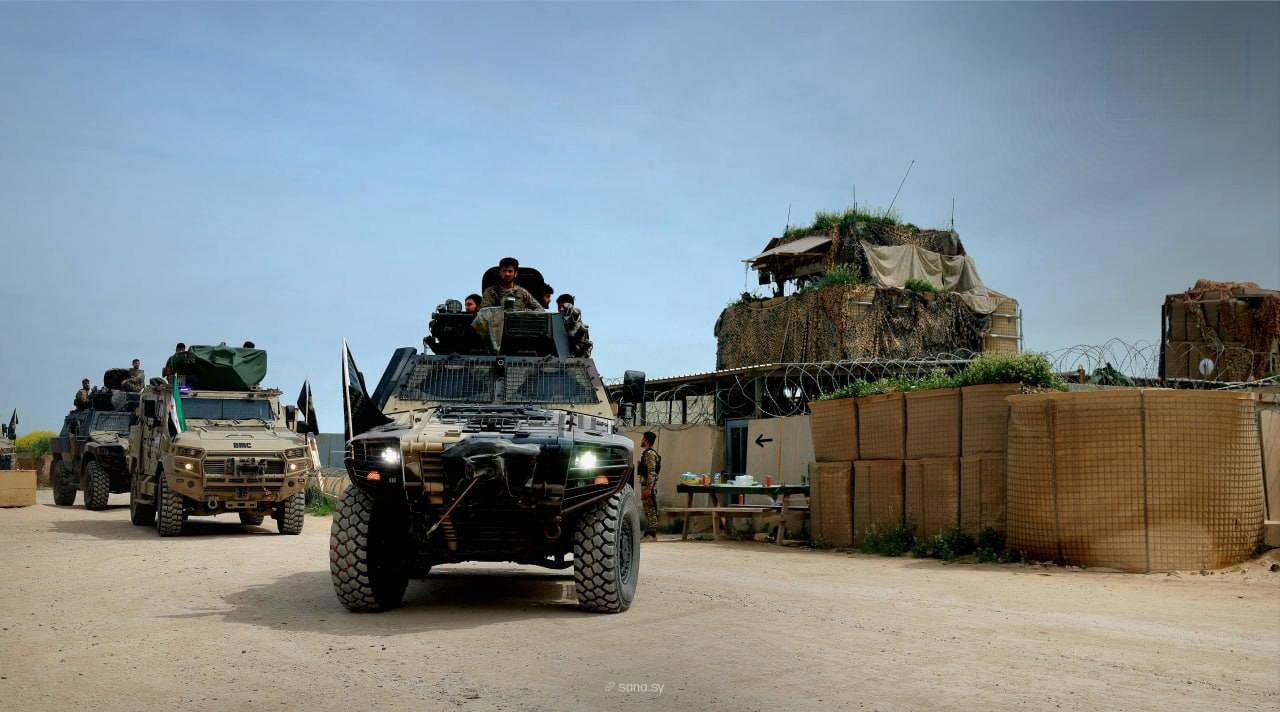
One notable detail is that Qasrak airbase, the site vacated by the final American forces, lies on the strategic M4 highway and inside the Hasakah zone that remained under SDF control after the final integration agreement was sealed. Yet based on videos that emerged after the US withdrawal, the base appears to have been handed over to HTS-led elements of the Syrian Army’s 60th Division, which the SDF is set to join. The footage shows dozens of Turkish-made BMC vehicles entering the base to deploy there. More importantly, when the US left, the SDF’s anti-terror unit, known as YAT, appeared to be waiting to hand the base over to the Syrian Army, indicating clear coordination and suggesting that implementation of the integration deal is progressing relatively smoothly.
It is also notable that both Qasrak and, a month earlier, Rmelan airbase appear to have been handed over to HTS-led brigades known to operate Turkish-made weaponry.
These two bases matter because Qasrak overlooks the M4, while Rmelan sits beside the strategically important Rmelan oilfields. Both are located inside the zone that remained under SDF control after the cessation of hostilities at the end of January.
The Syrian government is also set to take over all prisons in Hasakah, while the courts are to be transferred to Damascus-linked institutions. Officials involved in the integration process have said this could happen as soon as next week.
At the same time, the SDF appears to be receiving more positions within the Syrian government than initially expected, with the SDF bloc emerging as an important pillar of governance. Its role is set to extend beyond the defence and interior ministries to the foreign ministry, justice ministry, and other state institutions.
Meanwhile, the SDF is transitioning into politics following its formal dissolution as a separate armed entity, with strong indications that Mazloum Abdi himself may move into a political role.
This also appears to fit into the PKK’s broader rebranding across the Middle East and its effort to better align its political entities across the region, from Turkey to Syria and beyond. That process now appears to include a push for new cross-border media platforms aimed at strengthening coordination as these movements become more embedded in governance in Syria and, potentially, Turkey, while also aligning more closely with the PUK sphere in Iraq’s Kurdistan Region. The broader direction points toward a reconfigured cross-border political force emerging from the PKK’s transition in Turkey, where it has moved toward laying down arms and repositioning itself as a political actor.


