


Bahçeli’s Offer to Meet Jailed PKK Leader Sets Off Political Earthquake in Ankara
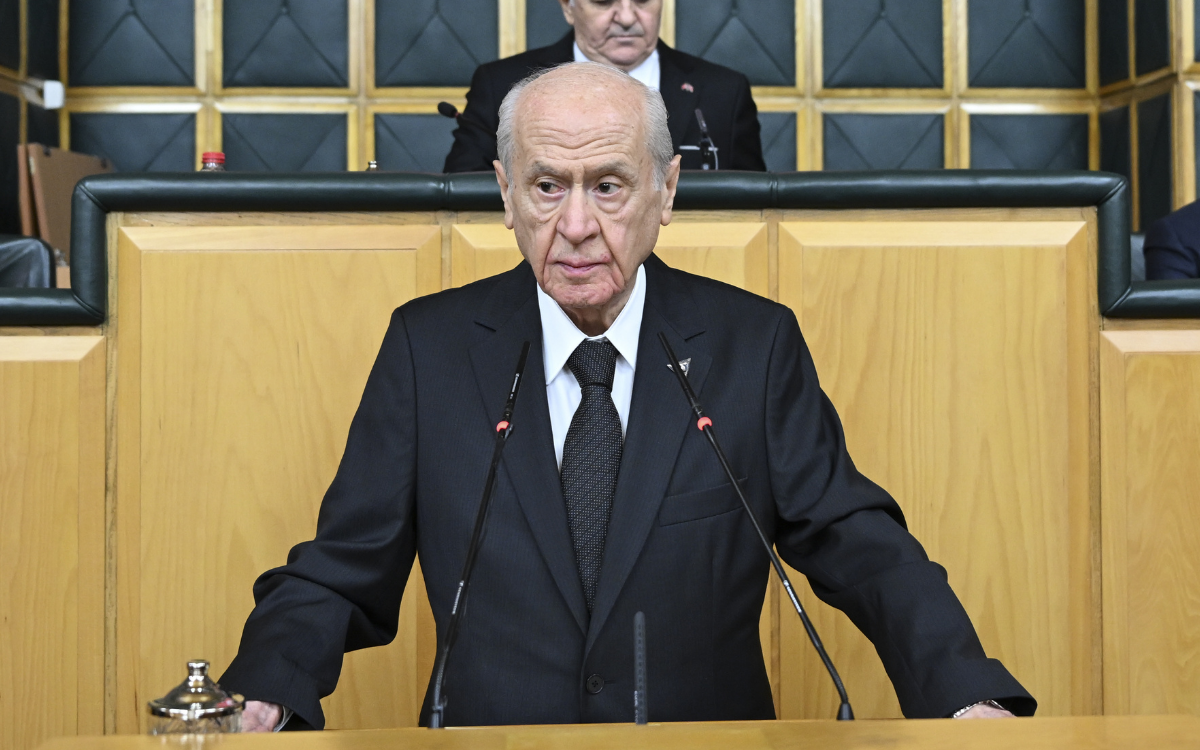
In a speech to his party’s parliamentary group, the leader of Turkey’s Nationalist Movement Party (MHP) and key Erdoğan ally, Devlet Bahçeli, declared that he is prepared to travel personally to the island prison where Abdullah Öcalan is held if the cross-party commission created to oversee the new PKK–Turkey peace process fails to do so. Within hours of his remarks, the parliamentary commission announced that it would hold a vote on Friday on whether to send an official delegation to meet Öcalan in person.
Context: Bahçeli, who stunned Ankara in October 2024 by taking ownership of the new peace initiative with the PKK, has now delivered a second major shock by publicly offering to go to Öcalan himself if the commission does not. He had twice previously urged that a delegation be formed to visit İmralı, but no concrete step followed. This time he said “Then I’ll go,” and secured an explicit show of support from MHP deputies.
The impasse reflects hesitation on President Erdoğan’s side. Although AKP deputies hold roughly half the seats on the commission, Erdoğan has so far been unwilling to clearly endorse a visit to İmralı, fearing public backlash and internal resistance. Reports from parliament suggest that, despite a one-on-one meeting between Erdoğan and Bahçeli about five days ago that was widely expected to resolve the issue, their differences over the İmralı visit remain.
Analysis: Bahçeli’s intervention amounts to another political earthquake in Ankara. His decision last year to front the peace talks with the PKK already broke a major taboo for a hardline nationalist leader. But an explicit offer to meet the movement’s jailed founder in person goes further still. The fact that, more than a year into the process, an İmralı visit is still treated as such a dramatic threshold explains why, despite Bahçeli’s repeated public calls, his ally the AKP – and Erdoğan personally – have not yet fully embraced it.
Bahçeli’s move appears to have forced the issue. The commission, chaired by parliament speaker who is fom AKP, has now agreed to hold a formal vote on Friday and, barring surprises, is expected to approve the visit. On Tuesday it held what was described as its final working session, hearing closed-door presentations from the interior minister, the defence minister and the head of the National Intelligence Organisation, İbrahim Kalın, on the state of the disarmament process and regional implications.
Bahçeli has previously gone out of his way to praise Öcalan’s role, thanking him for honouring his commitments so far and even referring to him once as a “founding leader” – a phrase he later framed as an attempt to smooth the process. What emerges is a picture of an MHP leader who is both invested in and determined to complete the peace track, and who increasingly doubts that Erdoğan and the AKP share the same resolve.
Turkish media report that AKP deputies on the commission have been unusually candid with their MHP counterparts about their concerns. They ask why the commission needs to go to Öcalan at all, how such a move could be explained to grassroots supporters, and what it would mean in the face of opposition attacks. “How am I supposed to go back to my constituency and explain this?” one MP is quoted as saying. The fear of vote loss and a backlash from a base long mobilised on anti-PKK rhetoric appears genuine.
Bahçeli and senior MHP figures, however, continue to insist that a clear signal from Erdoğan would be sufficient to break the deadlock. For them, the determining actor is the president himself. Erdoğan has repeatedly spoken of Turkey approaching the “terror-free Turkey horizon,” in reference to the peace process, and has said the state is “close to its goal.” Yet he has conspicuously avoided the decisive formula: that deputies will now “go to Öcalan” or “go to İmralı.” The MHP wants him to cross precisely that rhetorical and political line; Bahçeli’s pledge that, if the commission will not go, he himself will, is designed to increase the pressure on Erdoğan to authorise the step.
The commission’s work has already been repeatedly postponed over the past two weeks, first due to “technical reasons” and ministerial schedules, then after the crash of a Turkish cargo plane near the Georgian border. Fatigue is evident both in parliament and in public opinion. MHP sources say that attention is drifting and that the process now needs to reach a visible decision point – either an authorised visit to İmralı or a clear admission that it will not happen.
A second strand concerns the legal framework that will have to follow any political settlement. Key questions remain unresolved: what kind of legal arrangement will be offered to the militants, what changes to sentencing and enforcement regimes will be required, and how fast such legislation can be drafted and passed. With the new year approaching, MHP figures warn that at the current pace it will be impossible to enact the necessary changes before year-end, which is another reason they are pushing for acceleration – and for Erdoğan to take a more visible role in preparing public opinion.
Local reporting also points to a degree of introspection within the ruling AKP. Some MPs reportedly acknowledge that years of polarising rhetoric and the routine branding of opponents as “terrorists” strengthened Erdoğan in the short term, but now make it far harder to sell a “brotherhood” agenda. It is no longer credible, they argue, to claim that only Öcalan was ever treated as a terrorist; in practice, almost every dissident constituency was tarred with the same label. A number of AKP figures admit privately that this went too far and is complicating the present pivot.
Nevertheless, given Erdoğan’s dominance over the party, the prevailing expectation in Ankara is that, if he eventually decides that the commission should travel to İmralı, AKP deputies will fall into line. Under the presidential system, few believe a ruling-party MP would openly refuse to go if the president has publicly endorsed the visit.
In sum, Bahçeli’s statement has removed any ambiguity about his own position and has sent an unmistakable message to political actors across the spectrum. What began with Syrian President al-Sharaa’s visit to Washington and the broader regional resetting of the Kurdish file has now crystallised, in Ankara, around a single question: will Turkey’s state formally send a delegation to sit down with Abdullah Öcalan in his prison cell? How Erdoğan answers that question – and whether he chooses to take public ownership of the step – will shape the next phase of both the domestic peace track and Turkey’s wider Kurdish policy.


