


Damascus’s Hasakah advance threatens the KDP’s border leverage
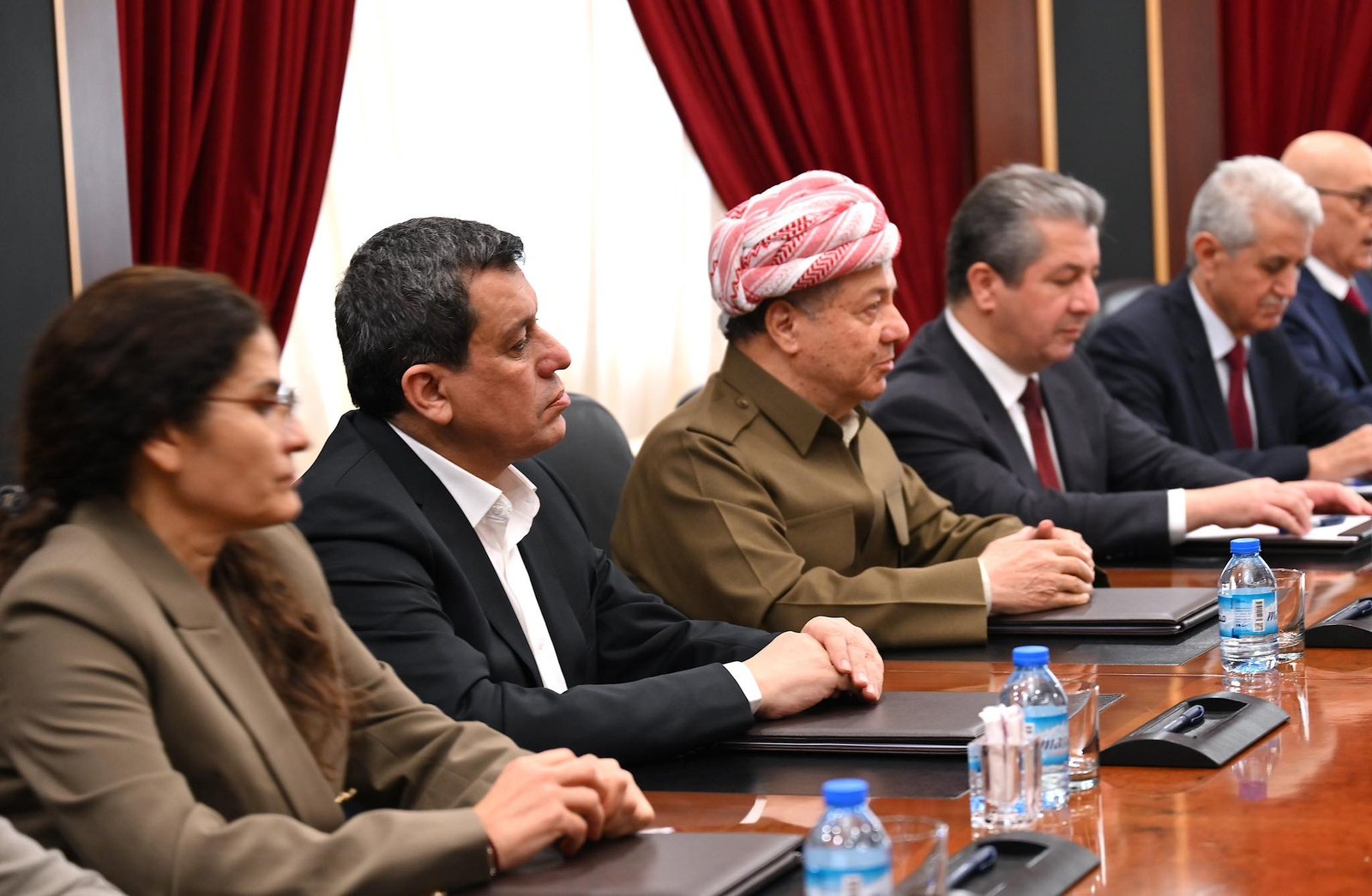
The KDP, the dominant party in the Kurdistan Region, has made a dramatic shift in its approach to the SDF since the collapse of the Assad-era order in Syria. Masoud Barzani dispatched an envoy to meet SDF commander Mazloum Abdi, then Abdi travelled to meet Barzani in their first-ever public meeting after years of animosity. That outreach later culminated in a one-day “unity” conference, where the SDF’s political wing agreed to align with the KDP-backed Kurdish National Council (KNC).
Context: For years, the KDP enforced a blockade on SDF-held areas and treated the group as a hostile actor—viewing it as a PKK offshoot. The KDP also saw the PUK (its traditional rival inside the Kurdistan Region) as deepening an alliance with the SDF in a way that effectively “squeezed” the KDP from both flanks, east and west. So what changed, especially after December 2024?
Analysis: The KDP’s current messaging, standing with Kurdish brethren facing an existential threat, may be partly sincere, but it does not fully explain the speed and scale of the pivot. The KDP’s earlier posture toward the SDF often resembled Turkey’s, until Assad’s collapse in December 2024. And the shift has accelerated again as the Syrian government advances toward the core Syrian Kurdish areas.
A key inflection point came after the Aleppo clashes, when Syrian forces took over the SDF pocket in the city, and the KDP’s media tone hardened sharply against Damascus. But beyond solidarity rhetoric, some of the key drivers are geopolitical.
First, geography and leverage at the border triangle.
The KDP controls the northwestern part of the Kurdistan Region, including the border with Syria. As things stand, the KDP’s Syria-facing frontier is primarily adjacent to SDF-held areas—while many Syrian advances have unfolded along lines closer to the Iraqi federal government’s side. For the KDP, it is strategically important that the Syria–Iraq–Turkey border triangle does not fall under firm Syrian government control, because if it does, Iraq and Turkey gain a viable alternative to their current dependence on KDP-controlled routes.
That matters for two reasons. Iraq may have incentives to reduce the KDP’s leverage—and Turkey, given its close ties with Syria’s new leadership, would also gain the option to bypass the KDP if Ankara ever wanted to punish it or diminish its bargaining power. Projects like the Development Road—already designed to connect Iraq to Turkey could, in theory, be rerouted or reimagined to pass through Syria rather than relying on the KRG corridor. That would directly erode one of the KDP’s most important levers: control of the Ibrahim Khalil crossing, Iraq’s single most important border crossing with Turkey—both a source of political influence and a major revenue stream.
Second, the wider regional mood—and pressure on the KRG’s strategic depth.
A resurgent Syria could embolden actors in Baghdad, including Sunni political forces, and contribute to an environment that is more permissive for efforts to weaken the KRG. The “Syrian scenario” itself is unlikely to be replicated inside Iraq, the Kurdistan Region is solidly Kurdish-majority, but the changing geopolitical context could still create openings for a different kind of pressure.
One plausible pressure point is energy. Baghdad has long treated parts of the KRG’s hydrocarbon map—especially assets near the Iraq–KRG frontlines – as falling within what it calls the “disputed territories,” but currently under the KRG control. The most sensitive examples are Khurmala, the KRG’s largest oil field, and Khor Mor, its largest gas field, both only kilometres from the federal–regional lines of control. In a more assertive regional environment, Baghdad could use that disputed-territory framing to justify a tougher push to bring these strategic assets under federal authority, tightening the screws on the KRG’s revenues and autonomy.
So, beyond the political rhetoric, partly aimed at expanding the KDP’s influence among Syrian Kurds at the PKK’s expense, the Syrian army’s advances are reshaping the strategic map in ways that challenge core KDP interests, not only out of concern for Syrian Kurds but because the emerging geography threatens the KDP’s leverage, revenues, and long-term strategic depth.


