


Planned Iraqi Crude Shipments Set to Expand Syria’s Oil Transit Earnings
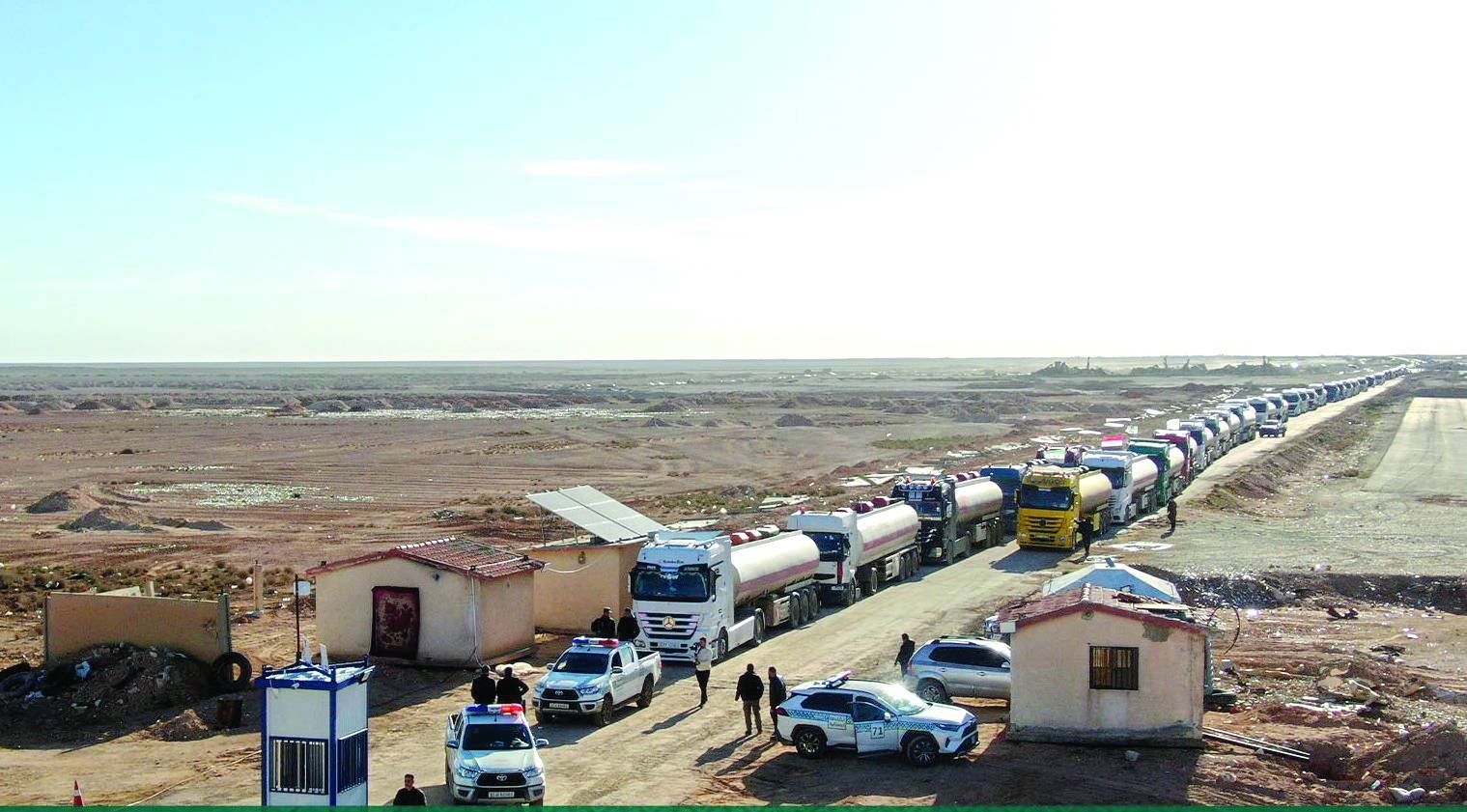
Iraq is preparing to begin exporting crude oil overland through Syria, with the first tanker trucks expected to reach the Mediterranean port of Baniyas as early as mid-October. Youssef Qiblawy, head of the state-owned Syrian Petroleum Company, said on 7 October that negotiations with Baghdad were close to completion and that Syria would provide storage at Baniyas before the crude is loaded onto ships for export.
Qiblawy expects the crude operation to match or exceed the scale of the fuel oil trade already running through Syria, which brings around 1,000 Iraqi tanker trucks into the country each day. At a typical load of about 220 barrels per truck, a crude route of that size would carry roughly 220,000 barrels per day. Running alongside the existing fuel oil traffic, it would take the combined volume of Iraqi petroleum crossing Syria to around 440,000 barrels daily.
The agreement has not yet been signed, and no starting volume has been confirmed. The 1,000-truck figure is therefore the scale Damascus is planning for, and the first weeks of operation will show how close the route comes to it.
Context: Iraq began sending fuel oil through Syria in April 2026, after the closure of the Strait of Hormuz during the Iran war cut its seaborne crude exports from more than 3.3 million barrels per day at the start of the year to around 98,000 barrels per day in May. Exports through Basra have since recovered to an estimated 2.57 million barrels per day in September, still around a quarter below the level of September 2025, and the oil ministry said shipments that opened the month at 3 million barrels per day had slipped to about 2.4 million by its third week.
The recovery has come at a high price. To persuade buyers to send tankers into the Gulf, SOMO, Iraq’s state oil marketer, is offering October-loading Basrah Medium at a discount of $34.50 per barrel to destination benchmarks and Basrah Heavy at $37, up from less than $30 for August and September cargoes. The overland route has its own costs, and Baghdad has not disclosed what it pays to move oil through Syria. Iraq’s trucking arrangement with Jordan offers a reference point, with Amman deducting $7.75 per barrel to haul Kirkuk crude to its refinery. The road from Basra to Baniyas is longer, and Syrian transit, storage and loading charges come on top, so the cost per barrel on the Syrian route is likely to be higher. As long as trucking and fees together remain well below the Gulf discount, a barrel sold from Baniyas could still earn Iraq more than one loaded at Basra, which helps explain why Baghdad is prepared to expand the route despite its limited capacity.
The fuel oil route runs mainly through the al-Walid and al-Tanf crossing, with the Rabia and al-Yarubiyah crossing also in use. Trucks discharge at Baniyas, where the cargo is stored and then loaded onto tankers for buyers including the United States, Spain and Egypt. The crude would follow the same path, loaded initially in the Zubair area of Basra and carried across both countries to the coast.
Since late September, the corridor has also been carrying fuel in the opposite direction. Petrol bought on international markets by Qatar-based UCC is landed at Baniyas and trucked east into Iraq. The first cargo was around 32,800 tonnes, and the stated target is 200 petrol trucks a day, which at the same load would equal roughly 44,000 barrels per day, close to the volume Iraq imported by sea in August.
Baghdad and Damascus are also discussing a pipeline to Baniyas with a capacity of up to 2 million barrels per day. That project would take around four years to build and cost at least $15 billion, so trucking remains the only operating link for the foreseeable future.
Analysis: The most direct gain for Syria comes from fees. Damascus collects transit charges on Iraqi trucks crossing its territory, storage charges for holding cargo at Baniyas, and port handling and loading fees when the oil is transferred to ships. The petrol imports add a second stream of the same charges moving in the opposite direction. Neither government has published the fee schedule, so total revenue cannot yet be calculated, but every one of these charges rises with volume. If crude trucking reaches the planned scale without reducing fuel oil traffic, the throughput on which Syria is paid would roughly double.
Storage is particularly relevant to the crude deal. Qiblawy’s offer of tank capacity at Baniyas turns existing port infrastructure into a paid service, and a larger and steadier flow of crude would give Syria a stronger case for investing in additional storage and loading capacity, which it could later market to other users.
The indirect benefits are spread along the route. Although the drivers and most of the trucks are Iraqi, every journey involves spending inside Syria on food, accommodation, fuel, tyres, repairs, spare parts, parking, mobile data and currency exchange. As an illustration, if each truck movement generated $50 in local spending, 2,000 movements a day over 300 operating days would put around $30 million a year into Syrian businesses. That income then circulates further as restaurant owners, mechanics and shopkeepers spend their additional earnings and take on staff.
These gains would be concentrated in border towns, roadside service points along the desert highway and the area around Baniyas, where the effect on local employment and trade is likely to be more visible than in national economic figures. How much of the money stays in Syria also depends on what drivers buy. Spending on meals, lodging and labour is largely retained locally, while purchases of imported diesel or spare parts send a significant share abroad.
The arrangement also has political value for Damascus. By becoming Iraq’s working outlet to the Mediterranean while Hormuz remains disrupted, Syria gives Baghdad a practical reason to keep relations stable and acquires a role in regional energy flows that it has not held for decades.
The limits are mainly physical. Road capacity, handling rates at Baniyas, security along the desert route and the cost of trucking compared with seaborne exports will all determine whether the crude route reaches 1,000 trucks a day, and a full reopening of Hormuz would reduce Iraq’s need for the corridor. For now, Syria’s earnings from Iraqi energy transit are set to grow, and the crude agreement is the step that would expand them most.


