


Damascus Moves From Nominal to Physical Security Control in Hasakah
New on the SDF-Damascus integration agreement:
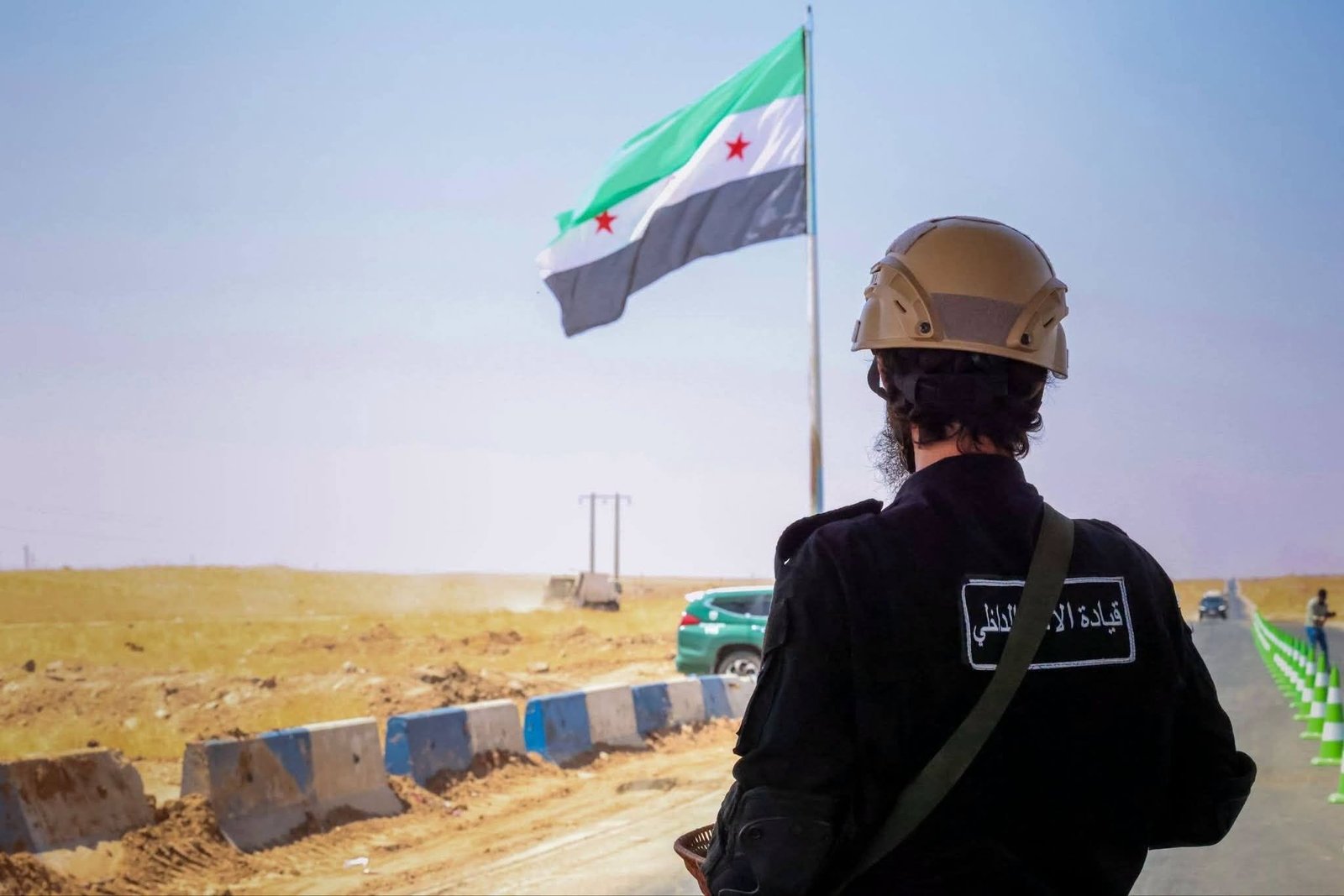
Yesterday and today, a sizable number of Damascus-linked Syrian Interior and Defence Ministry personnel entered Hasakah city in preparation for taking over the city’s security affairs. We reported five days ago, citing reliable sources, that additional Damascus-appointed security personnel were set to enter Hasakah in the coming days.
Based on this change on the ground, we are recolouring two areas within Hasakah and the Qamishli countryside to green, denoting Syrian government forces. The entire SDF pocket is now nominally under Damascus control, but outside these areas that control remains nominal, which is why we are keeping the rest yellow, where the SDF holds real power on the ground.
Two indicators that security control of the city is being taken over: yesterday, a convoy of around 100 military police, a Defence Ministry force, was stationed in the northwest of the city, and today, some 300 to 350 personnel from the Special Tasks Forces were stationed on the eastern and east-northeastern edge of the city.
Today’s deployment is especially large because the role of the Special Tasks Forces is rapid intervention and dealing with exceptional security incidents, including serious disturbances, hostage situations and other sudden security threats. It is a strong sign that they are there in preparation for a further deployment of Syrian government forces into the city. According to a reliable source embedded with the deployed security force, the task forces are one of the first operational components of a phased takeover, providing an early high-readiness security capability while the rest of the state security institutions are deployed sequentially.
In the coming days, civil police, road security, further military police and other security agencies are set to enter the city to take over their respective functions across it. These forces also include the integrated SDF-linked Asayish personnel, who will form part of the broader security structure under Damascus command. This is important because it shows that while the personnel are being absorbed, as Damascus has previously stated, the command sits with Damascus.
Two other points are worth noting. The three key security appointments we have been discussing in Hasakah province have now been made, and all three are Damascus-appointed, with none coming from the SDF. This matters because the key goal is command.
Marwan al-Ali was already appointed head of Internal Security in the province, which oversees and coordinates the Interior Ministry’s security presence, including civilian policing, public security, criminal security operations and civilian checkpoints. Imad Fawaz al-Ayash has been appointed head of military police, which enforces military law and discipline, deals with violations by military personnel, carries out military arrests and maintains military order.
This is significant because while three brigades in Hasakah province are populated by former SDF personnel, the discipline side is handled directly by Damascus, which means they will not function autonomously, and in cases of violation the Damascus-controlled military police structure may intervene.
The third post went to Thaer Obeid al-Bilal, appointed head of military security, which broadly concerns the security of the military establishment itself: force protection, security oversight, vetting, counter-intelligence functions and the security of installations, although the precise formal remit of the reorganised Military Security structure has not been publicly detailed. Both his appointment and that of al-Ayash were publicly confirmed during the latest integration meetings.
Today, importantly, the executive office of Hasakah province held its first meeting. We have reported on the appointments to the executive office, which is numerically dominated by SDF-linked figures. As we argued at the time, this executive office is more civilian-facing, and Damascus appears to have allowed the SDF a stronger civilian-facing role in the province while retaining tighter control over the coercive institutions. That is what is now happening on the ground.
Aside from that, in the coming weeks more Interior Ministry personnel are expected to enter Qamishli as part of the deployment of Internal Security running from Qamishli towards Derik/al-Malkiyah,, but also Rmeilan, where the oilfields are, and the Semalka border crossing.
This is significant because Semalka has already been administratively integrated under the Syrian central government, while the security side has been integrated only on paper, with almost all personnel on the ground being former SDF or Autonomous Administration-linked figures.
It is now likely that Damascus will deploy its own forces and absorb some of the remaining SDF and Asayish personnel as part of this broader mixed force. The distinction matters, because absorption into a mixed force leaves these personnel without exclusive control of these areas.
How extensive the deployment will be is unclear. In Qamishli, for instance, no final arrangement appears to have been reached, but the outcome is likely to be a mixed force of integrated SDF Asayish and Damascus-linked security.
As we also reported six days ago, claims in some early reporting that Kurdish had become an official language were misleading. This later proved accurate: Kurdish was assigned only as a national language, with three sessions of Kurdish language and one weekly activities period, while the curriculum will stay in Arabic, meaning Kurdish students will study in Arabic. For one year, students will have the option to study social studies subjects, including history, geography and philosophy, in either Kurdish or Arabic, but only for one year. Under the current rules, that option expires after the first year, with the three Kurdish-language sessions and weekly activities period remaining.
For now, we have changed the colour only of the Hasakah pocket and the triangle towards Qamishli, because the security environment there has already changed to a degree that warrants it. The rest are expected to follow.


