


Why PJAK Remains Armed While the PKK’s Other Fronts Close
On 25 August, Mazloum Abdi, commander of the Syrian Democratic Forces, announced from the People’s Palace in Damascus that the SDF had ended its mission and dissolved as an independent military force, completing an integration process that began with the March 2025 framework agreement with Syrian President Ahmad al-Sharaa and moved into implementation after the phased-integration deal reached in January this year. In Turkey, the twelve-article framework law was passed at the beginning of August and now waits on the security verification and National Security Council decision that will certify the PKK’s dissolution as complete and irreversible, expected around October. In the Kurdistan Region, the PKK has evacuated its Turkey-facing positions across Haftanin, Amedi, Khwakurk and Gara, and Turkish forces have moved into a large share of the vacated ground.
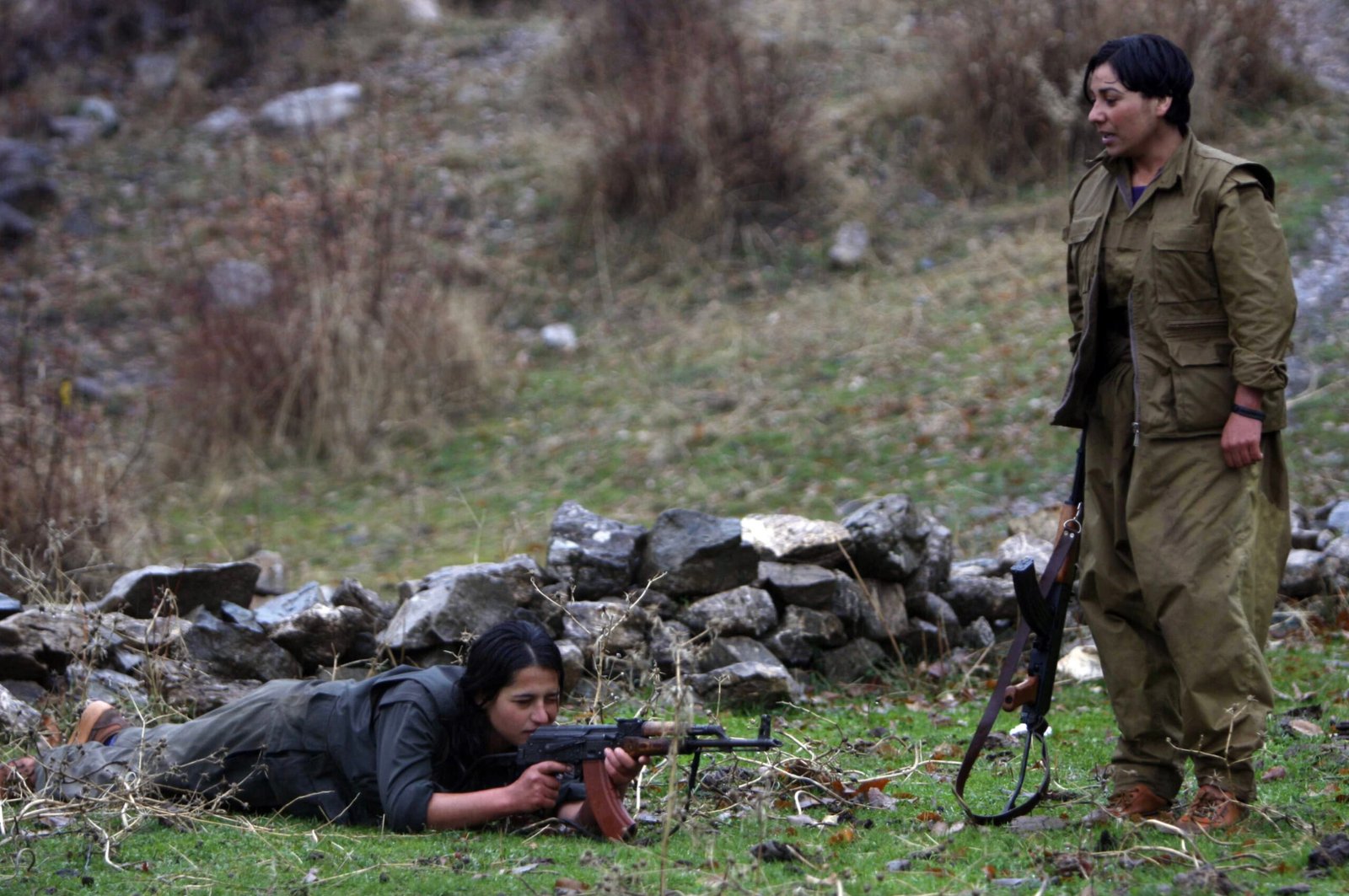
In three of the four countries where the PKK system operates, the movement’s armed structures have been dissolved, absorbed into a state army, or withdrawn from their positions. In the fourth, the direction of travel has reversed. Since early June, PJAK, the movement’s Iranian affiliate, has been in sustained combat with the Islamic Revolutionary Guard Corps at a tempo unseen since before its 2011 ceasefire with Tehran. The clashes began in the highlands near Marivan and south of Mahabad, spread through July into the Sardasht, Baneh and Saqqez triangle and onto the border itself, and on 2 August produced an attack with loitering munitions and rocket-propelled grenades on the Iranian army’s 328th Brigade base at Sianav. Iran, which had spent years striking the camps of the other Iranian Kurdish parties in the Kurdistan Region while leaving PJAK’s positions alone, is now engaging PJAK directly.
The Turkish framework law extends to the PKK and KCK and to “every formation connected with it”, and speaks of peace throughout the entire geography. It does not name PJAK, does not define what ending organisational existence requires, and leaves both questions to the security institutions and the subsequent Council decision. Ankara says it still expects PJAK to disarm. Nothing in the text commits it to a date.
Context: The reason PJAK sits outside the process becomes visible only once the process is dated correctly. What is usually described as a Turkey-PKK peace track was designed from the start as a response to a regional assessment formed after October 2023, and its country-by-country sequencing follows from that design.
The clearest single piece of evidence is the first day of the 2024 legislative year. Addressing parliament on 1 October, President Recep Tayyip Erdogan said that every development since October 7 had raised the threat to Turkey, and that Israel was attempting to use the separatist organisation in northern Iraq and northern Syria as a proxy through which to establish small satellite structures. He then argued that Turkey had to keep its “internal front” strong and that reconciliation had to take precedence over domestic conflict. The same day, Devlet Bahceli, leader of the MHP and Erdogan’s governing partner, crossed the floor of the chamber to shake hands with Tuncer Bakirhan, co-chair of the pro-Kurdish DEM Party, and explained the gesture by saying that Turkey needed peace at home while seeking peace in the world, tying his remarks directly to regional developments. Three weeks later, on 22 October, Bahceli made the proposal that Abdullah Ocalan, the imprisoned PKK founder, address DEM in parliament if he declared the armed struggle over and dissolved the organisation.
Bahceli confirmed the reasoning himself on 12 August this year, when he located the intellectual, political and strategic source of his October 2024 initiative in a regional environment where proxy organisations were being instrumentalised in geopolitical competition and where ethnic and sectarian differences were being converted into levers of regional strategy. Closing the armed question inside Turkey, on that account, had become a matter of national survival.
Two qualifications matter for dating. The public milestones are a weak guide to when the decision was taken, since a proposal of that magnitude presupposes months of closed contact with Imrali beforehand. And the Israeli strategic posture Ankara was reacting to was not created by October 7. Israel’s cultivation of non-Arab and minority actors on the region’s periphery is as old as the state, and the Israel-Greece-Cyprus relationship predates the Gaza war by more than a decade. What changed after October 2023 was the military depth of these arrangements and the speed at which the regional state system around Turkey began to come apart.
The events that followed hardened the assessment. Israel dismantled Hezbollah’s command through the autumn of 2024 and killed Hassan Nasrallah on 28 September. Assad fell on 8 December, after which Israel destroyed the bulk of Syria’s strategic military capability, moved into the buffer zone, and senior Israeli officials described a federation of autonomous ethnic regions as the best available outcome in Syria, a position Israel also pressed in Washington in early 2025 partly in order to constrain Turkish influence. Cyprus took delivery of the Israeli Barak MX system that same month. By February 2025 Israeli strategic commentary was openly asking whether Turkey was the next major threat. In March this year, reporting established that the plan to activate Iranian Kurdish armed groups against Tehran was pushed first by Netanyahu and Mossad with the CIA joining later, and that Israel pressed Iraqi Kurdish leaders considerably harder than Washington did to open a Kurdish front. Today, Israel and Greece signed the roughly three-billion-euro Achilles Shield agreement, under which Israel will build Greece’s entire multilayer national air-defence architecture around David’s Sling, Barak MX, SPYDER and an AI-enabled national command-and-control centre. Israeli defence coverage describes the system as directed at Turkey and Iran.
Whether these developments amount to a single coordinated design is a question TNC has treated separately. For explaining Turkish behaviour it is the secondary question. What matters is that Ankara concluded in late 2024 that Kurdish armed structures on three of its borders were becoming available as instruments in someone else’s regional project, and acted on that conclusion before the availability could be tested.
The conversion model, and what it requires: The architecture Ankara has built since is a conversion model applied state by state. In each case the Kurdish armed structure is turned into a legal or state structure inside the existing country, Kurdish political representation survives and expands, and the independent armed pole disappears.
Inside Turkey, the armed movement becomes legal politics through DEM, with the framework law supplying a conditional route out of prosecution and imprisonment for much of the membership and civilian network, and with the harder questions of Ocalan’s status, the constitution, the trustee-run municipalities and socioeconomic reintegration deferred to later stages the justification text openly anticipates. In Syria, the SDF’s personnel enter Syrian army brigades, Kurdish citizenship and cultural rights are conceded by decree, the unitary state is locked into the signed framework, and the separate military and territorial pole is extinguished. In Iraq, Turkey accepts the Kurdistan Region’s constitutional status and targets only the PKK’s separate military geography, which is being dismantled position by position.
Each of these outcomes required three things to be available at once. There had to be a state willing to offer a political landing zone into which an armed structure could dissolve. There had to be a settlement architecture credible enough that the movement would accept disarmament before the political returns arrived. And there had to be a counterpart with whom Ankara could transact, whether Damascus, Baghdad or Erbil.
Iran supplies none of the three. The Islamic Republic has no constitutional mechanism for Kurdish political incorporation and, under war conditions, no capacity to make such an offer credible even if it wished to. No successor arrangement is defined, so there is nothing to negotiate a transformation into. And Ankara has no channel through which to conduct a Kurdish settlement with Tehran while simultaneously managing its own interest in an Iran that is weakened and intact. Washington could not resolve the Iranian Kurdish file either, having attempted to assemble a Kurdish ground component in February and March and failed, after which Iran turned to sealing the western frontier so the option could not be revived.
This is why the framework law’s regional wording is drafted as discretion instead of obligation. Leaving “connected formation” undefined and reserving the dissolution standard to the security institutions allows Ankara to press the affiliates on separate and open-ended timelines. Discretion is what makes asynchronous implementation possible, and the Iranian file is where that flexibility is being spent.
Why the exception suits Ankara: PJAK was the one Iranian Kurdish armed organisation left out of the effort to build a Kurdish front against Tehran. Its co-chair said in March that the party maintained contacts with US officials and none with the Israeli government or Mossad. Through the war it described its position as a third line, declining to join the external campaign while continuing its own. The organisations that were approached were the established Iranian Kurdish parties hosted in the Kurdistan Region, the PDKI, the Komala factions, PAK and Khabat.
The doctrinal reason is straightforward. PJAK sits inside the Ocalan movement, whose reading of the region treats Israeli primacy as the adversary. Turkey’s own reading converges with it. That convergence is one of interests, and it carries no implication that either side acts on the other’s behalf.
The geography matters more than the doctrine. PJAK holds the mountain chain along the Iraq-Iran frontier running from Qandil through the Asos range and Mawat down to Penjwin and Said Sadiq, with tunnelling reported around Halabja. Its people are embedded in caves and underground systems rather than housed in fixed camps in Kurdistan Region towns, which is why its capacity to operate inside Iran survived the campaign that degraded the other parties. That belt is also the transit space between Iraqi Kurdistan and Iranian Kurdistan. Whoever holds it controls physical access to the Iranian interior.
The consequence follows from the map. If PJAK were removed from the belt, the belt would remain, and the organisations positioned to move into it are the ones that proved receptive to the activation effort. Turkey spent the February war blocking a Kurdish ground front, working through the KDP and PUK as the host authorities on whose consent the Iranian Kurdish parties depend. A vacuum along the same frontier would reopen the question Ankara has just closed. It would also raise the prospect of an armed Kurdish theatre pressing on Iranian territorial integrity, which would hand Turkey a fourth Kurdish file on its eastern approaches after Iraq and Syria.
Turkey’s declared end state across the region is a set of territorially intact states with Kurdish political participation and no independently armed geopolitical actors. In Iran only the third condition is currently reachable, and it is reachable only by leaving the frontier in the hands of an organisation belonging to a movement Ankara is presently negotiating with and whose regional alignment runs against the project Ankara is countering. None of this requires an understanding between Ankara and Qandil about PJAK’s status. Overlapping interests produce the same result without one.
Why the exception suits the Ocalan movement: The movement’s calculation runs in the opposite direction and reaches the same place.
The first element is sequencing risk. The relief the Turkish law offers is conditional, staged and revocable, the executive board controls certification and eligibility, and the political stages that matter most to the movement have been postponed. The Syrian outcome is institutional and only days old. If the movement dissolves inside Turkey, vacates its Iraqi positions, accepts absorption into the Syrian army and also dismantles PJAK, it will have surrendered every hard-power asset it holds before any of the political bargains has been tested.
The second is regional relevance, which is the more valuable asset. Iran is now the central unresolved file for Washington, and the movement’s other armed components are disappearing at exactly the moment that file is being contested. The Iranian frontier is the one place where the movement retains something outside powers have to account for.
The third is redistribution. TNC reporting in July established that the PKK’s repositioning leaves it with close to no presence on the Turkish frontier and close to total concentration on the Iranian one, with movement recorded down the connecting mountain chain and as far as Kalar and Chamchamal. Turkish evacuation conditions covered only the Turkey-facing sites, and Ankara’s silence about the southern positions implies tolerance in exchange for inheriting the vacated northern belt. That pattern is consistent with a transfer of assets eastward instead of a wind-down, which preserves the option of reactivation later.
The fourth is signalling, and it should be read with more caution than the other three. PJAK’s escalation since June coincides with the closure of the movement’s other fronts, and the plainest interpretation is a demonstration that the movement retains capability as its other structures are dismantled. The operational triggers were also local, including a drone strike on a PJAK fighter at Penjwin in July and an IRGC campaign already under way against cells that infiltrated in the opening phase of the war. Both readings can hold simultaneously, and the timing is what makes the strategic one worth taking seriously.
The certification decision expected around October is the empirical test of this argument. The law requires the security institutions to determine, and the National Security Council to confirm, that the PKK, the KCK and every formation connected with them have ended their actual existence and surrendered their weapons. If that certification is issued while PJAK remains armed and operating inside Iran, Ankara will have adopted a definition of dissolution that carves the Iranian file out of the standard, and the compartmentalisation reading will be confirmed by the state’s own instrument. If certification is withheld pending PJAK, or if Turkish operations against PJAK resume, the reading fails.
Two further outcomes would falsify it. A negotiated end to the Iran war that produced a constitutional process with room for Kurdish political incorporation would remove the reason for the exception, and PJAK’s status should then begin to move. And a PJAK disarmament while Iran remains unresolved would show that the sequencing had nothing to do with the availability of a landing zone.
What this adds up to: Ankara’s map now has two arcs. To the west, Israel has equipped Cyprus and, as of today, will build Greece’s national air-defence architecture. To the south and east, Syria has been reintegrated into a unitary state, the PKK’s Iraqi military geography is being dismantled, and Turkey’s internal front has been closed by legislation. In three of the four states where a Kurdish armed structure could have been used against Turkey, the structure has been converted into something that operates inside the state and answers to it.
The fourth is the one state where no such conversion is available, because Iran offers nothing to convert into and no counterpart to arrange it with. PJAK’s continued existence is what the process looks like where the model has no host. For the movement it is insurance and a seat at the one table that still matters. For Ankara it keeps the most consequential stretch of the Iranian frontier in the hands of an actor aligned against the regional project it has spent two years working to pre-empt. The file has been postponed, and the postponement is doing work for both of them.


