


The Turkey-Israel Layer of the PKK Peace Process
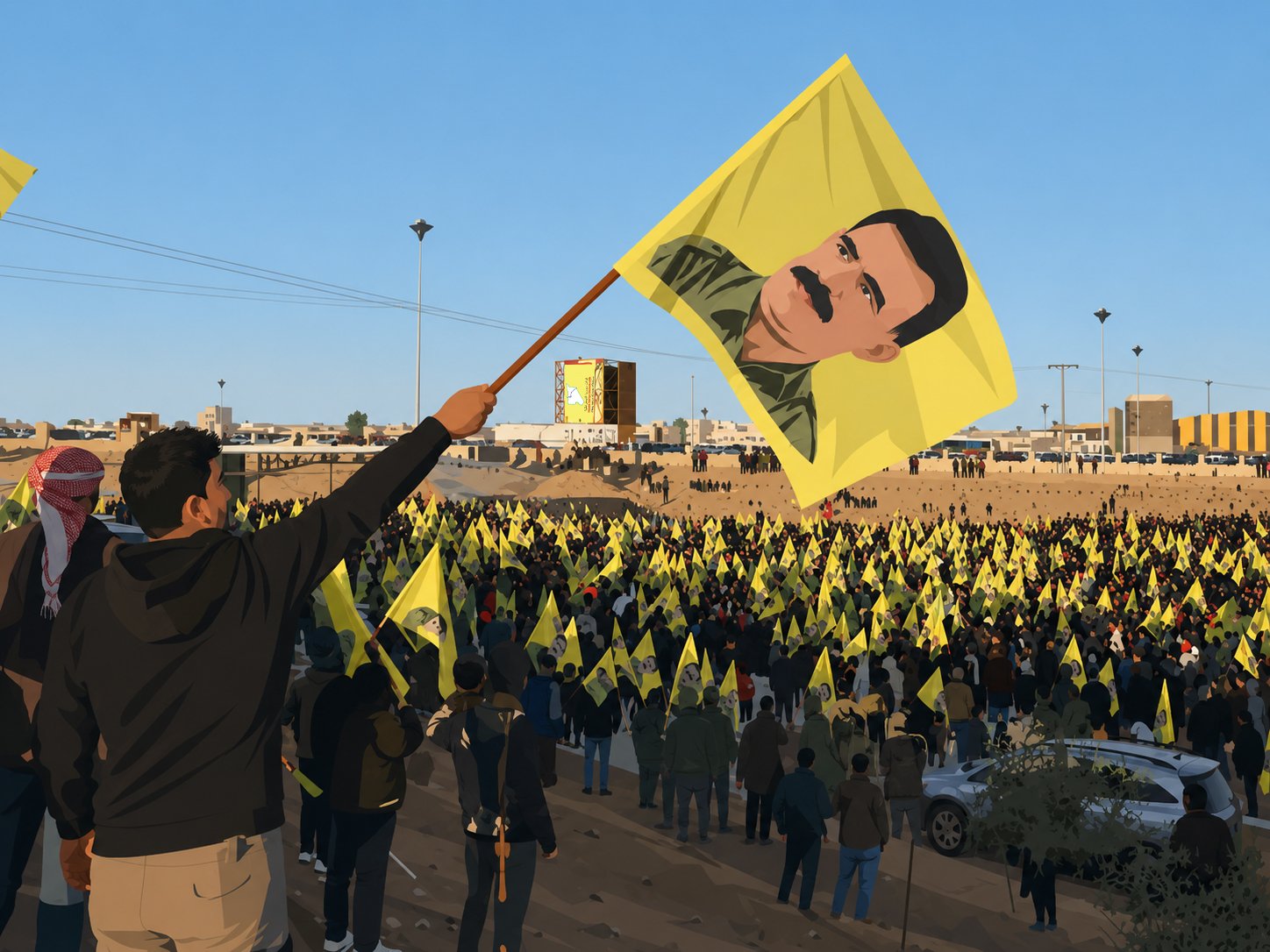
The Turkey-PKK peace process contains a strategic layer that most analysis leaves out. Between late 2024 and mid-2026, the external power competing with Turkey over the future of the Kurdish armed groups changed. Since the 1980s, Iran had been the main outside state shaping the environment in which the PKK operated, and Iranian policy kept the conflict contained while making a final settlement difficult to reach. After October 7, and above all after the fall of the Assad government in December 2024 and the US-Israeli war on Iran in 2026, Israel took over that position. Israel is working to recruit Kurdish armed groups as long-term partners against Iran and, in Ankara’s assessment, eventually against Turkey itself. This change explains the timing of the peace process, the speed with which Turkey has pursued it since the war, Ankara’s exclusive reliance on the Ocalan channel, and Ocalan’s own cooperation, which rests on his long-standing opposition to Israel’s regional role. The sections below set out the evidence for each of these claims.
Why the process restarted when it did
The regional change that made the settlement possible was October 7 and the Israeli push to reshape the region that followed it. At the strategic level, Ankara and Ocalan reached the same reading of Israeli planning: the objective was regional hegemony, to be achieved by first dismantling Iran and its regional extensions and then moving against Turkey. This is the layer that explains a restart which appeared to come from nowhere and surprised most observers, and it also explains why Turkey, which held the stronger position on the ground, accepted negotiations with Ocalan as the political representative of the movement.
Turkey was fortunate in its adversary. Ankara had been deeply sceptical of Ocalan for decades, but its own strategic thinking was changing, and as it changed it moved closer to his reading of how the region was being reshaped. The two sides converged on opposition to Israeli hegemony, and that convergence opened the gate to a settlement. Much of the surprise that greeted Bahceli’s handshake with DEM deputies, and the steps that followed it, comes from analysis that missed this. The evidence set out below supports the reading, the consequences reach across the region, and the convergence is likely to deepen for as long as the shared adversary remains.
The second factor determined the speed. Elements of the PKK leadership in Qandil, and figures within the SDF, were building ties with Israel, and Ankara concluded that the situation was moving beyond its control. The purpose of the process was therefore wider than ending an insurgency. Turkey moved to internalise the Kurdish question within a Turkey-centred regional system before Kurdish and Arab political forces could be incorporated into the Israeli-led project to reshape the region, first for use against Iran and eventually against Turkey itself.
Iran’s role before 2024
Iran benefited from a contained PKK conflict and worked to keep it that way. The relationship dates to the first years of the insurgency: from the 1980s the PKK used Iranian territory for sanctuary and transit, and Tehran, aligned with the Damascus government that hosted Ocalan until 1998, treated the group as usable pressure on Turkey. PJAK’s 2011 ceasefire with Tehran ended armed activity on the Iranian front while the war with Turkey continued. In Sinjar, YBS fighters received salaries through the Popular Mobilization structure, which meant an Iranian-aligned institution was funding a PKK affiliate. In Syria, the Assad government’s 2012 withdrawal from the northeast gave the PYD its territorial base. The combined effect was that the PKK operated across several sanctuaries with several patrons, Turkey could not end the conflict militarily, and Iran had no reason to help Ankara end it politically, because the conflict tied down Turkish resources and gave Tehran leverage. Iran’s aim throughout was to keep the PKK useful as pressure on Turkey while preventing it from growing into a project that could threaten Iran.
What changed between September 2024 and April 2026
The sequence can be dated precisely. Israel killed Hassan Nasrallah on 27 September 2024, demonstrating that it could dismantle the leadership of a large armed movement embedded in a neighbouring state. Four days later, on 1 October, Bahceli shook hands with DEM deputies at the opening of parliament, and Erdogan warned the same day that Israel “will set its sights on our homeland after Palestine and Lebanon.” The two moves were prepared in advance: Al-Monitor had already reported secret contacts between the state and the PKK before Bahceli’s gesture, and subsequent Turkish reporting described MIT maintaining continuous contacts among the security bureaucracy, Imrali and the Qandil leadership.
Israel’s interest in the Kurdish groups then became public. On 10 November 2024, Foreign Minister Gideon Sa’ar declared the Kurds a “natural ally” of Israel with political and security dimensions. Sa’ar was restating one of the oldest instruments of Israeli foreign policy, the periphery doctrine formulated under David Ben-Gurion in the late 1950s, which built alliances with non-Arab states and with the region’s minorities, among them the Kurds, the Maronites, the Druze and the southern Sudanese, in order to weaken and distract the states surrounding Israel. The Kurds fit the doctrine unusually well for two reasons. They share no border and no territorial dispute with Israel, so there is no bilateral conflict to manage, and their position inside four states that Israel regards as adversaries or competitors makes them usable as an instrument of Israeli power deep inside those states, far from Israel’s own frontiers. The practical record runs from Mossad’s cooperation with Mustafa Barzani in the 1960s to Israel’s position as the only state that supported the 2017 independence referendum. On 14 November, KCK Executive Council member Zubeyir Aydar responded on Medya Haber TV that the movement could establish relations with Israel. Assad fell on 8 December, which removed Iranian influence from the Syrian file, and the first DEM delegation visited Ocalan on Imrali on 28 December.
The war on Iran, which began on 28 February 2026, showed how far Turkish policy had moved. Kan News, citing senior Israeli officials, reported that Turkey threatened to provide air assistance to Iran if Kurdish forces invaded the country as part of a Mossad-coordinated ground operation. Iranian Foreign Minister Abbas Araghchi corroborated the sequence: Washington contacted the Iraqi Kurdish leaders, Tehran contacted the Barzani and Talabani leaderships and Hakan Fidan, and Turkey adopted what Araghchi called a “very firm position” with the Americans. The National Context has separately established that the Iraqi Kurdish leadership used Ankara as the channel for communicating their own refusal. Bahceli stated the policy openly in March 2026 when he said Kurds are “not for sale, not for rent, and not hitmen for hire” for the United States or Israel.
Why Israeli sponsorship is a different problem from Iranian influence
Iran and Israel want opposite things from the Kurdish armed groups, and the difference determines Turkish behaviour. Iran wanted the groups kept at a fixed size and used as calibrated pressure. Israel wants them enlarged, trained, funded and integrated into its regional planning against Iran, and Turkish officials assess that the same infrastructure would later be available for use against Turkey. Israeli officials described Turkey during the war as the next Iran, Naftali Bennett has called Turkey Israel’s principal long-term competitor, and Israeli commentary continues to argue in print for arming Iranian Kurdish factions such as PAK.
The Syrian file supplies the most concrete evidence of what Israeli sponsorship looks like in practice. The Washington Post, citing Israeli and Druze military sources, has reported that the SDF served as a conduit and trainer for Israeli-linked support to Druze militants in Sweida, that the channel was established months before the collapse of the Assad government, and that the relationship continues. The report appeared one day after Fidan, speaking from Damascus, called SDF coordination with Israel the biggest obstacle to implementing the March 10 agreement on the SDF’s integration into the Syrian army. Earlier steps in the same relationship are on the record: Sa’ar acknowledged in December 2024 that Israel was in contact with Kurds and Druze in Syria, and Israel Hayom reported an extensive phone call between Sa’ar and Ilham Ahmad in January 2025. For Turkey, an unresolved PKK question under Iranian influence was a chronic and bounded problem. The same question under Israeli sponsorship becomes an active threat, because the sponsor’s objective includes building the groups up. Closing the file therefore became urgent, which is why the process accelerated through the war rather than stalling: the framework-law breakthrough of July 2026 came two weeks after the collapse of the US-Iran ceasefire, during renewed hostilities.
Why Ankara works through Ocalan
Ankara’s channel choice follows from two requirements. The interlocutor must have the authority to make decisions bind the whole movement, and he must hold a position on Israel that Ankara can rely on. Ocalan meets both requirements. The PKK’s dissolution congress in May 2025 acted on his call, which settled the question of authority. On Israel, his record is consistent: he has described a five-stage Israeli strategy in which Gaza, Lebanon and Syria are complete and Iran and Turkey remain; he has recounted a Mossad approach in Moscow in 1998 during the flight that ended in his capture; and his February 2025 dissolution message presented Turkish-Kurdish fraternity as the way to withstand “hegemonic powers,” crediting Erdogan and Bahceli by name. Aydar’s statement of 14 November 2024 showed that the executive tier in Qandil was open to relations with Israel, which meant the second requirement ruled Qandil out as a negotiating address. Ankara therefore concentrated the entire process on Imrali.
The alignment between Ocalan and Ankara, and its limits
On the regional question, Ocalan and the Turkish state hold overlapping positions, and the overlap predates the current process. Since his post-capture writings, Ocalan has argued that the solution to the Kurdish question lies inside Turkey through democratisation rather than through a separate state. That position rejects externally backed partition of the region, and it coincides with the Turkish state’s central concern, which is the emergence of an Israeli-supported Kurdish entity on its borders. Two qualifications keep this finding accurate. First, the overlap concerns the regional question only; on how Turkey should be governed, Ocalan’s programme and the current government’s remain opposed, and the process has narrowed none of that distance. Second, the shared framing performs political work for both sides: the government presents the process to nationalist voters as a means of denying Israel a Kurdish instrument, and Ocalan presents dissolution to the movement as a means of avoiding use by outside powers. The framing serves both leaderships, and it also appears consistently across their statements over two years, which supports reading it as an operative belief on both sides rather than as rhetoric alone.
What remains unresolved
Turkey’s evacuation conditions cover the PKK bases facing Turkey at Haftanin, Amedi, Khwakurk and Gara. The National Context has reported that PKK forces are at the same time expanding along the Iranian border, from the Asos mountains through Penjwin to reported tunnelling near Halabja, and Ankara has said nothing publicly about these southern positions. The part of the movement that publicly kept the Israel option open in November 2024 is now concentrated on the Iranian frontier, and Israeli advocacy for arming Iranian Kurdish groups continues. Turkey has secured the outcomes it wanted in the first phase of this competition: the PKK is dissolving into a Turkish-managed legal process, the SDF is being pressed into the Syrian army under the March 10 framework, and the Iraqi Kurdish parties declined the wartime role that Israel and parts of the US administration had planned for them. The competition over the Iranian Kurdish groups is still running, and it will determine whether the closure of the Turkish front stays closed.


