


As Iraq’s Oil Crisis Deepens, Syria Cashes In on the Land Corridor
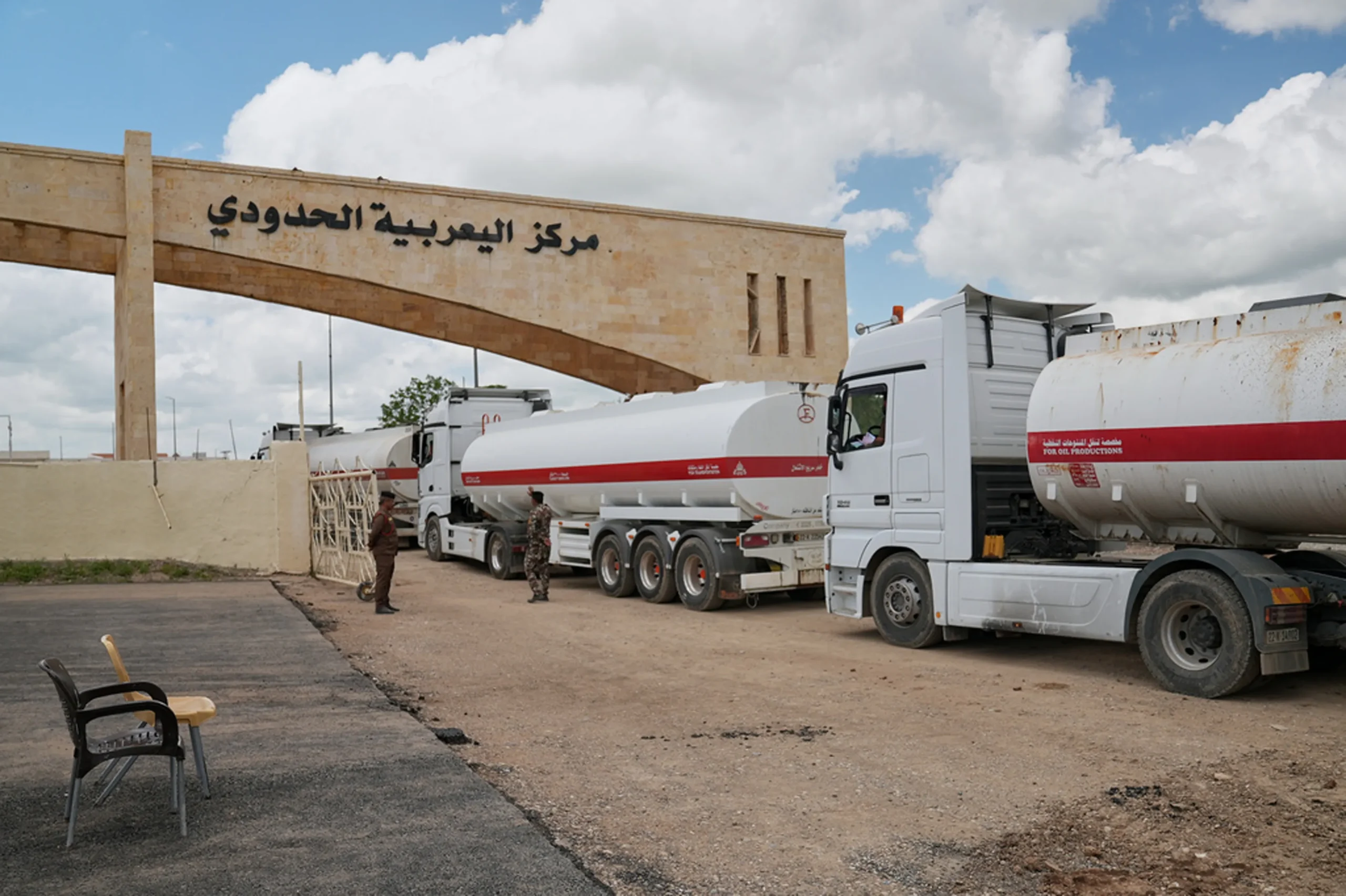
Syria is increasingly benefiting from the land corridor carrying Iraqi oil to the Mediterranean as Baghdad comes under growing pressure from the effective closure of the Strait of Hormuz. The worse Iraq’s export crisis becomes, the more traffic, hard currency and economic activity Damascus captures.
Since April, 2.123 million tonnes of Iraqi fuel oil have crossed Syria by road to Baniyas. At roughly 30 tonnes per road tanker, this equates to about 70,800 loaded journeys.
Two routes are operating. The first runs through the al-Waleed-al-Tanf crossing and opened with a convoy of 299 tankers carrying Iraqi fuel oil towards Baniyas. The second runs through Rabia-Yarubiyah, which Iraq reopened in April after more than a decade of closure, adding capacity for supplies from northern Iraq and easing congestion at al-Waleed.
The operation began with a handful of vehicles, but traffic has now reportedly reached around 1,000 tankers per day, with discussions under way to double current volumes. Baniyas is unloading around 900 tankers daily and loading roughly one seagoing vessel every seven to ten days.
The fuel is discharged into storage tanks and pumped onto ships for export rather than refined in Syria. Cargoes have already reached Spain, Egypt and the United States, making Syria an increasingly important Mediterranean outlet for Iraqi petroleum products.
Context: Damascus earns directly through road transit, border processing, storage, unloading, pumping and maritime terminal services. Syria’s published tariff schedule also levies dollar-denominated transit fees according to vehicle weight and the distance travelled to or from Syrian ports.
The corridor also channels money into the wider economy. Iraqi drivers can spend several days inside Syria because of the long journey, convoy arrangements and queues at Baniyas, paying for food, water, phone credit, vehicle repairs and other services along the way. The traffic also supports mechanics, roadside businesses, customs officials, security personnel, port workers and the contractors expanding Baniyas’s unloading and storage infrastructure.
Baghdad, for its part, has few alternatives. Before the Hormuz crisis, around 3.4 million barrels per day of Iraq’s 3.6 million in daily exports moved through the southern Basra terminals. Iraq is therefore under intense pressure to develop every available alternative outlet, even where road haulage is far more expensive than seaborne shipping.
Analysis: The commercial contracts have not been disclosed, but based on the reported volumes, tanker numbers and the published transit framework, we estimate that direct Syrian receipts since April may be around $20-25 million.
Including local spending, employment and associated services, the corridor may have generated around $30-60 million in total Syrian economic activity since April, with $35-45 million a reasonable central estimate. These figures are analytical inferences rather than reported data, as neither the fee structure nor the full commercial arrangements are public.
At current traffic levels, the corridor’s broader Syrian economic footprint may already be running at roughly $11-16 million per month. It could rise significantly if volumes double or if Iraq begins routing substantial crude oil and naphtha shipments through Syria.
For Syria, the sums remain modest against the scale of its economy and reconstruction needs. However, this is much-needed hard currency generated from existing geography, roads and port infrastructure at a time when the government has little foreign exchange, an empty treasury and a state still undergoing political and administrative consolidation.
The strategic gain may ultimately exceed the immediate revenue. The crisis is turning Syria from an economically isolated neighbour into a Mediterranean energy corridor that Iraq increasingly needs. Baghdad is already preparing to expand the route and to revive permanent pipeline connections that could continue operating even after Hormuz reopens.
The structural irony is that Iran’s closure of Hormuz is damaging Iraq’s economy while pushing part of its remaining petroleum trade through a Syria whose government Tehran regards as an adversary.
In both Baghdad and Tehran, however, this may read less as irony than as strategic necessity. If the ultimate objective is an Iran that survives the confrontation, and an Iran that survives emerges emboldened, then the damage to Iraq’s economy is a tolerable cost. And if these routes keep enough money flowing to sustain the current Shia-led order in Baghdad until Iran settles its strategic contest with the United States, they serve that objective directly. For both, this is a small price for a greater good.


