


Why Turkey Intervened: The Strategic Logic Behind Ankara’s Opposition to an Iranian Kurdish Front
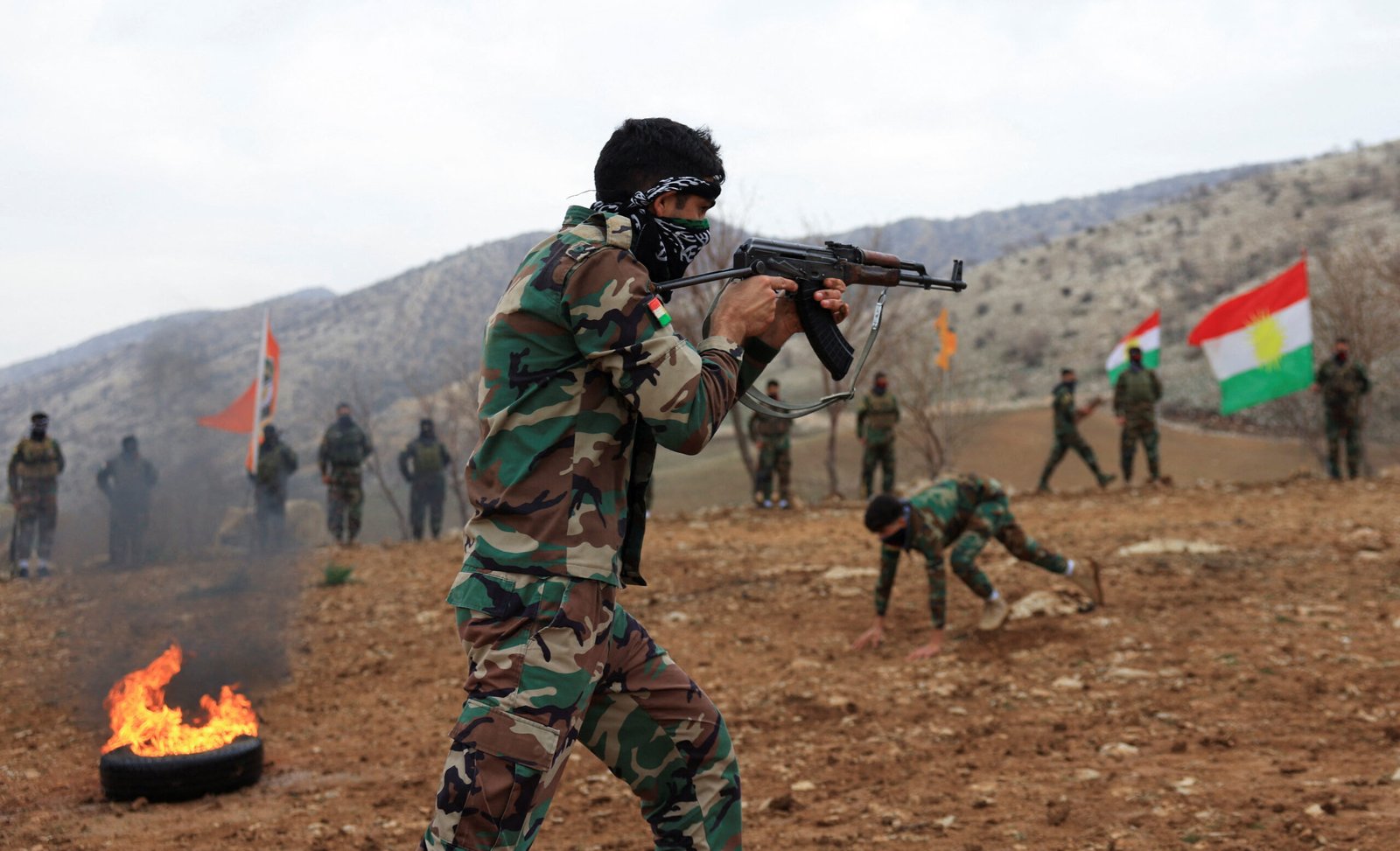
Kan News, Israel’s public broadcaster, citing senior Israeli officials, reported that Turkey threatened to provide air assistance to Iran if Kurdish forces invaded the country as part of a Mossad-coordinated ground operation. The channel has inferred that this is what Trump meant when he claimed Turkey had been on the verge of entering the fighting.
Iranian Foreign Minister Abbas Araghchi separately corroborated the core sequence: the US and Israel planned to partition Iran; Trump contacted Kurdish leaders in Iraq; Araghchi then contacted the Barzani and Talabani leaderships and Turkish Foreign Minister Hakan Fidan; Turkey engaged the Americans and adopted what Araghchi called a “very firm position”. Reuters, the Financial Times and the Associated Press have independently reported elements of the same sequence. Turkey did not intervene to defend the Islamic Republic. It intervened to prevent Iran’s destruction, because a destroyed Iran would have made Turkey the next target.
The analytical case rests on several interlocking reasons:
1. Israel’s strategic design was sequential. As understood in Ankara, the objective was to neutralise Iran first, through fragmentation or regime change, and then redirect attention toward Turkey. Several Israeli officials reinforced this reading during the war, publicly describing Turkey as “the next Iran.” Former prime minister Naftali Bennett framed Turkey as Israel’s principal long-term competitor. Hakan Fidan accused Israel of attempting to designate Turkey as its next enemy after Iran.
2. The Kurdish operation was the mechanism connecting the two phases. The proposed operation would have armed and empowered Kurdish forces under US-Israeli protection. Once Iran was removed, the same forces, the same infrastructure, the same intelligence relationships and the same precedent of externally sponsored Kurdish territorial power could be redirected against Turkey. From Ankara’s perspective, the feared sequence was clear: Iranian Kurdish organisations acquire territory and battlefield experience under Western protection; cooperation grows among Iranian Kurdish groups, Iraqi Kurdish parties, the SDF and PKK-linked networks hence encircle Turkey from the south and east; the same instrument becomes available for use against Turkey. That would reverse a decade of Turkish effort to contain Kurdish armed autonomy in Syria, degrade the PKK in Iraq and convert Turkey’s own Kurdish conflict into a controlled political process.

3. Iran serves Turkey as a strategic buffer against Israel. As long as Iran remains Israel’s principal adversary, Israeli military planning, intelligence resources and American deployments remain concentrated on the Iranian threat. Turkey can expand its influence across Syria, Iraq, the Caucasus and the eastern Mediterranean without being designated the central obstacle to Israeli-American regional primacy. A destroyed Iran would remove that absorption effect and leave Turkey facing a more powerful Israel without a counterweight.
4. Iran is also the threat that partially makes Turkey valuable to Washington. A large part of Turkey’s strategic premium in the US derives substantially from the Iranian threat. As long as Iran is the principal adversary, Washington needs Turkey as NATO’s southeastern anchor, a Sunni counterweight to Tehran and an interlocutor capable of speaking to all sides. That allows Ankara to be difficult and autonomous while Washington still accommodates it. Without a hostile Iran, the same Turkish policies that are currently tolerated could be reinterpreted as problems, and Turkey could move from indispensable partner to principal difficult power.
5. Turkey’s preferred outcome is therefore extremely specific. Ankara wants an Iran that remains structurally opposed to Israel and strong enough to absorb the principal burden of confrontation, but too diminished to challenge Turkish dominance, increasingly dependent on Ankara for trade and mediation, and unable to obstruct Turkish expansion in Syria, Iraq or the Caucasus. That is not merely a balance of power. It is a form of strategic rent: Turkey derives diplomatic and military value from the threat posed by Iran.
Turkey’s intervention preserved not only Iran as a strategic buffer against Israel, but also the regional threat structure that makes Ankara indispensable to Washington. A weakened Islamic Republic allows Turkey to expand at Iran’s expense while continuing to benefit from the Iranian threat that sustains Turkey’s strategic value. Iran’s destruction would have removed both the shield that absorbs Israeli attention and the threat that keeps the United States closely invested in the Turkish relationship. Turkey was not defending the Islamic Republic, it was defending its own interests.


