


Iraq’s Oil Revenue Has Collapsed. The Question Now Is How Long the State Can Hold.
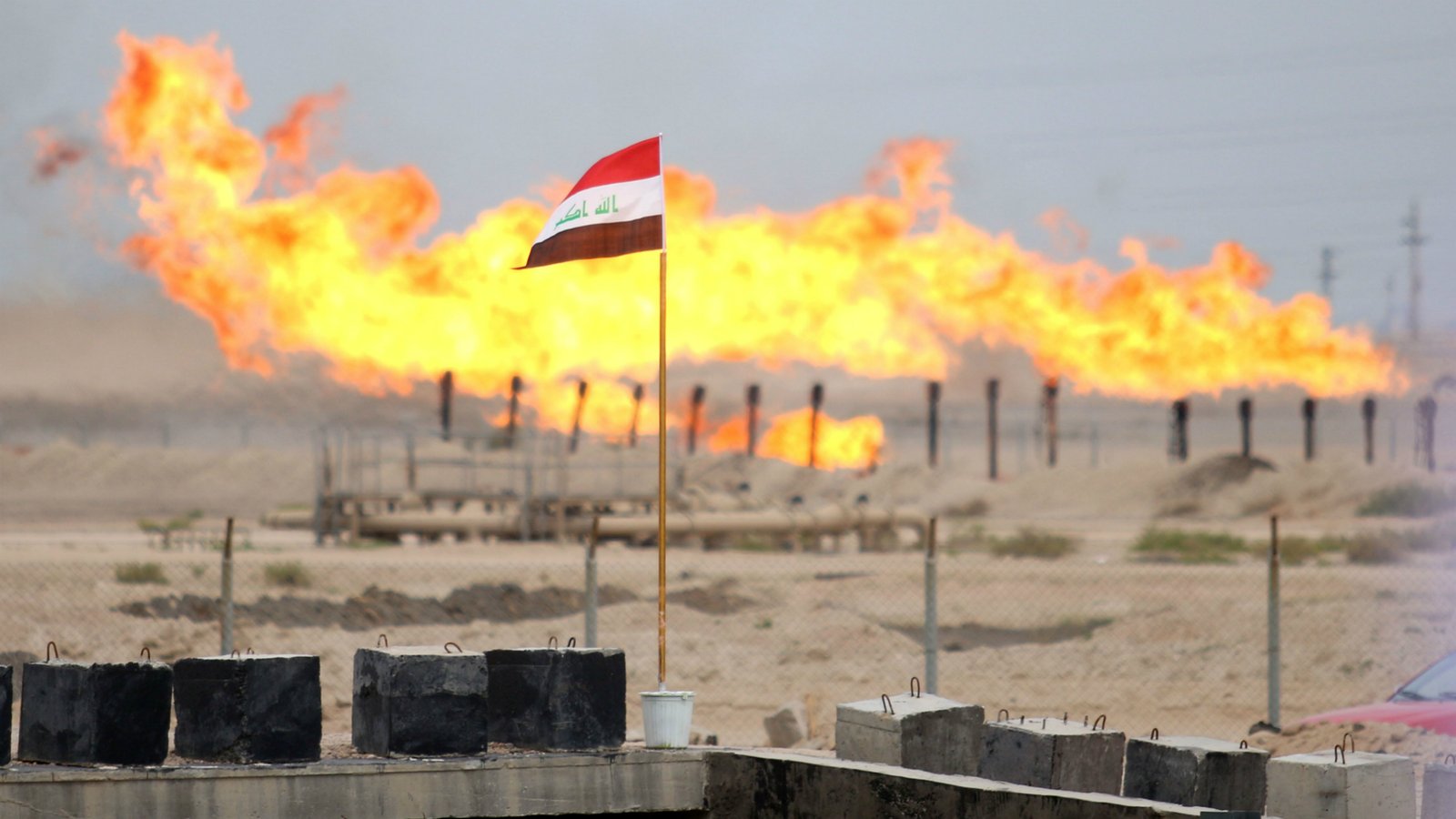
Iraq entered April having already recorded its worst monthly oil export figure in recent memory. March revenues had fallen to roughly $2 billion on 18 million barrels exported – a fraction of February’s $6.8 billion from nearly 100 million barrels, the last full month before the Hormuz closure. April was worse.
A reconstruction of April’s export flows puts Iraq’s total hydrocarbon earnings at somewhere between $1.2 billion and $1.4 billion. Against a salary, pension and welfare bill of roughly $5.45 billion per month, April’s revenues covered barely a quarter of Iraq’s core social obligations – before a single dinar of capital spending or broader operating costs is counted.
What Iraq Exported in April: April’s export picture was not Iraq’s normal crude model. The country was piecing together four partial routes simultaneously.
The largest stream came through the Kurdistan pipeline to Ceyhan in Turkey, running between 160,000 and 200,000 barrels per day. SOMO’s director general stated this on April 29, with the deputy oil minister confirming roughly 200,000 bpd on May 2. Applied across April, that implies 4.8 to 6 million barrels, priced broadly in line with the April Brent benchmark of around $116 per barrel.
Southern seaborne exports were nearly nonexistent. The Hormuz closure made normal Basra terminal operations effectively impossible. What happened instead was two exceptional tanker cargoes: the Agios Fanourios I loading roughly 2 million barrels around April 17, the first southern cargo since the closure, followed by the HELGA loading another 2 million barrels late in the month. SOMO acknowledged that only limited quantities moved through Basra ports during April. These were not a resumed export stream. They were two shipments.
The Jordan route through Trebil continued at around 10,000 to 15,000 barrels per day, yielding perhaps 300,000 to 450,000 barrels across the month.
The fourth route was structurally different from the others: a fuel oil trucking corridor from Iraq’s al-Waleed border post in Anbar into Syria’s al-Tanf, with cargo destined for Baniyas. Between 500 and 700 tanker trucks per day, each carrying around 30 metric tons, were crossing daily, numbers that align closely with SOMO contracts for approximately 650,000 metric tons of high-sulfur fuel oil per month signed with four Iraqi traders for April through June.
This route cannot be priced like crude. The applicable benchmark is Mediterranean 3.5 percent fuel oil, around $415 per metric ton in April, minus contract discounts of $155 to $170 per ton, leaving a net price to Iraq of roughly $245 to $260 per ton, or around $37 to $40 per barrel equivalent. At that price, the Waleed-Tanf volumes generated an estimated $110 to $170 million for the month, a fraction of what the same volume would earn as crude.
The Rabia-Yarubiya crossing, though reopened in late April, does not count meaningfully in April’s figures. The first documented oil movement through it, 70 tanker trucks, occurred on May 1.
For comparison: February’s oil revenues were $6.8 billion. March’s were $2 billion. April’s best estimate is around $1.3 billion, of which roughly $140 million came from fuel oil sold at steep discount.
The Budget Gap: Iraq’s monthly current spending obligation, as of January 2026 Ministry of Finance data, was 8.35 trillion dinars, including 5.09 trillion for salaries, 1.6 trillion for pensions, and 458 billion for social welfare. In dollar terms, salaries, pensions and welfare alone came to roughly $5.45 billion per month.
Non-oil revenues help at the margin but do not move the needle. Customs figures from the first four months of 2026 imply roughly 250 billion dinars per month, around $190 million. Even with taxes and other fees added, total non-oil revenue for April was unlikely to have exceeded $300 to $400 million.
That leaves total April cash inflows of perhaps $1.5 to $1.8 billion, against a salary-pension-welfare obligation of $5.45 billion. The monthly gap, before capital spending and broader operations, was roughly $3.6 to $4 billion.
The government is aware of the arithmetic. A senior adviser to the prime minister acknowledged in late April that monthly revenues may not exceed 4 trillion dinars while operational expenditures run to around 8 trillion dinars, framing the response as a combination of domestic borrowing and eventual external financing. The Central Bank governor held a direct meeting with PM-designate Ali al-Zaidi on May 2 specifically on the salary question.
The mechanisms being discussed, operating under a monthly one-twelfth spending rule, passing an emergency financing law modeled on the 2022 Food Security Law, or accelerating the next government’s budget process, are all bridges. None replaces the missing revenue.
How Long Can This Hold: Officials are publicly saying salaries will be paid, and that assertion is currently credible. Iraq’s foreign-exchange reserves stand at around $97 billion, covering roughly twelve months of imports. The state can borrow domestically, compress discretionary spending, and delay contractor payments to protect the salary line.
But those buffers are not unlimited, and using them aggressively carries its own risks: pressure on the dinar, inflation, and a confidence dynamic that can convert a fiscal crisis into a currency one. S&P placed Iraq’s sovereign rating on CreditWatch negative in direct response to the oil shock, citing fiscal and external pressure through the rest of 2026.
The government adviser’s own March warning was that the cash-flow impact would become visible after roughly two months, meaning May and June. If exports remain at April levels, June is the first month where bridge financing becomes genuinely strained, while analysts are treating July as the point where the gap can no longer be managed through internal cash management alone.
None of that is a fixed countdown. A partial resumption of southern exports would change the arithmetic quickly. But Iraq is currently earning, from all hydrocarbon sources combined, less than a quarter of what it needs just to pay its employees and retirees. The margin for delay is narrowing.


