


Iraq’s Oil Exports Collapsed by 82% in March as SOMO Scrambles to Build Emergency Alternatives
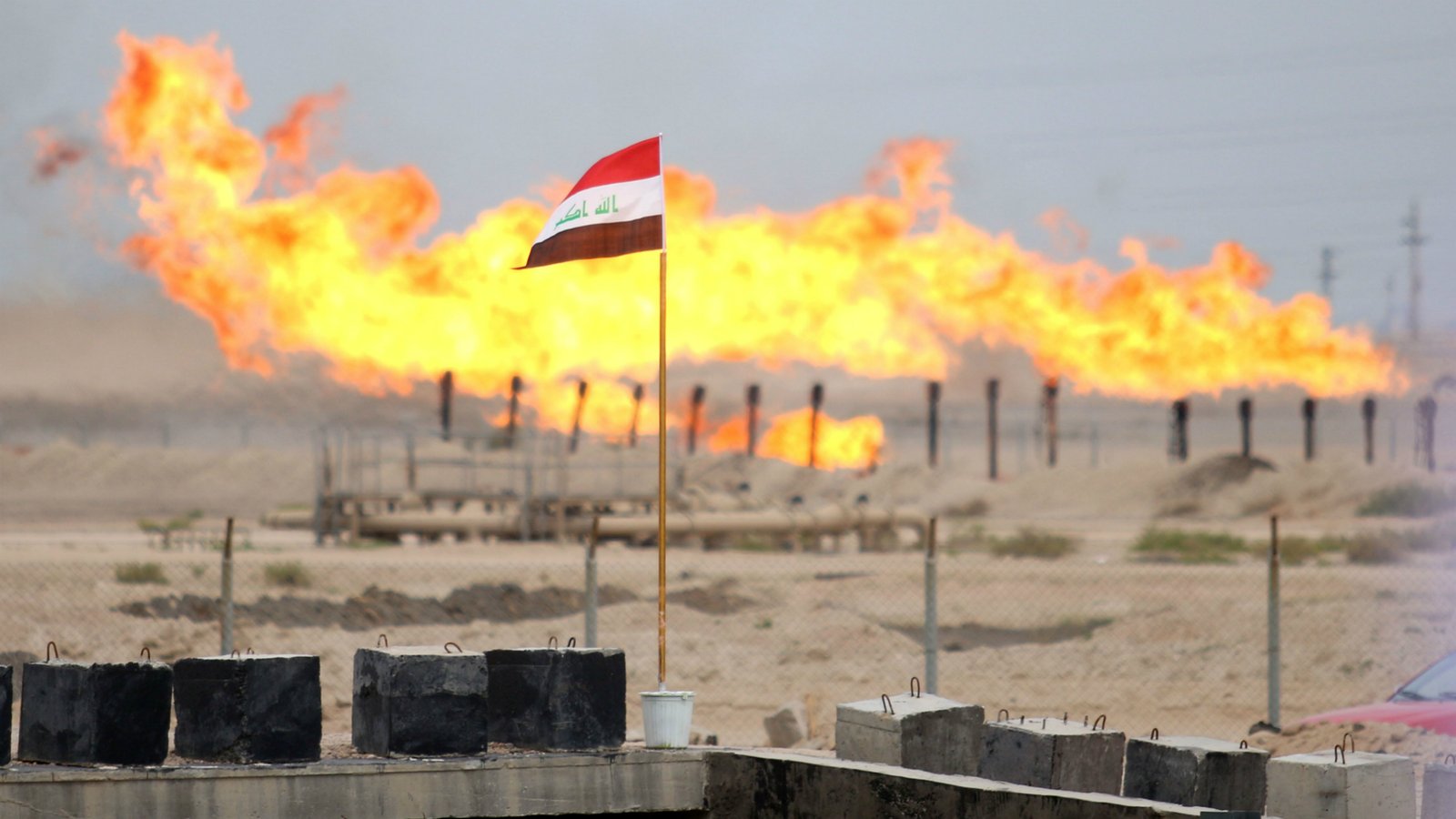
The war’s first full month wiped out most of Iraq’s seaborne export capacity. The patchwork of fallback routes Baghdad assembled kept some revenue flowing, but March’s earnings covered less than a third of the country’s monthly salary bill.
Iraq exported roughly 18 million barrels of oil in March and earned about $2 billion, according to remarks by Ali Nizar al-Shatari, director general of the State Oil Marketing Organization (SOMO), published on April 2. That figure, which covers combined exports from Basra, the Kurdistan Region and Kirkuk, represents an 82% collapse from February, when Iraq exported 99,872,220 barrels and earned $6.814 billion. Revenue fell by roughly 71%. A Reuters survey of OPEC output found Iraq suffered the biggest production drop in the cartel, averaging just 1.4 million barrels per day in March compared with 4.15 million bpd in February.
February was Iraq’s last near-normal export month. Of the 99.87 million barrels shipped, 93.35 million came from central and southern fields, 5.55 million from the Kurdistan Region via Ceyhan, and 971,130 from Qayyarah. The average daily rate was about 3.567 million bpd. One month later, the daily average had fallen to roughly 580,000 bpd.
March was not a month of smooth rerouting. It was a month of structural breakdown in which Iraq’s core seaborne outlet through the Strait of Hormuz was effectively destroyed and a much smaller flow of oil was kept alive through a patchwork of emergency channels. The Associated Press reported on April 2 that Basra province output had dropped from 3.1 million bpd to about 900,000, and that southern exports were completely halted by that point. The head of the state-run Basra Oil Company, Bassem Abdul Karim, told AP that no alternative loading areas in the south were yet fully operational.
Context: The 18 million barrels that Iraq did manage to export in March came from several layers of improvisation, not one substitute route.
The southern Gulf route was still part of the picture in early March, but only briefly. Shatari said Iraq kept its southern ports running until around March 8, after which fears of military targeting of tankers and their owners near Basra’s terminals made continued loading untenable. Even before the Strait of Hormuz was formally closed, the threat alone had begun driving tanker operators away. SOMO responded by monitoring crude buyers through the southern outlets, increasing the number and capacity of tankers in the waiting zone, and trying to load as much as possible in the available window. Shatari noted that Iraq managed to keep southern exports flowing longer than other Gulf basin exporters, some of whose shipments stopped immediately.
The northern Ceyhan route became the most important pipeline fallback. On March 17, Iraq resumed crude exports from Kirkuk to Turkey’s Ceyhan port after Baghdad and the Kurdistan Regional Government reached an emergency agreement to restart flows. The North Oil Company brought the Saralu pumping station back online with an initial export capacity of 250,000 bpd. This first restart came through the KRG-Turkey pipeline corridor, under a deal in which revenue would be returned to the federal treasury. Days later, Iraqi officials began describing the separate federal Kirkuk-Ceyhan / Iraq-Turkey pipeline itself as reactivated as well, though the Oil Ministry said 200 kilometres of that line still needed to be tested hydrostatically and that full completion would be announced in the coming days.
Shatari said the Oil Ministry and SOMO made a major effort to shift Basra crude northward, initially at 170,000 bpd and later raising that to between 200,000 and 250,000 bpd. Larger volumes of Kirkuk crude were also secured for export, which Shatari described as a medium-grade oil with strong pricing that reaches European and American markets through Ceyhan.
What is flowing through the northern system: The active northern route is best understood as a shared Ceyhan corridor carrying both federal Kirkuk crude and some Kurdistan Region crude, not as only one stream or the other. The clearest public breakdown comes from North Oil Company director Amer Khalil, who told Rudaw on March 25 that total exports through the Region’s pipeline to Ceyhan were then about 200,000 bpd, of which the KRG contribution was roughly 40,000 bpd. That implied an approximate split of 80% Kirkuk and 20% KRG at that moment. He added that flows were being raised to 250,000 bpd that day and could reach 300,000 bpd, but did not provide a revised split for those higher volumes.
Shatari confirmed that KRG field output has fallen sharply because of security risks affecting some of the Region’s oilfields. Production that had previously been in the range of 400,000 to 450,000 bpd has dropped to around 200,000 bpd. Not all of that reduced output is necessarily being exported through the Ceyhan system; the public reporting does not provide a full accounting.
Before the war, the official February export release treated Ceyhan flows as essentially the KRG export stream: 5.55 million barrels from the Kurdistan Region via Ceyhan, with no separate federal Kirkuk-to-Ceyhan line in the monthly breakdown. The Kirkuk component became significant only after the March crisis forced Baghdad to reactivate the northern route as a lifeline.
The Syria route: Iraq has also revived overland export routes through Syria for the first time in decades. This channel has two distinct layers.
The first is fuel oil. Reuters reported on March 31 that SOMO finalized contracts to supply about 650,000 metric tonnes of fuel oil per month from April to June, to be trucked overland through Syria. The first convoy of tanker trucks from the Shuaiba, Dora and Samoud refineries set off through the al-Walid / al-Tanf border crossing, arriving at Syria’s Baniyas refinery and port. Syria’s state news agency confirmed the arrival and described it as the start of a new transit phase. The SOMO document showed contracts awarded to four Iraqi oil traders at discounts between $155 and $170 per metric tonne.
The second is crude oil. Shatari said SOMO has signed a contract to export 50,000 bpd of Basra Medium crude via Syria to the Mediterranean, with plans to increase volumes. Middle East Eye and other outlets reported on April 2 that this crude will reach European markets through Baniyas. The head of al-Walid subdistrict said more than 150 tankers were waiting to enter Syrian territory, with the daily rate expected to reach 500.
Shatari also said the ministry is prioritising exports of fuel oil to prevent refineries from shutting down and to keep domestic supply flowing, especially gasoil for power stations. This, he said, is particularly urgent given the possibility that Iranian gas supplies could decline further.
Both Syria channels are now clearly operational. But they are best understood as the next phase of Iraq’s emergency network rather than as the main explanation for the 18 million barrels already sold in March. Most of the March total was sustained by the brief early-March southern loadings and the reactivated Ceyhan corridor.
In addition to the Syria route and the Ceyhan pipeline, Iraq has been using overland trucking as a contingency channel. Reuters reported on March 12 that Iraq was already moving about 200,000 bpd by truck through Turkey, Syria and Jordan under its wartime plan. Some companies brought in tankers from Jordan and Syria to increase volumes, though Shatari noted that pipeline exports remain more efficient and stable than trucking.
Two further routes remain at the level of talks or study, not active operations.
The first is using Gulf-country pipelines that extend beyond the Strait of Hormuz and reach the Arabian Sea. Shatari said negotiations are ongoing but did not name specific countries or pipelines. This remains a contingency option, not a functioning export route.
The second is reaching Lebanon’s port of Tripoli via Syria. Shatari mentioned this as an objective, noting that it is impossible to reach Lebanon without passing through Syria. Iraq has discussed the Tripoli idea since at least 2025, but no reporting confirms it as an active route in April 2026. The live western outlet in current reporting is Baniyas, not Tripoli.
The fiscal gap: The scale of the March collapse comes into sharper focus when measured against what the Iraqi state actually needs to spend each month. Iraq’s Ministry of Finance data for January through September 2025, published by The National Context, provides the clearest available breakdown of the government’s spending structure. Total expenditure over those nine months was 99.98 trillion dinars, averaging about 11.1 trillion dinars per month.
That total breaks down into three layers. The first and most politically immovable is the public-sector wage bill and social transfers: employee compensation (45.56 trillion over the nine months), pensions (14.18 trillion), the social protection network (4.26 trillion), and the public distribution system (1.97 trillion). Combined, salaries and welfare payments totalled 66.54 trillion dinars over the period, averaging roughly 7.4 trillion per month. This is the core obligation that Baghdad cannot defer without triggering a political crisis.
The second layer is total operational expenditure, which reached 85.48 trillion dinars over the same nine months, or about 9.5 trillion per month. This includes the salary-and-welfare core but also debt servicing (5.86 trillion over the period), electricity costs (3.53 trillion), grants and subsidies (8.96 trillion), commodity procurement (4.74 trillion), wheat purchase support for farmers (2 trillion), and medicine procurement. This is the full recurring cost of keeping the Iraqi state running.
The third layer adds investment spending: 14.50 trillion dinars over the nine months, or about 1.6 trillion per month. Investment made up only 11% of total spending, consistent with a broader pattern in which Iraq’s default austerity response is to slash capital projects while protecting wages. Rudaw Research Centre data for January 2025 alone showed total expenditure at 9.1 trillion dinars, of which 8.46 trillion was operational.
At the official Central Bank exchange rate of 1,320 dinars per dollar, the monthly averages convert as follows: the salary-and-welfare core of 7.4 trillion dinars equals about $5.6 billion; total operational expenditure of 9.5 trillion equals about $7.2 billion; and total spending including investment of 11.1 trillion equals about $8.4 billion.
March’s roughly $2 billion in oil revenue, equivalent to about 2.64 trillion dinars at the official rate, covered only about 27% of the monthly salary-and-welfare core, about 21% of total operational expenditure, and roughly 18% of total government spending when investment is included. Even by the most generous measure, using only the narrowest salary baseline, Iraq’s March oil earnings fell far short of covering its most basic obligations.
Iraq’s government should have enough reserves to get through mid-May without new oil sales, according to Ahmed Tabaqchali, an economist specialising in Iraq, who told the Associated Press that after that point Baghdad would have to borrow. The implication is clear: if Iraq’s export system does not recover substantially within the next several weeks, the gap between revenue and expenditure will force the government into deficit financing. Oil revenue is responsible for roughly 90% of Iraq’s national budget.


