


Have the PYD–ENKS Unified Front Against Damascus Collapsed?
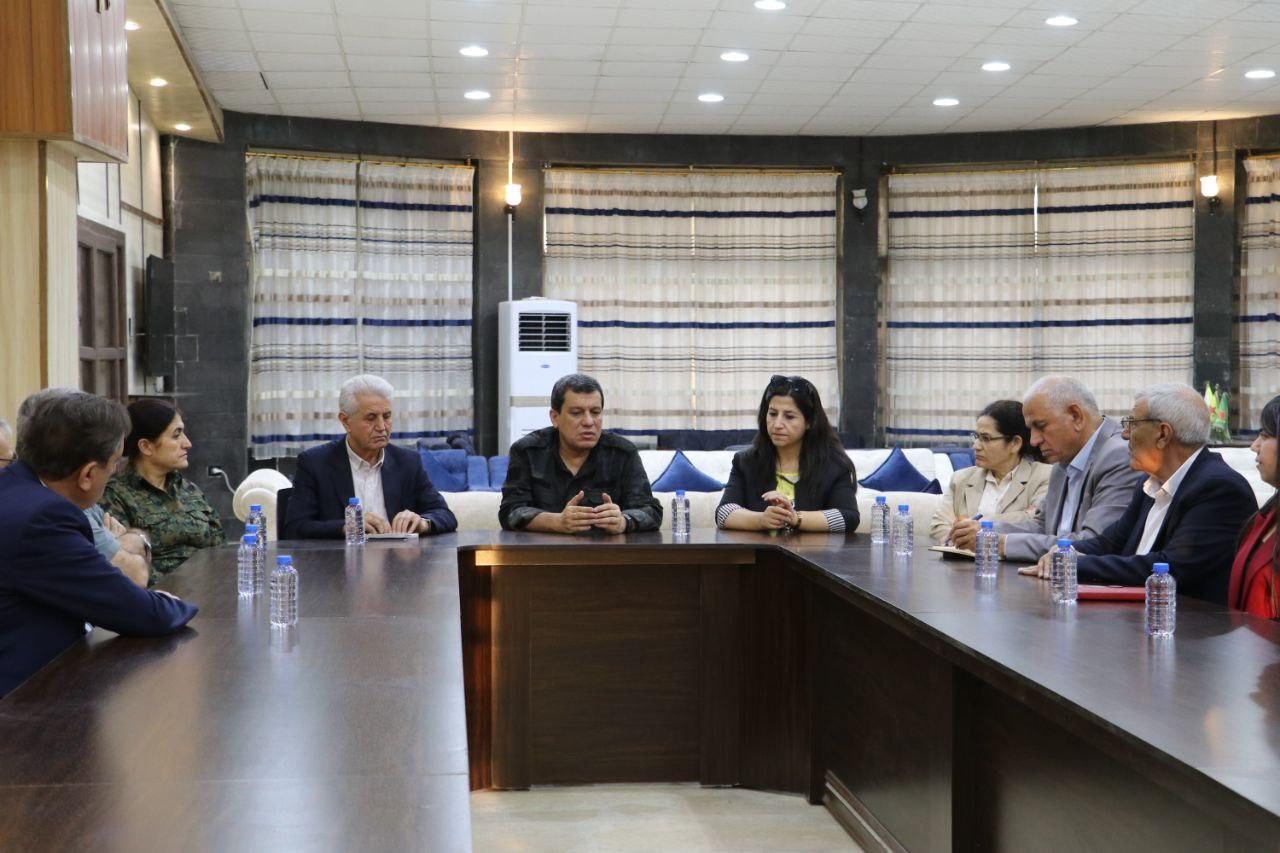
The Turkish Foreign Minister, Hakan Fidan, has said that the parties of the Syrian Kurdish National Council (ENKS) have asked Turkey for help. Yesterday, an ENKS delegation attended a Syrian government–backed event in Damascus, also attended by interim president Ahmad al-Sharaa. On the same day, PYD co-leader Salih Muslim stated that they envision a multi-ethnic northeast Syria rather than an exclusively Kurdish one.
Context: In April, a pan-Kurdish conference was organized among rival Syrian Kurdish groups. The participants called for a contiguous Kurdish region in northern Syria and agreed to form a joint committee to negotiate with Damascus. While the committee was officially formed, it never carried out any negotiations and quickly became inactive.
Analysis: ENKS, backed by the KDP in the Kurdistan Region, regards Masoud Barzani as its spiritual leader. The PYD, on the other hand, is aligned with the PKK and looks to Abdullah Öcalan as its ideological guide. The deep ideological and geopolitical differences between them were so entrenched that even U.S. mediation efforts failed to bring about unity.
This dynamic briefly shifted after the fall of the Assad regime in Damascus. SDF commander Mazloum Abdi—essentially the most senior figure in the PYD camp—visited Erbil and met Masoud Barzani for the first time, paving the way for the April pan-Kurdish conference. But since then, differences have re-emerged, particularly over the future shape of the region. ENKS, as a nationalist bloc, rejects the current structure of northeast Syria, which includes large Sunni Arab-majority areas, and instead calls for an ethnic Kurdish federal region modeled on Iraq’s Kurdistan Region. That was the understanding reached at the April conference. The SDF, however, has since moved in a different direction, sidelining the committee formed in April.

The rift became public after a Hasakah conference that brought together all components of northeast Syria and called for a decentralized governance structure. This angered ENKS leaders. Abdulhakem Bashir, leader of the KDP-S (a key ENKS party), openly lambasted the conference, accusing the SDF of betraying the April agreement. He argued that the SDF had used ENKS as a mere tool, dragging them into conflict with both Damascus and local Sunni Arabs, instead of working toward a Kurdish federal region.
Another ENKS senior official, Ibrahim Biro, declared that the joint committee with the PYD was effectively dead. He noted that ENKS has now opened its own representation office in Damascus. While he welcomed symbolic steps such as Syrian authorities recognizing the Kurds or SANA launching a Kurdish-language service, he accused the PYD camp of prioritizing military appointments—such as Abu Ashma, who led the Afrin assault—over advancing Kurdish rights as an ethnic group.
Adding another layer, Hakan Fidan stated in an interview that after Erdoğan’s remarks pledging to “protect and guard Kurdish rights in Syria,” Kurdish groups affiliated with ENKS reached out to Turkey for support. If true, this marks a serious deepening of the ENKS–PYD split. It could translate into new political alignments, with Turkey stepping up its backing of ENKS to divide Kurdish ranks and strengthen ENKS’s hand in Damascus at the expense of SDF. At the same time, it would increase pressure on the SDF, which continues to administer large Sunni Arab-majority areas like Raqqa and Deir Ezzor—territories ENKS considers outside its core concern of Kurdish ethnic rights and aspirations for an autonomous Kurdish region.


