


Baghdad Targets the KRG’s Biggest Oilfield and Border Crossings, and Khor Mor Could Follow
Iraqi Prime Minister Ali al-Zaidi today issued a series of decisions on the Kurdistan Region’s oilfields and border crossings. If implemented, they would significantly weaken the KRG’s hand in its ongoing power struggle with Baghdad.
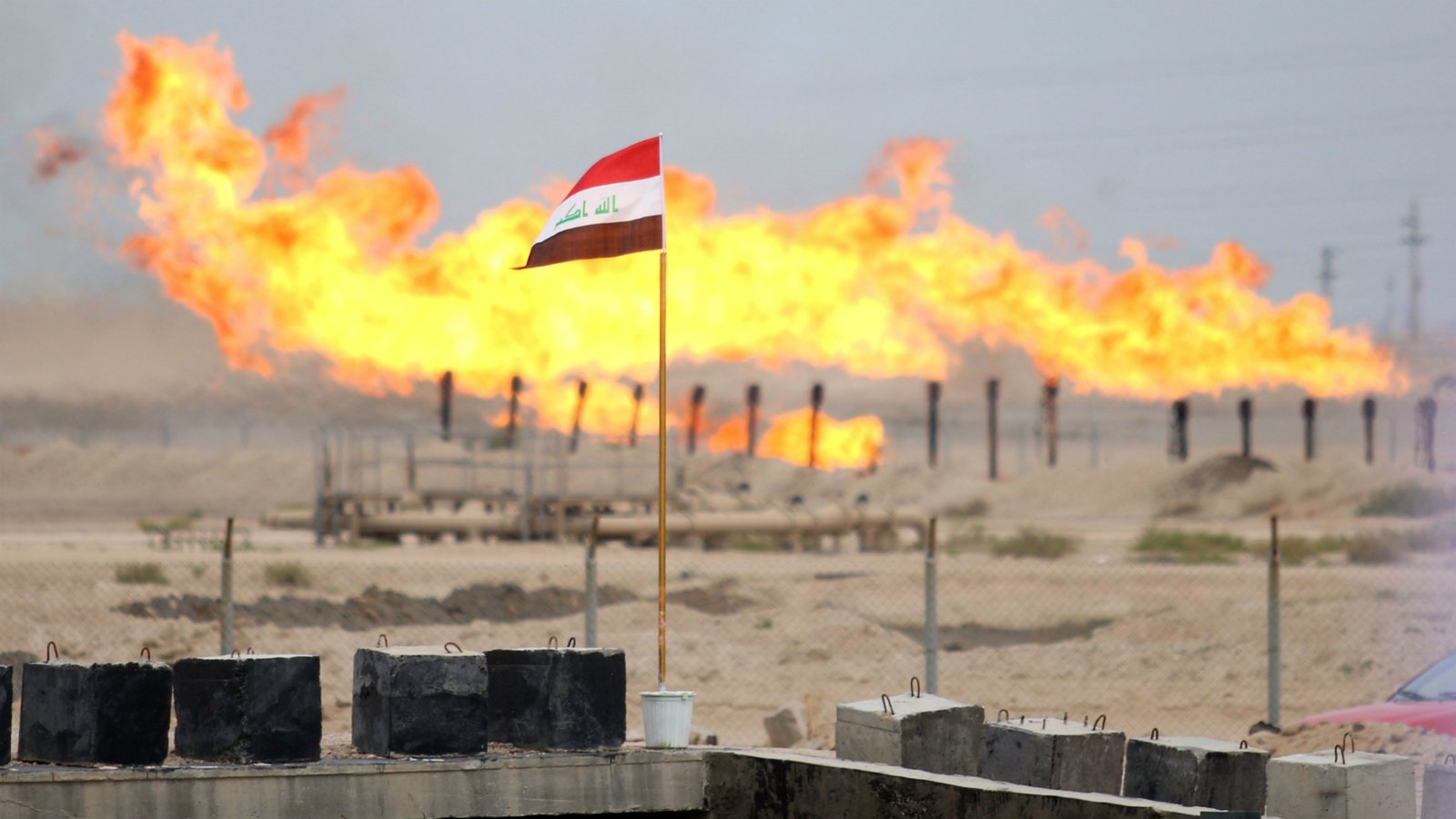
The most important decision hands the federal Ministry of Oil management of all ministry-owned oilfields in Diyala, Kirkuk, Salahaddin and Nineveh that are currently under KRG security control. These fields would be run directly by Baghdad, with no joint management with the KRG, which shows that Baghdad sees them as federal property. Federal forces are also to take control of these fields and monitor them with cameras. Baghdad will set up inspection points at the checkpoints leading into Erbil, Duhok and Suleimani to check petroleum products entering the Region. Bitumen and naphtha plants in the four provinces that sit outside federal security control are to be moved elsewhere within the same provinces within six months.
On borders, all of the Kurdistan Region’s crossings are to be handed to federal authorities, although security at them would be shared between federal forces and the Peshmerga. Federal forces are also ordered to close all unofficial crossings on Iraq’s borders. This mainly affects the Kurdistan Region, where unofficial crossings make up more than half of all crossings with Iran and Turkey and Syria including the key Smelka border crossing with Syria which is unofficial.
Because the oil decision is limited to the four provinces, several fields fall outside it. The clearest target is Khurmala, the Kurdistan Region’s largest oilfield, in Makhmour district. Baghdad treats Makhmour as part of Nineveh, and it votes as part of Nineveh in federal elections. Khurmala has long had a unique arrangement and is run by the KDP-linked KAR Group, with no foreign company involved. Sufaya, in Nineveh near the Syrian border, is also held by KDP forces and has no foreign operator. Some wells of Avana, part of the Kirkuk field, also remain on the KDP side, even though Baghdad retook most of it in 2017. At least one other field, Ain Sifni, is in Nineveh and under KRG security control, but it is unlikely to be covered because a foreign company, Hunt Oil, operates it and Baghdad has not claimed it as federal.
The scope of the oil decision also points to a longer process. Just days ago, a Federal Board of Supreme Audit document showed that the North Oil Company claims fields well beyond the disputed territories. These include Khor Mor, the Region’s largest gas field, in Suleimani, as well as Tawke in Duhok and Taq Taq in Erbil. Today’s directive does not cover them, because they lie outside the four provinces. That suggests Baghdad may have wider ambitions and intends to pursue them in stages, starting with the fields it can most easily claim. The audit appears to lay the groundwork for bringing a far larger share of the Region’s oil and gas under federal control later.
The timing of today’s decisions is telling. Zaidi appears emboldened by the government’s move on Jurf al-Sakhar, the Kataib Hezbollah stronghold south of Baghdad. As TNC has argued, the standoff and compromise there are likely part of a calculated strategic move by the Shia factions and their backers in Tehran. Absorbing militia power into the state serves Iran’s interests too. A strong federal government led by Tehran’s Shia allies is worth more to Iran than autonomous militias, partly because a stronger centre can police the Kurdistan Region. During the war earlier this year, the KRG and the Iranian Kurdish groups based on its territory were seen in Tehran and among its Iraqi allies as a potential front against Iran. A Baghdad able to assert control over the Region’s oil, borders and checkpoints would make that much harder to repeat. Having asserted its authority at Jurf al-Sakhar, the government now appears to be extending the same logic to the Kurdistan Region. Baghdad also appears to be exploiting the deep divisions between the KDP and PUK. Two years after the 2024 Kurdistan parliamentary elections, the two parties have still failed to form a government, and the KDP’s unilateral bid to reconvene parliament has widened the split between their administrations.
In a rare joint statement, the KDP and PUK, the Kurdistan Region’s two ruling parties, rejected the decisions and said they would oppose any measure that goes beyond the constitution. What happens next is unclear. Baghdad could try to enforce the decisions through legal channels, use force, or apply financial pressure through the budget. Some see the directives as an attempt to renegotiate the KRG’s share of the federal budget permanently and settle the issue once and for all.
The constitution may also offer the KRG less protection than the statement implies. Baghdad recognises Erbil, Suleimani, Duhok and Halabja as the Kurdistan Region’s provinces, and the fields it is targeting lie outside them. Beyond those provinces, the KRG’s legal authority extends only to the areas it administered on 19 March 2003, the eve of the invasion. The KRG took Khurmala in 2007, and Avana and Sufaya in 2014. The KRG has its own argument, however. It says Makhmour, where Khurmala is located, was part of Erbil province before the Ba’ath regime redrew its administrative boundaries, even though the area lay outside the Green Line before 2003. On that reading, the case falls under Article 140, which is meant to reverse the Ba’ath-era boundary changes but has never been implemented, and Baghdad cannot settle it by directive.


