


The Hormuz Crisis Could Weaken al-Sharaa’s Support and Tighten His Grip
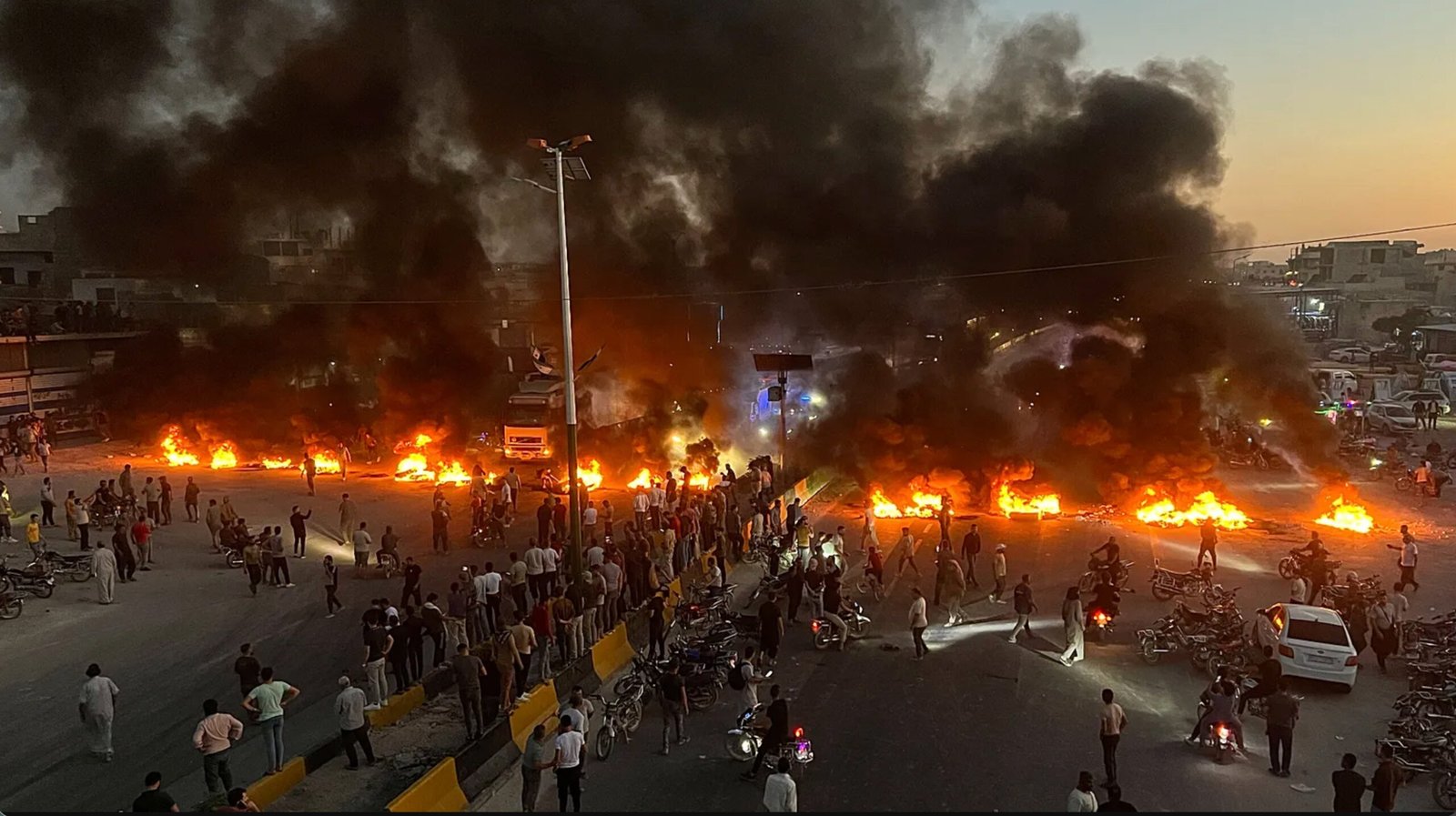
As the Hormuz crisis continues, Syria is facing a worsening fuel and electricity crisis, driven by rising energy prices, sabotage against its energy infrastructure and shrinking Gulf financial support. Together, these pressures amount to the first serious domestic test for Syrian President Ahmad al-Sharaa since he came to power.
Electricity supply, which had been improving steadily under al-Sharaa, is deteriorating again. By late September, some cities were receiving up to 20 hours of power a day. Reports now indicate that some areas receive as little as five. The reversal carries a particular political cost. In late 2025, the government raised household electricity tariffs by as much as sixty-fold, presenting the increase as the price of better supply, and some households received bills larger than their monthly incomes. Syrians accepted those bills in exchange for more power and are now paying them for less of it. Because the government set that expectation itself, the failure damages its credibility more than shortages did under former president Bashar al-Assad.
The improvement rested on imported gas, and the Iran war has hit both the gas and the money that paid for it. Domestic fields supplied about 55% of the gas Syria had available in the first half of 2026. The rest was imported, mainly from Azerbaijan via Turkey, with Azerbaijani deliveries worth about $295 million in the first eight months of the year. Qatar financed those deliveries under a one-year arrangement due to end in August. Damascus requested a two-year extension in June, and no renewal has been publicly confirmed.
Qatar’s own finances have since been badly damaged, with its LNG exports largely halted by the closure of Hormuz. Saudi Arabia, Syria’s other main Gulf backer, recorded its largest quarterly deficit in nearly eight years in the first quarter. A Syrian official has said that pledged Gulf funds have been frozen since the war began. Gulf states continue to announce development projects, but project finance does not cover the monthly bill for imported gas and fuel. The state electricity company has acknowledged longer power cuts, citing reduced gas supplies.
The fuel shortages are part of the same unfolding crisis. In mid-September, a 40% rise in diesel prices triggered the most widespread protests since Assad’s fall, and the government partially retreated within days. Shortages are now most severe in Aleppo and Idlib, and they spread quickly through the economy. Households and businesses fall back on diesel generators when the grid fails, and the same fuel runs bakeries, public transport, farm machinery and water deliveries.
Supply has tightened on several fronts. Syria produced about 82,000 barrels of crude a day in the first half of the year and has relied heavily on Russia for imports, at around 60,000 barrels a day. Ukrainian strikes on Russian refineries pushed Moscow to restrict fuel exports. In August, Damascus also agreed to sharply reduce its purchases of Russian oil as part of talks with Washington on lifting the last major US sanctions designation. Two months later, US President Donald Trump announced a deal under which Russia would sell diesel to the United States and other markets in return for eased US sanctions. Russia now has buyers willing to pay full price, while Syria has promised to buy less from it. Al-Sharaa’s turn towards Washington has cost him discounted supply at the moment he needs it most.
Sabotage is deepening Syria’s dependence on imports. Energy Minister Mohammad al-Bashir told parliament in September that oil pipelines had been attacked 22 times this year. Since August, attacks have hit gas lines from the Jbeissa plant in Hasakah and the Baniyas-Homs fuel pipeline. A blast on a line near Damascus on 30 September took three power plants offline. No group has claimed responsibility. Whoever is behind the attacks, they target the domestic oil and gas network, the one source of supply Damascus controls. That pushes the country further towards imports it can no longer reliably afford.
These pressures undermine the basis of al-Sharaa’s consolidation. After the civil war, his authority depended partly on rapid improvements to the services that shape daily life, and those gains are now being reversed amid a deepening economic crisis. That could erode his popularity and make it easier for groups seeking to weaken him to recruit. For the first time, the public mood appears to be turning, with the September protests reaching areas considered supportive of the new authorities. Surveys suggest the anger has so far been aimed more at the government than at al-Sharaa himself. That offers limited protection, because the transition’s legitimacy rests more on him personally than on its institutions. If conditions keep deteriorating, the blame could move from his ministers to the president.
Despite this, al-Sharaa has continued to rebuild the army. Reports estimate its strength at around 200,000, with plans to expand it to 300,000. Defence and national security account for about a third of planned spending in the 2026 budget. The army is also being reorganised into five regional corps, designed to bring former factions under central command. The economic crisis cuts both ways for recruitment. Hardship helps the government’s opponents, but it also makes army salaries, which are relatively high, one of the few reliable incomes in a contracting economy. The army is therefore competing with al-Sharaa’s rivals for the same young men.
If the Iran war continues and energy prices stay high, Syria’s situation is likely to worsen through the winter. Demand for heating fuel, generator diesel and electricity will peak after the scheduled end of Qatar’s gas grant, with no renewal publicly confirmed. That could leave al-Sharaa increasingly fragile. His investment in the army, however, could produce an ironic outcome, in which declining popular support coincides with tighter control through a security apparatus he is bringing under his direct command.
The coercive route has a fiscal limit. The budget was already running a deficit of about $1 billion in the first half of the year, before September’s price shock. At a reported $250 a month, base pay for 200,000 soldiers would come to about $400 million over eight months, more than Syria spent on Azerbaijani gas in the same period. Many of those soldiers come from former factions, and the restructuring has already caused discontent among some of their commanders. If the crisis disrupts their pay, the army al-Sharaa is building to consolidate his power could itself become a source of instability.


