


Hasakah’s SDF Integration Protests Are Fuelled by a Media War Over Who Is Winning
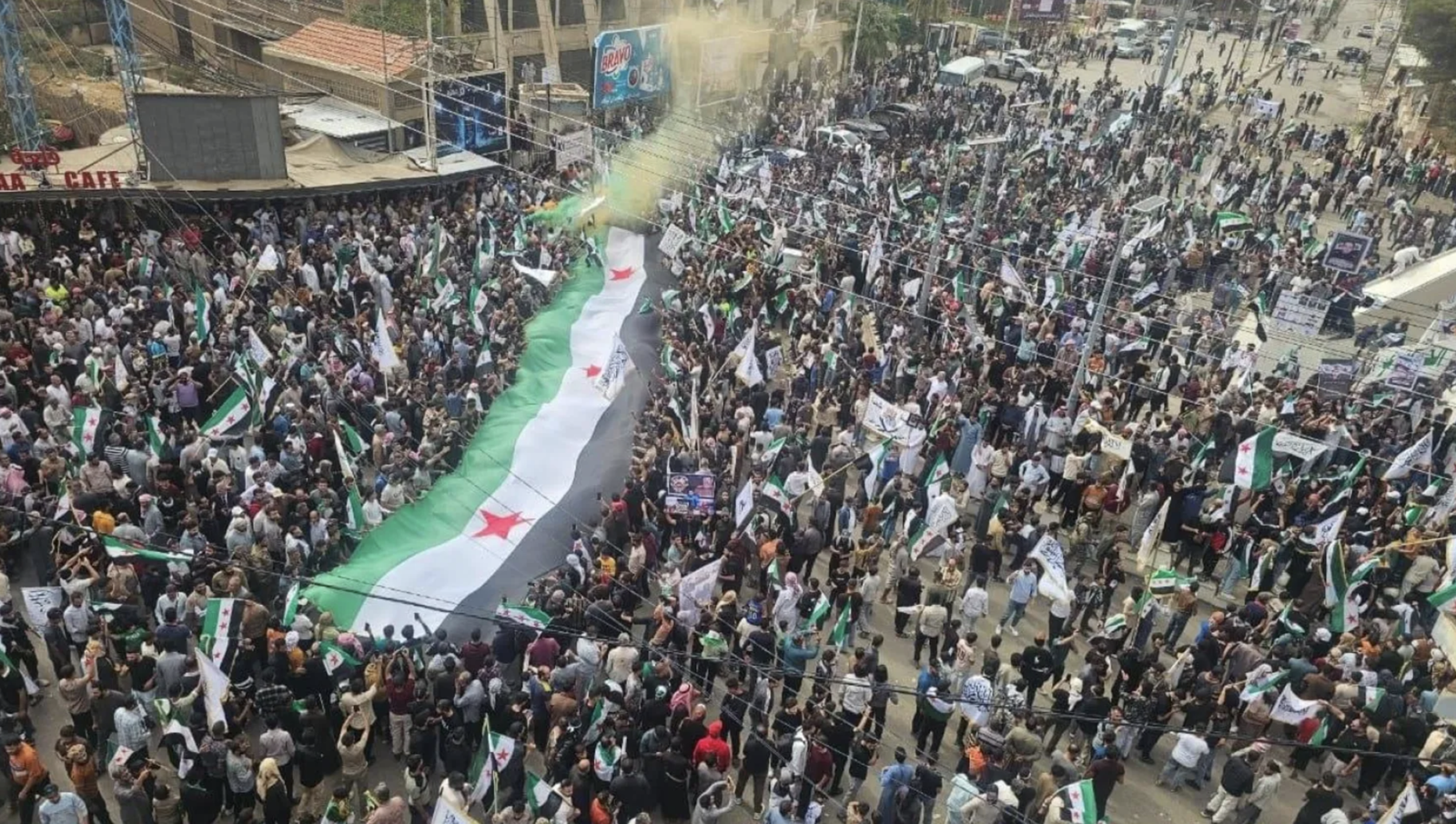
As SDF integration into the Syrian state on the ground moves into more advanced stages, instability is growing, most visibly in the recent protests by a segment of the Arab population in Hasakah city.
Part of the problem is the gap between the media narrative and what is actually happening on the ground, which is complicating an already difficult process.
As this map shows, Hasakah city is highly mixed, though Arabs are likely the majority. As the largest single demographic group, Arabs have a greater incentive to escalate their demands in order to secure more, and the protests have largely originated in southern Hasakah.
One reason Arabs in this part of the city are increasingly able to mobilize is the distinct role of the Ghuwayran neighbourhood, where most of the activity is taking place. Densely populated and overwhelmingly Arab, Ghuwayran has historically served as an intellectual base for the city’s Arabs, which makes its residents far more readily mobilized.
The recent return of many pro-Damascus activists, including some who took part in the revolution alongside Ahmad al-Sharaa, now Syria’s president, and other opposition figures, has made mobilization much easier. These activists are better organized and less fearful, partly because they live in the city’s almost exclusively Arab south, where the SDF (the Kurdish-led Syrian Democratic Forces) has far less ability to cause them problems.
This complicates the SDF’s long-term aim of keeping control of the city.
Another complicating factor is how the SDF and the Syrian government are each presenting events on the ground. The two sides are pursuing very different media strategies.
The SDF has a network of journalists and activists publishing near-identical material, which suggests a centrally coordinated operation feeding them messages. This network is presenting appointments from the SDF side as far bigger than they are, which in turn is leading many Arabs to believe the city, or even the province, has been handed over to the SDF.
Recent judicial appointments are a good example. Anyone following pro-SDF activists would assume the SDF has secured most of the judicial posts. In context, it has received significantly fewer than it appears, less than half of the appointments.
At the Hasakah city judicial palace, four of the 11 SDF-affiliated judges accepted across the province have begun work, in a city expected to have 25 judges in total. It remains unclear how many of the 11 will ultimately be assigned to Hasakah city.
The province’s Attorney General (al-Muhami al-Amm) is also a government appointee.
Even so, SDF media has presented the appointment of the 11 judges, together with another 20 who will undergo judicial training in Damascus, as a major achievement, which has caused alarm among many Arabs in the province.
Hasakah province will have at least 65 judges, and potentially as many as 85. These appointments matter for the SDF, given how long it has operated outside the state, but in context they are less significant than SDF media suggests.
This framing is provoking the Arab side and feeding the impression that everything has been surrendered to the SDF. The government’s near silence has only deepened anxiety among these Arab segments.
The government’s approach appears to be to work quietly, implementing changes on the ground and extending control incrementally. Facing a growing set of problems across the country with limited resources, it has a vested interest in moving slowly in Hasakah, which has left the SDF to dominate the narrative. In practice, however, it is the SDF that has been steadily losing influence on the ground. It therefore makes sense for the SDF to run a media strategy that frames integration as a win-win and plays down its loss of control.
Security appointments follow the same pattern. Around two-thirds of senior security appointments in Hasakah have gone to the government side and one-third to the SDF, yet the Arab protesters remain dissatisfied.
Part of the reason is a combination of panic and a significant element of racism. Some protesters genuinely feel they are losing ground to the SDF and that it is being legitimized. Another section is driven by racism and cannot accept a Kurd holding any post in Hasakah. Both attitudes are feeding what is happening.
The danger is that the situation is becoming more delicate. In a city as mixed as Hasakah, the ongoing security transition has effectively produced two parallel security structures, raising the risk of clashes and wider violence.
Security is gradually coming under greater government control, but the SDF still has a large number of people on the ground, both officially and unofficially.
Around 8,000 Asayish personnel, the security forces on the SDF side, have recently been incorporated into the Syrian Interior Ministry’s internal security structure in Hasakah. Of these, around 5,000 are Kurdish and approximately 3,000 are Arab.
The government has also been gradually deploying more of its own internal security forces to Hasakah. The exact number remains unclear, but it is likely now well over a thousand and rising.


