


Two Power Centres: How the KDP and PUK Became Different Kinds of Useful
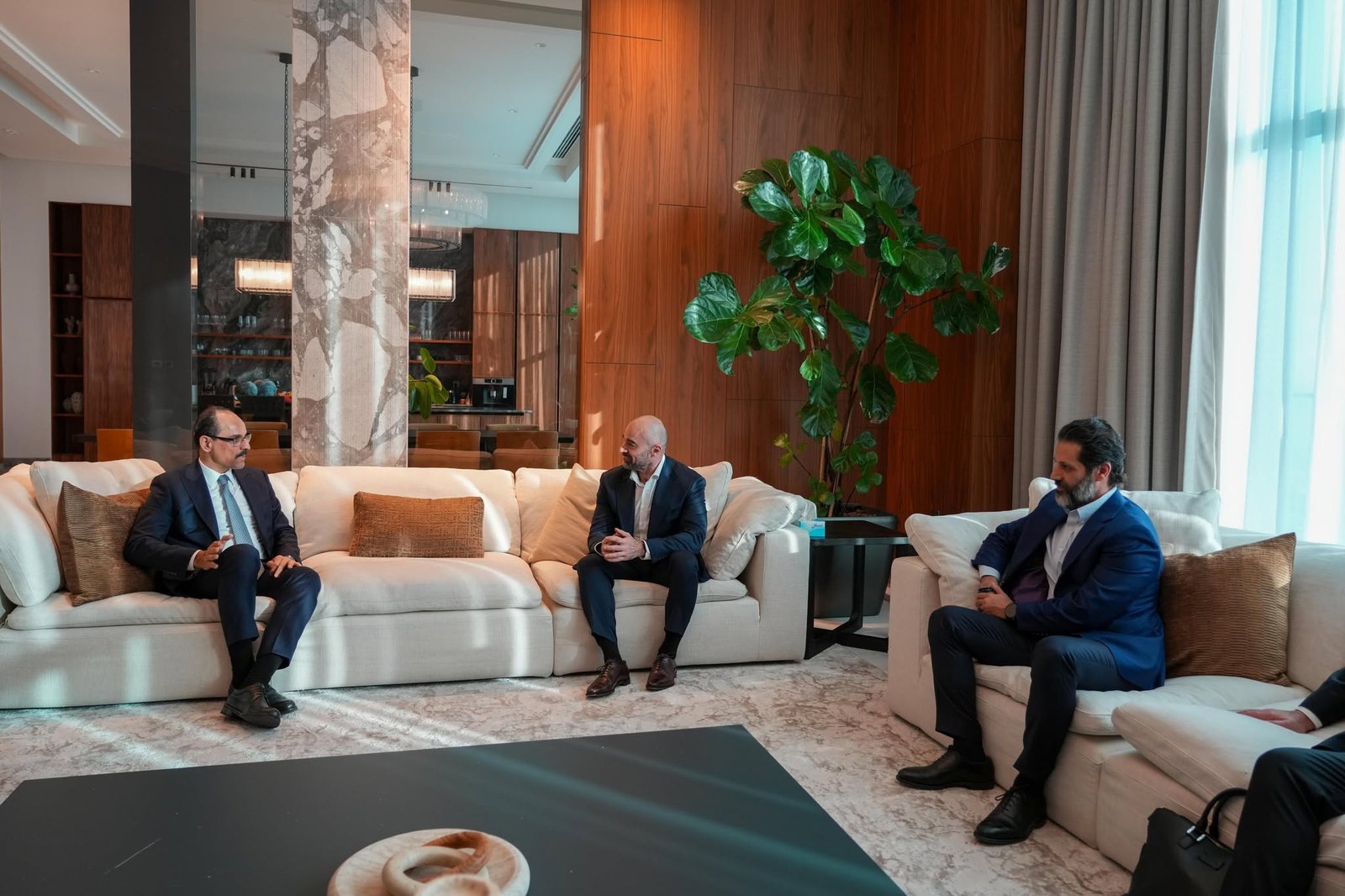
The Kurdistan Region has one flag and is constitutionally one polity, but for nearly two years it has not been able to form a new government, with the current caretaker cabinet having been voted in by parliament in July 2019. In practice it has two governments. The Kurdistan Democratic Party runs Erbil and Duhok. The Patriotic Union of Kurdistan runs Sulaimani and smaller portions of Erbil and Kirkuk. Foreign powers have stopped pretending otherwise: Washington, Ankara and Baghdad now deal with each party separately, as a power centre in its own right. Two things decide what each centre is worth to them. The first is energy. The second is the PKK.
Start with energy, because the split is almost perfectly clean. The region’s oil sits in the KDP zone: the producing fields of Duhok and Erbil, the pipeline connection to Ceyhan, and the crossing at Ibrahim Khalil, which for a generation was Iraq’s most important land gate to Turkey. The region’s gas sits almost entirely in the PUK zone. Khor Mor, near Chamchamal, reached 750 million cubic feet a day of processing capacity after its KM250 expansion was completed in October 2025, with output already around 700 million, and the pipeline connecting the field to the Sulaymaniyah power plant was completed in late June, Kurdish-language outlets have reported. Chamchamal itself is next, with contracts signed to supply industrial buyers with up to 142 million cubic feet a day from the second half of 2027. Behind those sit two of the largest energy deals in Iraq’s recent history, both in the PUK sphere: a $40 billion agreement for the Miran field and a $70 billion arrangement for the Topkhana-Kurdamir blocks, signed with American companies in 2025.
Oil and gas are not equally useful right now. Oil earns revenue. Gas changes politics. Iranian gas still fuels roughly a third of Iraq’s power generation, which gives Tehran a standing grip on Baghdad that PUK-zone gas can loosen. Turkey’s own gas contract with Iran, 9.6 billion cubic metres a year, expires this month, and analysts already describe Kurdistan gas exports through Turkey as the mechanism that could anchor a durable PUK-Ankara relationship. The KDP’s oil serves budgets. The PUK’s gas serves the region’s central strategic project, which is reducing Iranian leverage in Baghdad and Ankara at the same time. The KDP’s border advantage is eroding in parallel. Assad’s fall opened a Syrian route between Turkey and Iraq that is shorter and cheaper than the Kurdish one: a first cargo convoy crossed it in May, a rail line through Nusaybin, Qamishli, Rabiya and Mosul is the next stage, and Baghdad has approved feasibility studies for pipelines from Basra through Haditha toward both the Turkish and Syrian coasts. Every one of those routes gives Ankara and Baghdad an option that does not pass through KDP territory, which means Ibrahim Khalil no longer sets the terms it once did.
The PKK file has flipped in the same direction. For decades, Turkey’s Kurdish policy was a military campaign, and that made the KDP valuable in a specific way: it was the PKK’s oldest Kurdish rival, its territory bordered Qandil, and it functioned as Ankara’s local security partner in a war. The PUK’s closeness to the PKK made it a problem, and Turkey treated it as one, closing its airspace over Sulaymaniyah and shutting the PUK’s office in Ankara. The peace process reverses the value of both positions. A Turkey that is winding the conflict down needs a partner who can talk to the PKK, not one built to fight it. The PUK’s proximity, a liability for a decade, is now the asset: the PKK’s disarmament ceremony took place near Sulaymaniyah, a Turkish visa office has opened in the city, and the PUK sits closest to the PKK-SDF-Turkey triangle the process has to manage. The KDP’s anti-PKK role, meanwhile, loses value at the same rate the war that created it does. Ankara’s own parliamentary committee has framed the process as a regional undertaking, not a domestic one, which makes the party that can work the regional Kurdish network more useful than the party that once helped contain it.
The third difference is how each party answers Baghdad. The current American and Turkish design rewards local actors who integrate into state frameworks rather than stand outside them, and the PUK has been more responsive to that model. It holds the Iraqi presidency. Its premier counterterrorism force operates under the legal umbrella of Baghdad’s federal Counter Terrorism Service while Washington funds it directly, the arrangement the Pentagon’s own budget documents treat as the template. And its leadership pitches PUK-zone gas as the answer to Iraq’s national energy crisis rather than as a party asset, a framing aimed at Baghdad and Washington at once. The KDP has moved the other way, and its bet is legible in its diplomacy. It has spent years building the UAE into an external pole of its own: more than $3.3 billion in Emirati investment and over 120 Emirati companies in the region, repeated Barzani summits with Sheikh Mohammed bin Zayed, and, since September 2025, a dedicated UAE special envoy for economic affairs to the Kurdistan Region, a state-level instrument pointed at a sub-state government. The KDP also carries an older Israel-facing history: Israel was the only state to openly back the 2017 independence referendum, and Kurdish oil found its way to Israeli buyers for years before that. None of this is disqualifying on its own. But it places the KDP nearer the UAE-Israel pole at exactly the moment that pole is hardening against Turkey, a rivalry on open display this week in the fight over selling Turkey F-35s. The PUK has read the same board from the other side: closer to Ankara through the peace process, and positioned as the responsible manager of the Iran file, which is its own reversal, since the party historically closest to Tehran is now the host of the American investments designed to displace Iranian gas. That inversion is not accidental. American analysts have noted that placing multibillion-dollar US energy deals in historically Iranian-aligned Sulaymaniyah was part of the point.
None of this means the PUK replaces the KDP. The KDP still holds more of the region’s production, the established trade route to Turkey and the Barzani diplomatic network, and its leaders remain the first stop for most foreign visitors to the region. But the territorial picture is closer than the two-zone shorthand suggests. The PUK’s zone is only slightly smaller than the KDP’s, and its practical reach extends beyond it: outside the region’s formal boundary, the PUK is the de facto first Kurdish power in Kirkuk, where it holds the governorship.
There is also a reason the outside powers prefer two centres to one, rather than merely tolerating the split. Two rival Kurdish partners check each other. Neither can monopolise access to Turkey, veto a corridor, or drift too far toward autonomy without the other offering an alternative. A single dominant KDP could set terms, and for years, when it held the only usable border and the only Turkish relationship, it did. A KDP balanced by a PUK cannot, and neither can the PUK. For Washington, Ankara and Baghdad alike, the duality is not a problem to be solved. It is a feature that keeps both parties useful and neither indispensable.
What has changed is the direction of the two bets. The KDP is betting on autonomy: external patrons, its own energy machinery, a position strong enough that the regional powers have to come to it. The PUK is betting on usefulness: integration with Baghdad, alignment with Ankara’s peace process, and gas that serves everyone else’s strategy. In the regional order now being built, state-anchored, Turkey-centred, organised around connectivity rather than confrontation, the second bet is currently paying better. Neither party designed that order. Each is choosing how to live inside it, and for the first time in decades, the choice that involves less autonomy is the one gaining ground.


