


Exposed and Disposable: Why Iranian Kurdish Groups May Be the War’s Biggest Losers
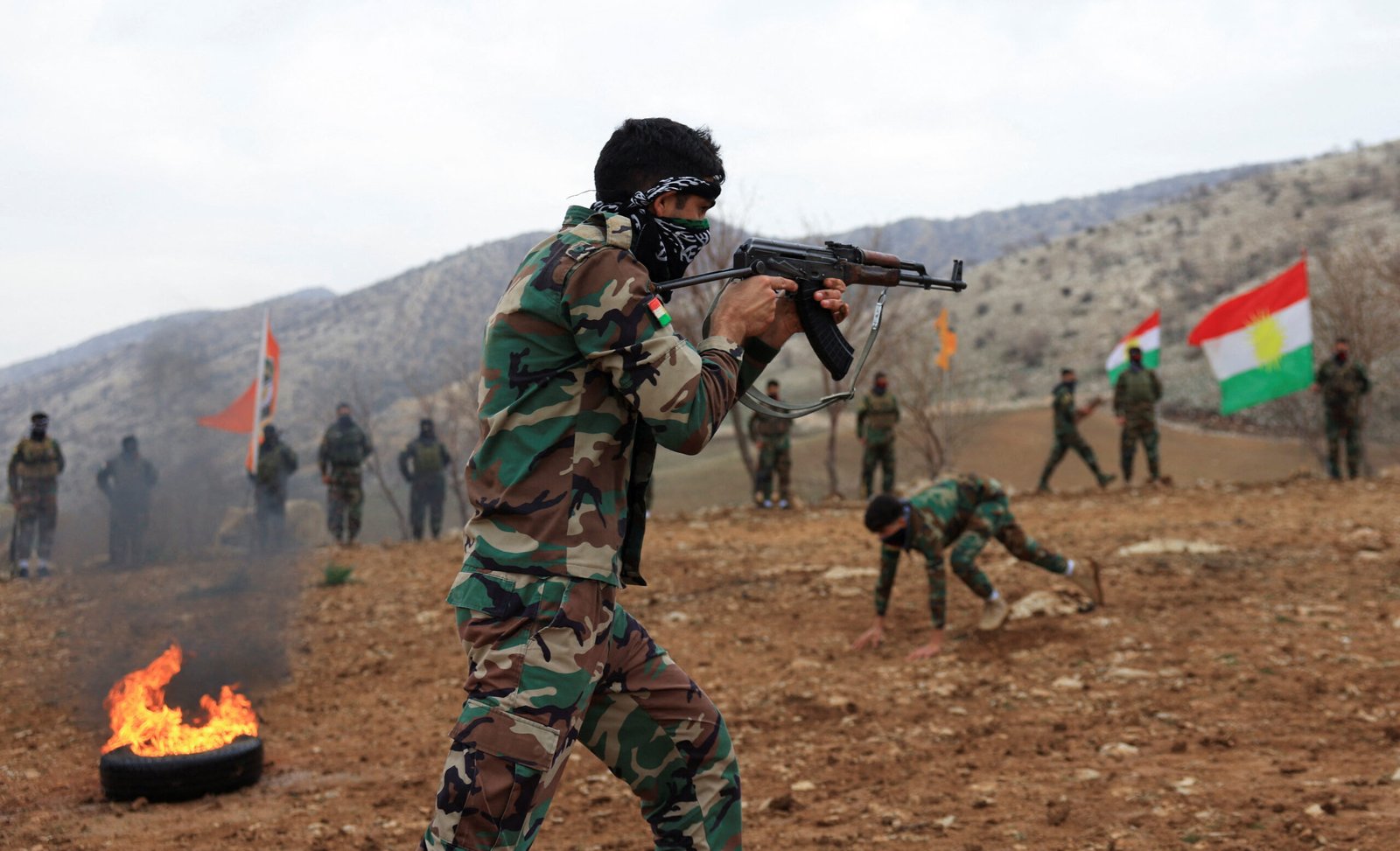
As the United States and Iran are reported to have reached a tentative two-week ceasefire, attention is already turning to the likely winners and losers. Most of that discussion is focused on states. But in some cases, non-state actors are easier to assess because their gains and losses are more immediate and more tangible. Among the clearest examples are the Iranian Kurdish groups, whose role, or lack of one, became an important part of the early war planning around how pressure on the Iranian regime might be turned into something larger.
If the war ends under the current terms, these groups are likely to emerge as among its biggest and most immediate losers. That is true regardless of the exact parameters of a final deal.
There are two main reasons for this. The first is that some of these groups were publicly and repeatedly highlighted as part of the initial logic of the war, especially in reporting and commentary tied to an eventual ground component or internal uprising against the Iranian regime. The second is Trump’s more recent statement that arms had been given to a “certain group” to pass on to Iranian protesters, only for that group to keep them, and that they would “pay a big price” for it. Whatever the exact truth of those claims, statements like that matter because they harden Iran’s case that these groups cannot simply be left where they are under the old arrangements.
That is the key point. The danger for these groups is not primarily that Trump himself will punish them. It is that they have now been exposed enough, and publicly enough, to make it far harder for Iran to accept any return to the previous status quo. Tehran already had a security agreement with Iraq aimed at disarming these groups and confining them to designated camps. But the chaos that followed the protests in early 2026, and the extent to which these groups were discussed as possible instruments in a wider anti-regime strategy, have likely convinced Iran that their mere physical presence in the Kurdistan Region remains a security threat. Under those conditions, Iran is unlikely to settle for anything less than much stricter terms, potentially including their full removal to third countries that do not border Iran.
This is where the vulnerability of non-state actors becomes much sharper than that of states. States can still negotiate, claim protections, and fall back on sovereignty. These groups cannot. The Iraqi government already has an understanding with Iran on this file, and the KRG would have very limited room to resist if Tehran presses harder under a ceasefire framework. Any broader understanding between Washington and Tehran is also unlikely to contain meaningful protections for them. In fact, the opposite may be true. Because they were elevated rhetorically as part of an initial anti-Iran plan but did not prove useful in practice, they now risk being exposed from both directions at once: too threatening for Iran to tolerate as before, but not useful enough for others to defend at meaningful cost.
That is what makes them likely disposable. They were visible enough to be marketed as part of a larger plan, but not effective enough to make themselves indispensable to that plan. For weak actors in a moment like this, that is often the worst outcome. Once it becomes clear that they cannot meanginfully shape events, their room for protection shrinks very quickly.
This would also be a historic blow in a deeper sense. These groups were presented with what was arguably their best opportunity since the Iranian revolution and the consolidation of the Islamic Republic in the 1980s. Yet the war appears to have passed without them being able to turn that moment into real strategic leverage. Instead, they may come out of it more exposed, more constrained, and more vulnerable to forced displacement than before.
That said, the losses are unlikely to fall evenly across all Iranian Kurdish groups.
PAK is the most likely to face the harshest immediate consequences. It is based in Erbil, sits in an environment much more directly shaped by KDP control, and has most publicly aligned itself with offering to be Israel’s boots on the ground, and is therefore easier to pressure and easier to dismantle if such a decision is made. If Iran insists on an example being made quickly and visibly, PAK is the clearest candidate.
KDPI and the Komala factions are also highly vulnerable, but their likely trajectory may be somewhat different. Their top leaders are already largely based in Europe or the United States, and if pressure intensifies the more probable endgame may be forced exile not only for the leaders but also for much of their remaining camp and fighter infrastructure. In other words, the issue may not simply be disarmament or tighter confinement, but eventual transfer out of the Kurdistan Region altogether.
PJAK, however, is the likely exception. Its position throughout the war has been different from that of the other groups, and that difference now matters. PJAK made clear that it would not become part of this war and rejected joining the initial plan tied to attacks on Iran. It was also not among the parties reportedly given weapons or logistical backing. Part of that reflects its own stance, but part of it also reflects Turkish sensitivities over any support to PKK-linked actors, sensitivities Washington has long understood and generally tried not to cross. For that reason, PJAK’s border infrastructure is more likely to remain where it is, even if under pressure, while the others face a much more immediate and potentially existential threat.
If this ceasefire holds, then, one of the clearest conclusions may be that the war’s most immediate losers are not necessarily the states that entered it, but the smaller non-state actors that were briefly elevated by its early logic and then left exposed by its outcome. Among them, the Iranian Kurdish groups stand out. But even within that category, the coming fallout is unlikely to be uniform. PAK appears most exposed, KDPI and Komala may be pushed toward exile, and PJAK is the one actor most likely to remain in place because it kept itself outside the war that has now placed the others in jeopardy.


