


Syria’s Kurds Are Stronger Than Ever. That May Not Be Enough.
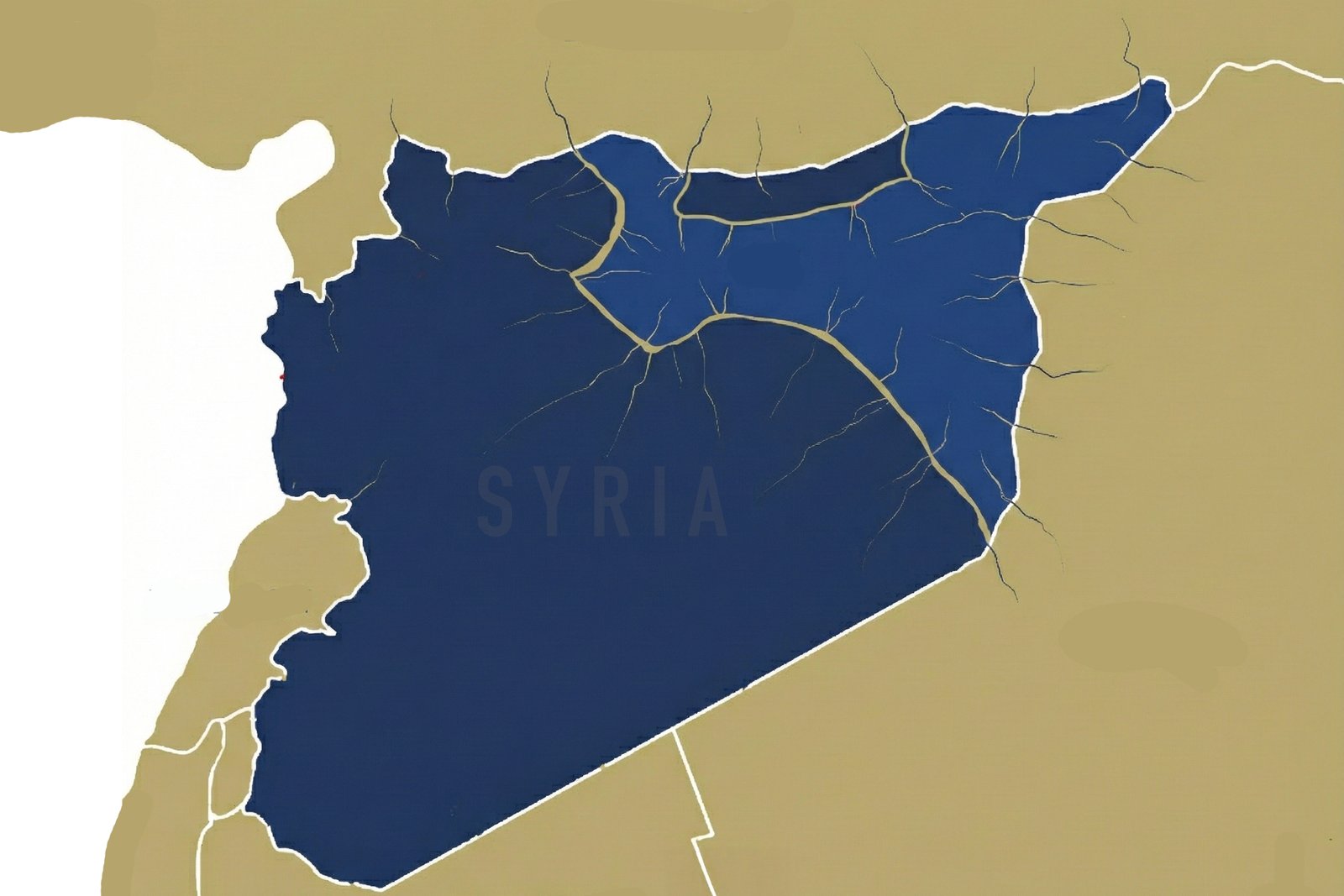
Trump’s newly released National Security Strategy offers the clearest lens for understanding why northeast Syria’s political options are foreclosing. The document is not a Syria policy memo, but it establishes the hierarchy that governs American commitments: which fights Washington sustains, which it sheds, which relationships it refuses to risk for partners on the periphery. Read through that lens, northeast Syria is not “failing” because it is uniquely weak or uniquely mismanaged; it is colliding with a strategic environment built to close grey zones, not protect them.
The comparison with the Kurdistan Region’s emergence in 1991 is useful precisely because it tempts the wrong analogy. The KRG took shape at the peak unipolar moment, when Washington saw itself as organizer of a post–Cold War liberal order, able to translate humanitarian shock into enforceable arrangements and sustain a protected “exception” because the center it constrained was hostile and internationally boxed in.
The Trump administration’s 2025 NSS reflects the opposite posture: a strategy written under constraint, insisting that not every “worthy” cause can command American focus, elevating the Western Hemisphere as a priority, and calling for burden-shifting while avoiding “forever wars.”
What follows examines four structural conditions that explain why the SDF faces a narrowing corridor the Kurdistan Region did not face in 1991.
Part One: The International System Has Inverted
In 1991, the United States was in system-building mode. Northern Iraq’s Kurdish tragedy could be packaged as an early proof-of-concept for the new liberal order: an internationally legible exception that constrained a defeated enemy without formal border changes. European allies were central. Operation Provide Comfort was led by the UK and closely supported by France and Germany. Crucially, Saddam’s Baghdad was not a partner candidate; it was the problem. Weakening and isolating it were strategic objectives. A protected northern space served those objectives.
The SDF faces the inverse on every count.
The 2025 NSS treats the Middle East as a theater for managing threats, not midwifing new political entities. The SDF is a useful instrument against ISIS, not a political project to nurture into permanence. Europeans who were instrumental in 1991 are now consumed by war on their own continent and wary of actions that might trigger a new refugee crisis.
The legitimacy channel has also shifted. In 1991, “protection” was the legitimizing verb: the international system asked how to shield a vulnerable population from a hostile state. In 2025, the verb is “integration.” The system asks how to rebuild Syria as a unit that absorbs armed groups, controls its borders, and becomes the address for reconstruction. The SDF’s strongest moral arguments, its pluralism and its sacrifices against ISIS, do not translate into durable guarantees because the international system is not asking “How do we protect a Kurdish zone?” It is asking “How do we restore the state without restarting a war?”
Part Two: Turkey’s Veto Power Is Not Comparable
The common mistake is treating Turkey as a constant. The Turkey of 1991 and 2025 are different states.
Then, Ankara was dependent on U.S. military supply chains and the NATO ecosystem. Human Rights Watch described U.S. weapons as roughly 80% of Turkey’s arsenal in that era. The country was politically fragile under weak coalition governments and consumed by an internal PKK war. It could bargain hard but had fewer autonomous tools and less room to reject an American-designed architecture, especially one sold as managing refugee flows.
Today the relationship is harder-edged and more symmetric. Turkish officials routinely cite defense localization rates around 80%; even if the exact metric is debated, the direction is unmistakable. Turkey is far less hostage to U.S. spares, permissions, and political cycles than it was three decades ago.
Now add the salience asymmetry. For Ankara, the SDF/YPG file is core national security. For Washington, it is a small file subordinated to larger priorities. The 2025 NSS makes that hierarchy explicit by putting the Western Hemisphere first, emphasizing tariff-driven “commercial diplomacy,” and instructing a reallocation of posture away from theaters whose import has “declined.” Turkey can credibly signal willingness to absorb more cost than the U.S. will bear for the SDF, because the U.S. has already said, in its own strategy, that its attention is finite and its priorities are elsewhere.
Multipolarity amplifies this. When Washington is balancing Russia, Ukraine, China, and global supply chains, it has fewer degrees of freedom to pick prolonged fights with pivotal middle powers. Turkey understands that and bargains accordingly.
Part Three: Damascus Has Flipped From Antagonist to Address
Saddam’s Baghdad was boxed in; strengthening it was not a Western objective. Time therefore worked for the Kurds in the Kurdistan Region. Every month that passed, Baghdad remained isolated and the protected zone consolidated.
In Syria, time works in reverse. The more Damascus is treated as workable, for counter-ISIS coordination, sanctions relief, investment, or regional stabilization, the more the international system gravitates toward a settlement that routes authority through the capital. The speed is striking: the U.S. House has already passed a straightforward repeal of the Caesar sanctions as part of the 2026 NDAA, delivered to a transitional government led by a former al-Qaeda-linked figure, with the SDF question unresolved. Compare that to Iraq after 2003, where even after a full U.S. invasion and regime change, residual UN sanctions linked to WMD and Oil-for-Food were not fully terminated until 2010–2011. The contrast underlines how decisively Washington has prioritized normalization over leverage.
Deadlines become political weapons in this environment. The “March 10 framework” that insiders reference is an integration understanding: the outline of folding the SDF’s military and administrative structures into the Syrian state over a defined period, with year-end used as a political marker by multiple actors. Even if details remain contested, the direction is clear. As Damascus becomes more usable, the cost of remaining outside the state rises.
This explains why even seemingly expansive integration offers fail to produce movement. Some accounts suggest the SDF has been offered incorporation as three divisions, expanded Kurdish civil rights, ministerial roles, and senior placements for commanders inside defense and interior institutions, yet there is no agreement. If broadly accurate, this clarifies the dispute. It is not about symbolism; it is about coercive power and credible guarantees. Who controls the chain of command after integration? What prevents selective arrests, purges, or forced redeployments once the SDF dissolves as a separate force? What legal protections exist for language, education, and local administration that cannot be quietly reversed once borders and resources return to state control?
Part Four: Demography Makes Northeast Syria Structurally Harder to Defend
Demography and territorial sociology make northeast Syria structurally harder to defend than the KRG ever was. Kurdistan Region’s de facto autonomy could plausibly be described as self-rule over a largely Kurdish space. Northeast Syria, in its current form, cannot.
The SDF administers territory where the human geography is uneven and, in key cities, overwhelmingly Arab. That shifts the legitimacy battle from “self-determination” to “wartime arrangement.” A Kurdish-led security bureaucracy can govern majority-Arab cities when coercion, patronage, and an external protector align. It struggles to convert that into a durable political settlement once the protector’s attention drifts and the capital regains traction.
Turkey does not need to occupy the northeast to win. If the bulk of the territory is not demographically Kurdish, Ankara’s cheapest victory is ensuring Damascus holds it after the SDF retreats to core Kurdish areas too strategically cornered to matter as a counterweight.
Conclusion: Stronger Force, Narrower Window
The SDF of 2025 is a more formidable actor than the Peshmerga of 1991. It is better organized, more battle-tested, and has a decade of governance experience across complex territory. It defeated ISIS. It built institutions under fire. On capacity alone, it outstrips what Kurdish forces in the Kurdistan Region could claim after the Gulf War.
But capacity alone is not enough. What enabled the KRG’s survival was a permissive international structure: a system-building America, a unified transatlantic alliance, a quarantined Baghdad, and a Turkey too constrained to impose its will. The Peshmerga benefited from a moment when the global order was expanding and exceptions could be defended as proof of that order’s reach.
The SDF faces the inverse. America is in retrenchment. Europe is absorbed elsewhere. Damascus is being rehabilitated. Turkey is more autonomous. And the demographic reality offers no clean overlap between the movement and the territory it holds.
None of this is the fault of the SDF or the northeast Syria project. The institutions they built, the multi-ethnic coalition they formed, the price they paid against ISIS: these are real, and they are why the SDF remains at the table. But merit alone does not secure political outcomes. Structure does. And in 2025, that structure is closing.
Yet structure is not fate. Syria’s minority question extends beyond Kurds: Druze and Alawite communities have unresolved anxieties about a Sunni-dominated center, and Damascus has yet to demonstrate it can integrate them without coercion. Israel has shown little interest in a centralized, capable Damascus and retains tools to complicate that outcome. A revived peace process inside Turkey, however fragile, could alter Ankara’s calculus on the YPG. These are real variables.
The path forward is not to insist that history owed them a KRG-style outcome. It is to negotiate the best possible settlement within a narrowing corridor, one that preserves political space, security, and cultural recognition within the constraints the current configuration allows. It is adaptation to a world that rewards the moment as much as the movement.


