


Will Turkey Let Mazloum Abdi and Ilham Ahmed Visit Ocalan on Imrali soon?
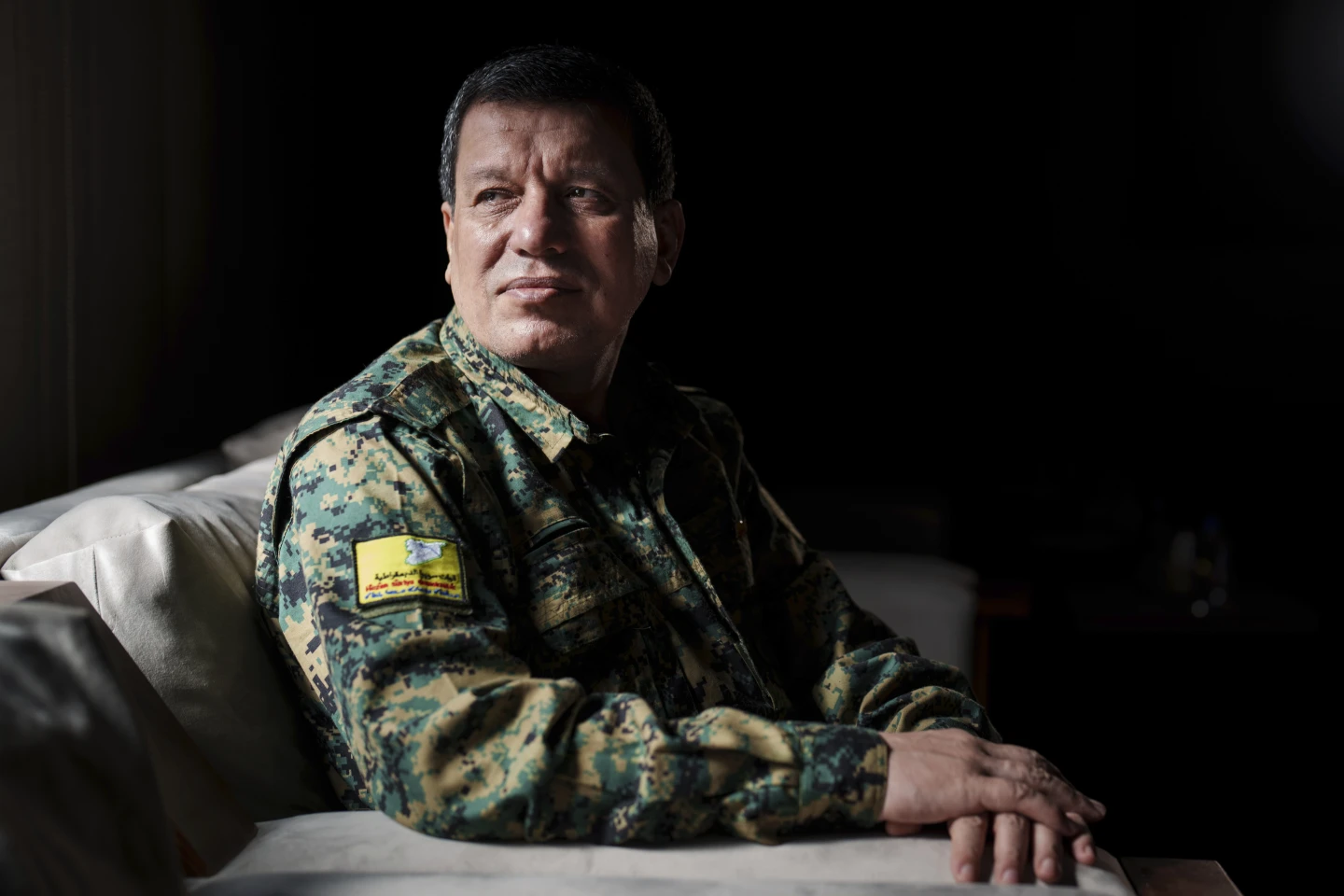
According to the official summary of the Turkish parliamentary peace commission’s visit to Abdullah Ocalan, when he was asked about SDF commander Mazloum Abdi, Ocalan confirmed that Abdi is “close to him and that he is subordinate to him.” DEM Party MP Gulistan Kilic Kocyiğit, one of the three MPs who met Ocalan was later interviewed and asked whether Ocalan had said that the YPG–PYD leadership (Mazloum Kobani, Ilham Ahmed) would listen to him. Her answer broadly matched the summary: “Yes. He said, ‘They listen to me, they take me seriously.’”
Context: Mazloum Abdi himself said, in an interview with the pro-PKK Mezopotamya Agency, that there has already been written contact with Ocalan and that Ocalan wants SDF-led Syrian Kurdish officials to visit him. Abdi added that they would make such a visit if it were arranged. In the same interview, he argued that there are problems in the SDF–PKK–Turkey triangle that “only Leader Apo” can solve – “Apo” being Ocalan’s nickname.
Analysis: What was once unthinkable now looks increasingly plausible. Rumours in Turkish media already suggest that SDF figures such as Mazloum Abdi and Ilham Ahmed could be brought to meet Ocalan – either on Imrali Island or, as some insider chatter has it, after a move to some form of house arrest. With the SDF–Damascus 10 March agreement stalled and less than a month left before its deadline, Ankara may be toying with a new approach: arranging a meeting between Abdi and Ocalan and unveiling a new framework immediately afterward.
So far, Ocalan has remained deliberately ambivalent on the SDF file, even as the PKK disarmament process has moved forward. That ambiguity is leverage: as long as the “Rojava question” remains unresolved, Ocalan has something substantial to trade against concrete steps from Turkey. For Ankara, meanwhile, there is growing discussion in pro-government and nationalist circles of a “Plan B” for Syria if the push for a fully unified, centralized state fails – especially given Israel’s efforts to prevent the re-emergence of a strong Damascus. In that scenario, some Turkish policymakers argue that Turkey will have to adapt to a more fragmented Syrian reality by co-opting the SDF rather than treating it only as an enemy.
One theory is that the new peace process is designed to make Ocalan a formal stakeholder in the SDF question – tying the SDF to Turkey via Ocalan, and then using that relationship as a counterweight both if President Shara drifts away from Ankara’s orbit and against Israeli influence in southern Syria. Others, however, see serious tension between President Erdogan and his nationalist ally Devlet Bahceli over this Plan B. It is not that Bahceli opposes a centralized Syria; rather, he has less emotional investment in salvaging that model if it breaks down, viewing the file primarily through a hard Turkish-nationalist lens, while Erdogan’s reading is more Islamist and regional.
Recent developments inside Turkey reinforce the impression of factional friction over both the Kurdish peace process and Ocalan’s role in it. Bahceli has pushed hard for the parliamentary commission to visit Ocalan, called him the “founding leader,” and publicly praised him on multiple occasions. By contrast, parts of the AKP-led state apparatus seem to be elevating Masoud Barzani as a rival Kurdish figure. The highly choreographed visit by Barzani to Sirnak – with AKP figures praising him and allowing his security team a very visible presence – looked like an attempt by one faction to boost Barzani’s regional profile, diluting Ocalan’s claim to be the paramount Kurdish leader.
This may help explain why Barzani’s office reacted so sharply to Bahceli’s relatively mild criticism after Sirnak: Barzani’s circle understands that he is being positioned by some in Ankara and Erbil as an alternative pole to Ocalan, and does not want that image undercut by Turkish nationalist rhetoric. In turn, Bahceli’s criticism was likely aimed less at Barzani himself than at the faction trying to promote him as the preferred Kurdish interlocutor instead of Ocalan.
In the coming months, these factional struggles inside the Turkish state – over Syria policy, the SDF, and the status of Ocalan – are likely to sharpen. Whether Mazloum Abdi and Ilham Ahmed actually make it to Imrali will be one of the clearest indicators of which line is gaining the upper hand.


