


Kurdistan’s First Christians: How the Church Took Root – and Who They Really Were
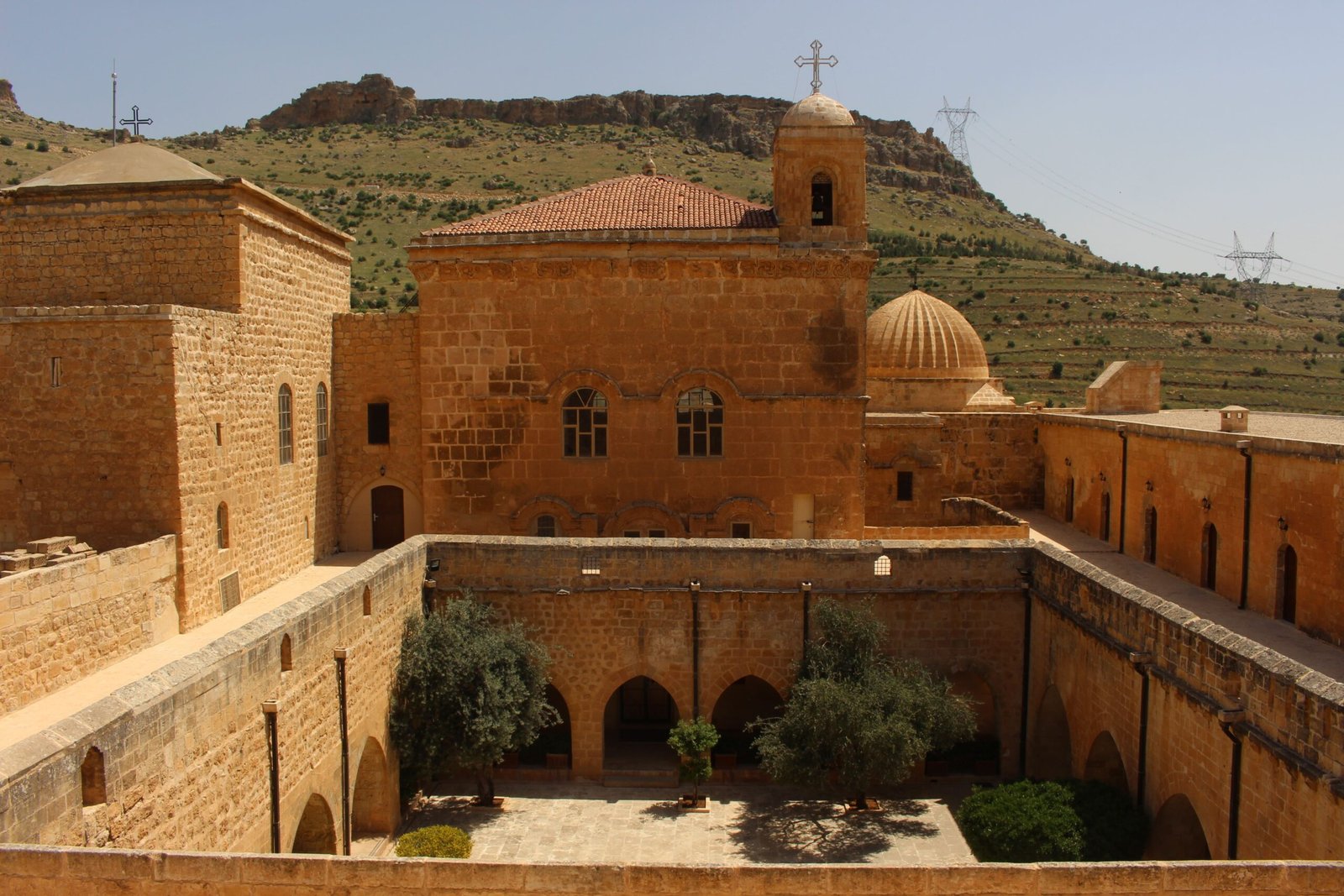
Historic Kurdistan has long been defined by religious and cultural plurality, and Christianity has been one of its enduring strands. From the earliest phases of Christianity’s emergence in the East, the faith reached Kurdish-inhabited lands. In areas where Kurds lived and operated, churches and monasteries were established, and notable religious figures contributed to shaping the tradition’s local presence.
With Islam’s expansion into Kurdish regions, Christianity entered a new historical phase shaped by coexistence, adaptation, and periodic tension. What follows traces Christianity’s trajectory in Kurdistan – from the first century CE into the medieval Islamic centuries – highlighting how religion, culture, and politics repeatedly intersected across the Kurdish landscape.
The Emergence of Christianity in Kurdistan
Christianity’s spread was propelled by its evangelical impulse: the Gospel commands believers to carry the message to all nations, and Jesus is described as instructing his disciples to guide all peoples. In the case of Kurdistan, Christian tradition commonly traces the earliest presence to the first century CE and associates it with the mission of Mar Addai, said to have been among Christ’s companions and disciples. Accounts place Mar Addai’s route through Edessa (present-day Urfa) in the Jazira around 29 CE, before moving onward to Hadyab/Adiabene (present-day Erbil province) and then to areas corresponding to present-day Kirkuk (Beth Garmai) and Sulaimani. He is often counted among the seventy disciples and described as reaching Nisibis, the regions around present-day Erbil (Hadyab/Adiabene), and present-day Kirkuk (Beth Garmai), while his followers extended toward Shahrazur (present-day Halabja area).
Early evidence of institutional rooting appears in the figure of Pqidha/Bqidha, who became bishop in Hadyab in the first century CE—a sign of Christianity’s indigenization in these Kurdish-inhabited regions. From Hadyab, Christianity spread further, acquiring by the second century CE a discernible footprint of churches, missionary institutions, and prominent figures. From Erbil, Christian missions also moved toward present-day Bahdinan.
The Composition and Origins of Kurdistan’s Christians
Kurdistan’s Christians have been diverse in both religious affiliation and ethnocultural self-identification. Those with the longest presence are commonly referred to as “Nestorians” in the historical literature, as documented by both Muwaffaq Nisko and Raphael Babu Ishaq. Nestorianism is linked to Nestorius (died 451 CE), Patriarch of Constantinople in the fifth century, whose Christological formulation distinguished between Christ’s divine and human natures. Adherents rejected referring to the Virgin Mary as “Mother of God,” on the grounds that she bore Christ’s human nature. These teachings were condemned in 431 CE by an ecumenical council, triggering a rupture. Wilhelm Baum and Dietmar Winkler, in their history of the Church of the East, document how supporters of Nestorius increasingly turned toward the Sasanian Persian Empire, becoming the nucleus of what later became the Church of the East.
Later polemics accused Nestorians of having altered the Gospel, and their teachings were forbidden in certain contexts. Albert Abuna and Aziz Suryal Atiyya both document how this prompted flight into the borderlands between Rome and Persia—regions that overlap with much of present-day Kurdistan. Over time, many of these communities came to be associated with the names Assyrian (Ashuri) and Chaldean, but the evolution of these labels remains fiercely contested.
One strand of scholarship argues that the region’s Christians are fundamentally Aramean and Syriac rather than Assyrian or Chaldean. Muwaffaq Nisko, in his 2020 study “Their Name is Syriac, Not Assyrian or Chaldean,” points to documents and ancient manuscripts in various languages from the first century CE to contemporary history, all of which name these communities as Aramean and Syriac. In Nisko’s reading, the Christians of Mesopotamia east and west of the Euphrates are Syriac, and their origins link to Israelite tribes exiled to Iraq rather than to Iraq’s ancient pre-Israelite inhabitants. Nisko, along with Mark Sykes and C.J. Edmonds, attributes the renaming to colonial and sectarian politics, specifically claiming that the Anglican Church, via a mission team in 1876, encouraged these Christians to adopt an “Assyrian” identity to strengthen perceived historical standing. This interpretation is disputed by Assyrian and Chaldean community organizations, who maintain distinct ethnic identities with roots in ancient Mesopotamia.
Nisko further documents that the Mesopotamian Christian community, encouraged by Persian authorities, adopted Nestorian belief, with their church sometimes labeled “Persian.” From the late fifth century CE (479 CE), they separated from Western Christians. From the sixteenth century onward, missionaries and evangelical groups pressed for new identity frameworks anchored in Iraq’s ancient civilizations—those who became Catholic were called “Chaldeans,” while those remaining in Nestorian tradition were increasingly labeled “Assyrians.” Because Kurdistan formed part of the Syriac homeland, these shifts also reverberated within Kurdish regions.
The question of ethnic origins is likewise disputed. Mark Sykes, in his study of Kurdish tribes, and Muhammad Amin Zaki Beg, in his history of the Kurds, both argued that at least a portion of these Christians were originally Kurds who converted. Abd al-Raqib Yusuf and Jamal Rashid Ahmad suggest that, even if not all, then some—perhaps a majority—were Kurds, pointing to the deep historical connection between Christian churches in Kurdistan and Kurdish/Median histories. Nisko notes that Christian sacred sources mention the Medes while lacking parallel reference to Assyrians and Chaldeans. The anonymous Syriac chronicle Al-Tarikh al-Sa’irdi also indicates that Kurdish people learned from and benefited through Christian missionary activity. These claims remain debated, and contemporary Assyrian and Chaldean scholars generally reject the characterization.
Alongside the Nestorians, a portion of Kurdistan’s Christians followed the tradition associated with Jacob Baradaeus of Nisibis (present-day Nusaybin), who became Bishop of Constantinople in 542 CE. According to Atiyya’s history of Eastern Christianity, his school viewed Christ as possessing a divine nature with two essences—one divine and one human—and he reorganized and revived the Syriac Orthodox Church. Marco Polo, passing through the region in the thirteenth century, observed that Jacobites spread particularly around Mosul. Jum’a Mahmud Abdullah Murad’s study of Mayyafariqin documents that during the medieval Islamic centuries, Jacobites formed a majority in Diyarbakir. Compared to the Nestorians, however, Babu Ishaq notes they remained a minority in the broader region—a pattern that J.B. Segal and Murad Kamil link to Sasanian support for Nestorians against the Romans.
Christians of Kurdistan During the Islamic Conquests
Before Islam’s advance, Kurdish regions were divided between Sasanian and Byzantine zones, a split that shaped religious life: Zoroastrian dominance in the Sasanian sphere and Christianity in Byzantine lands. Al-Ya’qubi’s history notes this division’s cultural and political effects on inhabitants. According to al-Dinawari, by around 627 CE during Heraclius’s reign, Byzantine forces had extended control over the Jazira, a context that helps explain the density of churches and Christian sites whose traces persisted into and beyond the Islamic period.
Islamic campaigns into the Kurdish-inhabited Jazira and northern Syria and Iraq date to around 17–18 AH/638–639 CE, after Muslim forces consolidated Syria and Egypt. According to al-Waqidi, the campaign was ordered by Caliph Umar ibn al-Khattab and led by Iyad ibn Ghanm al-Ash’ari with eight thousand warriors. In the broad corridor between the Tigris and Euphrates lay major Kurdish-inhabited cities that Yaqut al-Hamawi enumerated: Harran, Edessa, Ras al-Ayn (present-day Serêkaniyê), Nisibis, Sinjar, Mardin, Amid (present-day Diyarbakir), and Mosul. Compared to Sasanian-controlled territories and mountainous zones, the Jazira’s urban areas offered less resistance, moving instead toward negotiated arrangements. Al-Hamawi records that the people of the Jazira agreed with Iyad ibn Ghanm to pay jizya (a poll tax on non-Muslims in exchange for protection) and kharaj (a land tax), reaching such settlements more easily than other regions of Iraq, Syria, and Persia.
Edessa became the foundational case for these arrangements. Al-Kufi’s chronicle records that the city prepared provisions and defense, then was shaken by Muslim takbir and tahlil—interpreting the besieging force as perhaps twenty thousand. After roughly two weeks of resistance, the Christian patriarch Mitus urged negotiation, seeking an agreement akin to Raqqa’s. Al-Baladhuri preserves the text of Iyad ibn Ghanm’s letter to Edessa’s people, guaranteeing protection for lives, property, children, women, the city, and even mills, provided obligations were met—payment, bridge repairs, and guidance—with “God and the angels and Muslims” invoked as witnesses.
Using Edessa’s per-capita model, al-Baladhuri documents how Iyad ibn Ghanm pushed deeper into Kurdish regions, applying similar terms to Samosata (present-day Samsat) near Malatya and Muş, and then Saruj, Raskifa, Tell Mawzan, Amid, Mayyafariqin (present-day Silvan), Qasr Kafartusa, Nisibis, the Zozan road, the highlands of Tur Abdin, and fortified sites including Mardin Dara, Karda (Jazira of Botan, present-day Cizre area), and Bazbdi, before moving toward Bitlis and Ahlat and on to the sulfur springs of the Armenia region. In Mayyafariqin, al-Kufi records that the people empowered their patriarch—Fatus/Aslagorus—to negotiate an agreement involving three thousand dinars in cash.
Not every city yielded through agreement. Al-Baladhuri documents that Ras al-Ayn resisted: inhabitants closed the gates, killed some Muslims, and fought fiercely before defeat and renewed negotiations. The settlement returned lands and extended protection to women and children, while imposing four dinars of jizya per person. Al-Waqidi adds that after taking the city, Arab Muslims remained for a month, converted a Nestorian church and several other churches into mosques, and appointed Ajrafa ibn Mazin as governor. Yet internal Christian correspondence from this period, analyzed by Tawfiq Iskandar al-Yuzbaki, also indicates Muslim respect for the faith, kindness toward priests and monks, and protection of churches and monasteries—an outlook sometimes linked to the Quranic passage (Al-Ma’ida: 82) portraying Christians as nearest in affection to believers because among them are priests and monks who are not arrogant.
Christian Life Under Islamic Hegemony
Seventh-century accounts, documented by Abbas al-Azzawi in his study of Amadiya, describe Christians in Kurdistan constructing multiple monasteries and churches in the mountains of Hakkari east of Mosul. Al-Mas’udi, writing in the tenth century, noted that Kurdish tribes north of Mosul—identified as Jacobite and Guran (Al-Jurqan)—followed the Christian faith. The density of churches and monasteries in the region, some still inhabited until the thirteenth century according to both Yaqut al-Hamawi and al-Shabushti, supports this account.
Further evidence of Kurdish familiarity with Christianity appears in Ibn al-Athir’s chronicle for 927 CE, where a Kurdish tribal leader, Ibn Zuhak, apostasized from Islam, connected with Christians in the Jazira, was rewarded and sent back toward his fortress before being killed in a Muslim ambush. Marco Polo, passing through the Mosul region in the thirteenth century, also observed Christian Kurds.
Even so, Muhammad Amin Zaki Beg and the Armenian historian Ara Bedlian both note that Kurds did not convert to Christianity in large numbers, and the faith did not expand widely among them. Nevertheless, Mordechai Zaken, in his study of Jews and Christians in Kurdistan, describes Christians as the largest non-Muslim community in the region—a characterization that, if accurate, would make them historically the second religious component of Kurdistan. This is consistent with the density of heritage churches and Christian sites across the Jazira and the Mosul plain that Yaqut al-Hamawi documented—including Bashiqa, Qaraqosh (present-day Hamdaniya), and Bartella—areas containing Kurds, Arabs, and other communities.
Geography mattered. Christians concentrated more heavily in the Jazira and around Mosul, linked to earlier Byzantine influence. In the mountainous regions aligned with Sasanian influence (Al-Jibal), al-Maqdisi noted that Zoroastrians formed the majority. Edessa had the most famous churches in Kurdish lands; al-Istakhri described one as the largest within Abbasid boundaries, and al-Maqdisi portrayed it as among the world’s astonishing places. Hassan Shamissani’s studies of Mardin and Sinjar document that the Jazira more broadly was home to dozens of monasteries and sites of worship, some surviving to the present. In Amid, Nasir Khusraw observed a major church ornamented and built entirely of precious stone, writing that nothing like it existed in the world. Bashar al-Doski’s research notes the city contained twelve additional churches. Al-Istakhri and al-Maqdisi record that Nisibis and Hasankeyf similarly contained numerous churches and monasteries by the tenth century, while Shamissani documents that Sinjar retained Christian religious activity across the Islamic period.
The region’s relative stability for Christian institutions is underscored by Albert Abuna’s documentation of the Syriac Western Patriarch’s refuge in Amid in 1034 CE, later settling near Mardin. Robert Haddad observed that while Iraqi churches elsewhere collapsed under war, northern Mesopotamian churches remained intact. Nasir Khusraw noted some churches decorated beside mosques without being attacked. Beyond the Jazira, Arshak Puladian documents Christianity’s presence in Shahrazur, and Banaz Ismail Addu’s study of dhimmis in Kurdish lands notes Christian concentration across Armenia and Azerbaijan, where they formed the largest non-Islamic component due to proximity to Christian Armenia—particularly in Dvin (in present-day Armenia), an early homeland of the Ayyubids. Addu also records Christian concentration in Hulwan (present-day Sarpol-e Zahab area) and Hamadan.
Christians Under Principalities and Emirates
The Abbasid era was generally open to Christians, with some granted social and administrative roles, as Babu Ishaq and Ara Bedlian both document. Yet the period was not free of resentment, often connected to political tension. J.M. Fiey’s study of Christians under the Abbasid Caliphate notes that Christian communities were internally diverse, and their residence in frontier zones between Rome and the Caliphate exposed them to suspicion. Internal disputes sometimes escalated into accusations of betrayal or collaboration with Rome, including an episode in Edessa in 1176 CE that Fiey documents.
Under Kurdish principalities, conditions varied sharply. Atiyya Ibrahim Marjuna’s history of the Kurds under the Abbasids documents that Abu Aswar al-Kuri of the Shaddadid principality sought marriage into Armenian royalty, yet pursued harsh policies toward Christians amid conflict with Armenian and Byzantine ambitions. In contrast, Banaz Ismail Addu notes that the neighboring Hasanwayhid principality in Azerbaijan offered Christians relatively favorable conditions, with princes respecting communities that formed majorities in certain cities.
In the Jazira, the Marwanid state (981–1084 CE) gave Christians notable standing, including elevation into administrative posts. Al-Fariqi, a contemporary chronicler, depicted Christians as dominant and influential in decision-making—though this may reflect the perspective of a critic rather than objective assessment. Jum’a Murad’s research on Mayyafariqin documents specific appointments: in 1034 CE, administration of religious endowments (awqaf) was entrusted to Ibn Shalita; later, capital affairs under a general trusteeship were entrusted to a Christian physician named Abu Salim during 1079–1095 CE. Murad also notes that Christians were entrusted with tax collection and other state affairs. Abd al-Raqib Yusuf documents that Christians held leading roles in medical administration across the principality.
Erbil—a small principality from 1190–1232 CE—was a place where Christians gained significant office and influence, as Muhammad al-Saqqar’s research documents. The scale of this prominence became a target of literary reproach: al-Yunini preserves the Hasanwayhid poet Taha ibn Ibrahim Hasanwayhi’s famous lament, “God forbid Erbil where the cross-worshippers rule.” Uthman Amin Ahmad Salih’s study of Erbil records the Syriac poet Isa Sanjar writing to a caliphal governor contrasting neglected mosques with the curtains and cups of Erbil’s churches. Al-Saqqar notes that under Muzaffar al-Din Gokburi, Christian officials exerted considerable administrative control, and the city served as a refuge even for Christian figures from Damanhur in Egypt. Ibn al-Athir documents that Christians at times faced accusations of oppressing people. During Mongol raids on Mosul in the thirteenth century, Bar Hebraeus records that Christians viewed Erbil as a secure fortress and fled there.
Clashes and Friction
Alongside accounts of coexistence and institutional survival, the record contains episodes of friction, often tied to political conflict rather than purely religious animus. Ibn al-Athir documents that in 897 CE, Jacobite Christian Kurds were harassed and taxed by the Turkish commander Ibn Kundajiq because they supported his rival. Fiey notes that in 977 CE, during Buyid campaigns around Amadiya, some Kurdish tribes occupied monasteries. Marjuna documents that in the Shaddadid principality, Armenian churches were destroyed and those refusing conversion were killed amid war with Armenian and Byzantine forces. Murad records that Seljuk attacks led to looting of Christian property in Mayyafariqin. Fiey also documents a monastery in the mountains of Mardin converted into a mosque after its monk converted to Islam. In the second half of the thirteenth century, Bar Hebraeus records that Kurds participated in Malik Salih Lu’lu’s collective campaign against Christians during the Mongol era.
These episodes reinforce a central pattern: Muslim–Christian relations across historic Kurdistan fluctuated between cooperation and conflict, shaped by shifting political circumstances. Major wars driven solely by religious affiliation appear to have been rare; the tensions that surfaced tended to emerge within broader political and fiscal conditions in which both Muslims and Christians were subject to taxation and the pressures of state-building.
Sources
Primary Sources
al-Baladhuri, Futuh al-Buldan; al-Dinawari, Al-Akhbar al-Tiwal; al-Fariqi, Tarikh al-Fariqi; Ibn al-Athir, Al-Kamil fi al-Tarikh; al-Istakhri, Al-Masalik wa al-Mamalik; al-Kufi, Al-Futuh; al-Maqdisi, Ahsan al-Taqasim fi Ma’rifat al-Aqalim; al-Mas’udi, Muruj al-Dhahab; al-Shabushti, Al-Diyarat; al-Waqidi, Futuh al-Sham; al-Ya’qubi, Tarikh al-Ya’qubi; al-Yunini, Dhayl Mir’at al-Zaman; Yaqut al-Hamawi, Mu’jam al-Buldan; Bar Hebraeus (Ibn al-Ibri), Chronography; Nasir Khusraw, Safarnama; Marco Polo, The Travels; Addai Scher (ed.), Al-Tarikh al-Sa’irdi.
Modern Scholarship
Abuna, Albert, History of the Eastern Syriac Church; Addu, Banaz Ismail, People of the Covenant in Kurdish Lands in the Abbasid Era; Ahmad, Jamal Rashid, Kurdish Studies in the Land of Subartu; Atiyya, Aziz Suryal, History of Eastern Christianity; al-Azzawi, Abbas, Al-Amadiya in Various Eras; Attu, Nuri Butrus, History of Hadyab; Babu Ishaq, Raphael, History of Christians of Iraq; Baum & Winkler, The Church of the East: A Concise History; Bedlian, Ara, “Christians in Iraq”; al-Doski, Bashar, People of the Covenant in Kurdish Lands 447-656 AH; Edmonds, C.J., Kurds, Turks, and Arabs; Fiey, J.M., Conditions of Christians Under the Abbasid Caliphate; Haddad, Robert, Syrian Christians in Muslim Society; al-Khayyun, Rashid, Religions and Sects of Iraq; Marjuna, Atiyya Ibrahim, History of the Kurds Under the Abbasid Caliphate; Murad, Jum’a Mahmud Abdullah, The City of Mayyafariqin; Nisko, Muwaffaq, Their Name is Syriac, Not Assyrian or Chaldean; Puladian, Arshak, The Kurds in the Era of the Abbasid Caliphate; Salih, Uthman Amin Ahmad, Erbil: City of Literature, Knowledge, and Civilization; al-Saqqar, Muhammad, studies on Erbil; Segal, J.B., Edessa: The Blessed City; Shamissani, Hassan, studies on Mardin and Sinjar; Sykes, Mark, The Kurdish Tribes of the Ottoman Empire; Yusuf, Abd al-Raqib, The Dostak State in Central Kurdistan; al-Yuzbaki, Tawfiq Iskandar, studies on Islamic-Christian relations; Zaken, Mordechai, Jews of Kurdistan and Their Tribal Chiefs; Zaki Beg, Muhammad Amin, Summary of the History of Kurds and Kurdistan.


