


The PKK Is Rebuilding Its Media as a Civilian Political Network
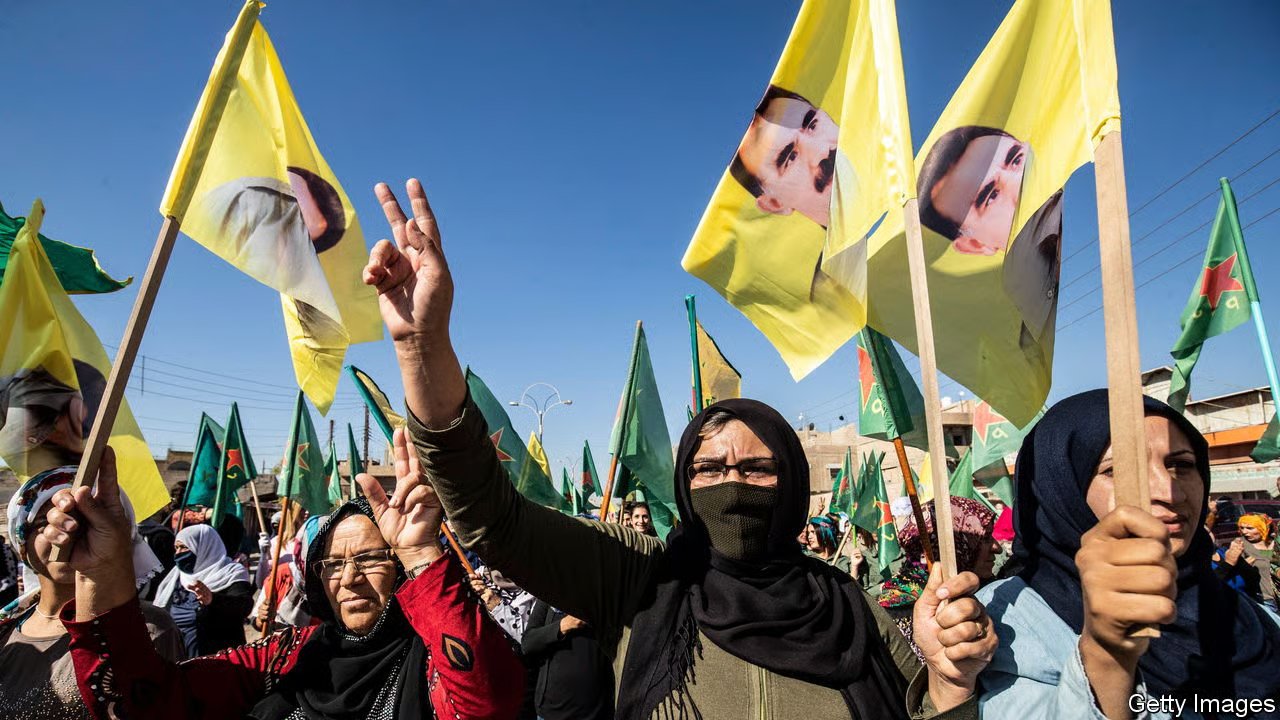
The PKK-aligned movement has spent the past eighteen months restructuring its media network around audiences and languages rather than around the armed struggle. The latest step came in August 2026, when Yazidi media and political structures in Sinjar held the first conference of a new Ezidxan Press Union, with the Yazidi women’s movement TAJE, the YBS-YJS militias and Jineoloji groups taking part. It follows a cluster of launches in May: Nûçe TV, a Kurdish-language political news channel, began broadcasting from Germany on 15 May, Kurdish Language Day, with bureaus in Diyarbakir, Qamishli and Sulaimani; KurdFM, a diaspora radio station in Kurmanji, Sorani and Kirmancki, started the same day through the Kurdish federation FED-GEL; and Zagros 24, an Iran-focused channel in Kurdish and Persian, formally launched on 30 May, less than three weeks after the Sweden-based Aryen TV ended its broadcasts on 11 May.
These changes sit on top of a longer sequence. Medya News, the movement’s English-language outlet, closed on 30 June 2025, stating that the changing political circumstances of the Kurdish movement as a whole required Kurdish journalism to be reimagined; The Amargi, an English-language platform based in Leipzig and aimed at journalists, academics and policy circles, launched on 20 September 2025. ANHA in northeast Syria and RojNews in Iraqi Kurdistan both dropped their Turkish services on 30 September 2025 to concentrate on regional languages. Denge Gel, the movement’s European radio station, shut down, with its coordinator saying the peace process had opened a new period in which old methods would no longer work and the movement’s press had to rebuild itself. Azadiya Welat, the Kurdish-language newspaper, resumed publication in January 2026 after a ten-year gap, picking up where the paper Xwebun stopped. Kurd Archive launched in April 2025 to digitise the broadcast inheritance of MED TV, Medya TV and Roj TV, the satellite channels Turkey pressured off European platforms between 1995 and 2013.
Context: German domestic intelligence identifies Sterk TV, Yeni Ozgur Politika, the Firat News Agency (ANF), Gerila TV, the cadre journal Serxwebun and the youth publication Sterka Ciwan as components of the PKK media apparatus. That backbone was built when the movement’s confrontation with Turkey was still primarily armed, and it remains in place. What has changed is the layer built around it. The movement’s own internal discussion in June 2026 of a new period for the Ozgur Basin, the “free press” tradition the movement’s outlets claim, called for media to reorganise around democratic politics, with separate news, women’s, youth and cultural press structures.
Three political tracks are driving this. The PKK is moving into Turkey’s legal-political order through the peace process, with Ocalan’s written guidance from Imrali as the ideological reference. The SDF has committed to integration into Syrian state structures. The PUK’s Sulaimani zone, which Ankara once punished with an airspace ban over accusations of PKK facilitation, has seen the ban lifted and is now treated as a management channel for the transition. Nûçe TV’s bureau map of Diyarbakir, Qamishli and Sulaimani traces exactly this terrain.
Analysis: The restructured network is best read as a portfolio in which each institution serves a defined constituency, language or political environment. Several layers can be distinguished.
The Turkey layer has grown fastest. Yeni Yasam, the legal newspaper descended from Ozgur Gundem, and the Mezopotamya Agency (MA), which supplies most domestic field reporting, remain the core constituency outlets. Around them the movement has added Ajansa Welat, a Kurdish-language agency launched in November 2024 that reports in Kurmanji and Kirmancki; Azadiya Welat in print; Ilke TV, which describes itself as a peace and rights channel and is designed to operate inside the wider Turkish television market; NuMedya24, a digital platform started in 2025 that mixes politics with culture, podcasts and lifestyle content and openly invokes the Ozgur Basin tradition; and the Spot Press Cooperative, launched in August 2025 and associated with the journalist Irfan Aktan, which addresses Turkish democratic and intellectual audiences on the peace process, political economy and reconciliation. PIRHA, an Alevi news agency that says it draws its ideas and strength from the same tradition, shows how the network extends by constituency beyond Kurdish identity.
The Kurdish-language layer is the clearest case of nation-building for a post-guerrilla period. Nûçe TV takes over the political news function Sterk TV carried for years, while Sterk itself is being repositioned toward language, culture and society across four Kurdish varieties. KurdFM, Ajansa Welat and Azadiya Welat fill radio, wire and print roles. Kurd Archive supplies historical memory.
The regional layers follow the movement’s map of Kurdistan. RojNews is the Iraq institution, covering KDP and PUK politics, Baghdad, salaries, Turkish operations, Sinjar and Makhmour, and increasingly Arab Iraq in Sorani, Kurmanji and Arabic. In northeast Syria, ANHA is the newswire, Ronahi TV the movement television channel, Rojava TV the channel the Autonomous Administration describes as its official station, and Alyaum TV an Arabic satellite channel that presents as a regional current-affairs broadcaster; a 2026 Syrian media mapping places Alyaum inside the Autonomous Administration ecosystem while noting that its ownership has not been publicly demonstrated. For Iran, Zagros 24 has replaced Aryen TV with a more polished, Iran-wide product in Kurdish and Persian, alongside PJAK’s official media centre and ANF’s Persian service. The Yazidi sphere has its own set: Cira TV and Ezda TV, both registered under one UK provider, the relaunched Dicle magazine in Kurdish and Arabic, and now the Ezidxan Press Union as a coordinating body.
Two further layers cut across all of these. The women’s movement runs a parallel system of its own: JINNEWS in Turkey, NuJINHA in Arabic, Persian, Kurdish, Turkish and English, JIN TV on satellite, JIN FM and Star FM in Syria, and the Jineoloji journal for theory. The KJK, the movement’s women’s confederation, treats press committees as a structural component of its organisation alongside diplomacy, education and economy. Youth media pair the older Sterka Ciwan and Nuce Ciwan with Beru, a newer social-media-native agency built on volunteer correspondents. Distribution and coordination have their own infrastructure: MyFlix has bundled Medya Haber, Sterk and other Kurdish and Arabic channels for mobile viewing since July 2025, and a Collective of Kurdish Press Workers in Europe, formed in Belgium in April 2025 by more than seventy media workers, provides a professional network, though not every participant is part of the PKK apparatus.
The succession chains are the most revealing evidence of intent. Medya News gave way to The Amargi. Aryen TV gave way to Zagros 24. Xwebun gave way to Azadiya Welat. Denge Gel closed as KurdFM and a digital audio architecture emerged. The historic Nuce brand was revived as a television channel. In each case a product built for movement communication was replaced by one built to look and operate like professional media for a defined audience. The ANHA and RojNews decision to drop Turkish points the same way: the movement’s institutions are becoming less Turkey-centric at the moment the Turkey peace process is under way, which suggests the network is being sized for a long civilian presence across four states rather than for the Turkish confrontation that produced it.
The limits of the evidence should be stated. Formal PKK ownership is documented for the older backbone. For the newer outlets, including The Amargi, Ilke TV, NuMedya24, Spot, Zagros 24 and Alyaum, the case rests on personnel, genealogy, timing, self-description and political function. Public records do not establish a command relationship, and the movement has an interest in keeping it that way as its Turkish and Syrian wings move into legal frameworks.
Iran remains the exception in political terms. Turkey, Syria and Iraq now have integration tracks for the movement’s affiliates. Iran has none, and its Kurdish file is still defined by regime pressure and opposition politics. Zagros 24’s Kurdish-Persian format reflects that difference: it is built for a contest with the Iranian state, while the rest of the network is being built for participation inside existing ones.


