


Turkey’s Kurdish Peace Process Reaches Its First Legislative Test
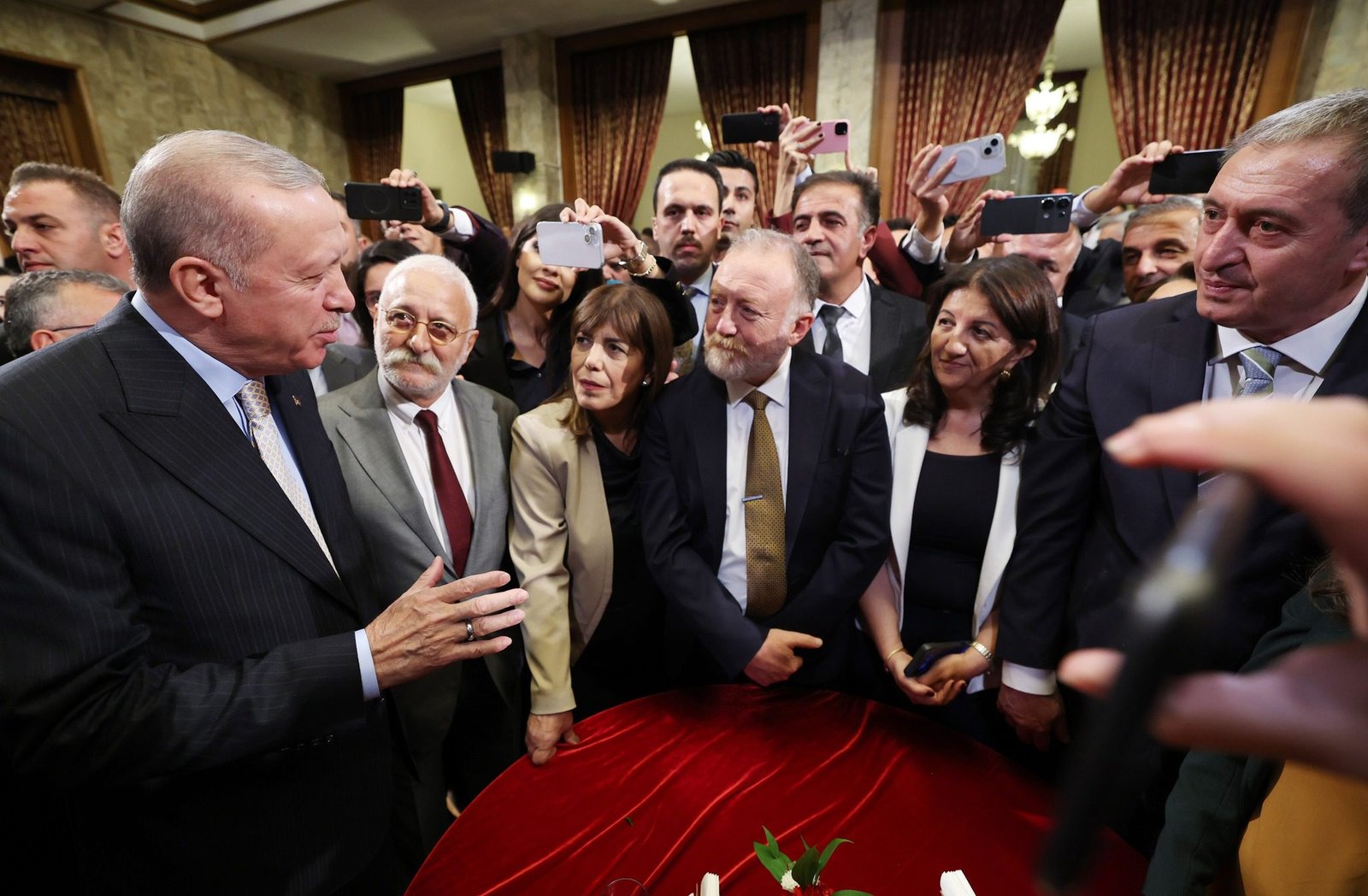
Speaking at an Eid al-Adha gathering in Van on 28 May, Pervin Buldan, a lawmaker for the DEM Party, Turkey’s main legal pro-Kurdish party and a deputy speaker of parliament, said a new draft law would be tabled after the holiday and that its passage was urgent. She put the framework at seven or eight articles and described it as a one-off measure. Within a defined window, former PKK members covered by the law would be able to travel to Turkey or a third country. She recounted a three-hour meeting on 24 May with Abdullah Ocalan, the imprisoned founder of the PKK, on the prison island of Imrali, where he has been held since 1999. At that meeting he stressed the need for what she called a “foundational law” and pressed for the process not to be drawn out.
Ocalan’s own message, released by the same delegation on 25 May, carried the warning in blunter terms. Remaining in a state of expectation, or prolonging it, “only generates risk,” he said, adding that there was “no time to lose” and that the effort had to be grounded in law. Buldan said DEM would concentrate its contacts after the holiday on getting the draft onto the agenda within roughly six weeks, before parliament rises for the summer.
Context: The process has stalled since early this year. In April, the group’s veteran commander Murat Karayilan described it as effectively frozen, citing more than a month without contact with Ocalan following a March meeting. DEM co-chair Tulay Hatimogullari accused the government of acting in a hesitant and dilatory manner. Ankara’s position is sequential: the intelligence service and the armed forces must confirm that the PKK has disarmed across all its elements and dissolved itself, on criteria described as objective, measurable, transparent and auditable, after which the National Security Council would recommend removing the group from the terror list. Ankara has also urged that the legal steps themselves be staged over time rather than taken at once. Erdogan, marking the process’s eighteenth month, said only that it now had to be “managed much more carefully.” The distance between the Kurdish side’s demand for speed and legal guarantees and the government’s preference for verification first is the axis on which the next phase turns.
Analysis: The symbolic moves are spent on one side. The PKK has declared a ceasefire, dissolved itself and burned weapons; what it has not received is a single enacted law. The framework Buldan describes would be the first the process actually produces. Its character is fixed: a purpose-specific, standalone and temporary regulation, framed expressly as something other than an amnesty, with a judicial process still applied to those it covers. Its confirmed core appears to be more procedural: legal cover for the officials and politicians conducting the talks, a monitoring mechanism to report on the process, a conditional route for fighters to come in from the mountains or relocate abroad, and a hook for the wider democratisation and reform that Buldan says will follow.
What that judicial process would mean in practice has been sketched only in the Turkish press, and should be read as a plan under discussion rather than settled law. According to AKP sources cited by pro-government Turkiye newspaper, returnees would be sorted into four categories: those not involved in crimes, those involved, the wanted, and those already imprisoned. Those in the first group would face judicial supervision and reintegration programmes rather than prison, while those in the second would be prosecuted individually under the penal code, with the charge of organisation membership expected to fall once the PKK is certified as fully dissolved. The prison population at stake is reported at roughly four thousand, more than five hundred of them serving aggravated life sentences, Ocalan among them, though the figures vary by source and by what is counted.
The narrowness appears to be deliberate. Buldan’s law is only the first of two stages; the questions that decide the outcome are held over for the second, the democratisation and reform packages set out in the later half of the commission’s report. Those reach well beyond the Kurdish file: compliance with European Court of Human Rights and Constitutional Court rulings, which would touch cases such as that of the imprisoned former Kurdish leader Selahattin Demirtas, whose release Strasbourg has ordered; a review of sentence-execution and pretrial-detention rules; the removal of non-violent acts and protected speech from the scope of terrorism; a rewrite of the assembly, press, party and election laws; and a curb on the trustee system, under which Ankara replaces elected mayors with state appointees. On that last point the report is unusually concrete, recommending that where a mayor is lawfully removed only the municipal council should choose the successor.
The sequence is itself contested. The nationalist MHP, whose votes the government needs, has signalled that confidence-building measures on trustees and on expression need not wait for disarmament to be verified, whereas anything touching organisation members or Ocalan must. That splits the agenda cleanly. What can move now is what Ankara can present as ordinary rule-of-law normalisation. What is held back is the more explosive material: the provision that could open a path to Ocalan’s release, pointedly left out of the commission’s report, and the position of the hundreds serving aggravated life sentences, for whom adjusted enforcement changes little. DEM wants all of it and more: an end to trustee rule, mother-tongue rights and constitutional change. Ankara will frame the second stage as normalisation; DEM will call it the legal opening for equal citizenship.
That normalisation pitch has a credibility problem, and the Kurdish side has begun to name it. In the same week Buldan spoke, a court annulled the 2023 congress of the main opposition Republican People’s Party (CHP) and removed its elected leader, Ozgur Ozel; police then stormed the party’s Ankara headquarters and broke up a rally in Izmir. A government promising rule-of-law normalisation through the Kurdish file while the courts dismantle the largest opposition party invites the reading that the opening is selective and reversible, managed from above rather than entrenched in law. That perception corrodes the trust the next steps require, which is why Ocalan and the DEM leadership keep returning to the word “legal”.


